Clarkies reflect on COP30 successes and challenges
COP30, the UN Climate Change Conference held in Belém, Brazil, concluded on Nov. 21, but its outcomes continue to resonate in a world grappling with the consequential and accelerating impacts of climate upheaval.
Among the outcomes were an agreement among participating countries to triple adaptation finance for developing countries by 2035, to develop a set of 59 global indicators to help measure progress in building resilience to climate impacts, and to establish a fund to raise $125 billion to compensate countries for preserving standing forests. Little progress was made, however, to create a roadmap to phase out fossil fuels and halt deforestation.
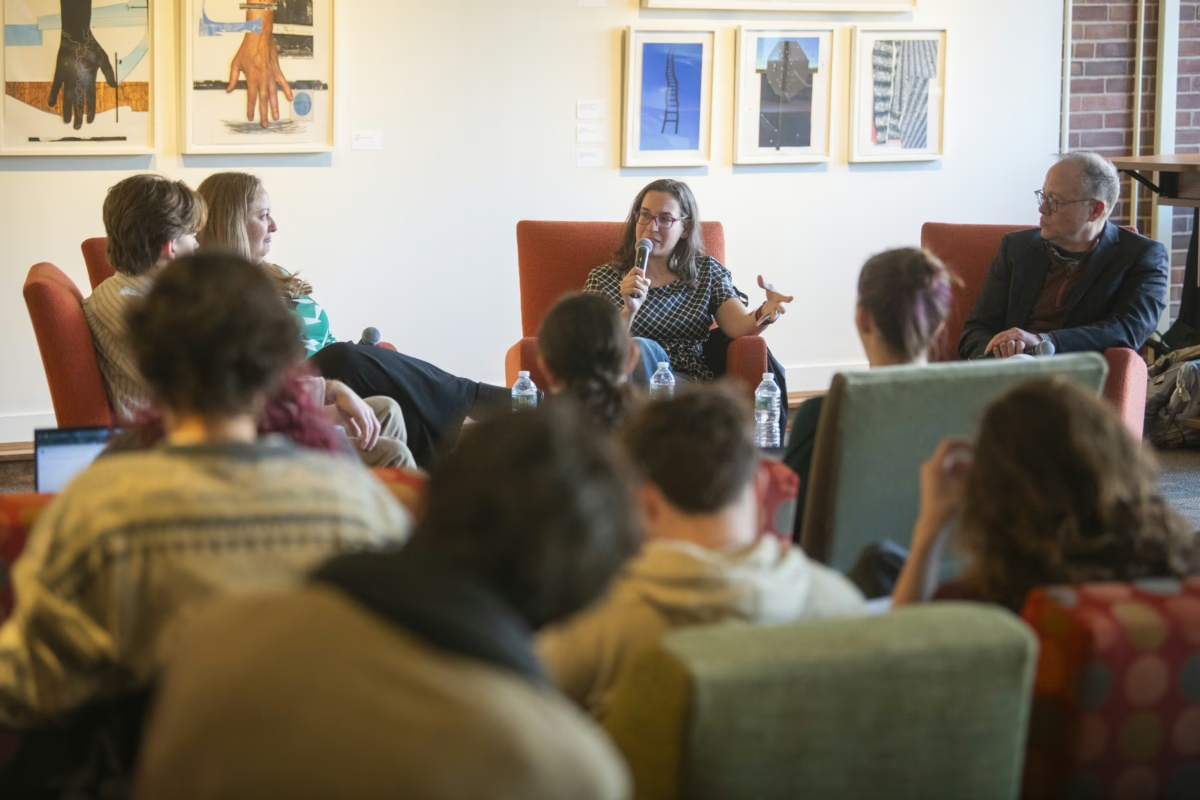
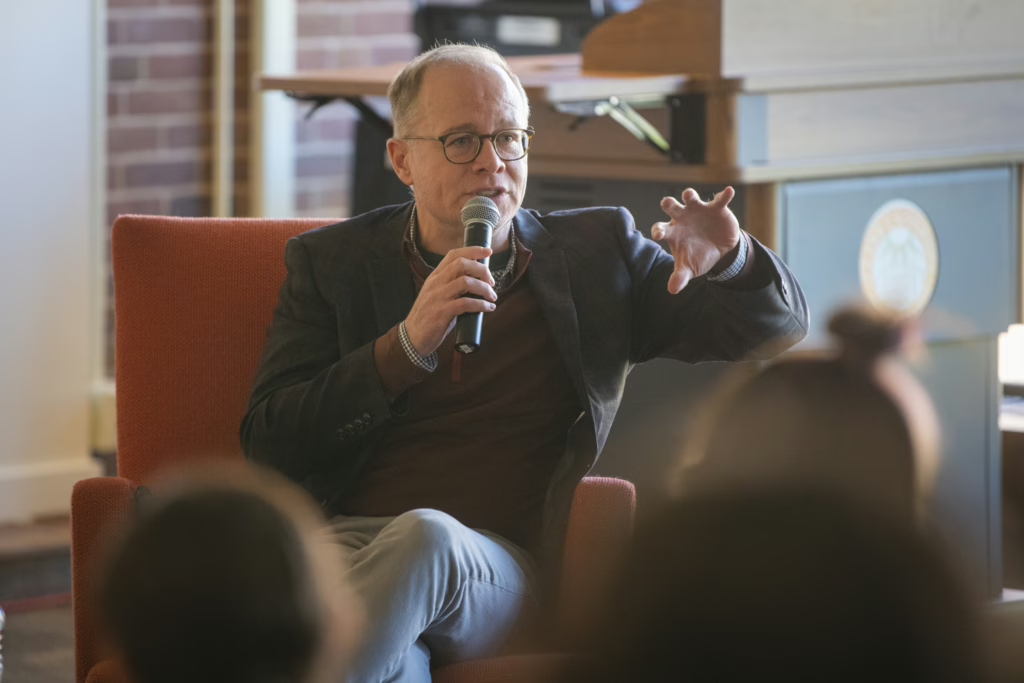
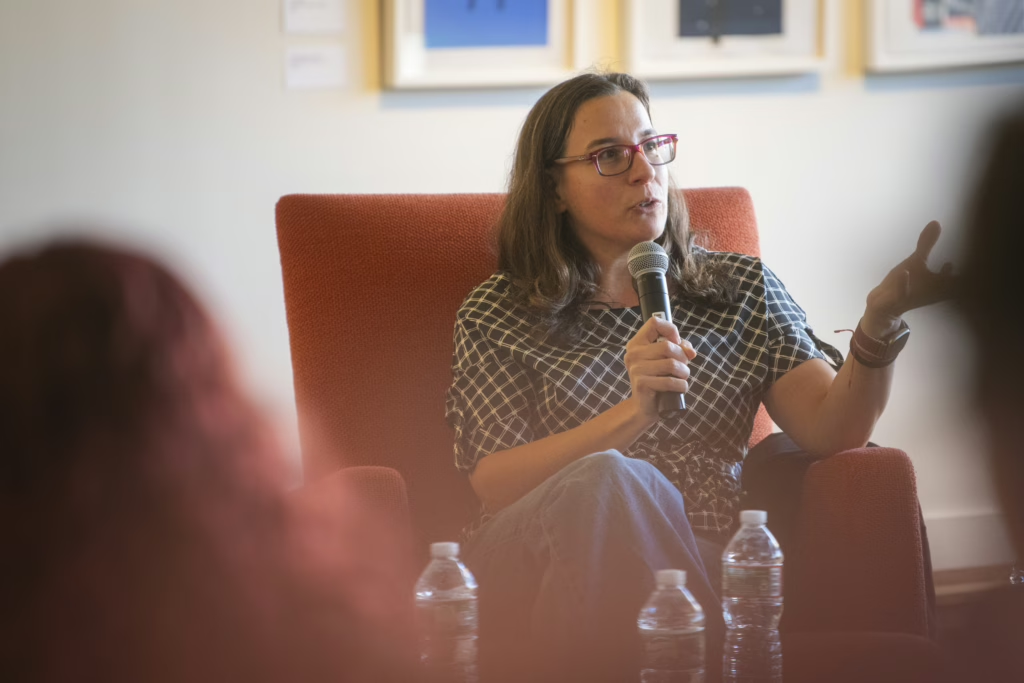
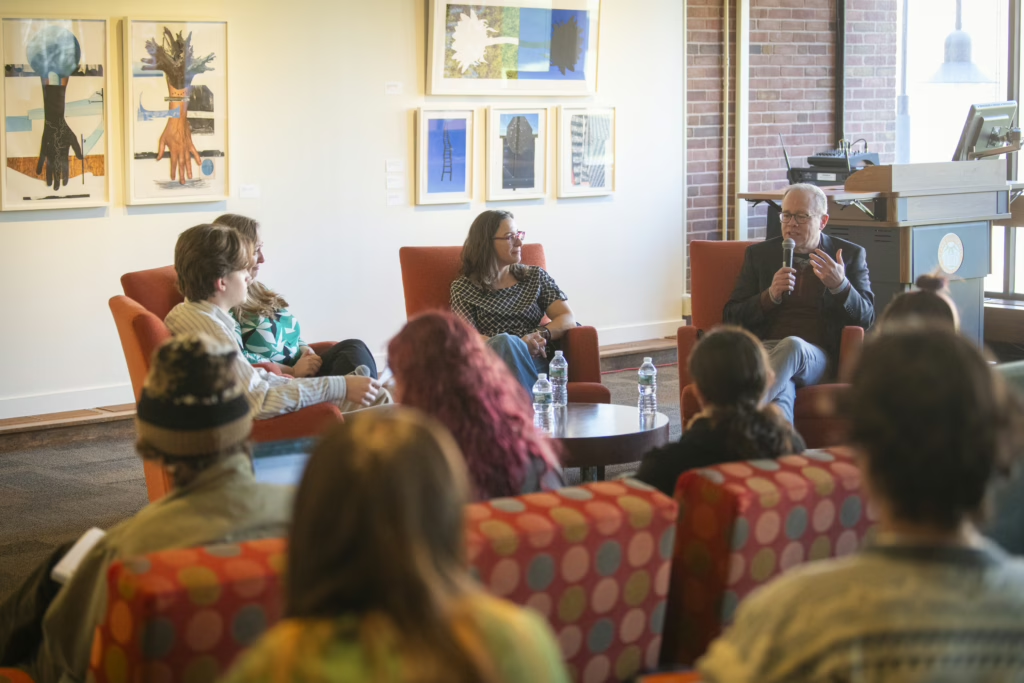
At a special panel held Dec. 1 in the Dana Commons Higgins Lounge, three Clark attendees of COP30 shared their impressions of progress and challenges that were illuminated during the two-week conference. Lou Leonard, the D.J.A. Spencer Dean of the School of Climate, Environment, and Society, and geography professors Florencia Sangermano and Abby Frazier, responded to questions about COP30 posed by Zach Rutherford ’27 of the Clark Environmental Action e-board.
Leonard, who has attended 10 COPs throughout his career, said this conference was significant in that it focused on practical solutions and tangible action. That said, commitments hammered out in the Paris Agreements to reduce global warming no more than 2 degrees above preindustrial levels, with an ultimate goal of 1.5 degrees, have not been successful, he said. “We haven’t gotten to the point where the commitments countries have made have bent the curve to a decline [in temperature],” he said. “We have to continue to bend the curve.”
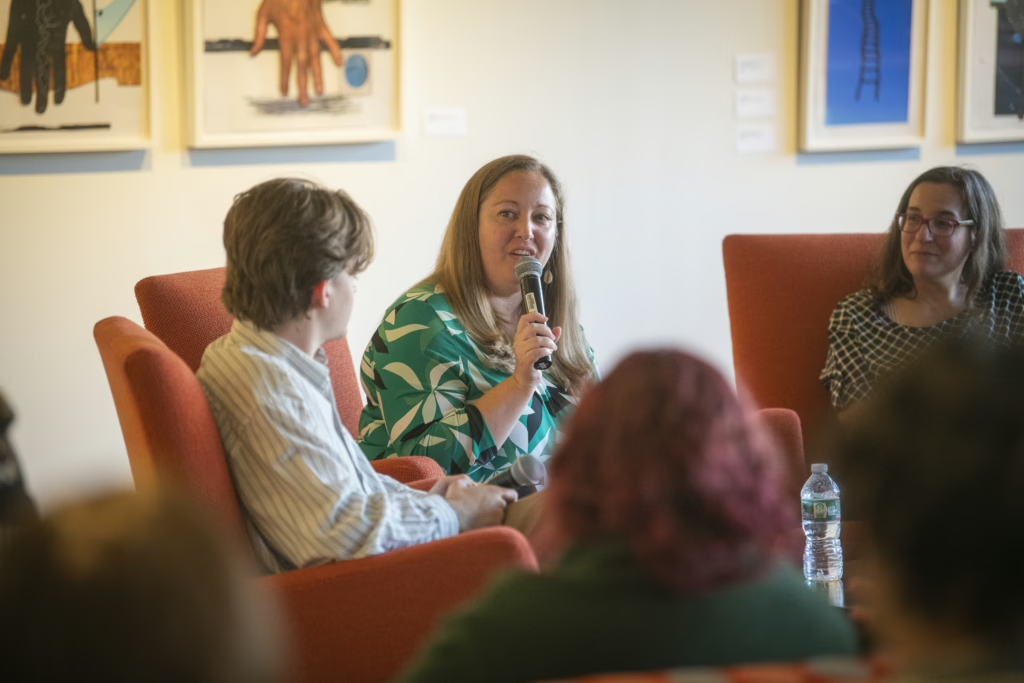
Leonard noticed a “good tension” developing at COP30, as scientists were more fully brought into the conversation with government representatives on the impacts of warming and strategies to combat it. Frazier, a climatologist whose research is concentrated in the Pacific Islands, asserted that curbing global warming to 2 degrees rather than 1.5 degrees “is not an option” because some islands will be flooded as sea levels rise. “There’s a common saying: ‘1.5 to stay alive.’” Frazier said. “From a Pacific Islands lens, we’re not being ambitious enough. Every tenth of a degree matters.”
Rising temperatures also have a profound impact on biodiversity, food security, human health, and access to clean water, Sangermano added. She has done significant work in the Amazon, and was a member of the ETH BiodivX Team that earned last year’s $250,000 Bonus Prize in the XPRIZE Rainforest Competition. The team recently announced that with the prize money is being used to establish the Indigenous Peoples and Local Communities Science Endowment Fund.
“At this COP there was more involvement of Indigenous and local communities,” Sangermano said. “Perhaps not as much as we wanted, but we saw more recognition of Indigenous rights.”
“We have more voices being included in the conversation; more young voices,” Frazier said. “It’s not about some abstract atmospheric phenomenon now, but how people are being impacted on the ground.”
Leonard remarked that over the last 10 years, “climate change as a priority has punched through the narrative” with an international process of plans and strategies that are revisited every five years. But he’s discouraged by the resistance to the Paris Agreements, which initially “represented a moment when every country on earth came together to reach a goal.” Climate change has become a deeply partisan issue, he noted, and the fossil fuel industry and other aspects of society are clinging to an unsustainable status quo (Leonard noted that the United States declined to send representatives to COP30).
Rutherford asked perhaps the day’s most pointed question when he motioned to his fellow students in the audience and wondered if they would bear the severest repercussions of unchecked climate change.
Frazier responded that Rutherford’s generation will both experience the impacts and be a “major player in advancing solutions and figuring out what the future looks like.” At COP30, the delegation from the Solomon Islands included a 12-year-old, who
contributed her perspectives to ongoing negotiations. “People do want to listen to the younger generation,” Frazier insisted. “It’s their future.”
Younger generations will need to help figure out how humanity will adapt in a climate-compromised world, Sangermano said. “We live in a privileged environment, but outside of it, we’re seeing real issues with access to health care and water. How will we control diseases and account for biodiversity loss? How can we adapt and mitigate?”
Combatting the climate-change problem “is not a relay handoff” to a younger generation, Leonard insisted. “That’s a copout.”
“This is a team sport throughout the process. Universities need to be thinking of themselves not only in their traditional role of training students for their careers, but also in how to do the work of learning collectively in a way that has an impact today. This is a partnership, and it’s multigenerational.”