Clark alum on his career in the wool industry
The sun was shining, with the day so warm that many on campus were dressed in shorts and T-shirts. But no matter. Despite the unseasonably high temps, Ben Carver, M.A. ’19, had returned to Clark to talk about his favorite cold-weather subject: wool.
As vice president of the Shaniko Wool Company, Carver’s work is equal parts passion, profession, and legacy. He is devoted to the mission of promoting the responsible production of wool that has found its way into clothes all over the world, including those of top fashion designers.
His Oct. 23 presentation in Jonas Clark Hall was an academic homecoming of sorts for Carver, who earned a master’s degree in international development from Clark. He was raised on the historic Imperial Stock Ranch (established in 1871) in Central Oregon and was immersed in the regenerative agricultural methods championed by his parents, Dan and Jeanne Carver. He joined the family business in 2022 after leading humanitarian projects in conservation, education, and public health, from Yemen and Haiti to Lebanon and Pakistan.
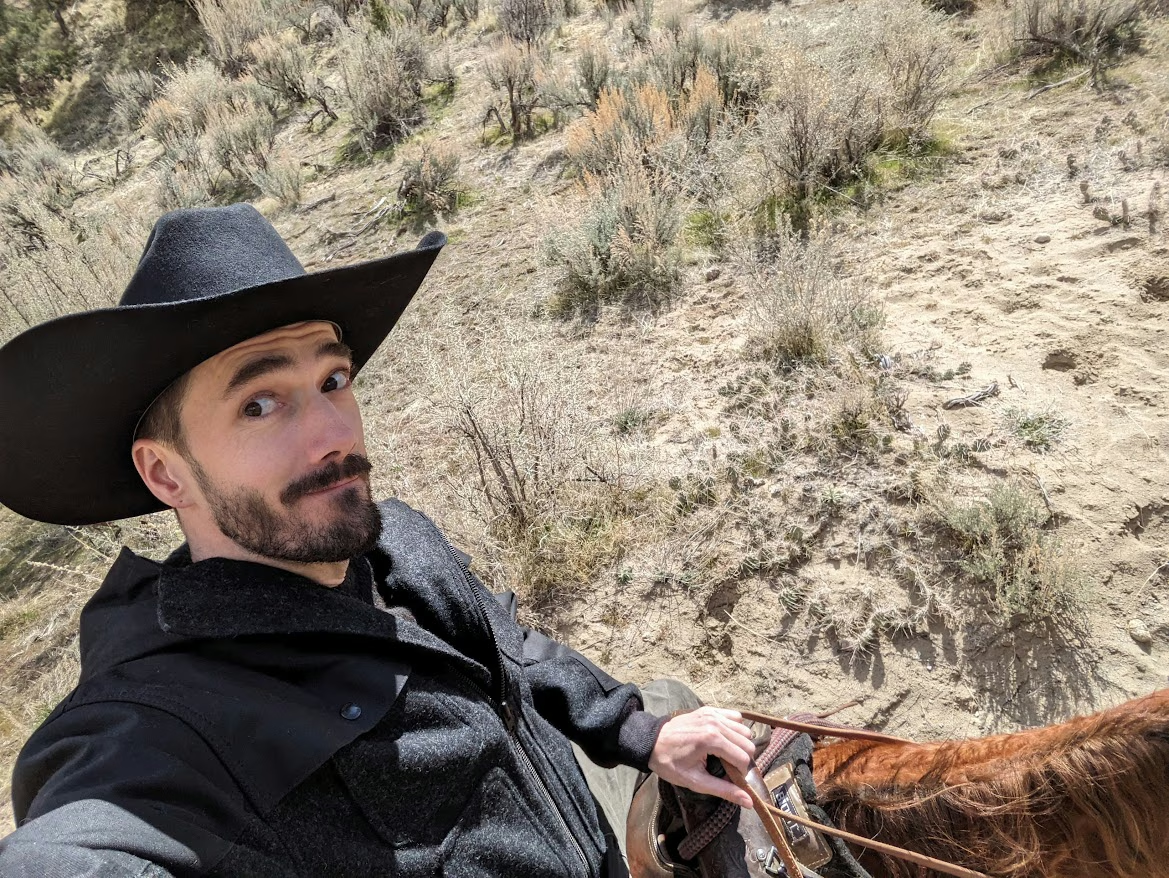
At Shaniko Wool Company, one of Carver’s primary roles is to implement the Carbon Initiative, which measures the positive carbon impact of the regenerative farming methods on all of their partner ranches throughout the West. He meets with ranchers, collects field samples, coordinates with the laboratory team, and provides feedback that helps guide management decisions.
Carver also runs all certification programs, including the Responsible Wool Standard (RWS) and NATIVA Regen, helping ranchers create management plans that meet stringent guidelines. According to the company’s website, “Shaniko brings together a group of family ranches across the American West and is the leading U.S. source of RWS-certified American Merino. By supplying wool at scale with verified standards for animal welfare, land management, and chain of custody, Shaniko connects global textile partners to fiber grown with integrity.”
During his Oct. 23 presentation, he shared a history of Shaniko Wool, which includes a partnership with designer Ralph Lauren that led to the company supplying materials to dress U.S. athletes at three Winter Olympics and the Summer Olympics in Paris. The family ranch was the first-ever to adopt the Responsible Wool Standard, which sets criteria regarding animal welfare, land management, the health and safety of workers, and other progressive practices.
“I have a wool sweater given to me when I was a child, and I still wear it.”
Ben Carver, M.A. ’19
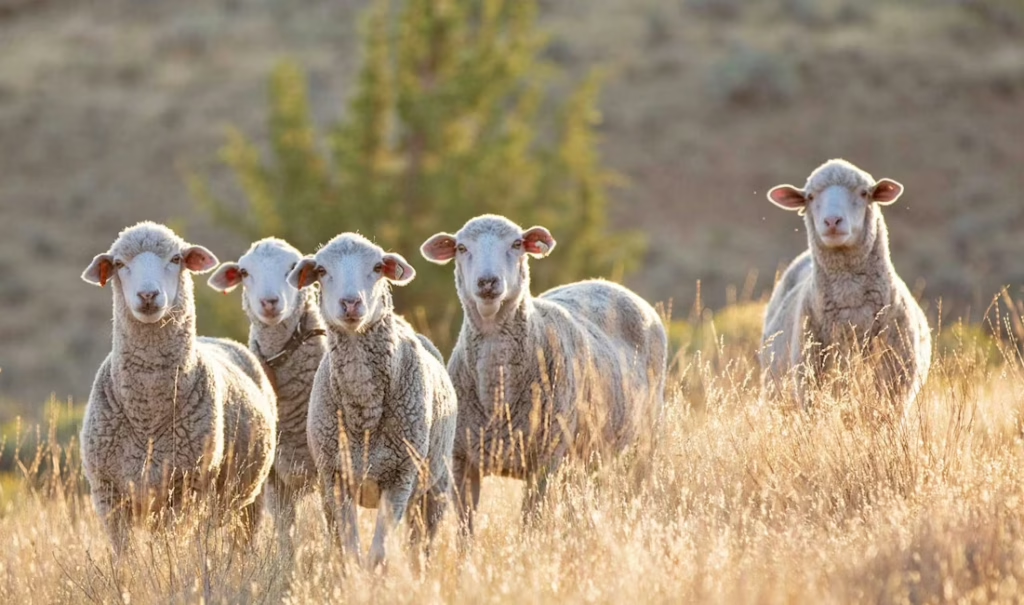
Today, Shaniko Wool works with farmers on 10 distinct ranches covering 3.8 million acres in the Western U.S. Carver advises on sustainable grazing practices that preserve soil health, conserve water, promote biodiversity, and protect Indigenous species. The practices are especially important to preserving old-growth grasslands, which take 150 years to reestablish if destroyed, he noted. Shaniko Wool’s Carbon Initiative collects data from 400 sites across 2.5 million acres showing how responsible practices are improving the carbon footprint of ranching operations.
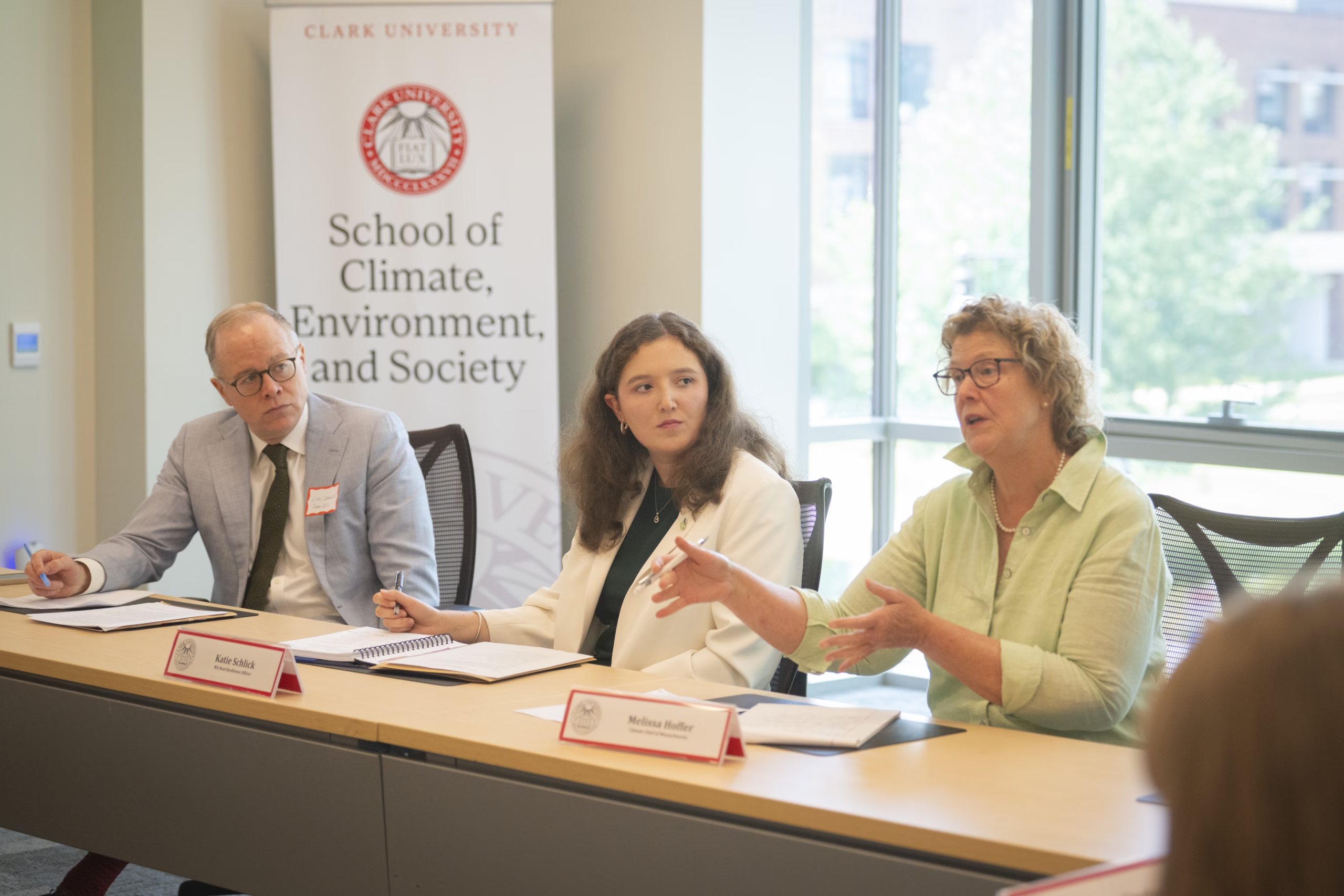
Following the presentation, in a Q&A session with students and professors Cynthia Caron and Ellen Foley of the Department of Sustainability and Social Justice — which is part of the School of Climate, Environment, and Society — Carver talked about the ecological benefits of sustainably produced wool, clear lines of sourcing, as well as the product’s durability and warmth. “I have a wool sweater given to me when I was a child, and I still wear it,” he said.
Carver, whose path to Clark was inspired by a book authored by Professor Cynthia Enloe, noted that much of today’s clothing is produced with plastics, which increases the use of fossil fuels and results in millions of tons of textile waste.