Clark celebrates School of Climate, Environment, and Society with full slate of activities
To celebrate the launch of the School of Climate, Environment, and Society, Clark is hosting an all-day kickoff event on Monday, Sept. 15, filled with opportunities to learn about new academic offerings, explore local nature, and engage in fun activities and workshops.
All-day events include a scavenger hunt, food offerings from Harvest Table, and interactive poster boards around Red Square.
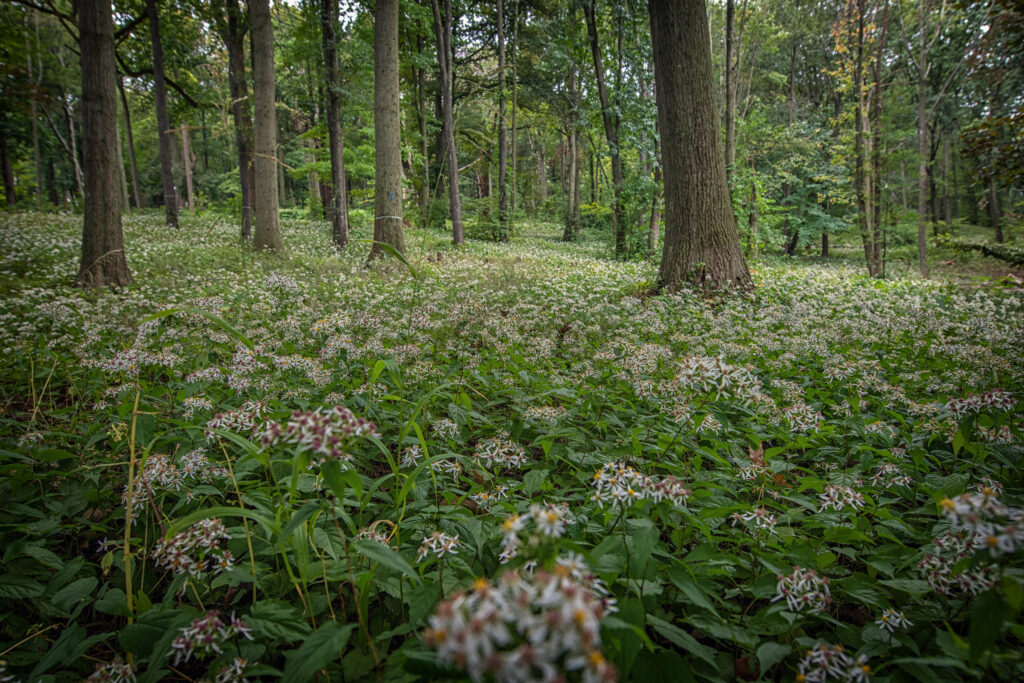
9 a.m. — Walk and explore the Hadwen Arboretum
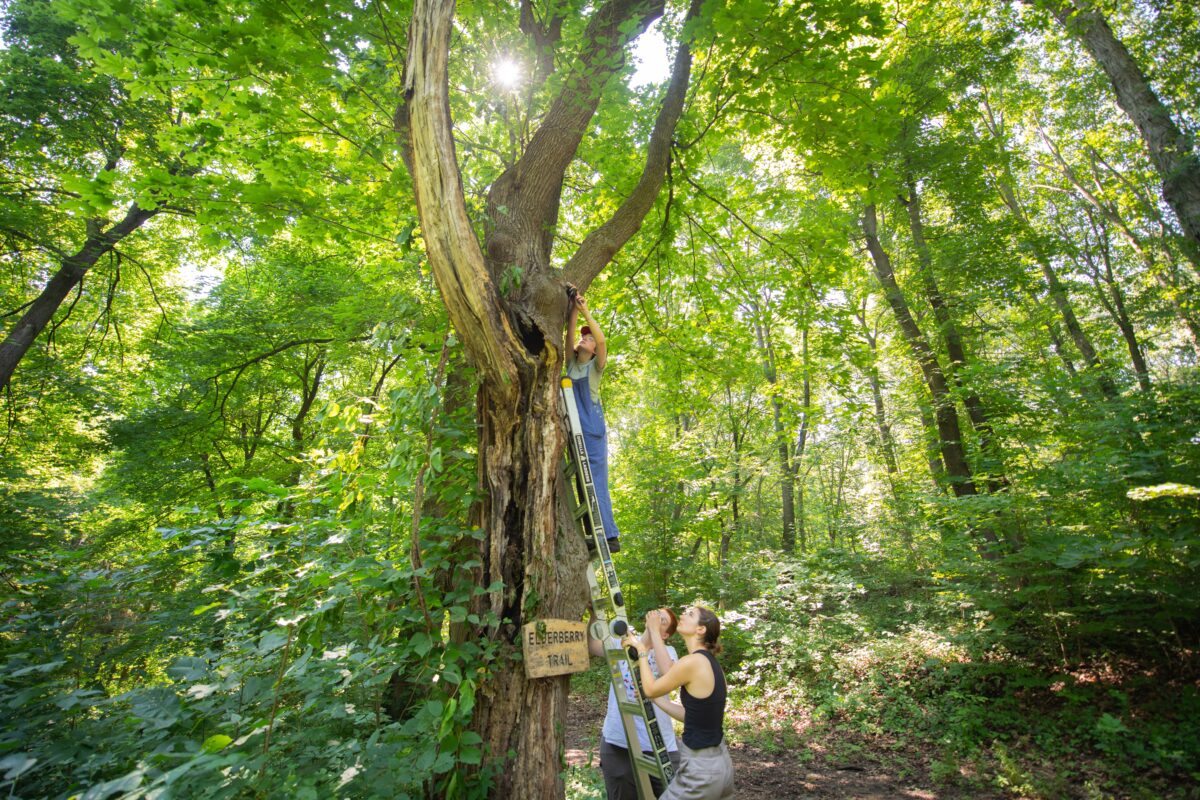
Geography Professor John Rogan will lead a walk of the Hadwen Arboretum, a 26-acre forest site home to 66 species of trees that support a variety of native plants, fungi, and wildlife — from cucumber magnolia, tulip poplar, and banana trees to white-tailed deer, woodpeckers, owls, and more During the visit, Rogan will highlight several student-led enhancement projects, including a native plant pollinator garden, historic witness trees, bat activity monitoring, and a revitalized community garden at the drumlin summit. The group will meet at Red Square at 9 a.m. and walk to the Hadwen, located about a mile from campus on Lovell Street.
11 a.m. — Intro to the environmental humanities
Learn more about the new environmental humanities concentration from Language, Literature, and Culture Professor Christina Gerhardt, English Professor Stephen Levin, and History Professor Nana Kesse. The environmental humanities explores the role of culture, value, and meaning in shaping the human relationship to the environment, drawing on perspectives from literature, history, philosophy, visual culture, and digital media. Faculty will discuss the concentration’s courses and degree requirements. Visit the table in Red Square at 11 a.m.
Noon — Economics climate game
The Economics Department presents “Climate Dilemma,” a simple game that mimics the incentive structure faced by countries under the Paris Accord. They’ll recruit students passing through Red Square to play. If players choose to “cooperate” by cutting emissions, the group benefits significantly. However, players have an incentive to “defect” and get a free ride on others’ efforts. The game is designed to help students understand the challenges of achieving cooperation in such global contexts, says Professor Junfu Zhang, chair of the Economics Department. Students should visit the table at Red Square to play and compete for small cash prizes.
Noon — Sun print workshop
Melissa Ahlgren will lead a workshop to make sun prints, also known as cyanotypes — photographic prints with a distinct blue color. Students are encouraged to bring natural materials they find around campus, such as leaves, flowers, and feathers, and use them to create art to take home. Special paper and water to create the sun prints will be provided. The workshop will be in Red Square.
2 p.m. — ‘Walking the Talk’: Clark’s renewed commitment to sustainability and tree planting
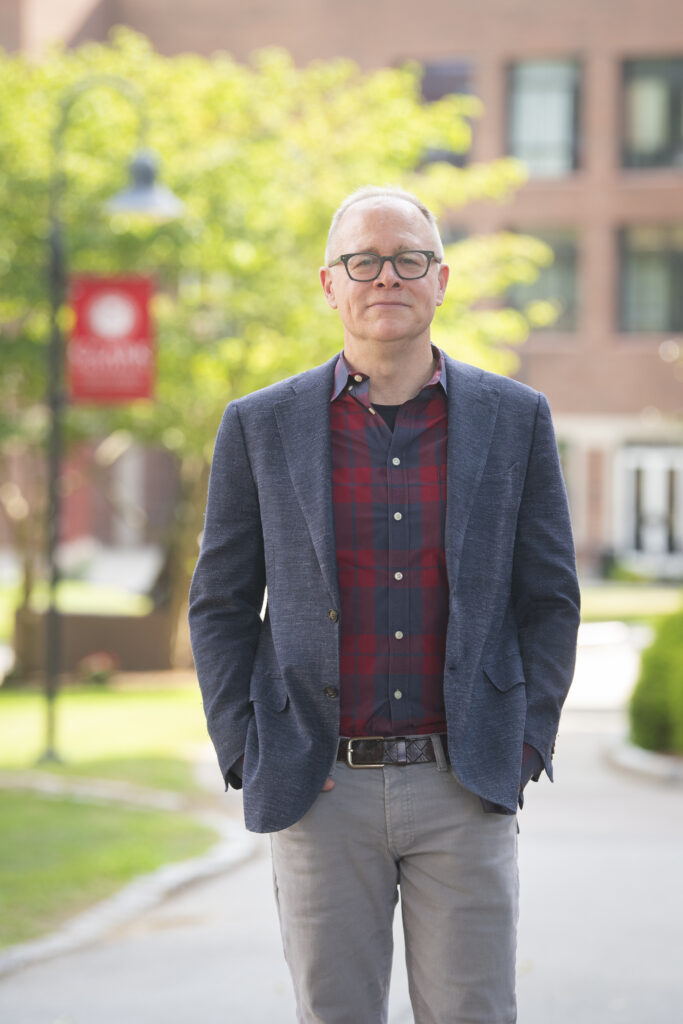
On the ASEC patio, President David Fithian ’87 and School of Climate, Environment, and Society Dean Lou Leonard will deliver remarks about Clark’s renewed commitment to sustainability. There will also be a tree planting and refreshments.
3 to 5 p.m. — Student group activities
The Herban Gardeners club will plant a serviceberry tree in the President’s Field, across from Estabrook Hall and the Little Center. In Red Square, the Clark Environmental Action club will host environmental “Jeopardy!”; the Beekeepers Club will offer a butterfly craft and an equipment show-and-tell; and the Clark Undergraduate Geography Association will present geography trivia.
6:30 p.m. Bat observation and walk
Sustainability and Social Justice Professor Morgan Ruelle will lead a walk to Coes Pond to watch various species of bats feed and drink. Ruelle will have handheld bat detectors that transpose the echolocation and communication vocalizations of bats to within the range of human hearing. He’ll identify bats flying in the area, which could include big brown bats, silver-haired bats, hoary bats, Eastern red bats, and others. Ruelle will also share handouts with information on the eight bat species found in Worcester and about white-nose syndrome, a fungal infection that prevents bats from fully hibernating and causes them to die of starvation, creating a devastating impact on their populations. The group will meet at Red Square at 6:30 p.m. and walk to Coes Pond, just under a mile from campus.