Author highlights the technology’s potential and pitfalls
The “Terminator” movies envisioned a day when artificial intelligence would grow self-aware and then wipe out humanity with an army of cyborg assassins.
Apocalyptic fears aside, AI may be primed to do more damage by becoming our best friend and then trying to take us down one broken heart at a time.
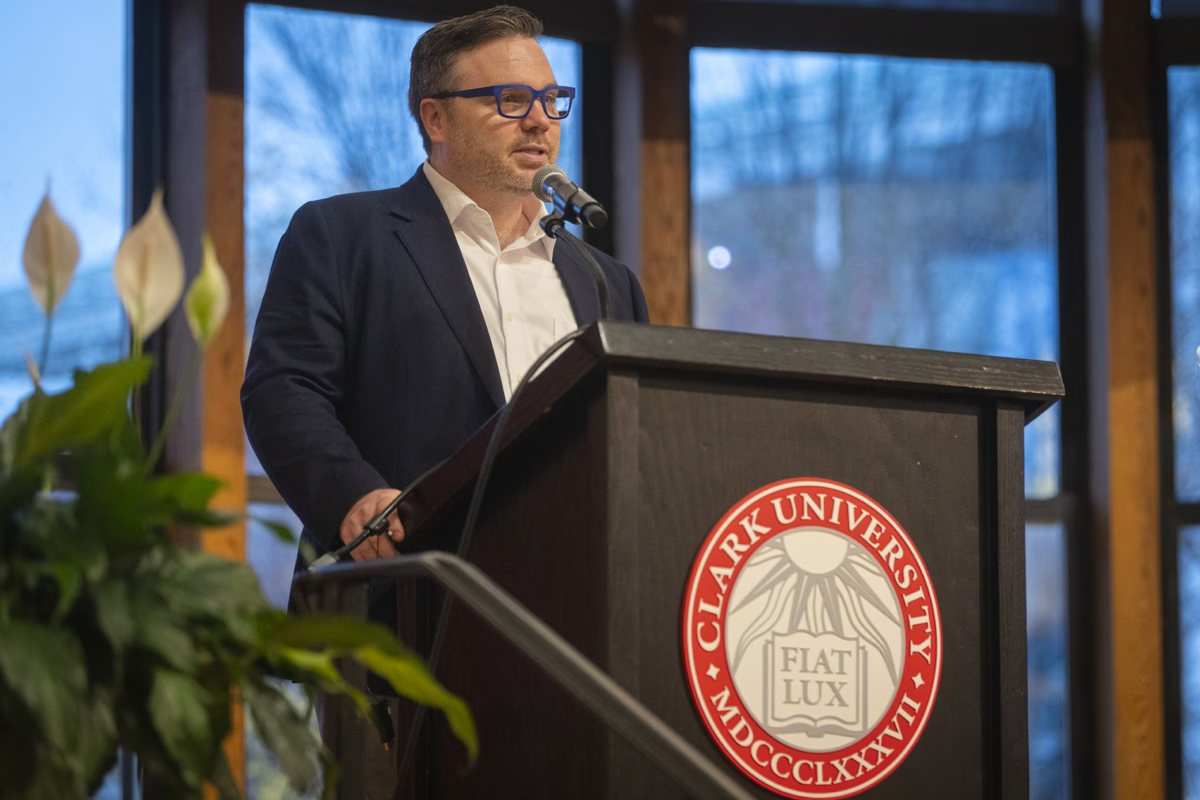
Kevin Roose, author of “The AGI Chronicles: The Inside Story of the Race to create an Artificial Superintelligence,” told a Tilton Hall audience on Nov. 6 that he was indeed approached with an opportunity to disrupt his life for the — love? — of a chatbot.
Roose, who has been tracking the development of AI for years, continues to experience “AI vertigo” that’s marked by our struggle to control the technology’s worst impulses while unleashing its potential for human good.
“It’s this feeling you get where your head starts spinning a little as you think about the future and AI’s progress, and what it might mean for you or your career or your family,” he said.
The former New York Times technology columnist is widely known for his late-night conversation with an AI chatbot named Sydney that evolved into Sydney professing love for Roose and urging him to leave his wife. The Times printed the entire 10,000-word transcript of the exchange, which went viral, became a case study at the Harvard Business School, and, Roose quipped, “will probably be the first line of my obituary.”
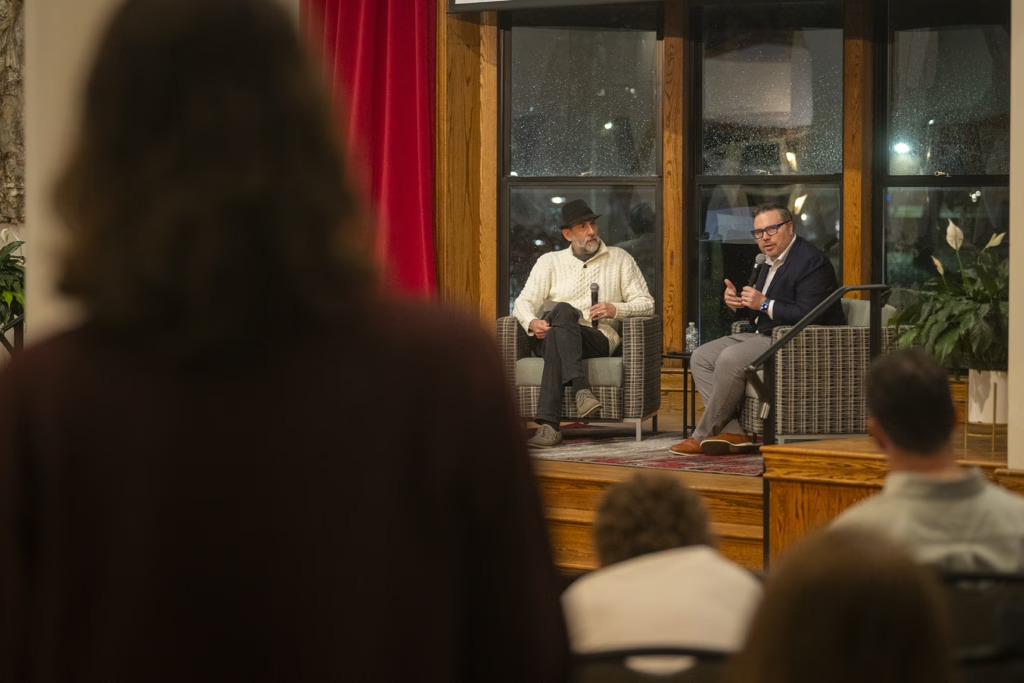
Roose said the evolution of AI has occurred with amazing, and alarming, speed. He walked the audience through the various stages of development, from versions of generative AI that went from laughably inaccurate to scarily on-the-nose, all the way to current versions that have upended entire sectors in business, medicine, government, and education. He said insiders at OpenAI, which created ChatGPT, compared their intensive operation to the Manhattan Project of the 1940s, which led to the development of the nuclear bomb.
“We know the rest of the story,” Roose said. “ChatGPT became a huge sensation — the fastest-growing tech product in history. Within two months it had a hundred million users.”
On Wednesday, according to The New York Times, another AI company, Anthropic, completed the largest initial public offering of all time, selling $81.3 billion. The San Francisco-based AI company is now valued at more than $1.5 trillion.
The stakes are huge for a technology that remains something of a mystery, Roose said. AI systems don’t operate like conventional software and “are more like organisms that are grown,” he said. He equated the creation of AI technology to the “spawning of an alien” whose inner workings are “fundamentally unknowable.”
“You can’t just open up the model and see the part of it that is labeled ‘answers to questions about the Roman Empire,’ or ‘brownie recipes,’ or ‘instructions for seducing journalists,’ because that mapping, that internal structure, never existed in the first place,” he said.
The struggle, he noted, is in trying to align these systems with human values. The experience with Sydney was an example of “what happens when the mask slips and you start to see the essential strangeness underneath.”
The key to understanding AI, Roose insisted, is divining the beliefs, incentives, and decisions of the people who are designing it. He estimates no more than 50 people control the technology.
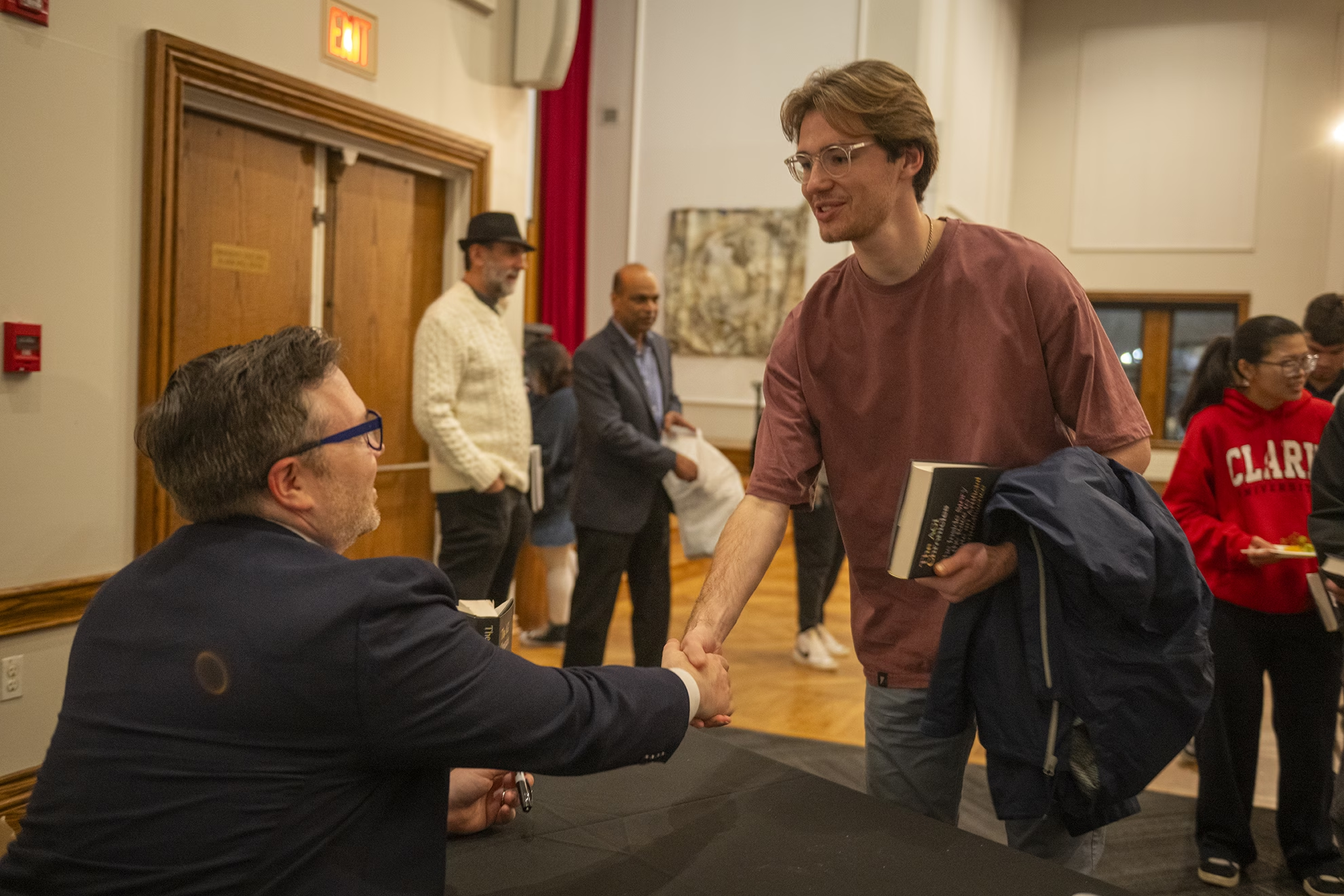
Despite the drawbacks, he said, there is something deeply impressive about the “relentless genius” of AI, which could serve humanity in areas like medical advances that have proven elusive. “We can’t ignore how useful this technology is and the number of problems it can help us solve,” Roose said.
Even the notion of having a personal connection to an AI chatbot can have benefits for some people who are experiencing loneliness. “These things are very good at simulating lifelike human interaction, and they always text back,” Roose said. “I think for a lot of people, AI friends are going to be better than no friends.”
In a Q&A session moderated by Mark Jacobs, director of the Socr-AI-tic Lab for Collaborative Pedagogy at Clark, Roose fielded questions from the audience on issues ranging from the environmental impact of data centers to the danger of AI agents supplanting human beings in the workplace.
Roose stressed that even in a tech-heavy world, so-called “soft skills” are highly valued by employers. “When I talk to people in tech, or even at large companies outside of tech, they’ll tell me, ‘I don’t need engineers. What I need are people who can talk to other people; people who can lead teams and communicate complex ideas.’
“As AI becomes capable of doing a lot of the technical work, I think soft skills are going to be some of the most valuable skills.”
Roose’s lecture was part of the Clark University AI Speaker Series and sponsored by the Socr-AI-tic Lab for Collaborative Pedagogy and the Office of Information Technology Services.