How are worm brains built?
Does noise impact bird activity in cranberry bogs?
Could studying the amphibian gut biome lead to advances in medicine?
These are just a few of the topics that will be covered by 29 biology graduate students at the annual Bumpus Symposium this Wednesday, Sept. 2, from 1:30 to 5 p.m. in the Lasry Center for Bioscience.
Eleven students will present their research in a poster session; the others will explain their work in a series of 12- and 5-minute lightning talks.
The symposium is named for Hermon Carey Bumpus, who in 1891 received the first doctoral degree ever conferred by Clark University. His specialty was invertebrate biology, and his dissertation examined the embryology of the American lobster, but he made lasting scientific contributions through his studies on natural selection in sparrows.
Nathan Ahlgren, associate professor of biology and a marine microbial ecologist, oversees the symposium. “There’s a wide range of topics, reflecting the diversity of the research interests of our faculty and students,” he says. “While much of the research focuses on basic science — understanding how biology works — some students are studying how microbes and ants can have applicable, beneficial impacts on agriculture.”
For example, students are examining how bacteria provide nutrients for plant growth, and the influence of companion plants on cucurbit productivity and insect communities. Cocurbits include popular vegetables such as cucumbers, melons, and squash.
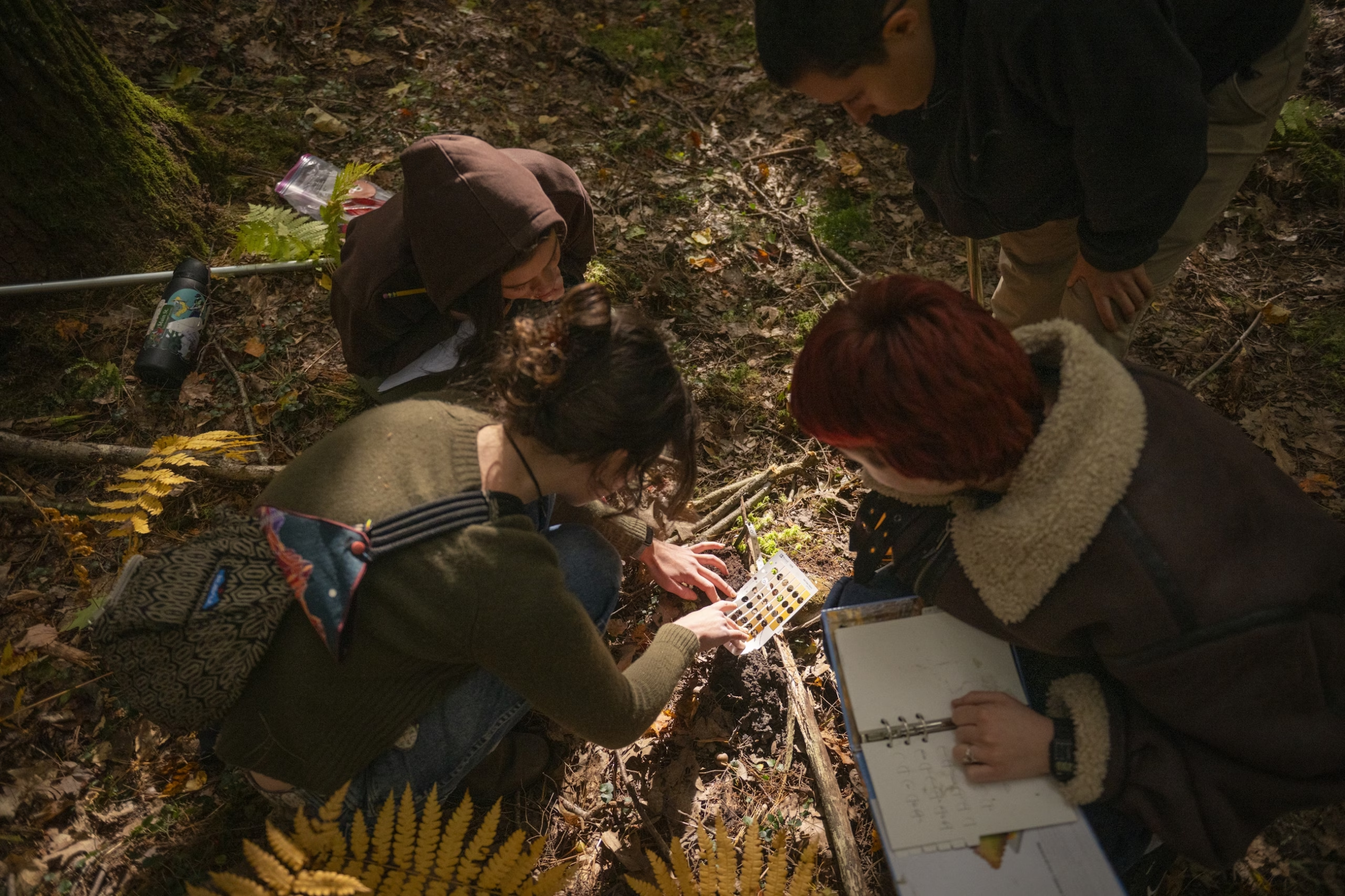
“The symposium is an amazing event because it highlights the fantastic research that our master’s and doctoral students do in our department,” Ahlgren says. “Clark is known for doing impressive work engaging undergraduate students in research, but our graduate students are the real engine behind the scholarship done in our department. They publish that work in prominent journals, win awards at national research conferences, and go on to impressive careers.”
He adds that while the symposium celebrates the graduate students’ achievements, undergraduates are also involved in supporting the research in most cases.
“The master’s students started their research as juniors and seniors — sometimes even earlier — and have taken that research to the next level as graduate scholars. We take pride in the specific contribution of our graduate students during the Bumpus Symposium, but it also highlights how their work provides key opportunities for undergraduate research and the interwoven nature of faculty, undergraduate, and graduate research in our department.”