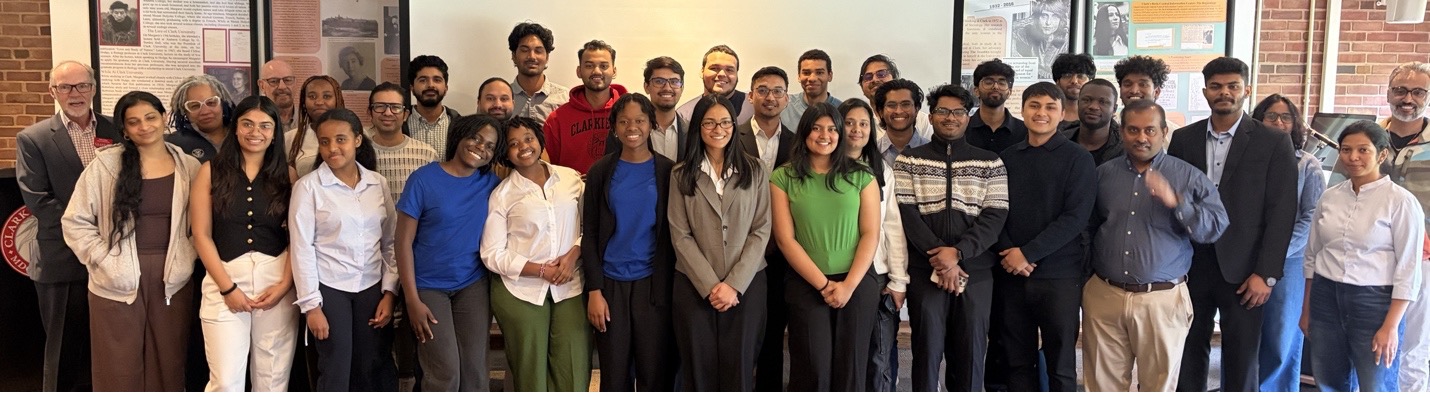
The School of Professional Studies (SPS) at Clark University is proud to celebrate the successful completion of the Tech Innovation Challenge 2.0. Building on the success of the inaugural competition in 2025, this year’s challenge brought together students from multiple universities to develop innovative and scalable technology solutions.
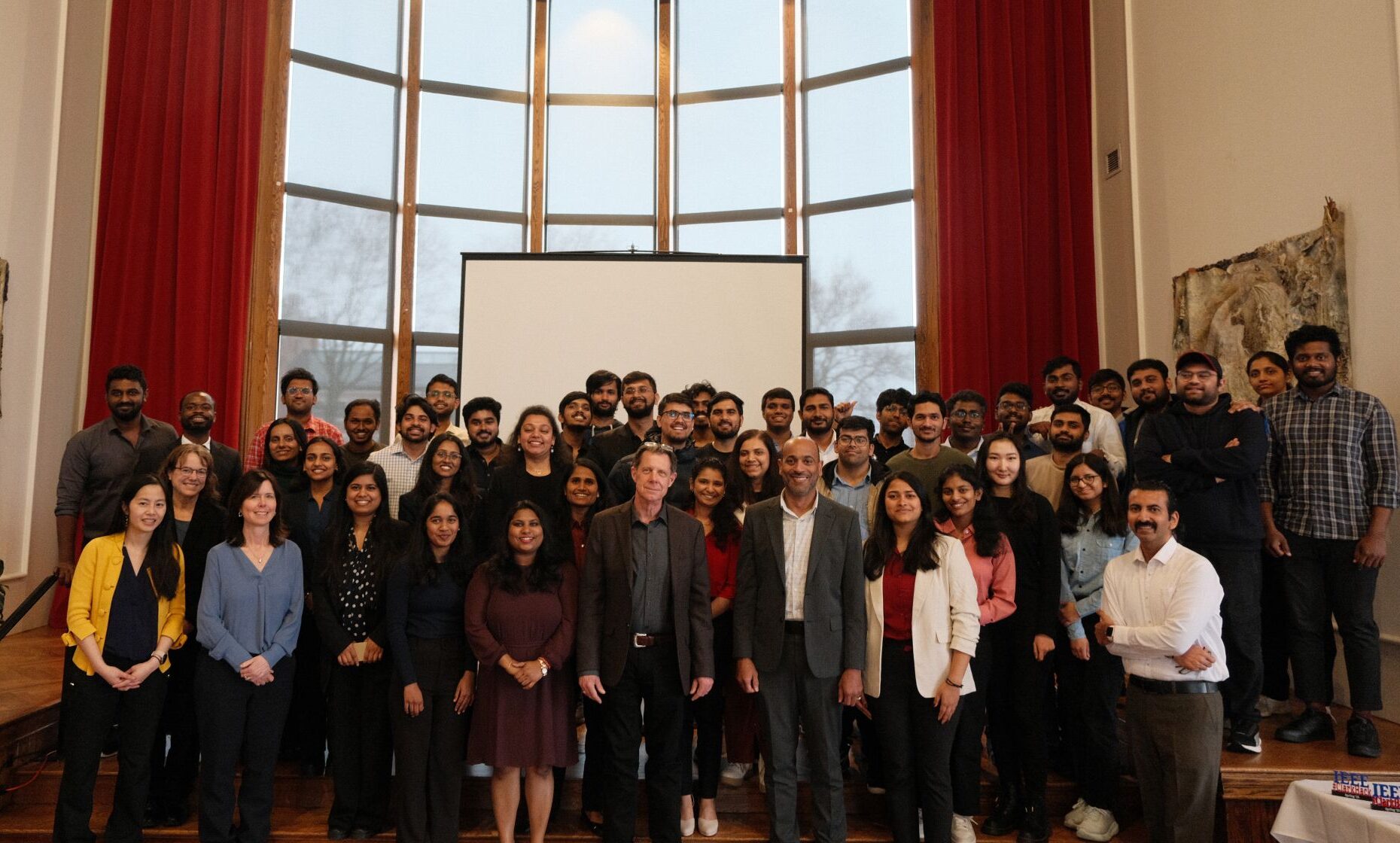
More than 30 teams registered for the competition, with 20 advancing to the final presentations, held on the Clark campus on April 30. Teams presented projects spanning AI-assisted learning, civic technology, enterprise automation, productivity tools, and much more.
This year’s challenge also saw strong participation from students from other universities — notably, students from Smith College and the College of Westchester traveled to Clark University for the final presentations.
Throughout the six-week challenge, participants received mentorship and feedback from faculty, tech professionals, and judges from academia and industry. The event highlighted technical innovation, creativity, resilience, and entrepreneurial thinking.
We are incredibly proud of all participants for the effort and growth they demonstrated throughout the challenge.
The six-week challenge was supported by faculty mentors, industry judges, and corporate sponsors who helped make the event possible.
The 2026 Tech Innovation Challenge winners:
First Place: LeetMotion
Sumanth Aitham, MSCS ’26, Clark University
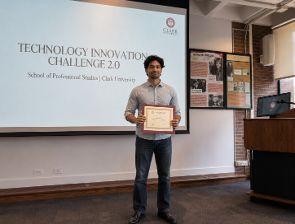
LeetMotion is a visual learning platform designed to help students understand algorithms through interactive animations rather than memorization. The platform allows users to visualize concepts such as sliding windows, dynamic programming tables, stacks, and pointer movement in real time, making difficult concepts easier to understand and retain.
The idea came from Sumanth’s own experience transitioning into software engineering from a mechanical engineering background. While preparing for technical interviews, he realized that many students struggled not because of a lack of effort, but because algorithms are often taught through static text rather than visual learning.
LeetMotion also includes Argos, an AI-powered mock interview assistant that simulates technical interviews and provides feedback. Additional features include spaced repetition for long-term retention and a Chrome extension that integrates directly with LeetCode problems.
Within the challenge timeline, the platform launched its core visualizer, Chrome extension, mock interview system, and spaced repetition features, while gaining active users and strong early feedback.
Second place: CLICK
Clare Njoroge, Smith College
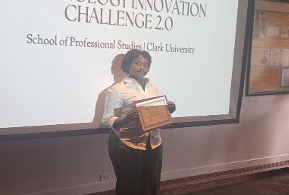
CLICK is a civic intelligence platform designed to help young people better understand laws, budgets, and public policy through simplified and actionable insights. The project was developed in response to Kenya’s June 2024 Finance Bill protests and focuses on increasing civic awareness and participation among youth.
The platform includes plain-language summaries of legislation, tools that show how policies may affect users personally, voter-readiness resources, moderated forums, and gamified civic engagement features.
The project stood out for its strong social impact focus and thoughtful approach to making civic participation more accessible to younger audiences.
Third place: Siyona
Harsha Vardhan Varma Kopanathi, MSCS ’26, Clark University
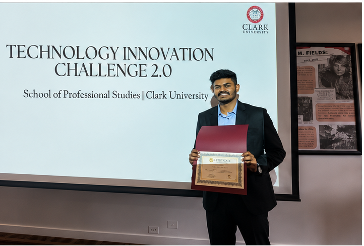
Siyona is a WhatsApp-based AI assistant that makes phone calls on users’ behalf. The idea originated from the frustration of spending long periods navigating automated customer service systems for simple requests.
The assistant can call businesses, make reservations, negotiate service requests, and communicate in multiple languages, including English, Spanish, and Hindi. The project demonstrated a practical and user-friendly application of conversational AI for everyday tasks.
The challenge provided an opportunity to refine the product pitch and demonstrate the platform in a live presentation setting.
Featured project: SAPIOR
Satish Puttaraju, MSIT ’26
Another project that drew strong interest from judges and attendees was SAPIOR (SAP Intelligent Operations & Resolution), developed by Satish Puttaraju.
SAPIOR is an AI-powered platform designed to improve how enterprise SAP support teams manage issues, transactions, and operational knowledge. Drawing from his professional experience in SAP support environments, Satish developed the platform to address the challenges of navigating complex enterprise systems and resolving recurring operational issues using AI.
The platform uses Retrieval-Augmented Generation (RAG) to analyze historical support tickets, SOPs, and knowledge base content to provide intelligent issue-resolution recommendations. In its prototype implementation, the system was also able to create transactions, identify issues, retrieve solutions, and execute actions after human approval.
Judges were particularly impressed by the project’s practical enterprise application of AI and its potential to modernize operational workflows.
Congratulations to all winners and participating teams!
Your creativity, persistence, and willingness to tackle real-world challenges reflect the very best of technological innovation and applied learning. We look forward to seeing how these projects continue to grow and create impact beyond the classroom.