Geography course offers career-ready insights and strategies for environmental research
Clark juniors, seniors, and graduate students seeking to pursue environmentally focused careers line up each year to take a popular geography class offered by the School of Climate, Environment, and Society, one of many that provide hands-on, job-ready experience and skills.
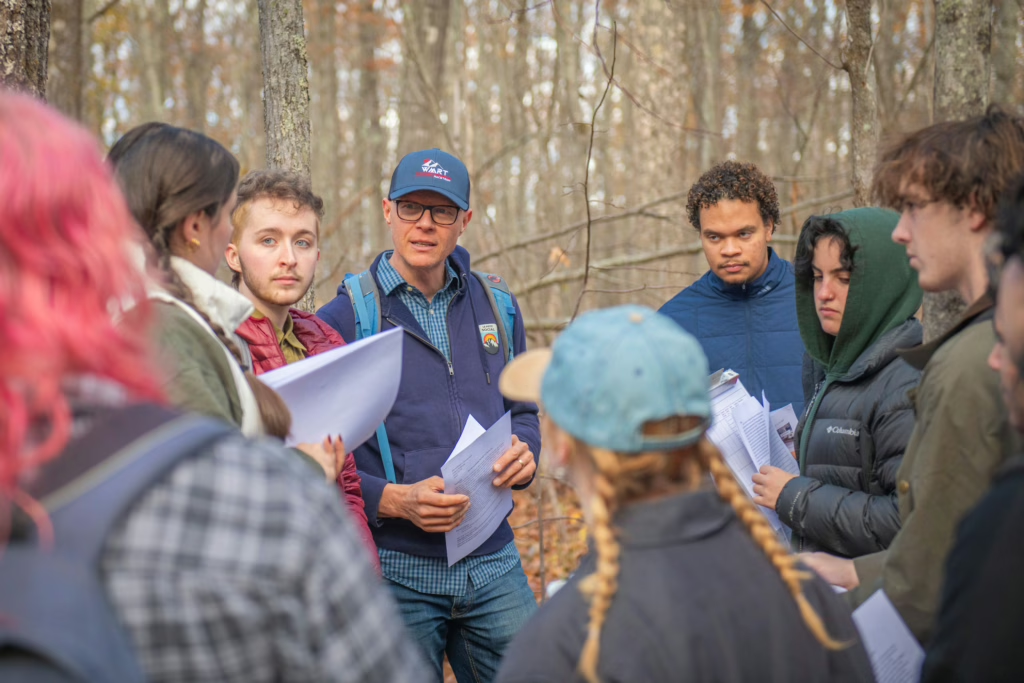
Taught by Geography Professor Dominik Kulakowski, the Field Methods for Environmental Science class meets once a week for five hours each fall, allowing students the time to visit forests and other ecosystems throughout Massachusetts and design, implement, and interpret field-based research projects.
The course usually fills up quickly during spring registration, often with students who have been waiting to take Field Methods since their earlier years at Clark, according to Kulakowski.
“My main problem isn’t recruiting students, it’s asking them to be patient and to wait another year,” he says.
Those who land a spot say the wait was worth it.
“Field Methods has been my favorite class at Clark so far,” says Meridian Stiller ’26, a double major in geography and international development and social change who will start the 4+1 M.S. in Environmental Science and Policy Program next fall.
“Getting to work in the field alongside Professor Kulakowski is such a unique and valuable learning experience,” Stiller says. “Professor Kulakowski is kind and attentive and makes you feel like a peer. He supports everyone’s ideas while finding ways to push you to your personal best.”
What’s more, “I have gained skills which have already increased my marketability in the job search,” Stiller says. “I am planning to go into natural resource management, so this course has really been the perfect way to build my career skillsets while furthering my academic knowledge. I am currently applying to summer jobs in forestry and have been able to discuss my experience in Field Methods in cover letters and interviews.”
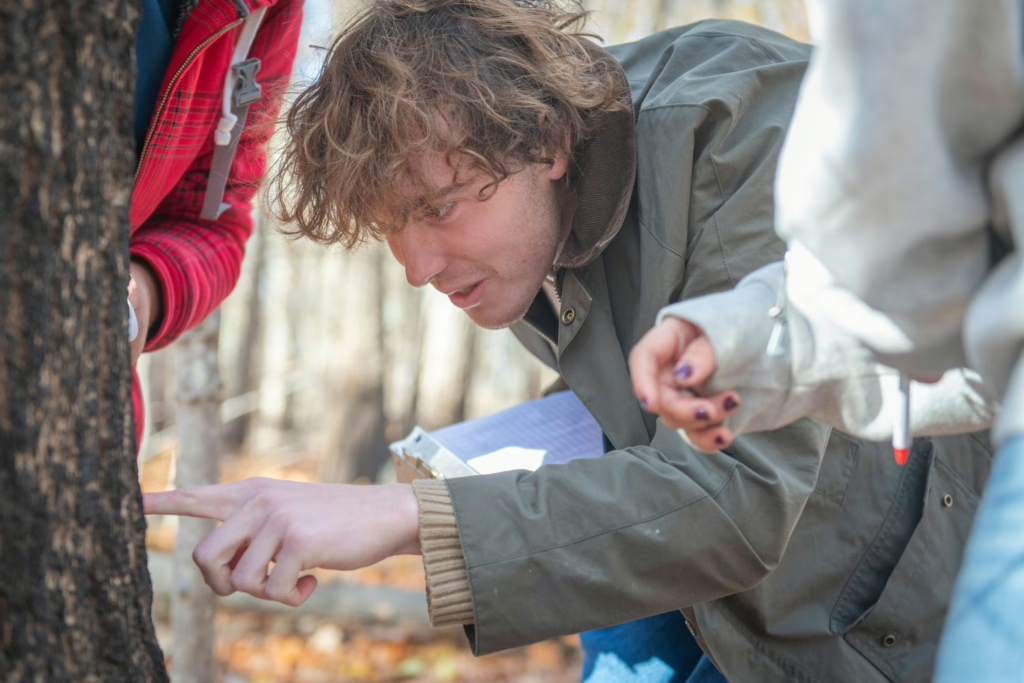
For Ruby Lichtman ’27, an environmental science major and biology minor, traveling to Massachusetts forests throughout the semester was “one of the biggest highlights of Field Methods for me — not just being there but actually learning from the forest and developing questions by observing patterns, asking why things look the way they do, and seeing familiar environments with a completely new level of curiosity,” she says. “I’ve always been an outdoorsy person, but this class helped me look at the landscape around me with a more investigative and informed perspective.”
By learning how to collect “consistent, reliable data,” she adds, she has gained skills that “will be valuable as I continue pursuing work related to climate change, sustainability, and ecological research.”
Marshall Fredericksen, M.S.-ES&P ’26, also found “the field-based learning opportunities and hands-on projects most rewarding. Being outdoors and actively engaging with the course material, rather than only hearing about it in a classroom, made the content far more meaningful and memorable. I felt noticeably more engaged and enthusiastic about the subject matter than I typically am in a traditional lecture setting.”
After graduation, Fredericksen plans “to work in the research and development sector, where I can integrate the hands-on skills that I developed in this course with local, place-based approaches.
“I am particularly interested in contributing to projects that draw on community knowledge, field-based experimentation, and site-specific solutions,” he adds. “By combining practical field experience with research-driven methods, I aim to help create more resilient and contextually grounded strategies to address real-world environmental challenges.”
Observing ‘what is in front of us,’ and not what we expect
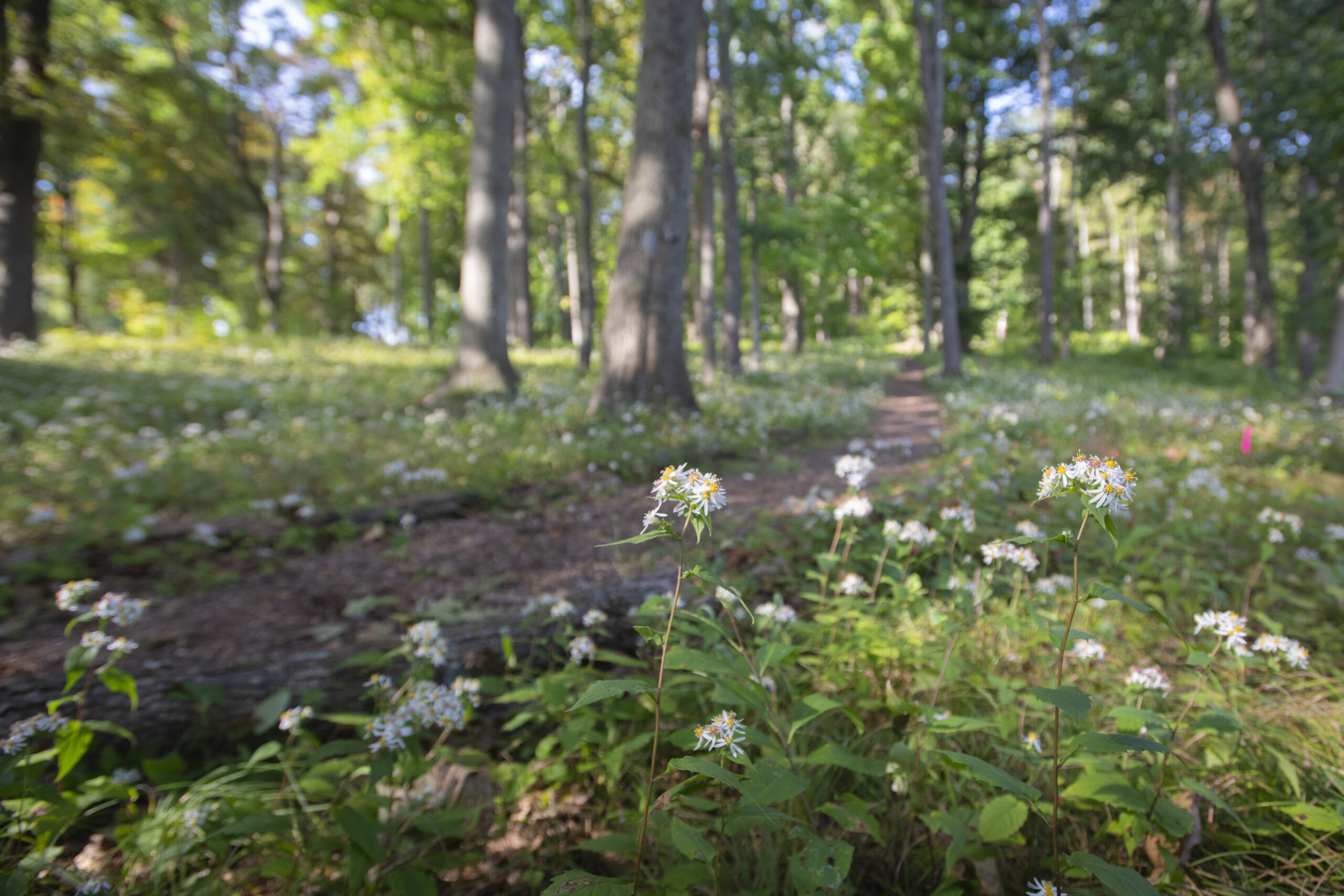
On Aug. 26, students jumped right in to learn, visiting Clark’s 26-acre Hadwen Arboretum. The goal of this first class, Kulakowski says, was “to practice making basic observations and to set aside, for just a moment, any preconceived ideas students had absorbed in their years of classroom learning and reading.”
“Those ideas permeate our perception, and when we go to a new ecosystem, we tend to look for ideas,” he explains.
Instead, Kulakowski, who has taught Field Methods since 2007, invites students to focus first on questions like “What do we see? What do we hear? What do we feel? Is it warm? Is it cold? Is the ground soft? Is the ground hard? What is the light doing? Where are the sounds coming from?
“All of us have the capacity and maybe the tendency to not see what is in front of us but instead to see what we expect to be there,” he adds. “Science, the scientific method, and research in general, are there to help us see the world as it is and to get past our stale opinions of it. That’s one of the skills we’re developing in this class.”
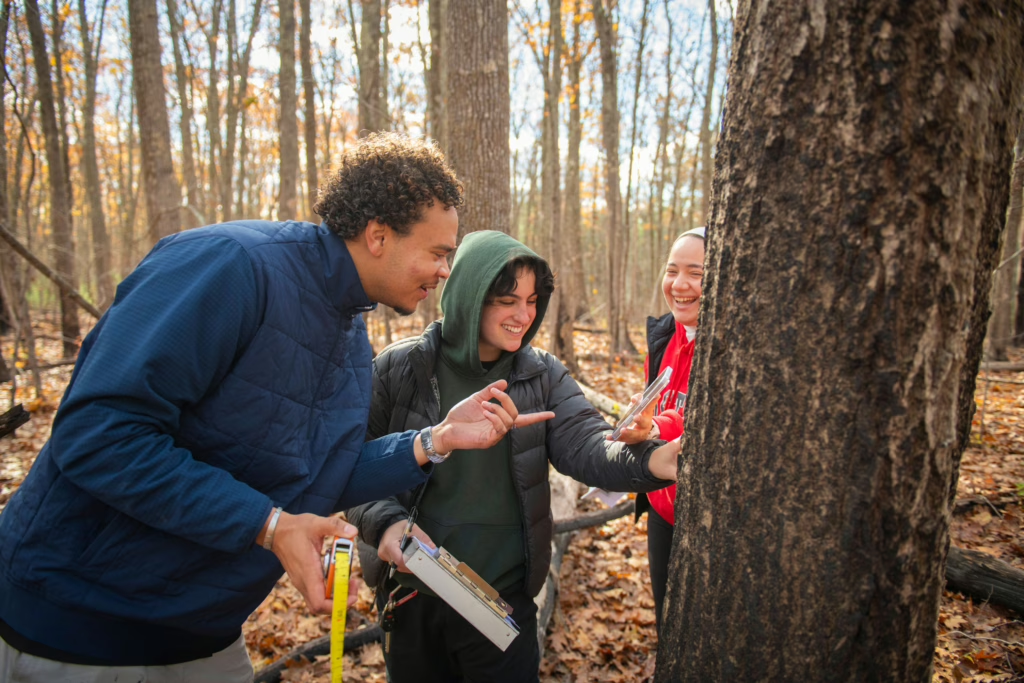
Over the next few weeks, the students continued their observations and began practicing collecting data at Wachusett Mountain, home to one of the largest old-growth forests in Massachusetts. They also explored tracts in the 4,000-acre Harvard Forest in Petersham, where they met with researchers including a Clark alum, Max Lutz ’23.
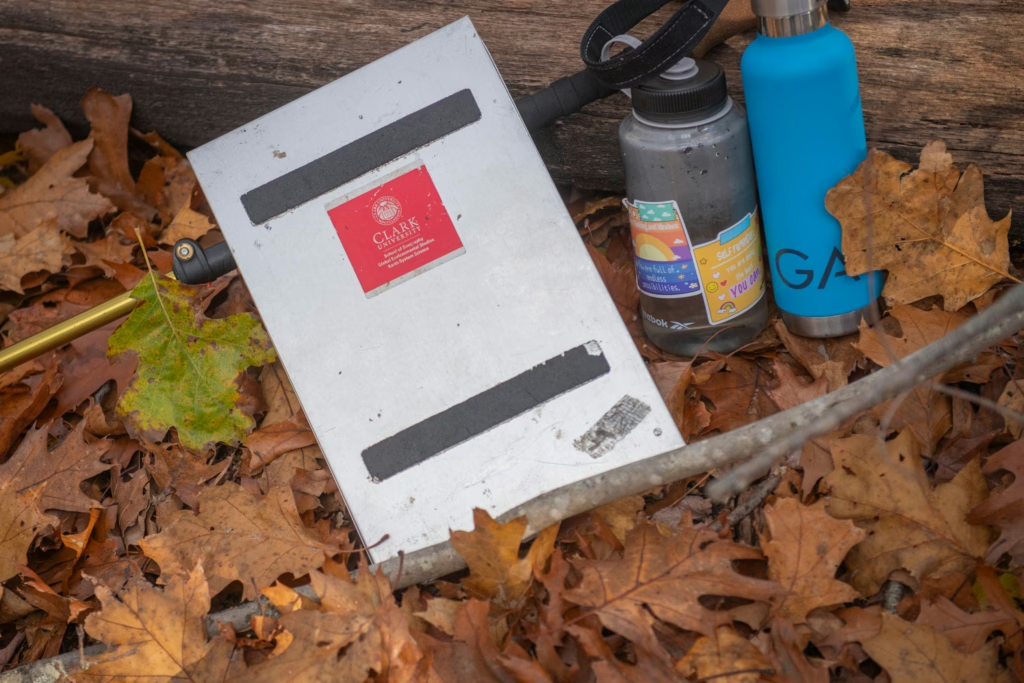
The students engaged in “field exercises” — or prompts for data collection — that Kulakowski has developed as illustrations of how to collect data to answer environmental questions. They became more skilled at developing their own field protocols, a set of directions for how to collect field data, he says. “When you’re designing a research project, you want to have a good plan in place that eliminates ambiguities and uncertainties.”
A well-designed field protocol can be “scaled up and used by teams working to collect data,” even if the lead researcher is not on site, Kulakowski says. Students learn, “How do you design a research project? How do you collect data? How do you make sure that your data collection is reliable? How do you interpret the data? What problems do you tend to encounter with data that you and your team have collected? How do you identify limitations in your own research and the research of others? How do you act on that knowledge to improve subsequent research?”
Experiencing ‘new ecosystems, new research, new designs, and new leadership styles’
With their newly acquired skills, the students transition to developing their own field research projects and protocols, according to Kulakowski.
“In the middle of the semester, I hand the baton to graduate students and those taking the course for graduate credit, and they lead the students in field-based research that they have designed,” he says. “ For the class as a whole, it’s an opportunity to be exposed to new ecosystems, new research, new designs, and new leadership styles.”
This year’s students chose to develop field protocols in a wide range of sites in Massachusetts.
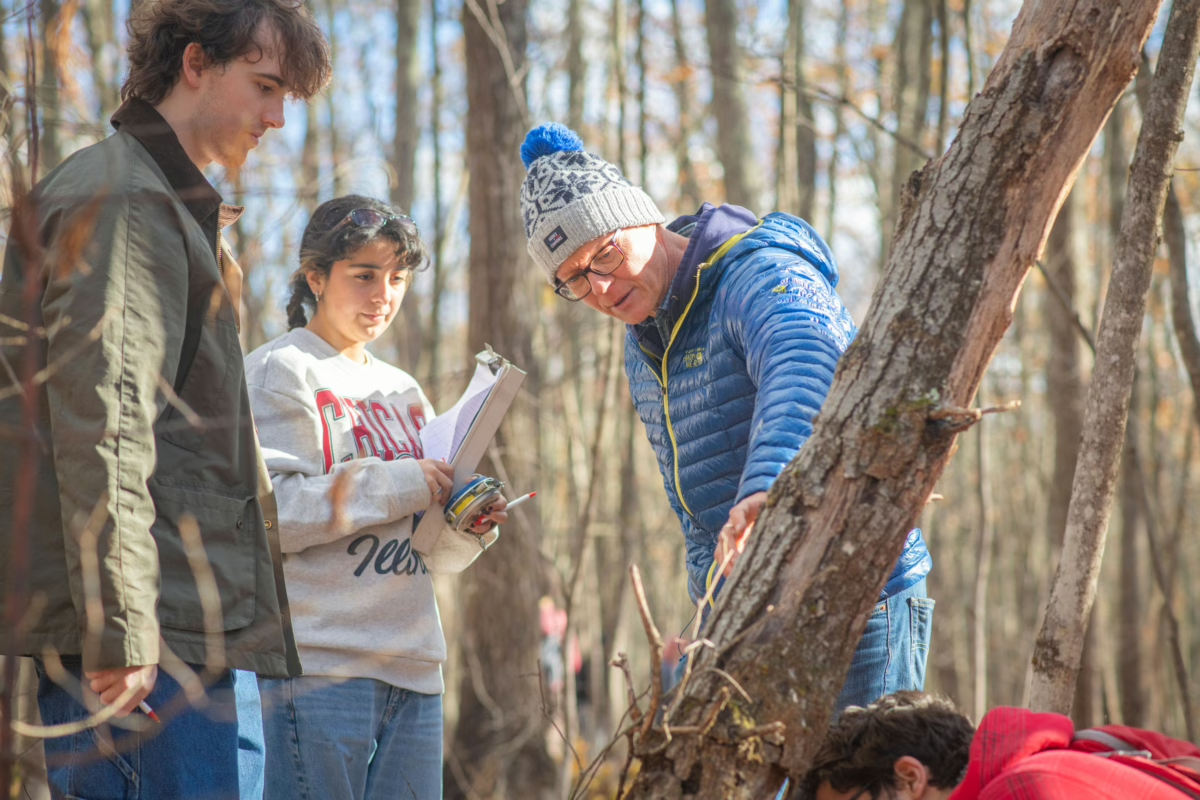
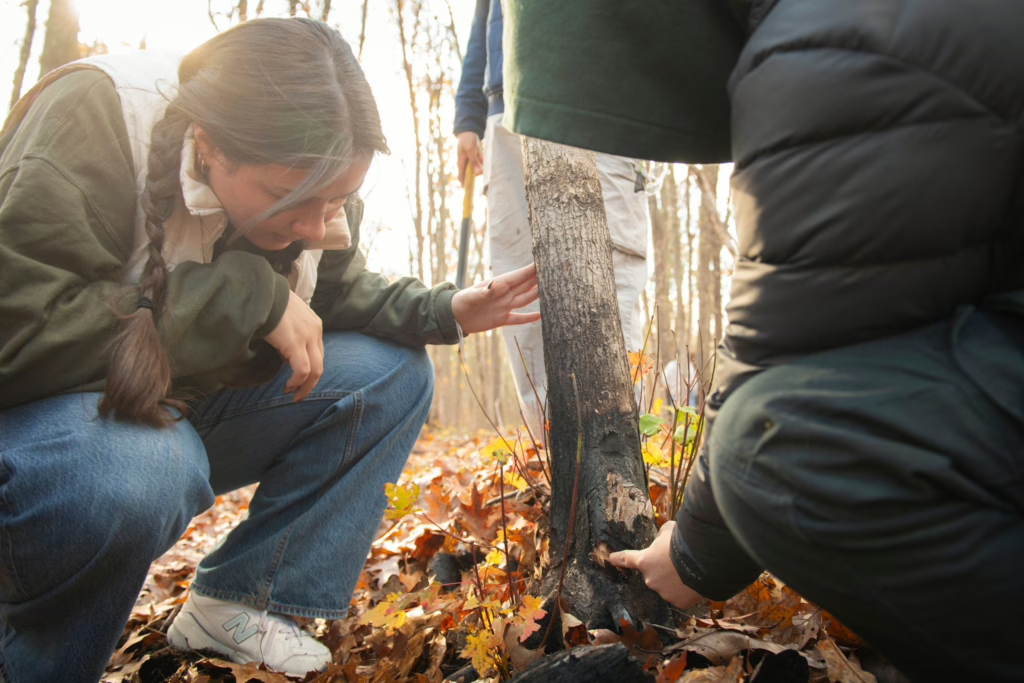
Stiller and Ellie Karabetsos ’25, M.S. ES&P 26, led a group investigating two wildfire sites in the Spencer State Forest and Mount Pisgah Conservation Area in Northborough.
They tested “the efficacy of a specific sampling method for determining cambium mortality in post-burn trees in the Northeast. Cambium is a layer of skin underneath a tree’s bark that transports water and nutrients up the tree trunk,” Stiller says. “Excessive cambium damage can prove fatal to trees.”
Cambium mortality in post-burn trees has mostly been studied in the U.S. West, which has experienced increased, significant wildfires. However, “further research into fire in the Northeast is critical,” he says. “My goal in testing the sampling method is to determine whether the easier, faster, and less invasive method is accurate enough to act as a surrogate for the more invasive one. This has not been adequately tested at all, let alone in the Northeast.”
Leading the final project offered Stiller “an interesting new perspective,” he says, “and I learned things that I may not have perceived otherwise, such as how detailed you have to be when planning the layout of data collection sheets to ensure that everyone collects the data in the exact same manner.”
‘Any sound environmental policy is rooted in the best available science’
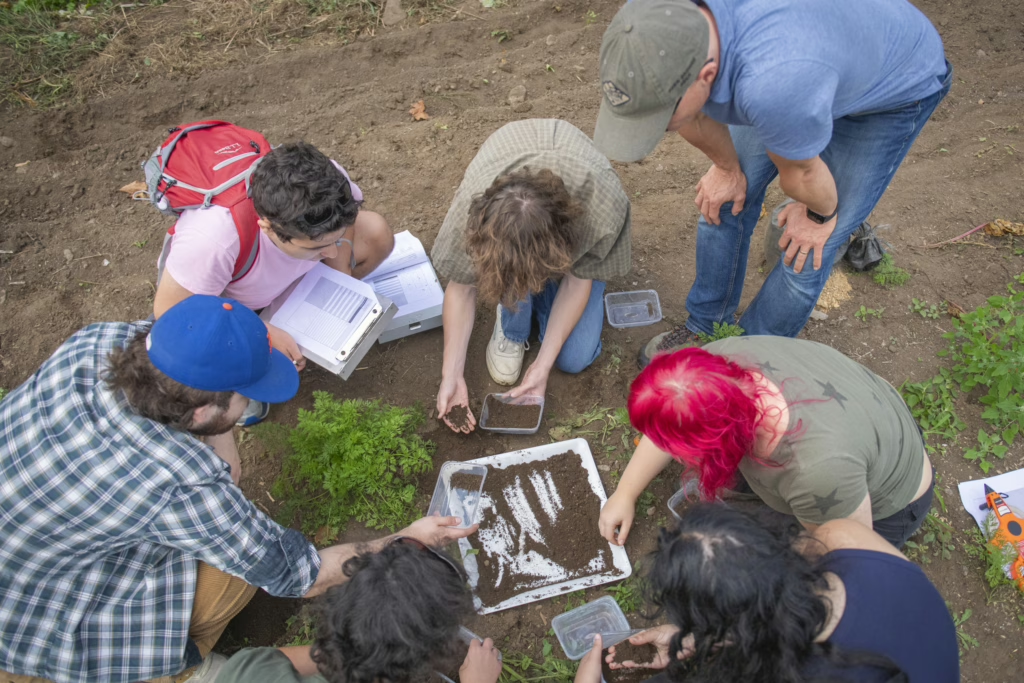
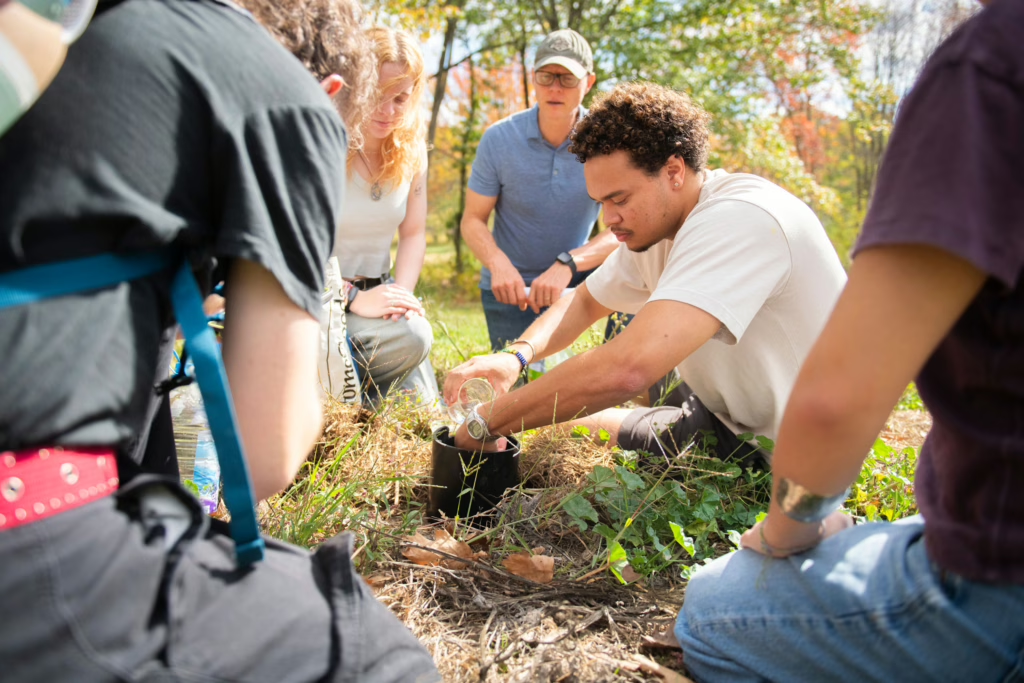
Fredericksen developed a final project focused on how easily water moves through saturated ground — a scientific measurement called “soil saturated hydraulic conductivity,” part of a fundamental principle in hydrogeology and fluid dynamics. He and his research partner, Lichtman, studied how this movement affects the earthworms, beetles, and other insects that break down organic matter, aerate the soil, and cycle nutrients.
They sought “to determine whether [soil] infiltration rates had a noticeable impact on macrofauna abundance and diversity,” he says, across three sites: urban parks in and around Worcester; the cultivated fields of Many Hands Farm in Barre; and “undisturbed, permanently vegetated sites” such as Clark’s Hadwen Arboretum.
“The most rewarding part of the class was working with my classmates and actively learning together rather than individually,” Fredericksen says. “Having classmates organize and guide data collection gives you an added appreciation of your peers and the work they are doing.”
For Lichtman, “the coolest part about this project is that we were given the ability to explore whatever piqued our interest. I personally am very interested in agriculture, land management, and food security, so exploring soil processes felt especially meaningful.”
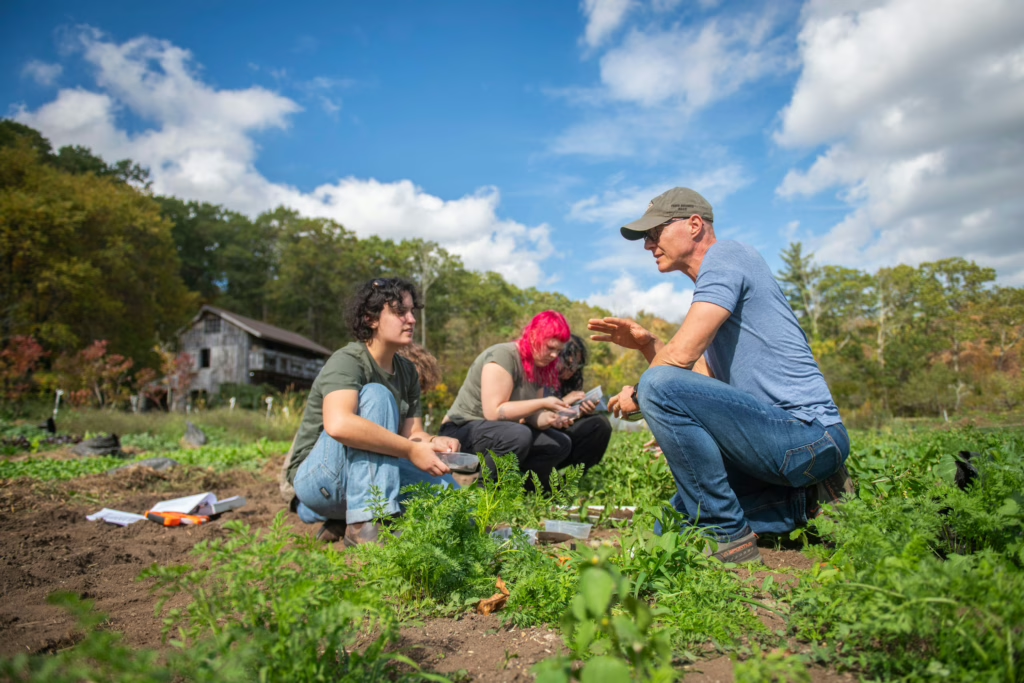
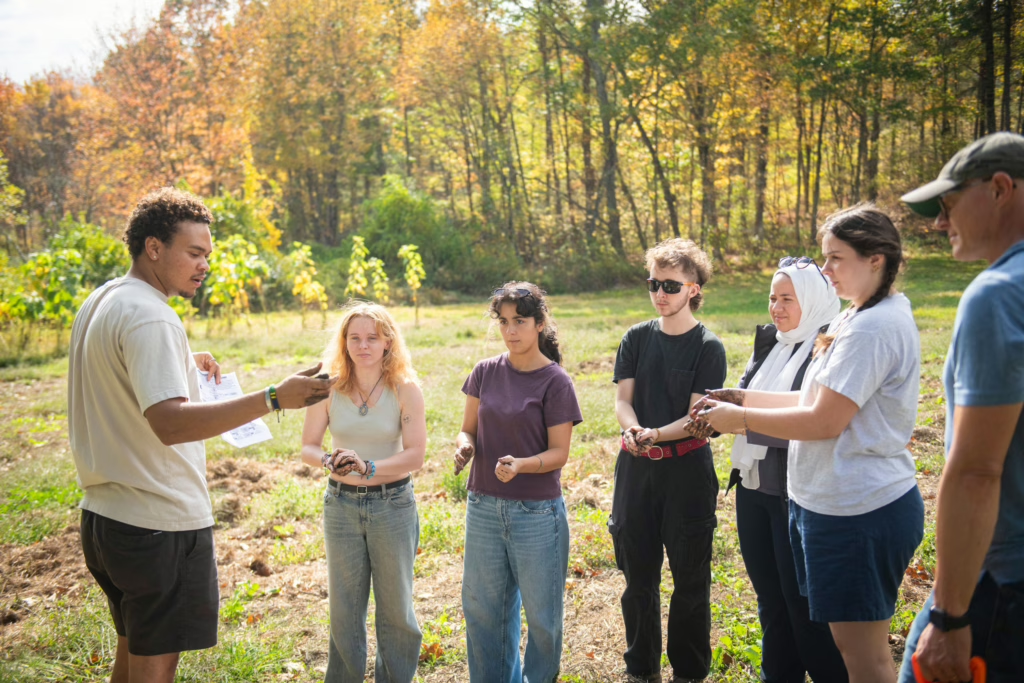
While many students in the class seek careers that would send them outdoors into forests and communities to gather data, those planning to investigate environmental issues from their computers with GIS and remote-sensing data, or developing policy, also can benefit from taking Field Methods, according to Kulakowski. For example, he combines site-based observations with GIS and remote sensing in his own research on wildfires and forest regeneration.
“Field-based observations are essential for knowing what we’re seeing in our remotely sensed imagery, whether it’s from satellites or drones,” he says. “It’s helpful to be on the ground and know how to make systematic observations.”
Students interested in public policy “recognize that any sound environmental policy is rooted in the best available science,” says Kulakowski, who has testified several times before Congress about climate-induced disturbances and related legislation. He also has advised governmental and non-governmental organizations domestically and abroad. “To understand and develop policy, we have to have some grasp of the underlying science as well.”
Kulakowski emphasizes to students that “every research project has limitations, and every research project can be improved in some way. We’ll never know everything; there will always be additional factors and new questions, and that’s why research keeps going.”
The students may have “invested a lot of blood, sweat, and tears, seeking to design the perfect research project that arrives at definitive conclusions,” Kulakowski insists. “But the goal is to learn and to become accustomed to honest retrospection and introspection, to become comfortable with the honest pursuit of knowledge. And that isn’t always triumphant. It can be humbling.”
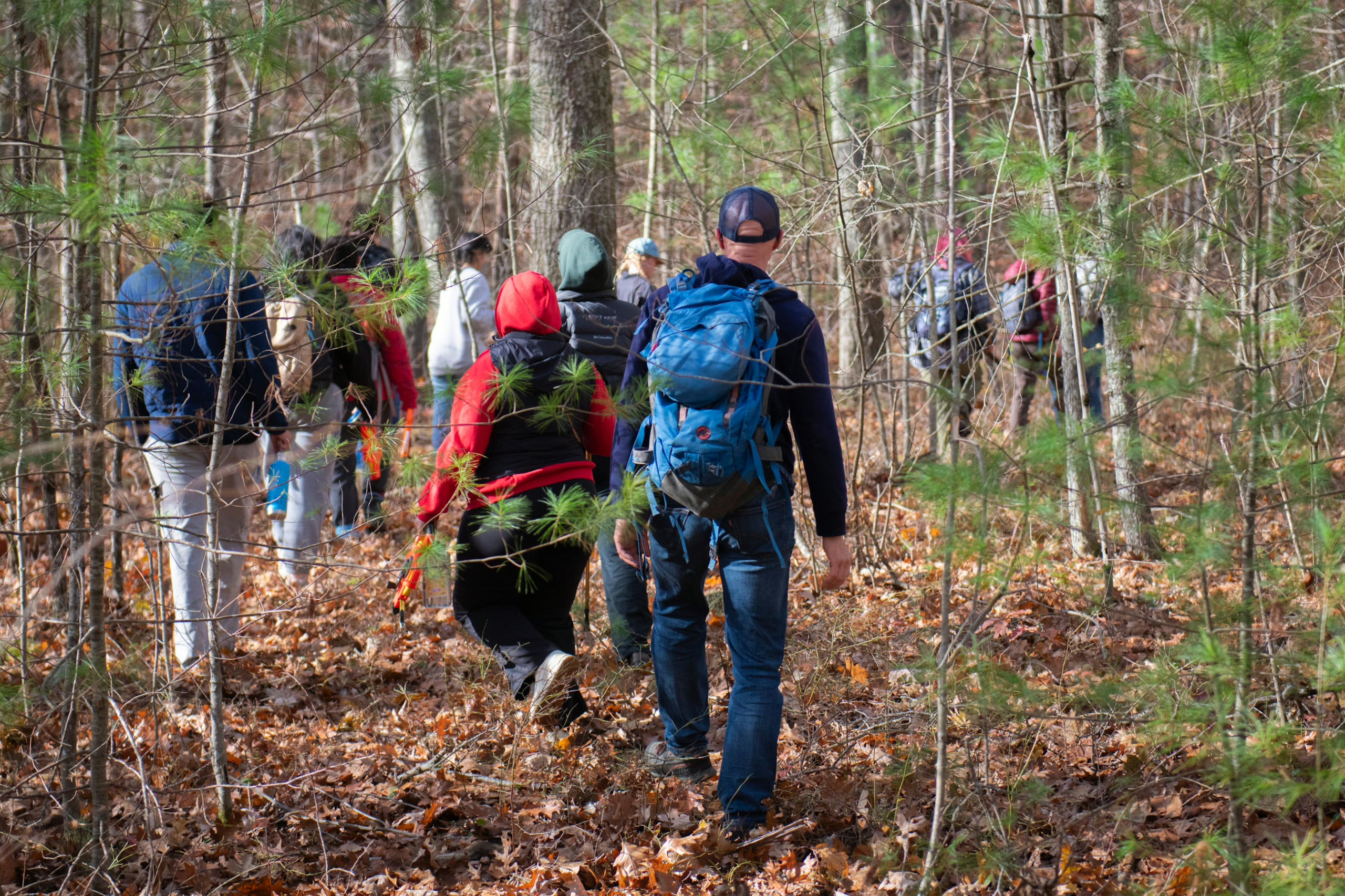
Photos by Steven King, University Photographer taken at the Spencer State Forest and Many Hands Farm in Barre, Mass.