Clark juniors hang dual exhibit in Traina highlighting scenes of summer and protest
When Dante Diez ’27 and Kaylie Allen ’27 noticed bare walls in the Traina Center for the Arts lobby gallery in early October, they saw an opportunity to hang an impromptu installation under the guidance of Visual and Performing Arts Professor Stephen DiRado. Over the course of a week, the pair developed the concept for a dual exhibit on display until Oct. 27.
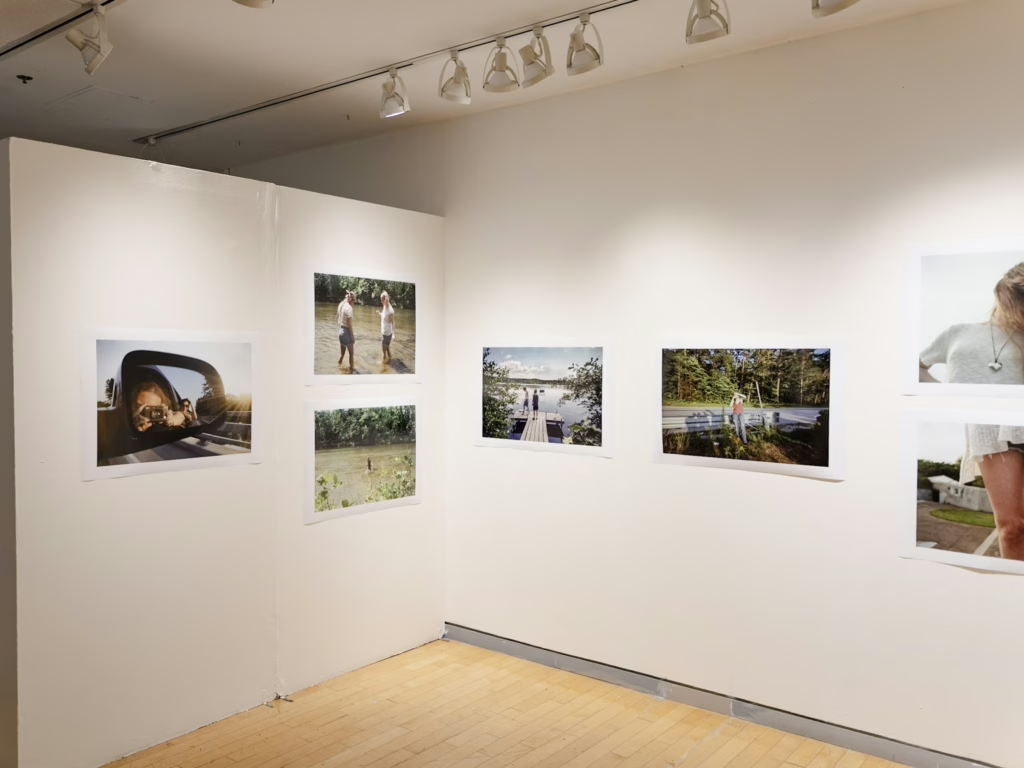
Allen’s exhibit, “Blurs of Summer,” greets visitors with a warm palette of color photographs that line the lobby. Shot on what Allen describes as “an old beat-up analog camera,” the work captures spontaneous summer moments through film photography. The series functions as both a visual record and a personal archive of the season. “Every year summer quickly turns into a blur of memories, but I was determined to keep a diary through film,” Allen, a studio art major, explains in a written statement for the exhibit. “The physical medium gives me something tactile that allows me to preserve the summer forever, while also perfectly memorializing the season’s rich colors through vibrant film stocks.” Her installation serves as a tangible reflection on memory and the persistence of lived experience through analog process.

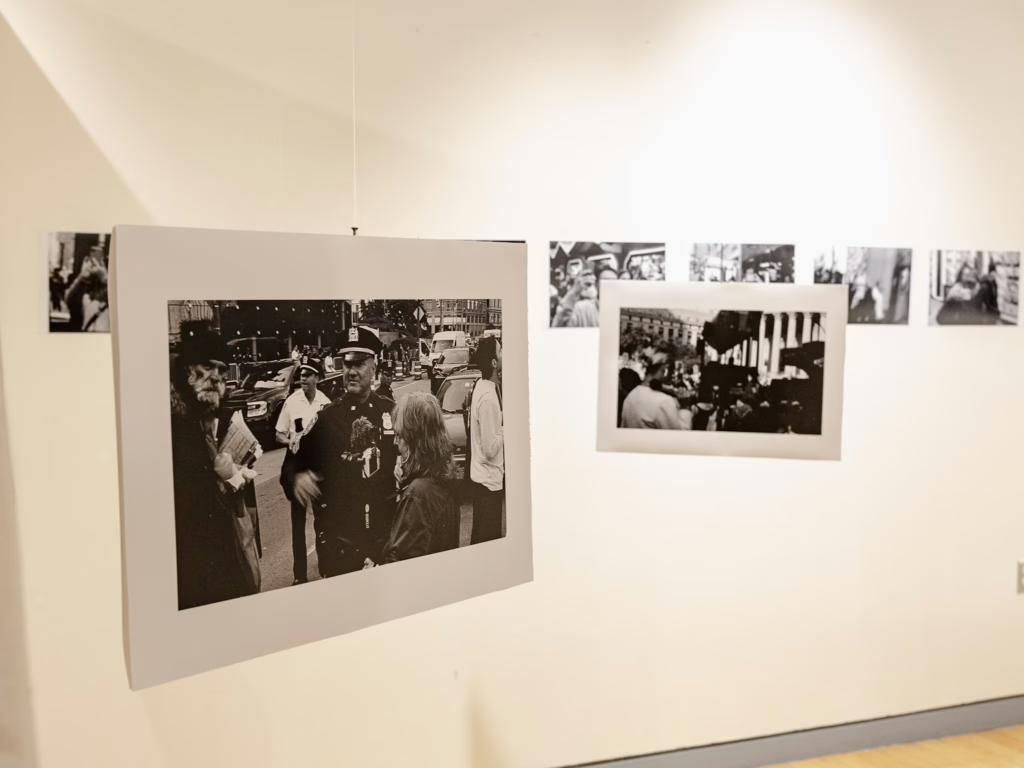
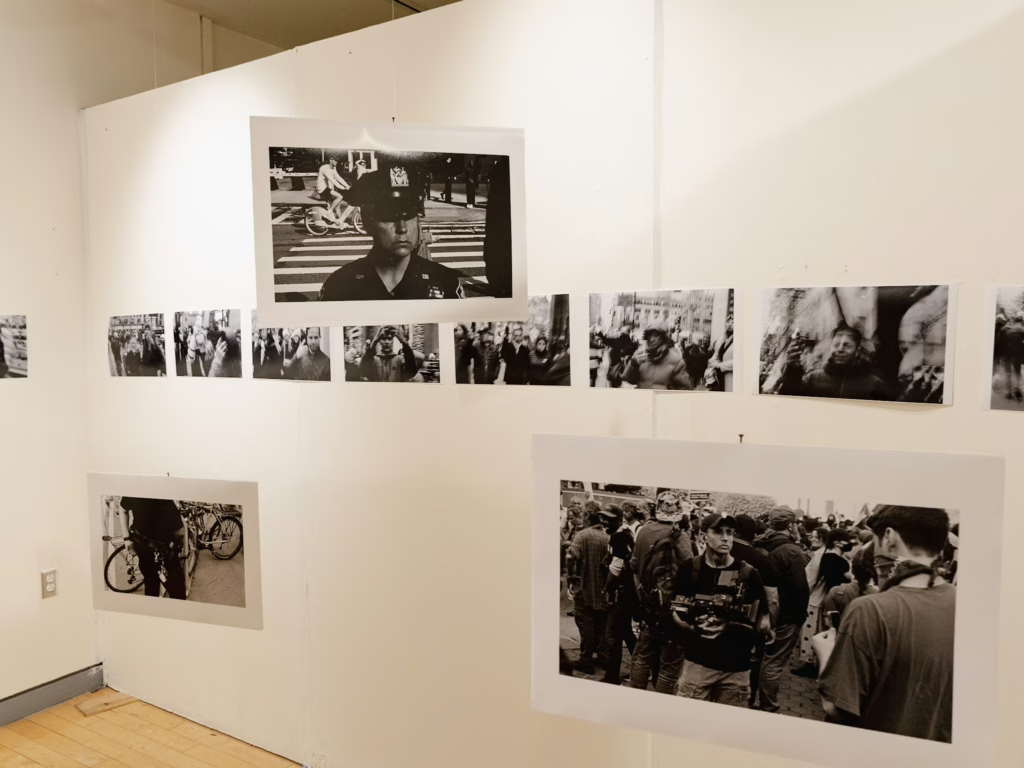
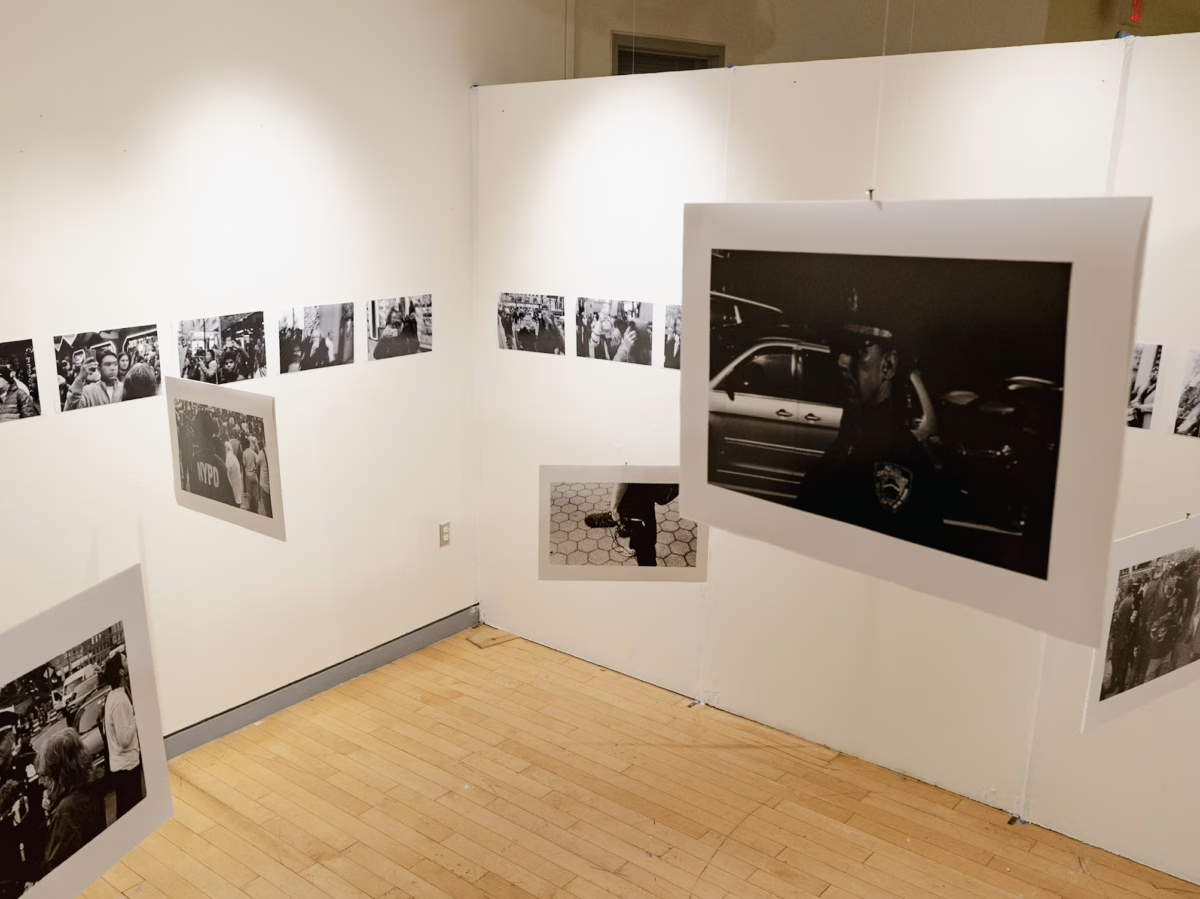
Diez’s exhibit, “Protester,” occupies the enclosed gallery beyond Allen’s display. Captured on 35 mm black and white film, the installation documents scenes from two protests in New York City. The space is arranged to draw viewers inward, where they will find themselves surrounded by faces of everyday organizers and participants. At the center, rotating displays present multiple perspectives of individuals within the crowd, emphasizing both the collective energy and personal vulnerability of public demonstration.
The screen studies and studio art major’s work examines how distinct forms of surveillance shape public life. The installation is structured around two modes of detection: “present surveillance,” represented through imagery of police and news cameras, and “omnipresent surveillance,” evoked through bystanders filming on their phones. While the former reflects known and established systems of control, the latter highlights a newer, decentralized gaze that now defines public gatherings. Through this contrast, Diez explores how the experience of protest has changed, how the presence of countless recording devices can transform collective expression into something cautious and self-aware. His installation positions the viewer both as observer and participant, prompting onlookers to reflect on the shifting boundaries between documentation, visibility, and privacy in contemporary civic spaces.
The exhibits form a dialogue between personal and public documentation, and the shared showcase reflects how image-making shapes what is remembered and perceived.