



Saving Paul Revere’s stationery supplier
If you ask someone to name an American paper company, the likely response would probably be Dunder Mifflin, the fictional home of the popular sitcom The Office. Truthfully, who even knows the name of a real-life paper company?
Todd Kletter does.

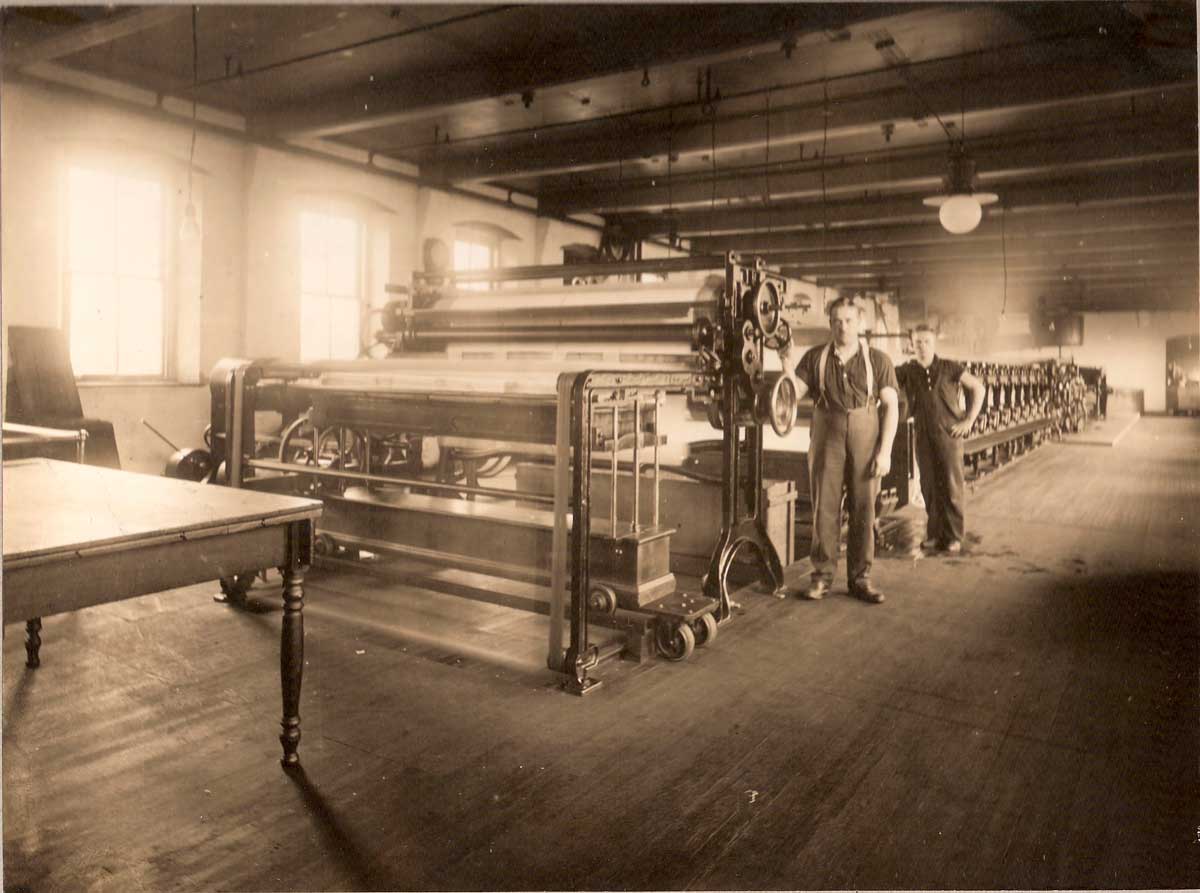
The Clark alum can tell you all about Crane Stationery. About how the company, founded in 1770, is older than the United States itself. About Crane’s cotton-fiber sheets, which have carried presidential signatures, royal invitations, and U.S. currency. About Paul Revere having banknotes — known as “cod notes” — printed on Crane stationery to help finance the American Revolution.
For most of its two centuries-plus history, Crane Stationery boasted an impressive legacy and peerless craftsmanship. What it didn’t have was a future.
On February 13, 2024, the Cohoes, New York, company was shuttered by its corporate owner, Fedrigoni Group, an Italian paper conglomerate that had purchased Crane’s parent company, Mohawk Fine Papers, and determined that Crane did not align with its business model. The closure meant the loss of more than 80 jobs, including those of some people whom Kletter had come to know through his family’s business, a national distributor of photographic and printing supplies. Coincidentally, Kletter also had worked for 18 months as a consultant with Crane to help them repair their stagnant operations, and he was still friendly with a number of the employees.
As the managing partner of WP Strategic Holdings, a private consulting and investment firm specializing in small and middle-market companies, Kletter found himself in a position to not only reopen Crane’s doors, but to breathe new life into a legacy brand that had begun its life in the Berkshires before being moved outside of Albany. At the conclusion of three high-speed, high-wire weeks of negotiations with Fedrigoni, WP Strategic Holdings acquired Crane Stationery and initiated an immediate relaunch.
“The day we closed the deal, we restarted,” Kletter says. “No ceremony, no speeches. We turned the lights back on.”
On March 18, 2024, Kletter stood at the door of the Crane Stationery plant and welcomed back press operators, engineers, electricians, and production workers who were eager to return to their workstations, which had lain idle for the past month. Ninety-five percent of Crane’s original workforce was rehired; systems were revamped and stricter financial controls implemented, while the company’s signature craftmanship—such as engraving, letterpress, and hand-inspection processes—remained untouched.
Crucially, the company rebuilt trust with clients. Operations resumed, customers came back, orders were met. By April, Kletter notes, Crane was cash flow-positive, and by late spring it had regained its full pre-closure volume.
Kletter’s entrepreneurial spirit and appreciation for the past are both grounded at Clark, where he majored in history (his deepest passion was American history). He found an influential mentor in Professor Janette Greenwood, started a T-shirt business, and established a network of friendships with Clarkies from the Class of 1996 that endures today.
“Clark was a real pivotal moment in my life. It broadened my horizons,” said Kletter, who went on to earn his MBA at Syracuse University.
After his family’s business was sold in 2008, Kletter became CEO of an organic food company before leaving to enter the world of private equity. Today, in addition to his work with WP Strategic Holdings, he is also the chief executive of an artesian water company.
He’s done plenty of deals, but the Crane Stationery saga was personal for him, given his prior experience with the company. When Fedrigoni shut down Crane, employees he’d known from his consulting days began calling him to ask whether he had any information about their prospects. When he decided to pursue the purchase, he devoted 20-hour days to reaching an agreement. “We had a melting ice cube,” he recalls. “If it took too long, we would lose employees and have a harder time getting customers back—the business would be unsalvageable. It’s much easier to shut down a company than to start one back up.”
After reopening, Kletter stayed on for a year as chief strategic officer at Crane. In July of 2025, WP Strategic Holdings sold Crane Stationery to a North Carolina firm that he says was well-positioned “to bring the company to the next level.” From a business standpoint, the move was a smart one for all involved and has given Crane “the right home,” he insists.
But for Kletter, who keeps a Revere-era cod note on his desk as a reminder of the history he helped preserve, the experience means more than dollars and cents.
“Crane holds a special place in my heart,” Kletter says. “I’ve never seen a group of employees rise to an occasion like these employees did. And to be able to say we saved the ninth-oldest operating company in America is pretty wild.”
— Jim Keogh