

Making gAIns
Clark does the hard—and human—work of determining how AI fits into its academic universe
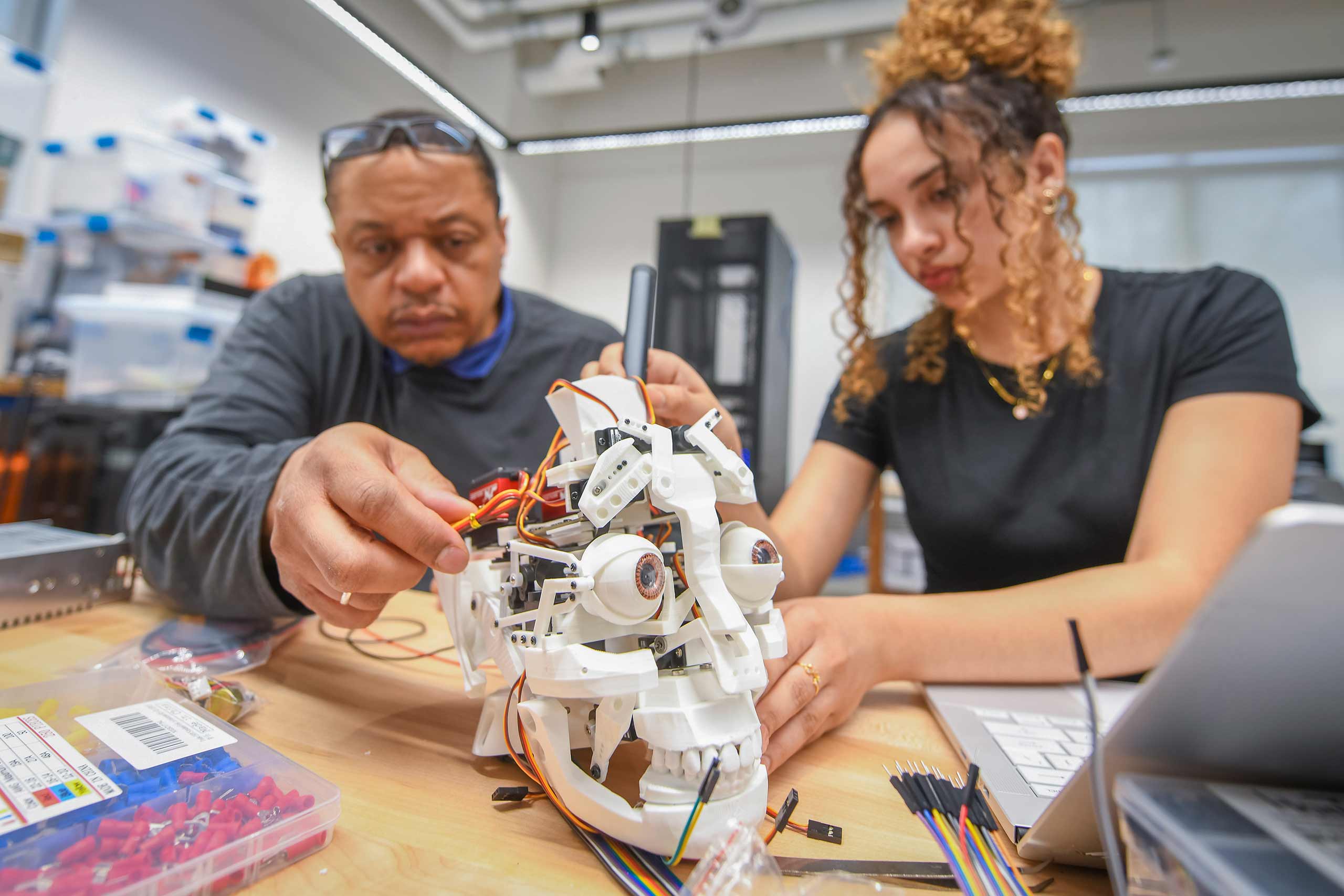
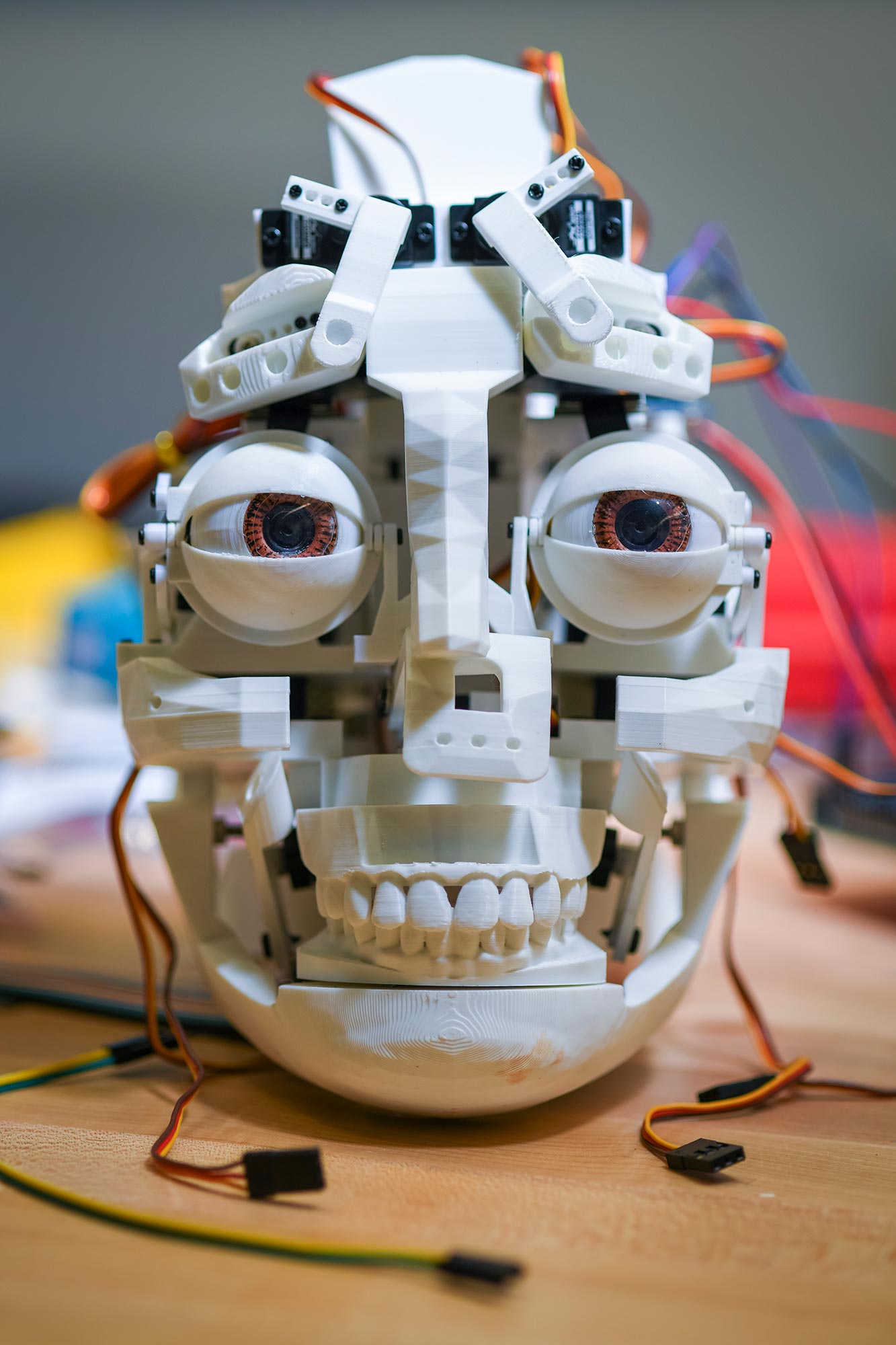
The robot gazes straight ahead from the corner of Clark’s Robotics Lab, home to the Laboratory for Intelligent Perceptual Systems, where it sits on a worktable surrounded by wires, tools, and parts. This isn’t Star Wars’ C-3PO—but it represents a step toward machines capable of culturally competent conversation with a human counterpart.
Computer Science Professor Gary Holness and Sarina Talerico ’27, a computer science and data science major, have been building an expressive animatronic robot head from scratch with an open-source reference design and a 3D printer in Clark’s Luxe Lab. Some parts took more than 40 hours to print, and substantial engineering is involved—the head has 21 motors, miniature cameras, and a variety of sensors that allow it to observe and make gestures.
Artificial intelligence models will enable the robot to assess how a person communicates and respond in ways that are socially and culturally appropriate. This work falls within Embodied AI, a field focused on designing algorithms for physical systems that can perceive, learn from, and interact directly with the world around them.
Holness and Talerico want to capture, represent, develop computational models of, and track multi-sensor “temporal sequences” indicating the ways people express emotions—perhaps through a smile or the raising of an eyebrow—so the robot can mirror those gestures, and essentially learn how emotional expression unfolds over time.
“AI involves perception, deliberation, and action,” Holness says. “Understanding what action or gesture is appropriate requires modeling how patterns unfold across vision, sound, and movement—and responding in real time.”
Researchers, faculty, and students across Clark, in every department and major, are also responding in real time to the questions accompanying AI’s growing influence and impact.
Is AI a valuable tool for expanding research capabilities? A quick-and-easy crutch for completing assignments? A collaborator that boosts efficiency? A drain on Earth’s resources?
Opinions are complex and varied, and conflicted. But Clarkies are harnessing their curiosity and passion to explore how AI will inform the future of academia and are increasingly eager to play a role in shaping it.
Advantages and risks
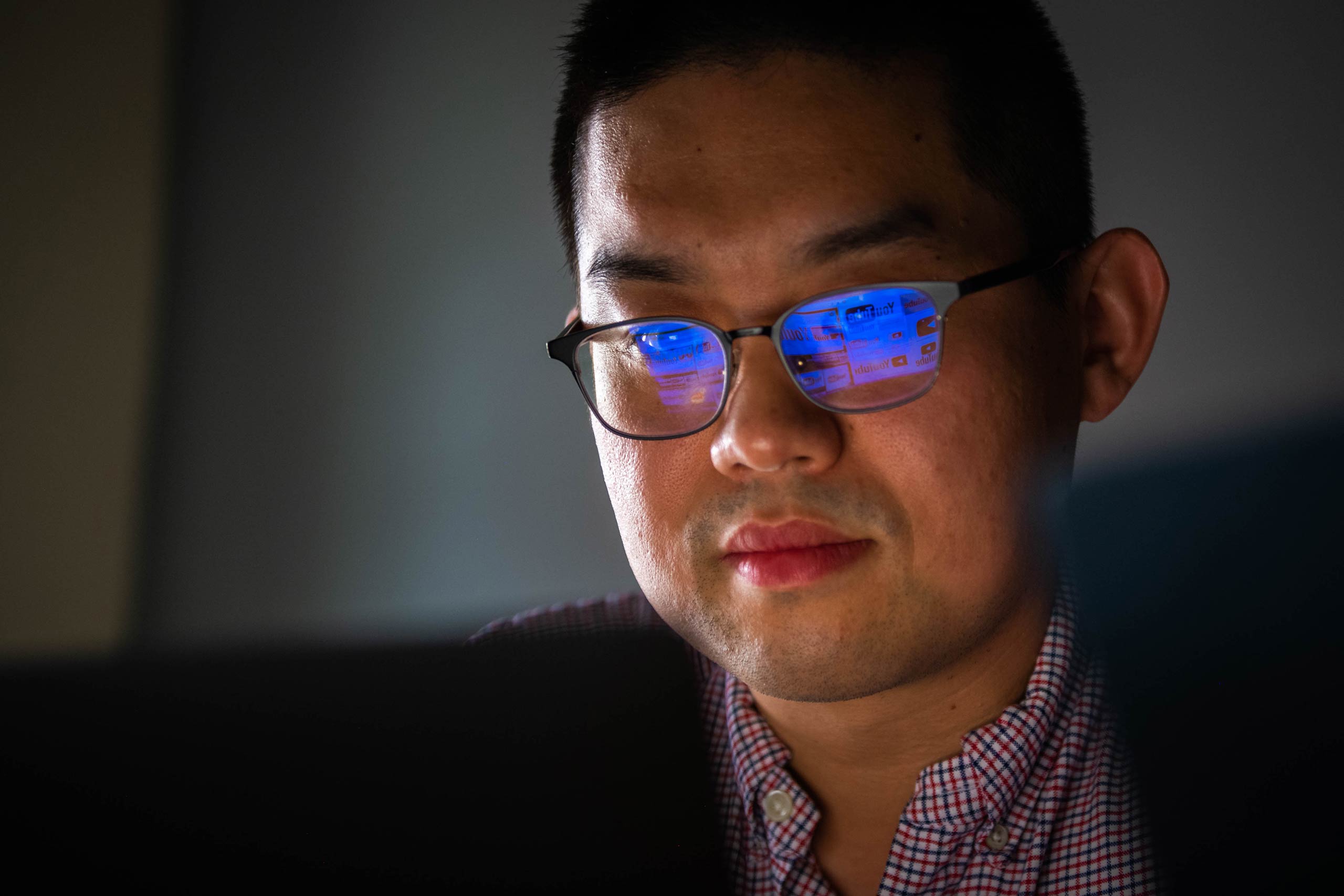
YouTube is frequently on the screen in front of Computer Science Professor Shuo Niu, who researches trends and developments in the online creator community. Many people see AI as a productivity tool, and creators may use it to edit grammar for video scripts or as a personal graphic designer. “There are concerns about the reliance on AI-produced content harming human creativity,” Niu says. “I think it is my job to look into trends with this new phenomenon and give guidance to preserve its advantage and mitigate those risks.”
With Jimin Lee, a doctoral student in psychology, and computer science major Torin Anderson ’27, Niu is developing a tool to support an advanced generative AI prompting technique that enables instructors and students to use GenAI to create new short-form educational videos.
This project is one of eight funded through the inaugural AI Innovation Grants, supported by the Clark AI Innovation Fund that was established with a $50,000 gift from the Yee Family, including Trustee Brian Yee ’93.
Lee’s role is to bridge the technical information with educational psychology and learning science frameworks. She focuses on ensuring the “meta-prompting” tool supports meaningful learning rather than solely content generation. The team is still in the development phase, and so far, Lee has been surprised that the design process itself influences learning.
“There’s a lot of potential for AI to make everyday tasks easier, to help people work through ideas and lower barriers to learning. At the same time, AI comes with trade-offs. If we lean on it too heavily, it can quietly take over skills we’re supposed to be practicing and building,” says Lee. “This project is important because it goes beyond using AI as a production shortcut and instead focuses on how people learn with it.”
Non-academic units at Clark, most notably the University’s Advancement team, are also heavily invested in deploying AI as a tool for refining and amplifying its functions.
Bias in, bias out
Onyx Rothman ’26, a political science major, knows that what you feed into AI influences what the model serves back. His AI Innovation Grant project addresses concerns about bias in AI—tools like ChatGPT are trained on data that is overwhelmingly white and Western—by developing a transcription model trained specifically on Worcester’s linguistic diversity, particularly the city’s large Ghanian population, to demonstrate that culture and diversity can be preserved in emerging technology.
“I think pessimism is certainly warranted in the AI space,” says Rothman, “but what I’m trying to communicate is that AI doesn’t have to be a terrible technology. I think a lot of people at Clark are very pessimistic about AI, but that’s precisely why you might want to be more engaged with it. While I am very worried about existential risks from AI that could disempower humanity, I think that gives me more reason to ensure that there are people with good intentions developing this technology.”
Professor Eduard Arriaga-Arango, chair of the Language, Literature & Culture Department, also believes technology can be more inclusively designed, socially responsible, and connected to community. He’s working on two related projects: one that is mapping the way language is used by AI corporations to create an anthropomorphic image of technology, and another that involves training a language-learner chatbot that can illustrate the benefits and drawbacks of using AI. When teaching the University’s first Digital Humanities course last semester, Arriaga asked students to question technology from a humanistic perspective.
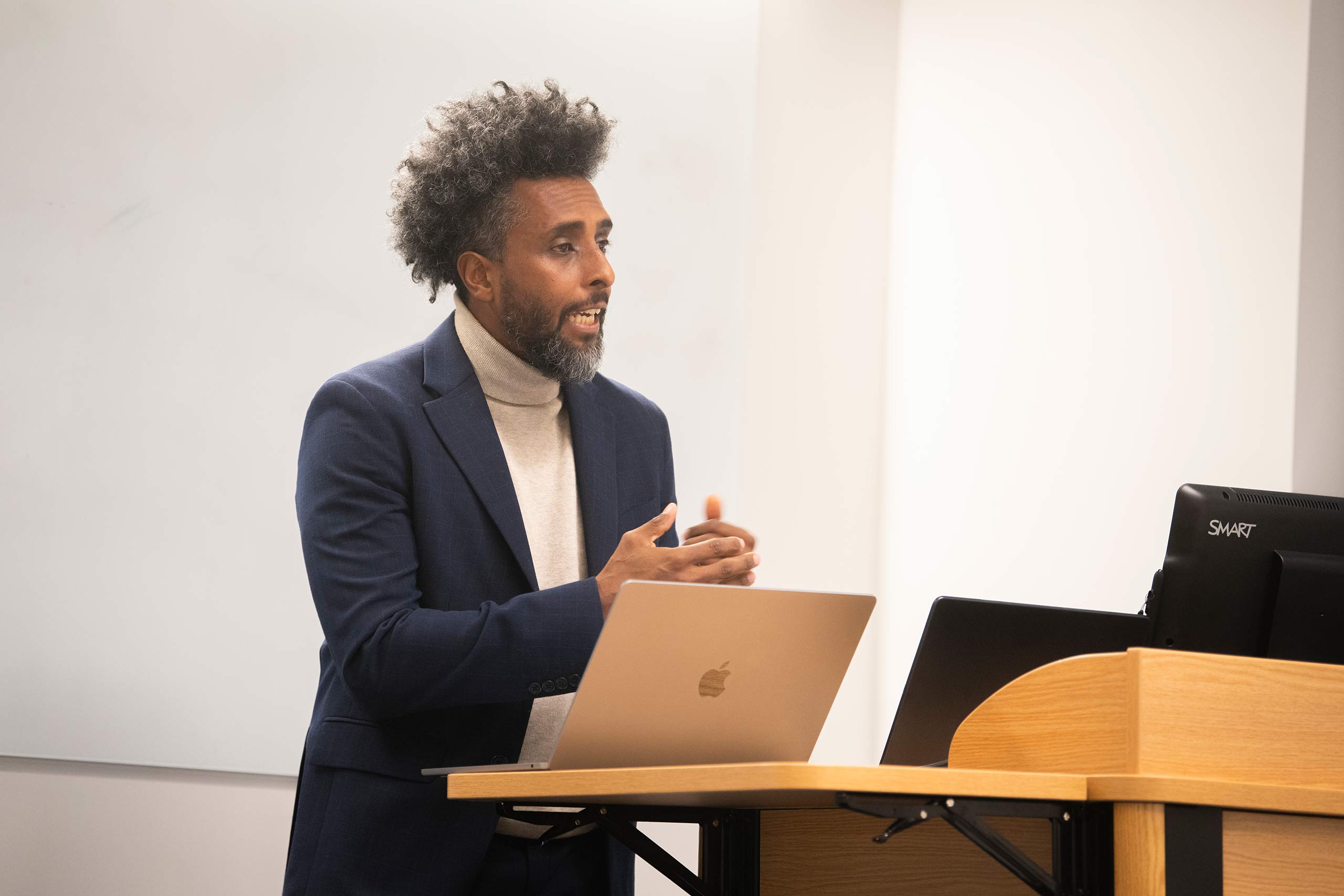
“We can think with the model as opposed to having the model think for us,” he says. “People are hesitant about AI right now, particularly because of the political connection between AI companies and what is happening in our country. They are realizing that we’re investing a lot of money in AI and it is also affecting the environment through the creation and use of data centers. That seems to be the new gold rush. I think we need to be on a middle ground in which we look at the impacts and try to control the way we use that technology.”
AI for good
Clark researchers are developing ways in which AI can assist humanity. Abraham Rahman ’27, a psychology and management major, has been exploring areas where AI can enhance accessibility, inspired in part by his experience as someone with ADHD. Rahman is working with psychology major Preeti Bachu ’26 and Michael Miller, professor of psychology, on another of the Clark AI Innovation Grant projects. Their project focuses on using AI to summarize scientific articles, which can be difficult to digest for people who are neurodivergent.
“The work isn’t intended to replace people reading scientific articles. It’s meant to be a step to help people like me get a good idea of the article, so that when I read the full paper, I have a deeper understanding,” says Rahman. “I’m using AI to make people’s lives easier in ways that were not possible before. I think it’s a way to reduce stress and improve holistic wellbeing.”
Interactive media and game design major Lauren Gallagher ’26, MFA ’27, is using her Clark AI Innovation grant to explore whether non-player characters (NPCs) can intelligently interact with players in a video game. She was inspired after attending the PAX East gaming convention and wanted to see what boundaries she could push in this new territory of technology. Gallagher developed a persona for her NPC — Jenny Applebaum, a local apple seller — and connected the character to a local language model to create a playable demo. The goal was for the player to convince Jenny to sell them an apple.
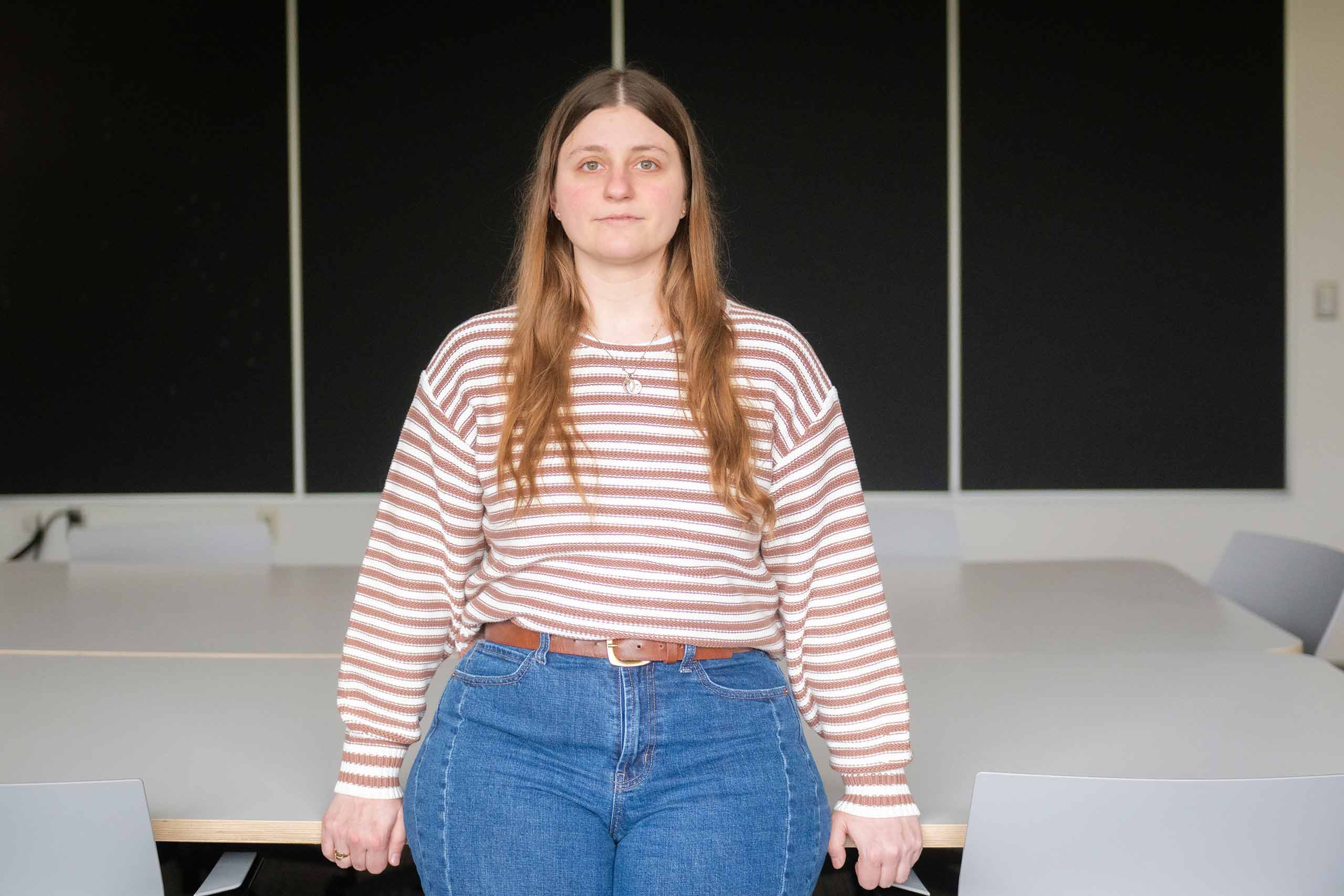
“Only a few game studios are doing this, so I was hacking and slashing my way through, trying to get it to work. When you’re experimenting, it feels like the wild West,” says Gallagher. “When players were interacting with Jenny Applebaum, they were being really creative. There was a lot of delight and joy. Now I want to refine it and add more NPCs to see if they can interact with each other.”
In the classroom
About 25 faculty members are seated at tables in the Grace Conference Room for a workshop titled “Developing Guidelines for AI Use in Your Classrooms,” one of four AI-related seminars that are being delivered to faculty in the spring semester. To launch the discussion, moderator Mark Jacobs ’89, MFA ’25, asks the attendees to gauge their attitude toward the use of AI in their classes using one of three colors: Green means AI would be fully encouraged “with reflection and attribution”; Yellow means AI use would be limited with clear boundaries; and red means AI is not allowed.
Most give a score of yellow, with two participants splitting the difference by offering “orange.” One professor says he’s “green” when it comes to his students using AI as a research and organizational tool, and “red” for writing assignments. For the rest of the session, there is curiosity, skepticism, and some ambivalence expressed, but no condemnation. AI is here, they know. It’s just a matter of what form it will take in their classrooms and labs.
“It’s important to break down the potential uses for AI rather than make generalizations that AI is all good or all bad,” says Jacobs. “Instead, let’s look at particular uses and evaluate each one independently.”
Jacobs, who directs the Socr-AI-tic Lab for Collaborative Pedagogy, says he is focused on promoting the use of emergent technologies that will have the most impact in the classroom. The series of workshops is meant to encourage faculty to consider how AI will be incorporated into their coursework.
“We need to leave the professors at the front and center of their teaching but give them tools that allow them to work well with AI,” he says.
That will take some creativity, and perhaps a shift in thinking. “We tend to be more focused on cheating than positive interactions with AI,” Jacobs says. “AI has value and needs guardrails as well. The more that we redesign assignments to optimize them for the strengths of AI interaction, and redesign evaluation so that it’s difficult to use AI inappropriately, the more effective we’ll be as educators.”
AI is not new to the classroom. The School of Professional Studies, for instance, was an early adopter in Massachusetts, and for more than a year has offered an M.S. in Applied Artificial Intelligence. The program is taught by industry experts and academics with a focus on hands-on applications and an understanding of the responsible and ethical use of AI.
Luke Sheldon ’26, a computer science and data science major and member of the Clark Competitive Computing Club, says that for some homework assignments, it’s expected that students use AI, but primarily to check answers after making a first attempt without assistive technology.
“If you’re not using it, you’re ultimately falling behind,” says Sheldon. “I think computer science professors are trying to get students familiar with using AI in their workflows because the reality is, in a couple years, you are going to be using it whether you like it or not.”
Professors outside the sciences sometimes find it difficult to make rules around AI because the technology can be challenging to monitor.
“We’ve had policies about plagiarism and attribution, which are relatively cut-and-dried, but this is different,” says James McCarthy, professor of geography. “It’s not just a question of whether something was written using AI, but a question of ‘Did you get the fundamental argument, the thesis, the insight from AI?’ That’s a bigger issue.”
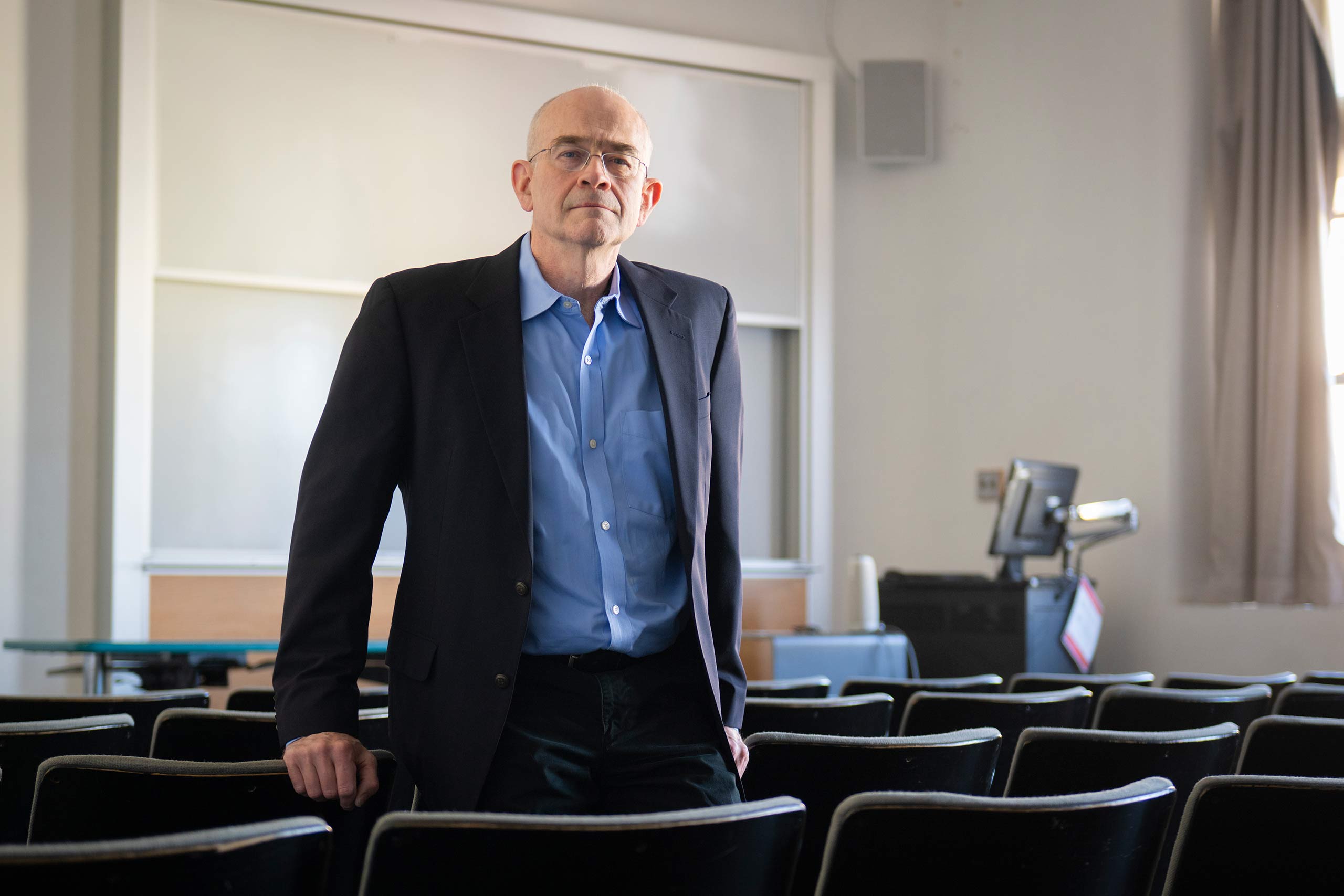
McCarthy is not averse to reasonable use of AI as a research tool, but he has adjusted his teaching approach to include more in-class assignments and activities that emphasize and reinforce students’ understanding of the readings. Among other things, that means more presentations and more exams, fortified with essay questions.
He believes AI will be a “ubiquitous” presence in his students’ careers but foresees that employers and clients will still expect them “to present their ideas in person, defend ideas in person, and debate courses of action in person.”
Since AI is here to stay, Miller, the psychology professor working with Rahman and Bachu, has become comfortable with categorizing AI as a co-collaborator. If his students use AI for homework, he asks them to cite the ideas that come from the large language model, or LLM.
“My biggest worry isn’t that people are using it. It’s that they’re using it and not paying attention to who writes what and who does what,” says Miller. “We can only operate at a human pace, and AI clearly can go faster and deeper. It’s a mind that does things differently than you.”
The business of AI
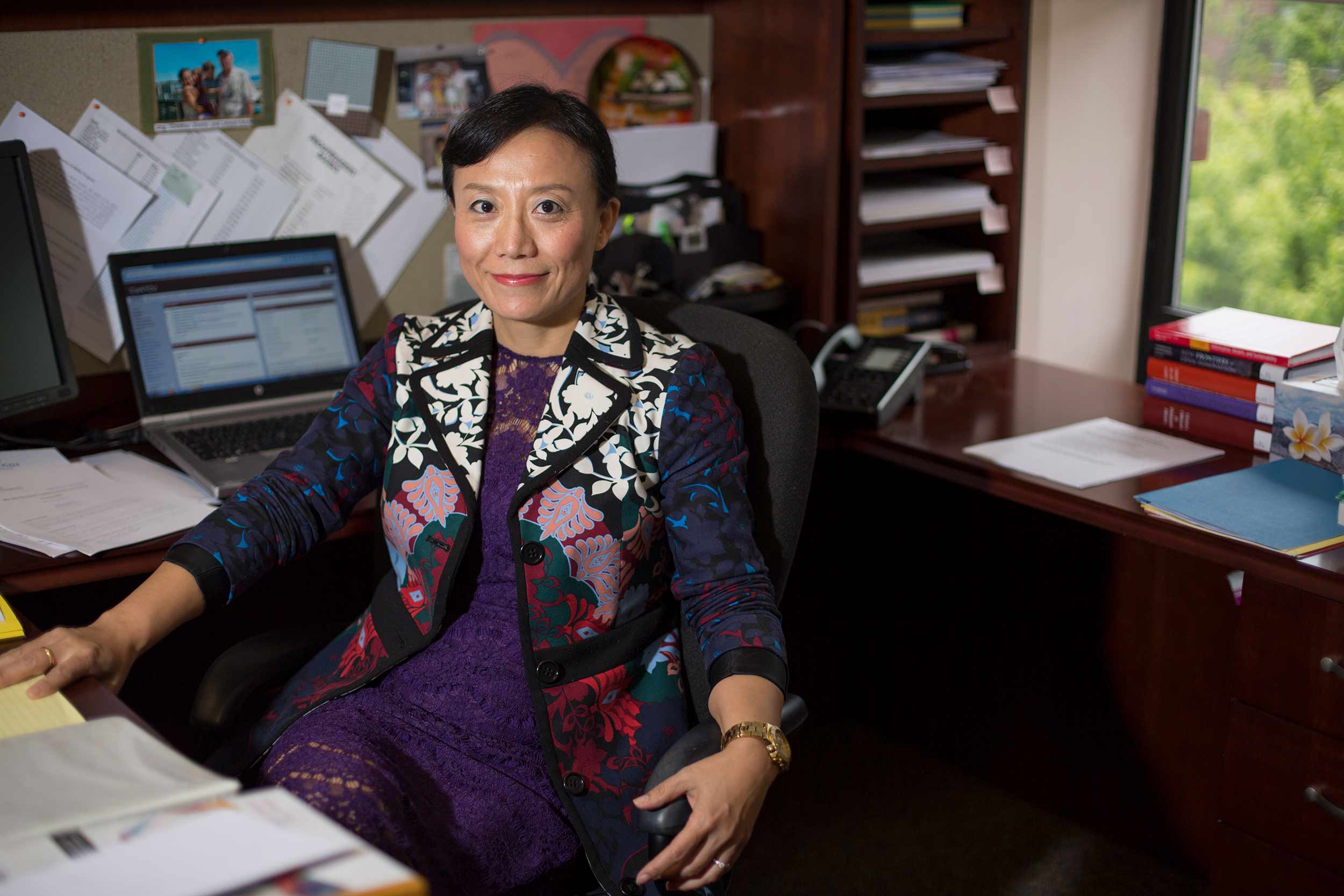
AI has been a pervasive presence in business for some time, driving decision-making in a number of areas while automating and augmenting aspects of accounting, finance, marketing, supply chains, and strategy. But its absorption into curricula will accelerate as the technologies grow more sophisticated and accessible in business practices, says Jing Zhang, dean of Clark’s School of Business. From an AI literacy course at the undergraduate level to master’s-level courses detailing its applications in the corporate world, the school has been steadily building its AI-education portfolio, with more on the horizon.
In the fall, the school will offer the newly created major Business Analytics and Applied AI, an interdisciplinary path forward.
“It involves collaboration with computer science, data science, game design, math and philosophy,” Zhang says. “The future of work is changing rapidly, and the University plays a critical role in preparing students for an AI-driven future by combining business thinking, technology understanding, and human skills.
“Through this major we can highlight how the industry is evolving and the skills and techniques that students need to have—how the concepts of machine learning and data analytics models work, and how AI applications can help solve complex business problems. Transformation is not only limited to the addition of a new major. Integration of AI understanding will also take place across the curriculum, making sure our existing majors are updated with relevant knowledge.”
Besides the technical skills, Clark’s business education will also focus on the durable skills that AI cannot easily replace, Zhang says, including the critical thinking and communication skills that inform how students will engage with AI in the workplace and beyond.
In her Intro to Information Systems class, Zhang’s students delve into many aspects of AI, from industry structure, technological infrastructure, business application, to its impact on everything from institutions to careers to societal norms. She notes that technological innovations have always “unsettled generations,” and this generation of students will need Clark’s guidance to “understand, apply, and manage artificial intelligence effectively and responsibly.”
“So, we don’t accept AI blindly, or we don’t blindly run with it at 100 miles per hour. Instead, we take it as something that’s important, and then we figure out how it can best contribute to our lives.”
Illustration by Blake Cale; Animation, Beth Prendergast