


Finding Community at Clark
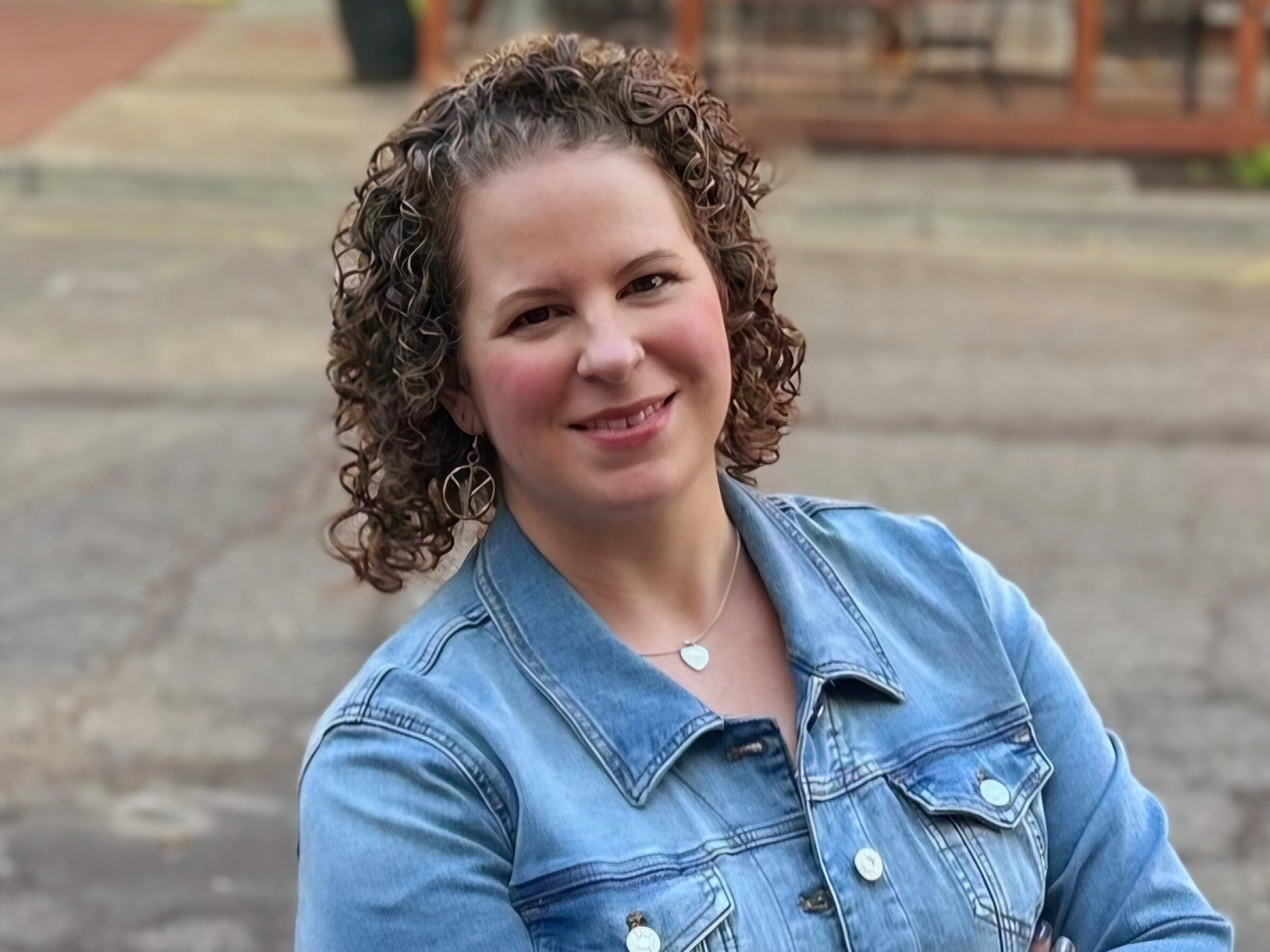
The first time Kaytee Gillis ’09 walked onto Clark University’s campus, it was for orientation. She had applied sight unseen after a high school English teacher told her, “You seem like a Clark person.” She didn’t quite know what that meant, but she figured it out.
“When I stepped foot on campus, I felt like I’d been there before,” Gillis recalls of her first visit to the Worcester campus. “I felt home.”
She would need that feeling. A native of Augusta, Maine, Gillis grew up inside what she describes as a very dysfunctional, very traumatic, abusive family. The worst of it peaked in high school, just before she left for college. Clark became her safe space.
Today, Gillis is a therapist and Ph.D. candidate at Michigan State University, studying intimate partner violence. She writes a Psychology Today blog and teaches psychology and social work at Michigan State and the University of Michigan. She has also published seven books on trauma, family abuse, and relationships.
It is, by any measure, a prolific output. But Gillis is quick to resist the label of “writer.”
“People aren’t going to open my book and be like, ‘wow, this really pulls me in,’ ” she says with a laugh. “I just have stories people can relate to.”
Gillis enrolled at Clark as a psychology major, with an interest in French that eventually became a minor after she spent a semester studying in Dijon, France. But the depth of what Clark offered in psychology registered only after the fact.
“I didn’t realize how well-known Clark is in psychology until I left,” she says. “Now I’m in academia for social work, and they’ll talk about Clark and Freud, and I’ll say, ‘Clark University was the only university to give him an honorary degree.’ ”
She studied under faculty she still cites with admiration: professors like Abbie Goldberg and Michael Bamberg, to whom she gave a copy of her first published book on a visit to campus. She felt “really spoiled” by the caliber of minds she encountered, even if she couldn’t fully appreciate it at 19.
“I didn’t have anything to compare it to. But now, having gone to graduate schools and working in academia, it is different.”
As much as the Psychology Department shaped her intellectually, it was the Clark student newspaper, The Scarlet, that shaped her personally. For four years, Gillis threw herself into the paper, eventually becoming executive editor. She describes long production nights that stretched until four or five in the morning, when the laid-out pages would be dropped off at the printer before dawn.
“The Scarlet was absolutely my thing,” she says. “It was my chosen community.”
“When I think about Clark,” she adds, “I realize that it was the first time I had ever felt part of a community. I just didn’t know it at the time.”
In her work, Gillis is careful to distinguish between family and systemic trauma. Family trauma is what happens when the people who are supposed to keep you safe are themselves the source of harm. Systemic trauma includes the biases, gaps in healthcare access, political uncertainty, and institutional indifference that reinforce or compound what is happening at home.
Gillis grew up in a time when therapy was rarely discussed in psychology classrooms, let alone at kitchen tables. The cultural shift from silence to TikTok confessional is something she finds genuinely meaningful.
Gillis says she didn’t begin to truly connect the dots of her own story until her thirties. As a Clark undergrad, she would read about abusive families in her psychology coursework without recognizing her own. The brain protects, she says, even when that protection becomes an obstacle.
At her 15th Clark reunion in 2024, Gillis visited the former Scarlet office at 138 Woodland Street, which is now home to University Marketing and Communications, and took a walk through Jonas Clark Hall.
“I have such fond memories,” she says, noting that she couldn’t help but be a little teary on her return to campus.
“The tears weren’t from happiness, and they weren’t from sadness,” she says. “It was a nostalgia — for who I was at Clark, and how I survived when I was there.”