


There’s Nothing ‘Nasty’ About This Nate
For Nate Edwards-Roseney ’26, a love of basketball has opened doors. The Clark senior has played collegiately, professionally, and even on the big screen.
Edwards-Roseney portrays a Harlem Globetrotter in Marty Supreme, which stars Timothée Chalamet as the real-life Marty Mauser, a 1950s-era table tennis savant who flexed his skills as a halftime act at Globetrotter games.
Edwards-Roseney landed the opportunity through two of his connections from the basketball circuit, the late Chicago Bulls star Bob Love and former Harlem Globetrotter Kenny Blend. Love told him that to fit the look of a Globetrotter, Edwards-Roseney would have to cut his hair, something he hadn’t done in six or seven years. “It felt worth the risk,” he says.
On set, Edwards-Roseney took on the role of “Nasty Nate,” learning ball-handling tricks from a different era and adapting to the slow, methodical rhythm of filming. He spent weeks practicing vintage Globetrotter moves, sitting through makeup and wardrobe, and working for long stretches that produced only seconds of footage.
“I like to play [basketball] with a lot of freedom and really express myself, so being a Globetrotter in the movie was pretty easy for me,” Edwards-Roseney says. “I got to have fun and goof around a little bit. The anticipation I felt toward acting is very similar to a game—you’re locking in and getting your game face on.”
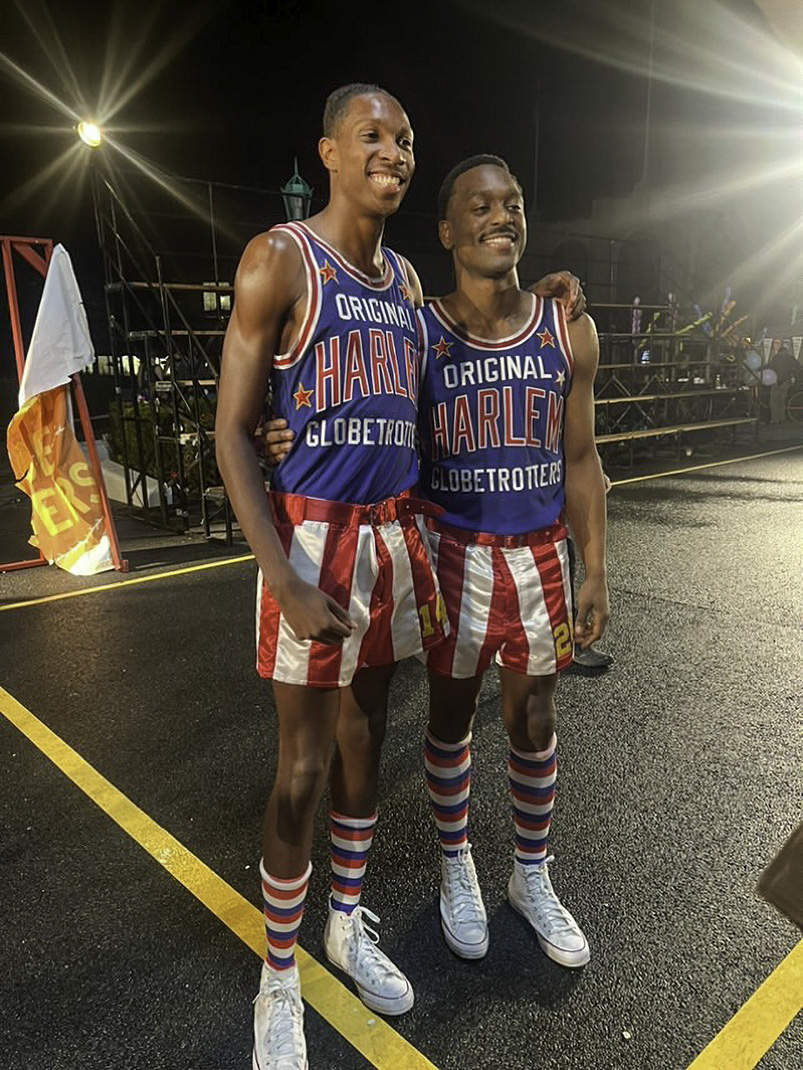
Some days, Edwards-Roseney shared scenes with Chalamet. Another day, he posed for a team photo staged in Egypt. “Being on film is one of the only times life actually feels like a movie,” he says. “The whole thing was surreal.”
A psychology major with a minor in education, Edwards-Roseney was a guard on Clark’s men’s basketball team for two years. He later joined a professional placement team coached by Ivan Sinjkevic of the International Basketball Federation, designed to give players exposure to agents and contract opportunities. Edwards-Roseney accepted an opportunity to play professionally in Serbia last year. The pace was fast and the expectations high.
“It was really eye-opening,” he says. “I got to see how I fit in with the talent pool around the world.”
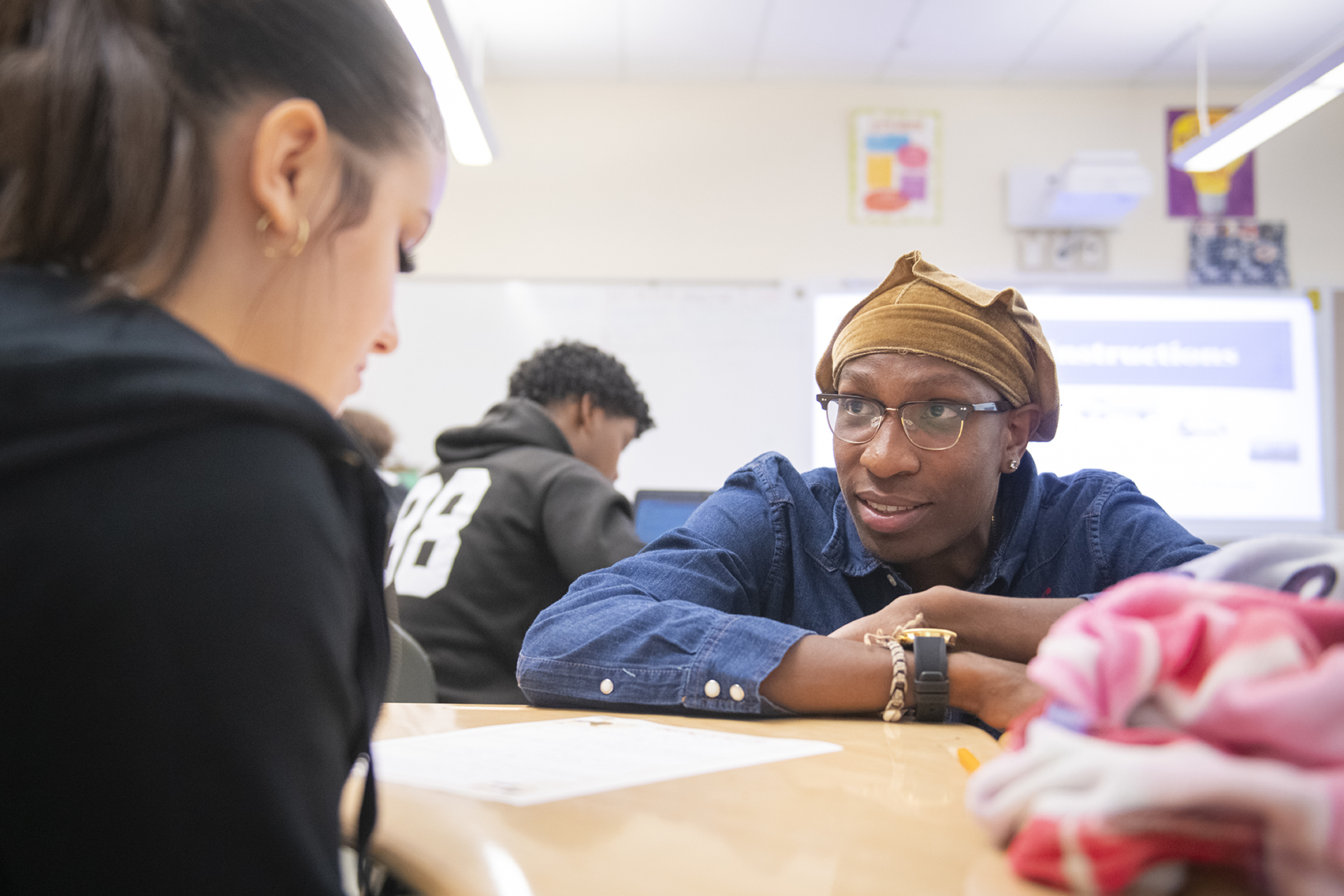
Back at Clark, Edwards-Roseney has spent much of his time focused on giving back through the MAAX (Maximizing Adolescent Academic eXcellence) social development curriculum developed within the Mosakowski Institute for Public Enterprise at Clark. As part of a fellowship with the Institute, he worked at Southbridge High School in Southbridge, Massachusetts, helping run a ninth-grade wellness class centered on life skills, self-regulation, and reflection. The program is designed to help students see themselves in college mentors who share similar life experiences.
“I try to stay relatable and down-to-earth and that approach has helped me foster relationships with some of my high-schoolers. I’ve seen them open up and talk to me about some of their struggles in school,” he says.
“It’s always about giving back to who gave to me, pouring back into who poured into me.”
The Mosakowski Institute and Southbridge Public Schools collaborated on an initiative to create a sensory immersion room where distressed students can decompress, calm themselves, and learn how to manage their behavior. The room, filled with comfy seating, soft lighting, and fidget toys, gives students tools to regulate their emotions and go to class ready to engage.
“It’s about asking what the problem is and how we can solve it,” Edwards-Roseney says. “I come from the inner city of Boston and attended a charter school. I noticed a difference in resource allocation and opportunity in general. When I went to a private middle school, I started to see a huge difference in the worlds that people are living in. My work with the Mosakowski Institute is my way of helping bridge that gap between the resources.”
Edwards-Roseney coaches a sixth-grade AAU team and trains players of all ages, continuing a cycle that has defined much of his life. “The best way to learn is to teach,” he says, adding that coaching has helped him grow as a player and a mentor.
Across basketball, acting, and education, the common thread is community. Edwards-Roseney speaks often about the power of relationships and the responsibility that comes with opportunity. He traces his outlook to a conversation he had as a teenager with his mother about wanting to give back to the places and people who invested in him.
“I know that I’m grateful,” he says. “And if I’m going to be grateful, then I want to show it. For me, it’s always about giving back to who gave to me, pouring back into who poured into me.”
— Justin Schwartz ’27