

‘My goal is to make my students better-informed citizens’
COURSE: Money and Banking
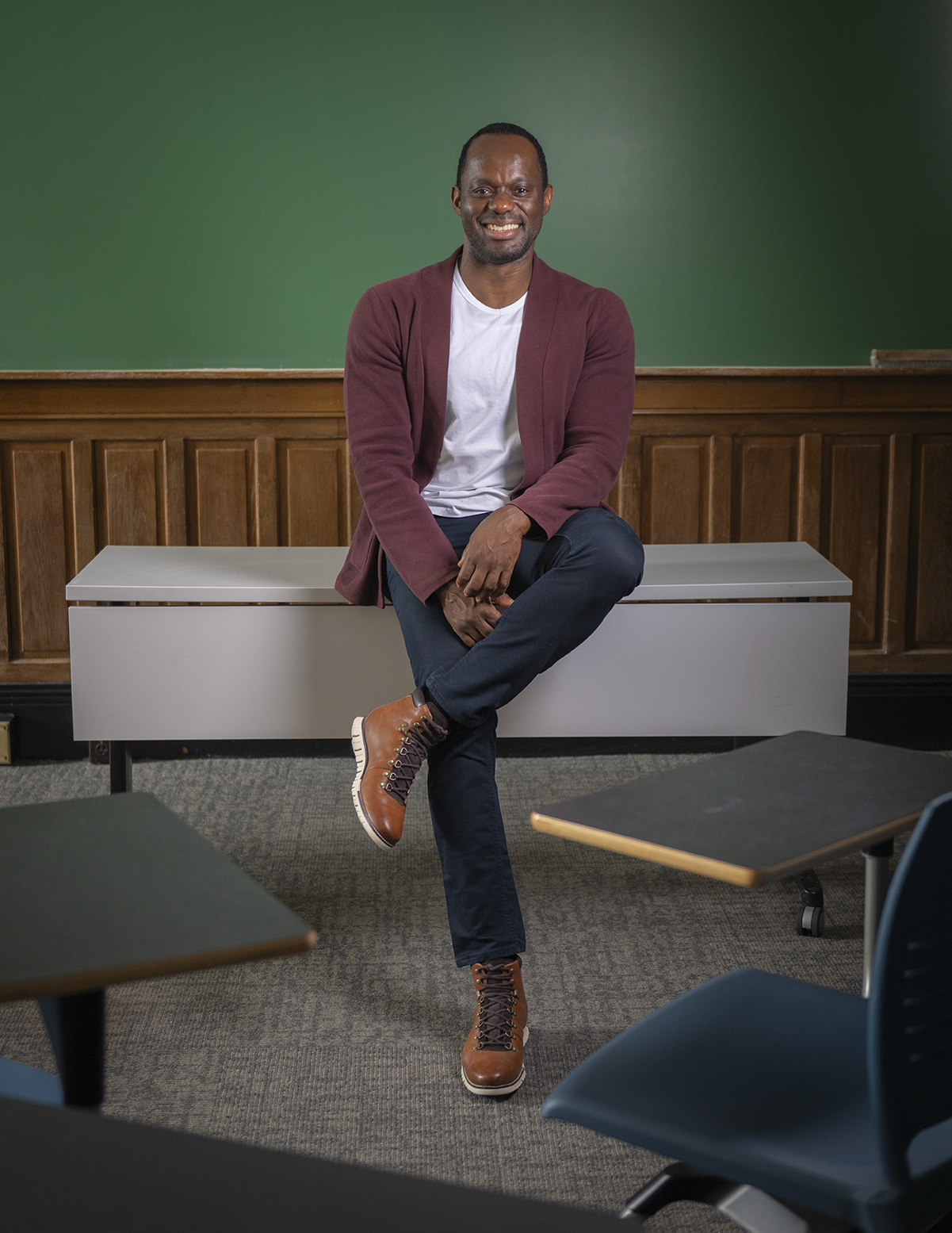
TEACHER: Edouard Wemy
Most of the students in Economics Professor Edouard Wemy’s Money and Banking class do not own homes. They haven’t launched careers, started families, or invested heavily in the stock market. But those things are coming, and Wemy wants his students to be prepared for them by better understanding U.S. monetary policy. “My goal is not to convert my students into economists,” he says, “but to make them better-informed citizens.”
Each year you prepare students to participate in the Fed Challenge at the Federal Reserve Bank in Boston. Describe what that is.
The Challenge is an activity created by the Federal Reserve system that gives students in different regions of the country an opportunity to compete against each other by making a policy recommendation about whether the Fed should increase or decrease interest rates. Faculty from the various schools are the judges in each region—we compete in the Northeast region against schools like Harvard, MIT, Babson, and Boston College. The winner actually gets to move on and make their pitch to the chairman of the Federal Reserve Board. You really have to know your stuff to get that far. Preparing for the Fed Challenge used to be part of this class, but I’ll be teaching it as a separate Problems of Practice course next semester.
How much about money and banking do students typically know when they enroll in this class?
This is an elective, and there are prerequisites to taking this class, so students know the basic concepts of how the economy works—how we compute GDP (Gross Domestic Product) and CPI (Consumer Price Index), international trade, labor issues, etc. We have to lay the foundation first, but they’re obviously showing some level of passion for the subject. I think a lot of students take it because they want to understand money. People like to talk about money.
Do they have any misperceptions about money?
I guess their view of money is different from the way we think about it in the macro economy, and that’s an interesting part of it. When they come to the class, they need to learn about the role that money plays in an economy and how it is used to generate economic activity, or at least to manage economic activity. I would say they don’t understand that the money supply is controlled by the Fed. They may hear in the news that the Fed increased or decreased the interest rate, and we’ll have a discussion about the impact that the rate can have on day-to-day decisions. The goal of economics is to understand the world around you so you can make better financial decisions.
They need to be able to have a sound understanding of interest rates and what money is — and how money is created — before we move on to talk about how the Fed uses the tools in their toolbox in order to influence economic activity.
Besides a learning curve, there must be something of a “life curve” to all this as well.
[Laughs] A few years after they’ve graduated, former students will email me and say something like, ‘Now I see why you kept talking about GDP and inflation in class.’ All of a sudden, it becomes relevant.
Do you ever wade into the politics surrounding the Fed leadership?
None of my courses revolve around politics, but politics and economics are intertwined, so those issues are hard not to get into at some point. I ask my students if they are paying attention to what’s happening in the news with regards to how the administration is behaving toward the Fed chairman. Once they understand the importance of what the Fed does, then we can move on to why it is important to have an independent Fed. The independence of the Fed is something that over time has been relatively unchallenged, and now it is not. But there are reasons why it’s structured this way, because monetary policy impacts the lives of millions.