

‘There was something in the air at Clark’
A pioneering program spread strong writing across the disciplines
By Genie N. Giaimo ’06, M.A. ’07
The mid-1970s to mid-1980s were an exciting and generative time both at Clark University and in the field of rhetoric and composition. As this academic field started to coalesce around a more egalitarian, democratic, and social approach to the teaching of writing, there was also profound support for writing across the disciplines in higher education. Clark was one of many universities that received funding from the National Endowment for the Humanities to develop innovative, co-taught, and interdisciplinary writing courses. And with that funding, a new kind of position came about: a writing center director who would oversee writing across the curriculum.
I will begin by noting that I am biased. As a graduate of Clark University (double major in English and psychology), I knew the school was a special place. During my time at Clark, I engaged in writing in every discipline I studied — from film studies and geography to psychology, history, and philosophy. Writing was a mainstay of my education, and I was taught by compassionate and adept professors who cared about the craft and content of writing.

I was, however, not given clear guidance on developing my own writing process. As a professor of writing and rhetoric at Hofstra University, I direct a writing center where countless undergraduate and graduate students come through our doors trying to figure out their own writing processes, their own craft. I have worked with thousands of writers, from those beginning their college journeys to those who are at the height of their careers as tenured professors. All shared a desire for self-improvement and the more communal aspects of writing that writing centers facilitate.
A year ago, a colleague of mine at Salem State University shared a chapter in a long-forgotten book on innovative writing pedagogy.
“Did you know Clark was at the forefront of the writing-across-the-curriculum movement?” he asked.
I did not.
In 1975, Clark was granted hundreds of thousands of dollars to create innovative and writing-focused curricula that included preparing faculty across the disciplines to teach writing. To do this work, the grant’s principal investigators hired Leone Scanlon, who would go on to manage the writing infrastructure of Clark University for over 20 years. Leone had retired by the time I arrived at Clark, and the writing center she founded became a smaller operation, located in the Corner House on Woodland Street. It was open a few hours a day and was primarily marketed toward students with learning accommodations.
During her time working at Clark, Leone ran the expository writing program that many Clarkies might remember from their first-year composition requirements. The DNA of her ideas was everywhere within these early writing initiatives.
Writing and rhetoric folks like history. We write about the histories of the programs we inherit, the people who mentored us, or the founders of our discipline. We return to the archives and conduct interviews to better understand the foundational elements of the writing programs we are tasked with running. While I am an alum of Clark, I also felt like the infusion of writing work was critical to my own professional and academic development.
“This is a secret history that very few people have a mild recollection of.”
Here, I share a story that is one part historical, one part celebratory, and one part mystery. How does the innovative work performed by a university’s faculty get lost to time? Why write in the modern world, when generative AI can do it for you? How do we ethically capture and honor the work of our colleagues and professors, even decades on from their work? In this story, I hope to find out.
Securing grant-funding for an interdisciplinary humanities curriculum
Professor Marvin D’Lugo, professor emeritus of Spanish, joins on a Zoom call from Spain. D’Lugo came to Clark in 1972 and retired in 2013, but in retirement he remains very active. A manuscript awaiting his review lies on the table next to him.
“There is no institutional history of Leone,” D’Lugo says. This is a “secret history that very few people have a mild recollection of, and it goes back to 1974 or 1975, when Al Anderson was encouraged by administration to go after funds at the NEH.”
Anderson, professor of philosophy, and D’Lugo embodied the interdisciplinary spirit of the programs they administered. Starting as a professor of Spanish, D’Lugo became one of the first jointly appointed faculty in Film Studies, long before this was common in academia. Anderson studied journalism at Syracuse and worked as a radio announcer for four years at KSCJ 1360 before studying philosophy.
Anderson, who came to Clark in 1973, wrote a pilot program called Concepts of Space in which cross-disciplinary teams of instructors co-taught classes with common themes, and shared activities and goals.
Despite the program struggling to find its footing early on, the NEH encouraged Clark to apply for a bigger grant centered on a new form of interdisciplinary writing education called “writing across the curriculum.” Clark eventually earned a $350,000 grant over a three-year period. “There was something in the air at Clark,” D’Lugo says.
And so, the Program in Humanistic Studies was born.
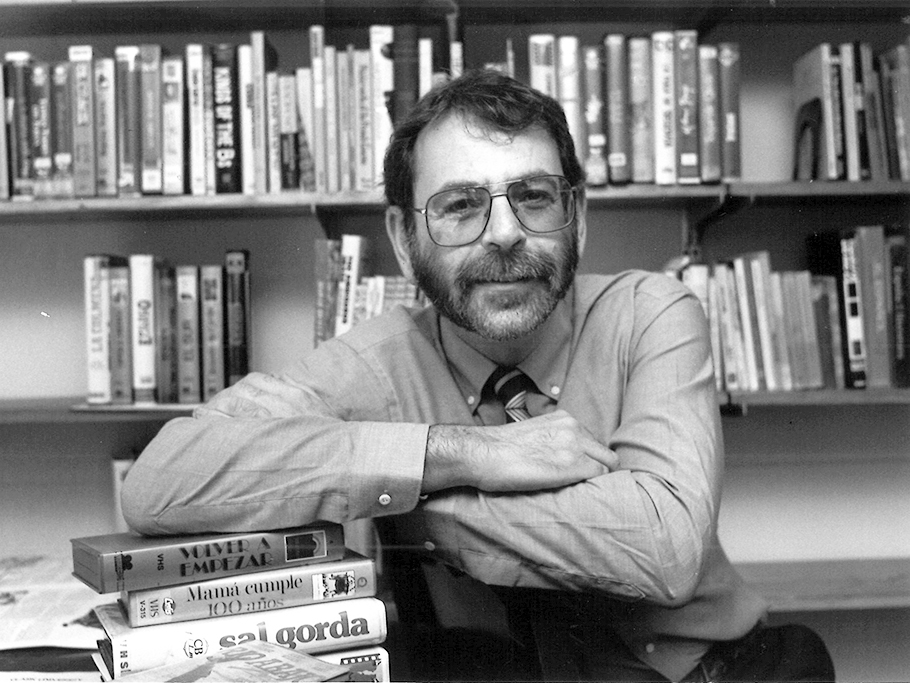
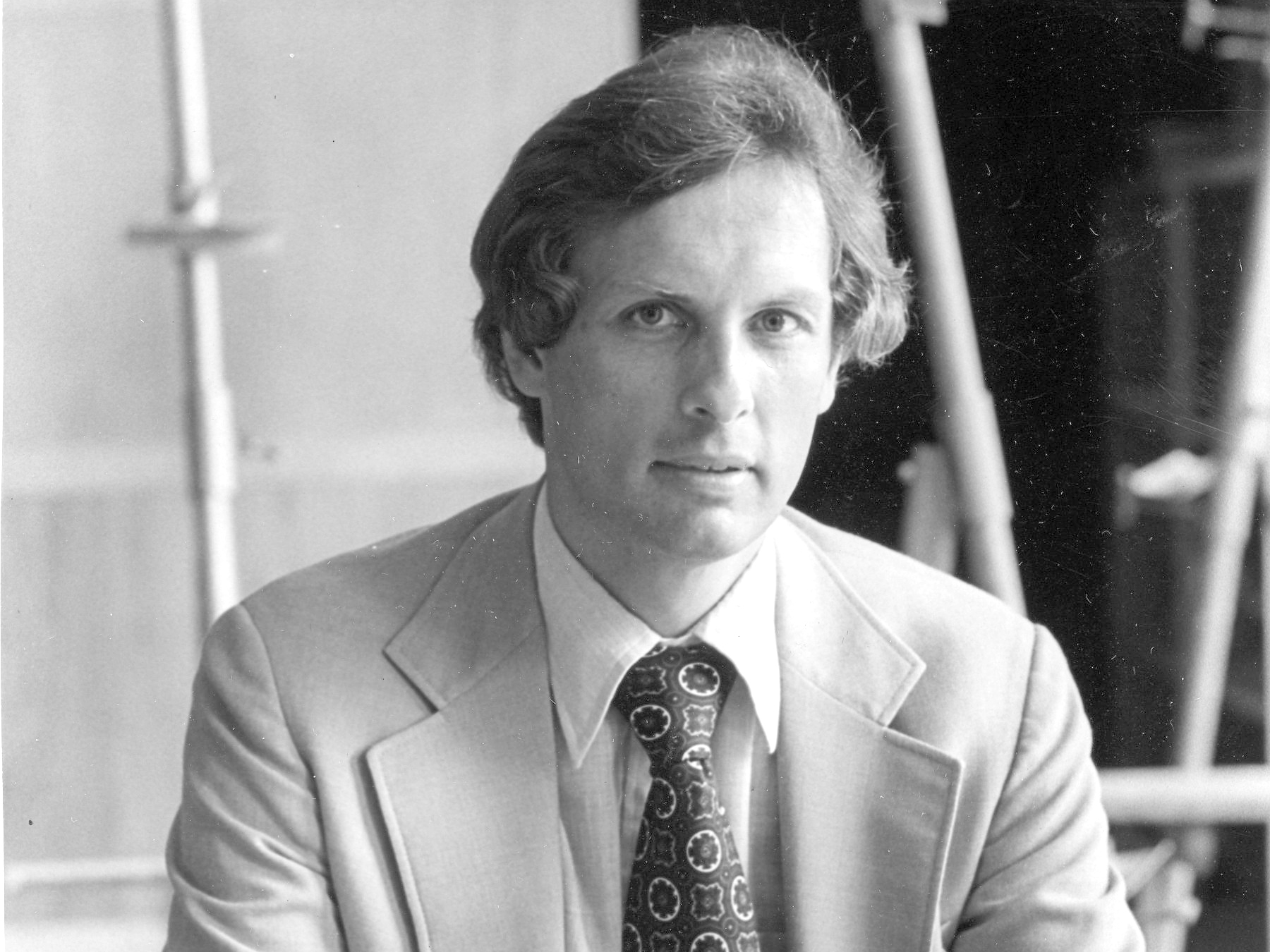
The program’s focus was to explore disciplinary connections through the shared pursuit of writing. “I was trying to contribute to the process of making the interdisciplinary a little more available,” Anderson says. “People were beginning to realize that, especially in the contemporary world, you just can’t separate one discipline from another.”
The mid-1970s marked a period when universities became interested in writing and teaching across disciplines, and Clark University was a leader. For a time, D’Lugo — like Anderson before him — traveled to institutions throughout the country to share the Clark model.
“The NEH evaluator came and said it was one of the best programs in the country,” D’Lugo recalls.
D’Lugo hired Leone Scanlon in 1977 to administer the writing-related parts of the grant. Scanlon had attended graduate school with the famed writing studies scholar Peter Elbow and later got to know him through his scholarship and conferences at Clark that she ran.
The program ultimately shifted its focus from faculty to students. Faculty were selected to join the teaching cohorts and student teaching assistants were trained by Scanlon.
Marlene Fine, who filled in for Scanlon in fall 1980, recalls the excitement around the program, even in the face of faculty resistance: “We taught students to critique their work in peer groups, which saved faculty time, and used students’ [time] well. I found those two things exciting about what was going on. And I do think it was groundbreaking.”
Scanlon strives to direct writing initiatives
Leone Scanlon was born in Massachusetts and attended American International College in Springfield.
“My life involved a lot of work,” she remembers. “I got no support apart from scholarships to attend any of the colleges I went to, so I always had to work. That was an important part of my life.”
Her mother was a seamstress in a textile mill who tried to organize a union. “I was brought up with a lot of talk about unions and community,” Scanlon says.
After college, Scanlon attended Radcliffe College on a Woodrow Wilson Fellowship, where she completed her master’s degree in literature. From there, she took a teaching position at Park College in Missouri and then attended Brandeis University to pursue a Ph.D. in English and American literature.
Scanlon split her time between New England and the UK with her husband, then a doctoral candidate at Harvard. When they returned to the States, they started a commune in Springfield, “in an old house [once] owned by Samuel Bowles III, a friend of Emily Dickinson, and the publisher of The Springfield Republican.” While writing her dissertation, Scanlon taught at several colleges and universities in New England.
Beginning in 1977, Scanlon directed Clark’s inaugural writing center and the expository writing program, working with D’Lugo and Anderson on the writing-across-the-curriculum approach. Scanlon notes: “It was a very busy life! But I was excited by the people I met in my interview at Clark and the variety of work that they wanted to start.”
In 1980, Scanlon attended a six-month research program at the Institute on Writing at the University of Iowa, where she became interested in groundbreaking scholarship in writing studies. “I didn’t get any professional training on writing until the Institute at Iowa,” she says. “One of the books I encountered during this time that made a great impression on me was Writing Without Teachers by Peter Elbow.”
From the Institute, Scanlon created an expository writing curriculum that not only spoke to the current trends in writing studies as well as her own working-class background, but also focused on the complementary principles of “play and work.” Students produced over 21 pieces in a single semester, including personal reflections alongside writing about engagement with Clark and Worcester.
“I think I used it for about a year. The English Department appointed a committee to review the curriculum, and they rejected it. So I had to switch to something more conventional,” Scanlon remembers.
Despite this setback, Scanlon went on to have a very successful career at Clark. She co-sponsored a writing-across-the-curriculum conference with local universities and K-12 educators and, in 1988, a reading-across-the-curriculum conference, both held at Assumption College (Elbow was the keynote speaker at the latter).
Scanlon trained English master’s degree students to teach expository writing. Valerie Hamilton, M.A. ’84, was already a secondary school teacher in England when she decided to pursue a master’s degree at Clark.
“I was bored with teaching and wanted to go to America,” she says. “Clark was advertised on the board at Manchester University. They were looking for people to teach expository writing and introduction to literature, and they were willing to pay your fees for your master’s and a small stipend, just about livable. I applied that afternoon.”
“It was the most fantastic experience for me. I came to Clark and there were six of us — all from England. Two or three of us were teachers, and some had just graduated from university in England.”
Hamilton remembers Scanlon’s detailed classroom observations and, also, her respect for instructors with prior teaching experience. “Leone Scanlon was very good. We only had a loose curriculum that we had to follow, but she did come in to monitor you, and gave quite detailed feedback, which I enjoyed.”
And while Hamilton struggles to recall the details, she remembers Scanlon championing her proposal to establish a creative writing curriculum.
Clark, Hamilton notes, gave her tremendous freedom: “I had a sense of it being a very intimate university, and the things that happened there might not be able to happen anywhere else.”
For a time, she worked for youth programs in both the U.S. and the U.K. before transitioning into consulting with organizations to develop more substantive narrative-based worker evaluations. She continues to write and has authored books on the early English novel, “Robinson Crusoe” author Daniel Defoe, and the Bank of England.
Lifelong learning and intellectual richness
Scanlon is deeply dedicated to the arts and lifelong learning. For 35 years, she attended retreats on Star Island, New Hampshire, and took workshops on painting and writing. “For me, the arts give us different ways to look at life that are essential to our existence and that we can’t narrow down to technology,” she says. “The arts open us up, and when you think about the changes in artists’ work, like poetry, we see a response to the times.”
Scanlon has engaged in community writing work. She volunteered in her daughter’s first-grade classroom at Elm Park Community School in Worcester, and she gave talks on poetry and writing at Midland Street School.
Around the time Scanlon retired in 1999, the NEH-funded writing-across-the-curriculum program ended, though writing across the disciplines remains a substantial component of the Clark University education.
“Clark was the best place,” Anderson says. “I’ve never encountered an intellectually richer group of students, and so, I loved teaching there.”