
Carceral studies
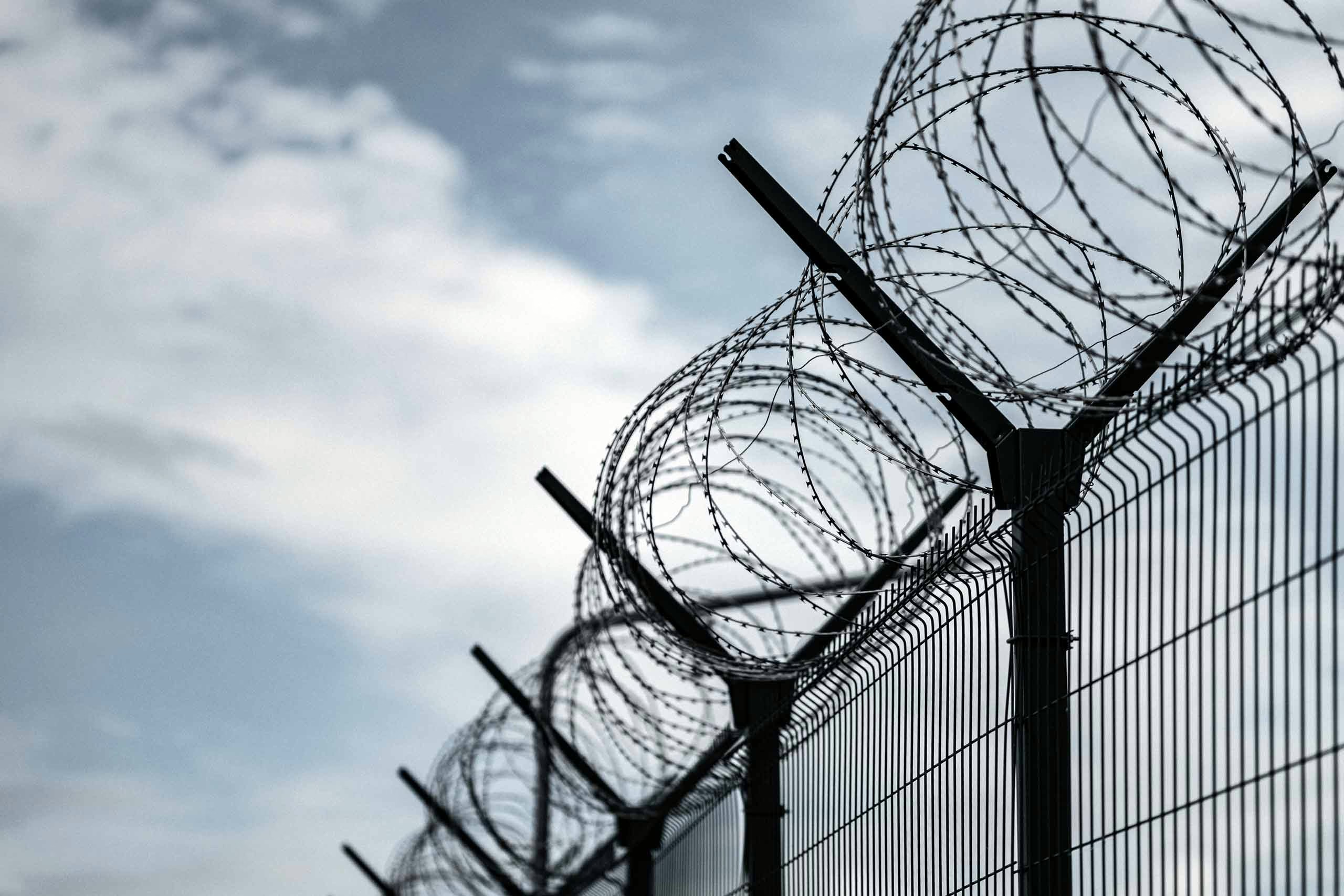
How do communities become sites of both control and creative resistance?
The carceral studies work at CGRAS examines systems of containment, surveillance, and spatial governance that shape our society—particularly for communities navigating histories of marginalization. This research asks us to reconsider whose knowledge counts in the creation of systems around laws, enforcement, and incarceration, and how communities exercise agency even within restrictive environments.
Constructions of national identity
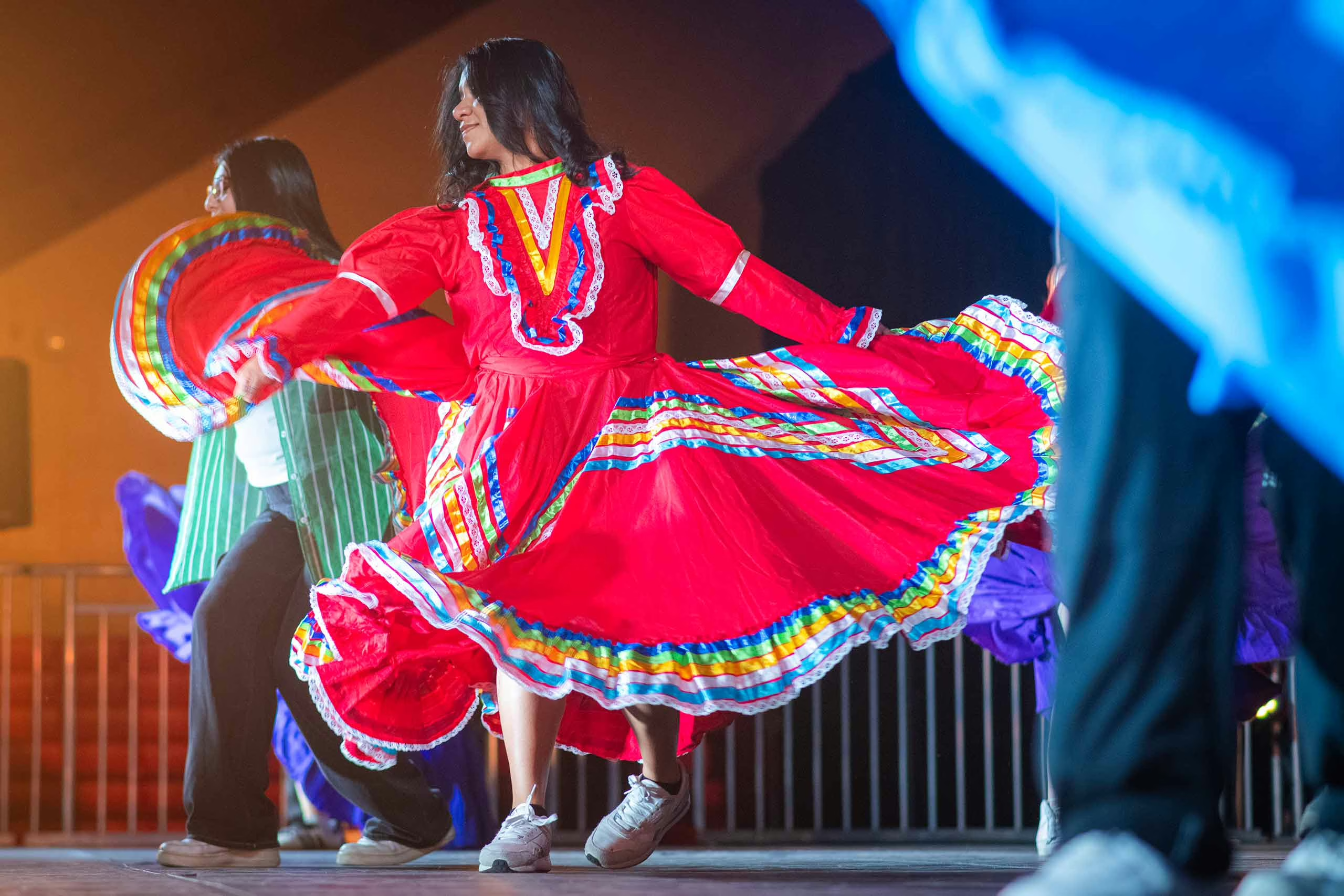
Who belongs to a nation, and who gets to decide?
Scholars in this area map the shifting terrain of national identity, showing how marginalized communities have pushed for inclusion while reshaping what it means to belong. Their interdisciplinary work reveals how cultural and national identities are continually negotiated — and how creativity becomes a tool for challenging exclusionary narratives.
Critical perspectives on democracy
What does democracy look like in practice, and whose interests does it serve?
This research cluster examines how democratic ideals operate under conditions of economic transformation, authoritarian control, and collective struggle. This body of work challenges simplified narratives about democracy, revealing the complex interplay between economic systems, state power, bureaucratic control, and grassroots resistance.
Migration
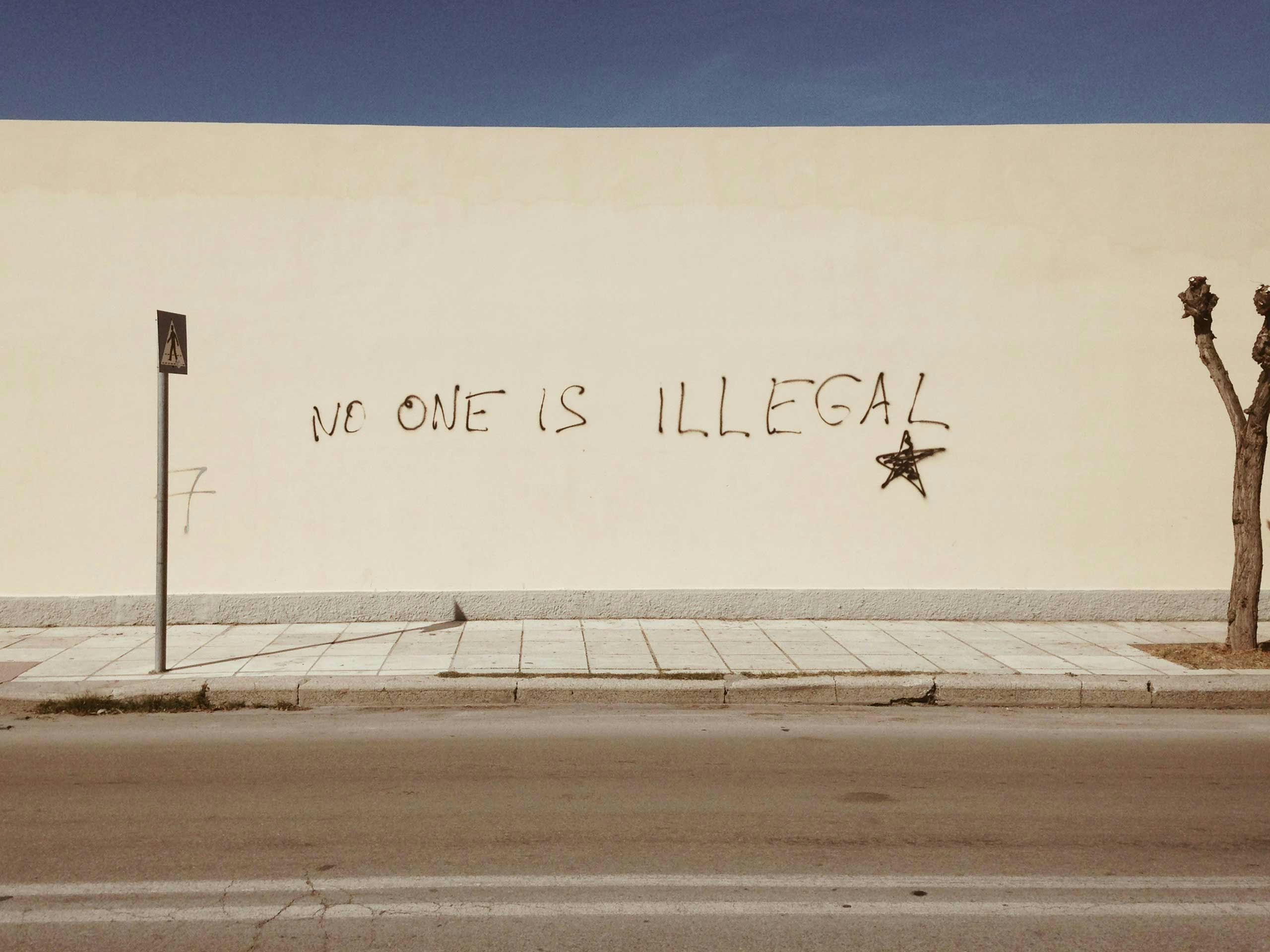
How do people create home when home is in multiple places, far away, or lost?
Migration scholarship at CGRAS approaches human mobility as a complex social phenomenon shaped by displacement, environment, policy, and the creative practices through which people craft belonging across borders. Scholars reveal migration not as a problem to be solved but as a fundamental aspect of contemporary life that shapes our cities, schools, and understanding of belonging.

Queer studies
How do diverse LGBTQ+ identities challenge normative assumptions about relationships, well-being, art, and society?
Queer studies scholarship at CGRAS spans psychology, literature, and cultural analysis to examine how non-normative desires, identities, and relationships have been represented, pathologized, celebrated, and lived across different historical moments and contemporary contexts. This work has important implications for policy, clinical practice, cultural understanding, and our appreciation of queer lives and contributions.
War and structural violence
How do violence and collective trauma reshape societies; relationships between nation states and groups; and individual lives?
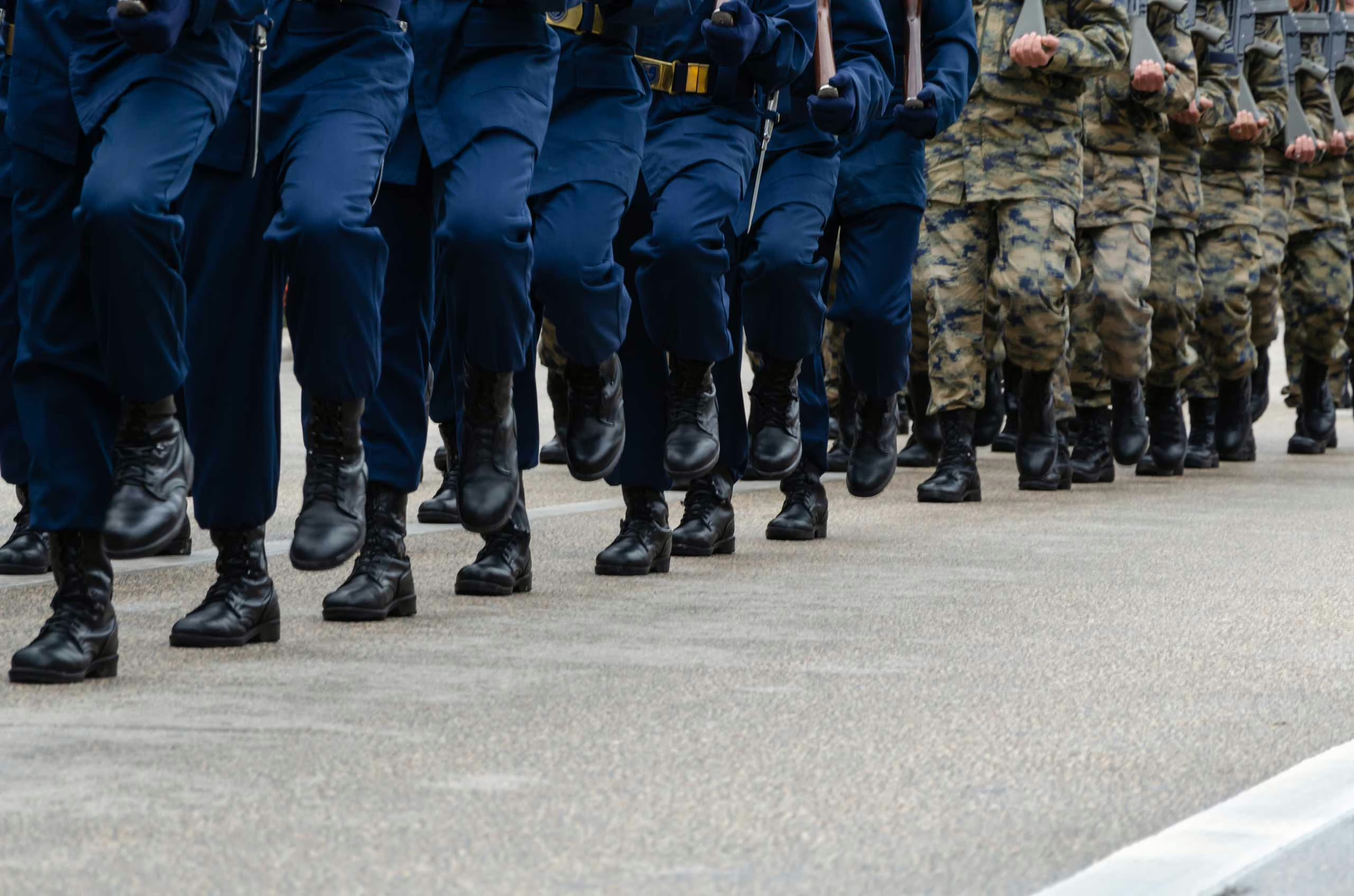
Research in this area examines both collective violence and the everyday structural violence embedded in social systems that produce disparate vulnerabilities for marginalized communities. This work reveals violence not only as dramatic events but as deeply embedded in social structures, cultural narratives, and institutional practices—with profound implications for peace-building efforts, public health interventions, transitional justice, and our understanding of how societies acknowledge historical trauma and ongoing systems of harm.