
Migration
This seminar series brings together scholarly work and student discussion about a variety of types of movement, including displacement, deportation and emigration from the US to places where those who have been targets of intimidation, violence, and harassment might find safety.
2025-2026 speakers
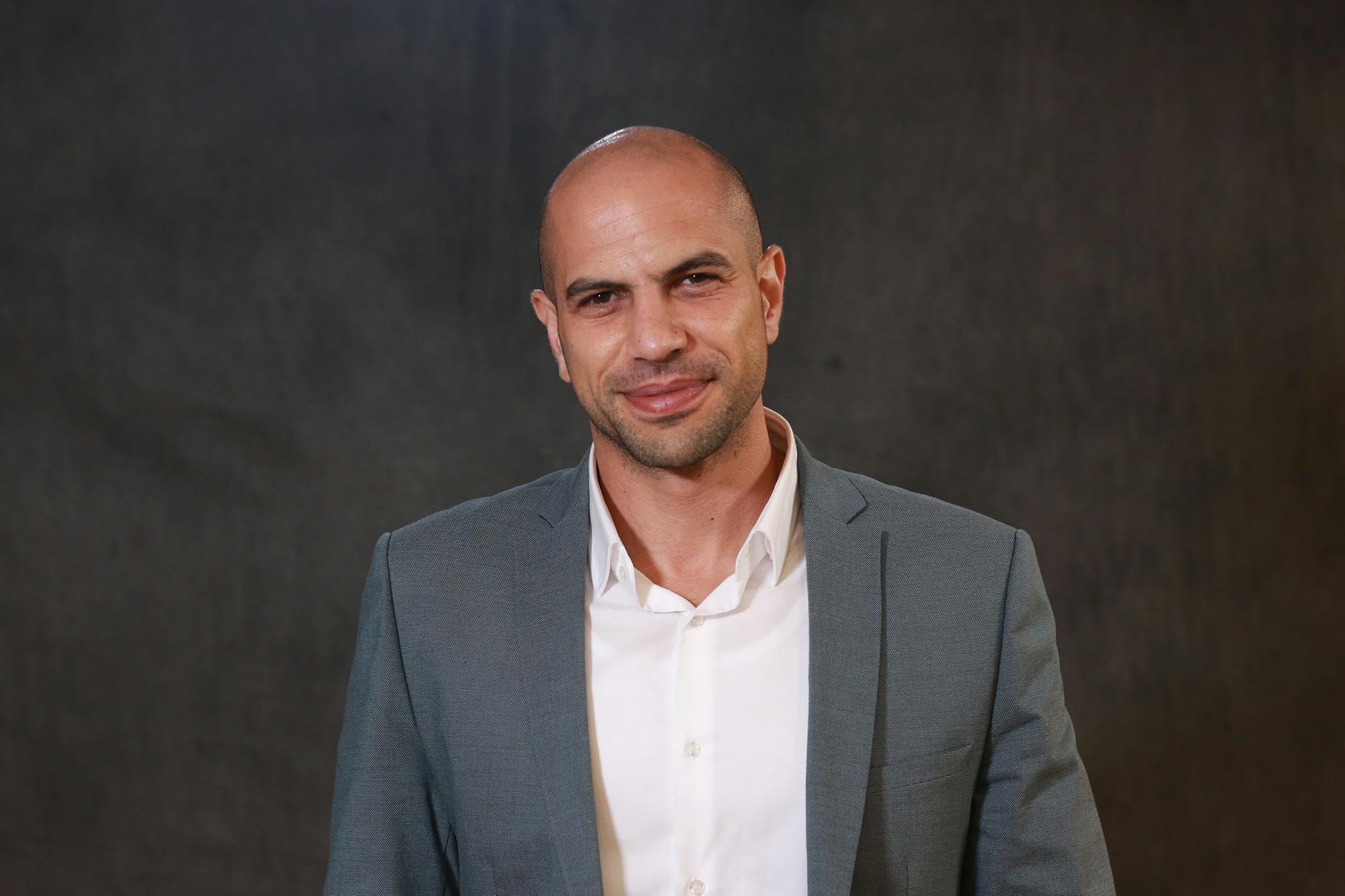
Orwa Switat “Remapping Demolished Spaces and Narratives in Haifa”
Orwa Switat is an urban planning scholar with degrees in philosophy, political science and urban planning. He focuses on the status of groups in planning theory and practice. He has been a Religion and Public Life Fellow in Conflict and Peace at Harvard Divinity School and a visiting scholar in the Department of Urban and Environmental Policy and Planning at Tufts University.
Switat has extensive experience promoting spatial justice and heritage preservation among Palestinian communities.
In his research, he integrates digitization and visualization with discourse and planning analysis to uncover hidden histories, restore lost heritages, spatialize oral histories, visualize counter-hegemonic narratives and develop innovative restorative planning approaches.

Alexsia Chan “Beyond Coercion: The Politics of Inequity in China”
Alexsia T. Chan is Associate Professor of Government at Hamilton College and author of Beyond Coercion: The Politics of Inequality in China (Cambridge University Press, 2025).
Her current research examines U.S. -China competition in Southeast Asia. She received her Ph.D. in Political Science from the University of California, Berkeley.
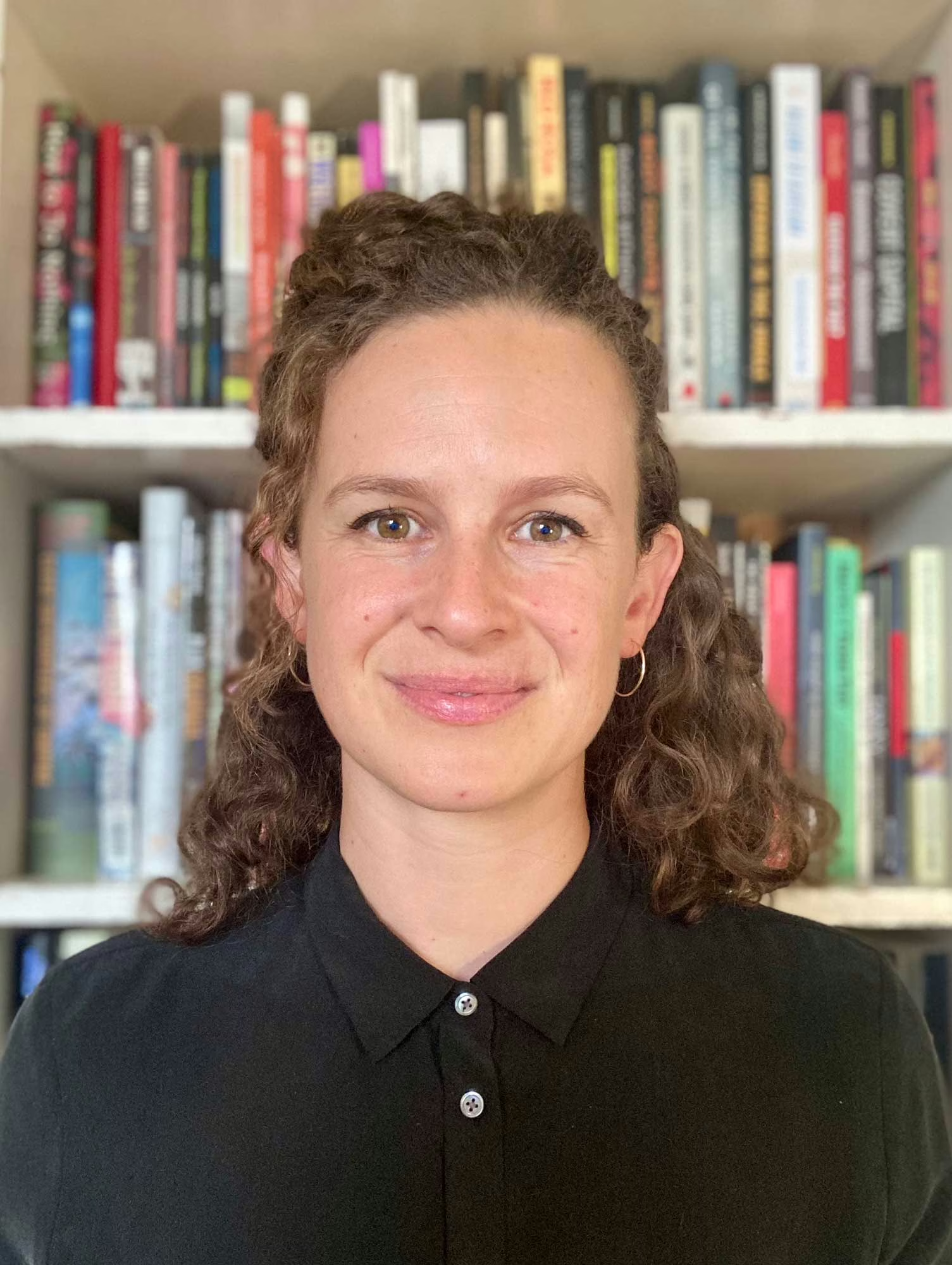
Emma Shaw Crane “The Periphery Within: Labor, Police, and the Camp in the Florida Suburbs”
Emma Shaw Crane, an Assistant Professor at Stanford University, is an urban and environmental anthropologist. Her research and teaching focus on war, environment, and racialization in the urban Americas.
Her current book project, Counterinsurgent Suburb, is a study of the environmental and spatial arrangements that sustain U.S. empire on the peripheries of Miami, Florida. It draws on ethnographic fieldwork across a military base, a detention camp for migrant children, a nuclear power plant, and industrial plantations sustained by Indigenous Maya migrant workers. The project engages war as a transnational racial project that is routinized and reproduced in the American suburb.
A second project examines aftermaths of war in Bogotá and draws on long-term fieldwork with former guerrilla combatants in Colombia’s civil war. It examines how peripheral neighborhoods become the targets of municipal, humanitarian, and insurgent efforts to repair past atrocity, often in ways that seek to remake urban built environments.