
Data Science, B.S.
Research
Faculty research
-
Li Han
Professor Li Han’s current research interests include data science, machine learning, data science and computing education, and scientific informatics. She applies methods ranging from statistical analysis and classical machine learning to deep learning, physics-informed modeling, and generative AI in collaboration with researchers across diverse fields. She also mentors undergraduate and graduate students and serves as principal investigator of CROSSROADS, an NSF-funded project that expands real-world, interdisciplinary data science learning and creates robust opportunities for student success.
-
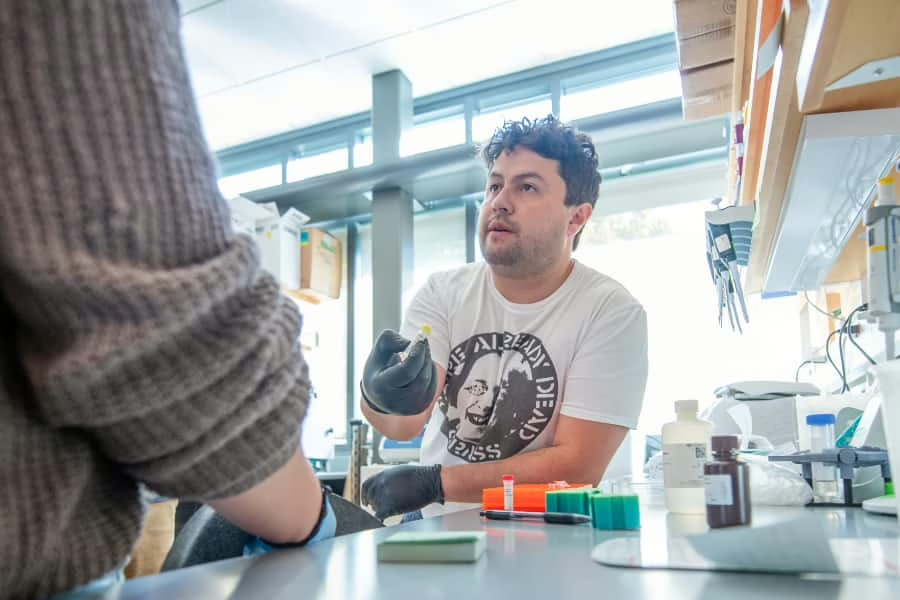
Javier Tabima
Professor Javier Tabima’s research integrates tools and concepts from evolutionary theory, computational biology, genomics, genetics, and plant pathology/mycology. His work focuses on the study of fungal evolution and the development of computational and molecular tools for rapid species identification, population genetics, and the detection of genes of interest. One notable paper connecting to data science is Poppr: an R package for genetic analysis of populations with clonal, partially clonal, and/or sexual reproduction.
-

Hamidreza Ahady Dolatsara
Professor Hamidreza Ahady Dolatsara’s research interests include healthcare analytics, finance, and transportation. He utilizes data-driven approaches and machine learning techniques to develop decision-support systems. One notable project involved creating a software tool to predict patient survival probabilities after heart transplants. He also investigates the financial implications of blockchain technology adoption.
-
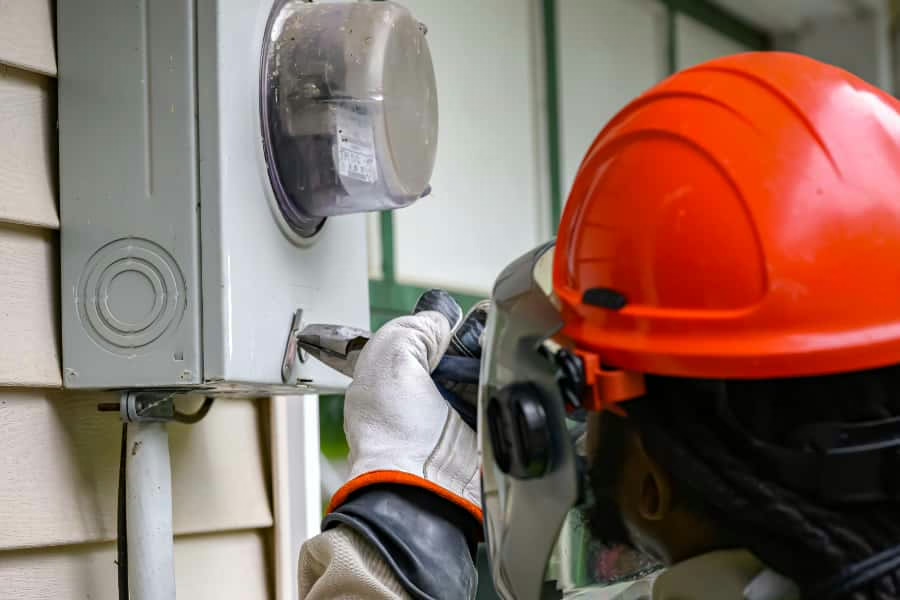
Jing Zhang
Professor Jing Zhang’s research interests encompass a variety of topics, including Information Systems and Sustainability, Smart Government and Smart City initiatives, the organizational impact of technology and innovation, and interorganizational knowledge sharing and networking. One notable publication related to data science is entitled A Spatial Analysis of Smart Meter Adoptions: Empirical Evidence from the US Data.
Student projects
-
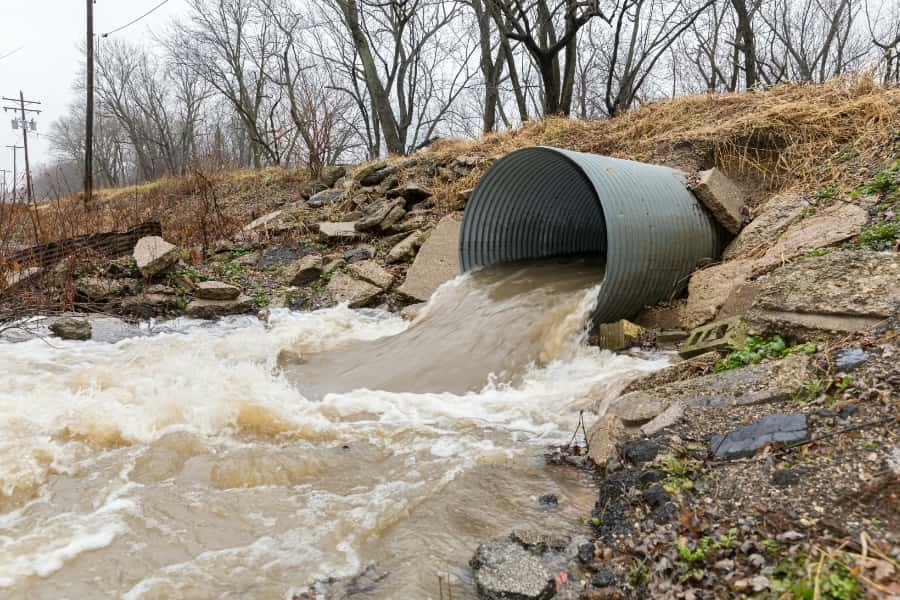
Modeling stormwater at Clark University
Winning the top award in Spring 2024 Clackathon, this project uses a LiDAR point map of Clark University from the US Geological Survey to simulate rainwater through a simple algorithm. Random points are chosen in the selected area, and a rainwater stream is simulated. This process is repeated thousands of times, and the resulting streams are compiled into a two-dimensional map showing the overall trend of rainwater flow on campus. This map can then be used to show choke points in water flow, analyze potential stormwater pollutants entering city drains, and display the efficiency of existing campus infrastructure to manage stormwater.
-

Spotify music recommendation system using EDA
This system utilizes Spotify song data from 2019 to 2022 to uncover trends in “song popularity” through detailed visualizations, achieved via Exploratory Data Analysis (EDA) to identify pertinent features. By applying K-means clustering, the system groups genres based on their audio characteristics, highlighting genre similarities and enabling nuanced song recommendations. Leveraging SpotiPy, a Python library for accessing Spotify’s music library API, the system analyzes users’ listening histories to recommend songs with similar audio features, aligning with their preferences. Regular updates with new data ensure the recommendations remain current and relevant.
-

Analyzing Secondhand Watch Market Data
This project focuses on scraping an e-commerce website for detailed information on secondhand watches from a diverse array of brands. It collects data on various aspects, including age, price point, and general style or purpose. By encompassing a wide range of watch characteristics and categories, the project aims to provide a comprehensive analysis of the secondhand watch market, offering valuable insights into the diversity and trends within this sector.
-

Profit distribution of band performances
The project utilized box plot graphs to illustrate the profit distribution from various band performances, revealing a primary profit range between -$15,000 and $10,000, highlighting the financial outcomes’ central spread.