


Citation
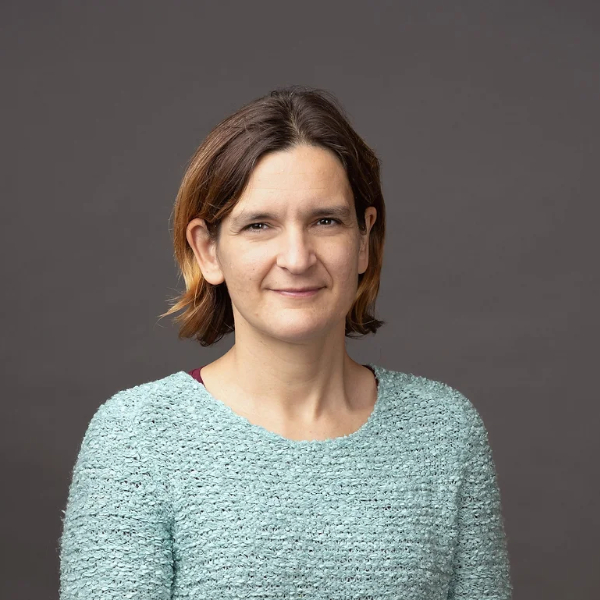
Mr. President, I have the great honor of presenting Dr. Esther Duflo, the Abdul Latif Jameel Professor of Poverty Alleviation and Development Economics at the Massachusetts Institute of Technology, President of the Paris School of Economics, and a Nobel Prize-winning economist who has given us a candid, unsparing, and ultimately hopeful approach toward reducing global poverty.
Dr. Duflo, you have devoted your career to better understanding the economic lives of our poorest citizens, with the aim of helping design and evaluate social policies that can lift them from often crushing circumstances. Early on, you recognized the dispiriting toll of poverty on individuals, families, and entire social and economic systems, and in response, you co-founded the Poverty Action Lab at MIT — which you co-direct and where you promote the use of randomized controlled trials in policy evaluation. Astoundingly, more than 400 million people have been impacted by programs tested by the lab’s affiliated researchers.
Your research focuses on the microeconomics of development — and the persistence of poverty — spanning topics such as education, household behavior, financial inclusion, political economy, gender, and health. Your peers have recognized your pioneering thinking with numerous academic honors and prizes, including the Princess of Asturias Award for Social Sciences, the Infosys Prize, the David N. Kershaw Award, a John Bates Clark Medal, and a MacArthur “Genius Grant” Fellowship.
Dr. Duflo, upon learning that you would be the recipient of the Nobel Prize, alongside Abhijit Banerjee and Michael Kremer, you revealed that you hoped to use the award as a “megaphone” in your crusade to bring poverty to its knees using scientific evidence. Indeed, you’ve always made sure to amplify your voice in this important arena, including through your seminal book Poor Economics: A Radical Rethinking of the Way to Fight Global Poverty, which has been translated into more than 17 languages, as well as in your 2019 book, Good Economics for Hard Times.
Dr. Duflo, your work delivers a much-needed call to action by demanding that we ask why so many of our fellow humans lack economic opportunity; why their educational options are constrained; why they struggle to meet their housing and health needs. And why they go hungry.
You offer us a roadmap for taking smart, urgent, compassionate action toward solutions, with the caveat that until we take meaningful steps on behalf of those with the least, we are all the poorer for it.