During a wide-ranging conversation with ClarkU News, Director of Sustainability Kortni Wroten, M.S./MBA ’20, provided a detailed description of what happens after something is dropped into a campus recycling bin.
So… is our recycling really recycled?
Absolutely! As long as it isn’t contaminated with trash, our housekeeping teams place bags of recycling outside, and our grounds team brings them to centralized recycling compactors and dumpsters on campus. They open each bag, empty the contents into the dumpster, and throw the bag in the trash, because that type of plastic isn’t recyclable.

Then our waste partner, Republic Services, picks it up and takes it to their Auburn facility. They unload the recycling, and it moves onto a conveyor belt into the sorting system. Machines and workers separate it into plastic, paper, aluminum, cardboard, and glass.
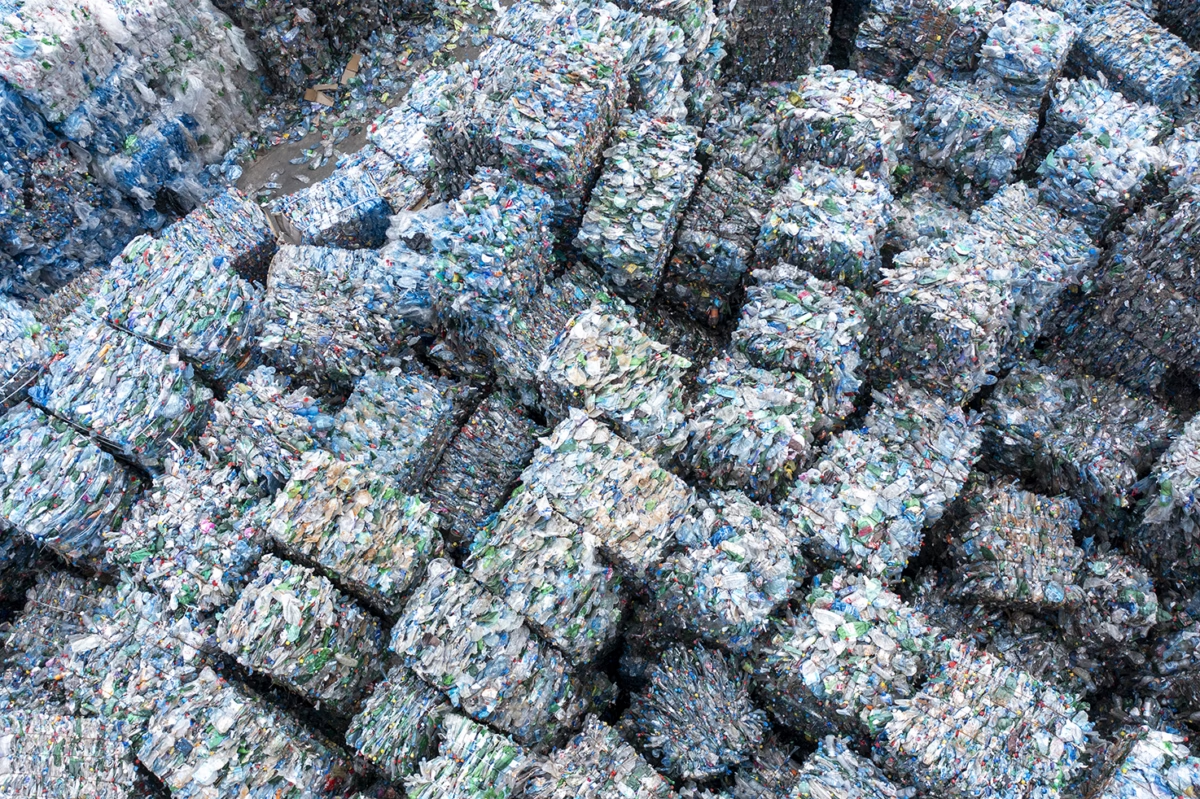
Those materials are compacted into giant blocks called bales, which can weigh thousands of pounds, depending on the density. The bales are loaded onto trucks or trains and become raw material in someone else’s manufacturing process.
Something a lot of folks don’t know is that recyclables are ultimately commodities. Once they’re sorted and processed, those materials can be sold as raw material for manufacturing.
Does one stray burger wrapper ruin the whole batch?
Thankfully, no. Trash can be removed. A perfect recycling stream is almost impossible, and it’s hard to get the message to everyone about what is and isn’t recyclable. On recycling plant tours, I’ve seen all kinds of strange things: pool noodles, whole tricycles, batteries — which are a big no-no, because they’re a fire hazard — but the machines and people do their best to sort them out as fast as they can.
There’s always a threshold for contamination. One candy wrapper isn’t going to ruin the entire stream. It depends on the level of contamination.
What if someone dumps a full cup of coffee in the bin?
Metals and plastics can be washed, and sometimes paper. But it makes work for people and lowers the quality of the recyclables. If a coffee-stained or soggy piece of paper ends up in a bale, the bale is worth less to the buyer because it’s less pure. That hurts the overall recycling economy. Food and drinks also create worker safety issues. Sweet smells attract wasps, and food attracts little rodent friends.
Does Clark earn money from its recyclables?
Not anymore. We used to, when those materials were really in demand — like cardboard during COVID, with all the shipments people were getting. Now the benefit is that recycling costs less per ton than trash. Republic hauls both, and we pay by weight. So, the more we recycle the right way, the more we save.
Do the rules ever change?
They do. Until recently, you were asked to tear greasy pizza boxes in half: clean part in the recycling, greasy part in the trash. Then recyclers like Republic pushed their industry to accept dirtier materials and worked closely with partners to create a process that removes the grease from the cardboard. Similarly, recycling companies pressured industry to accept wax-coated hot beverage cups in the recycling stream, since these are a highly disposed item and used to be a frequent contaminant of recycling. I hope changes like that continue, so we can accept more and more types of materials. But it’s going to take a little peer pressure from average people, speaking up for the changes they want to see.
Do the rules depend on where you live?
Over the years, there’s been a big push toward consistent recycling guidance across Massachusetts. Today, recycling programs across the state accept the same core materials, which makes things much less confusing. I love the Recyclopedia on the Recycle Smart MA website for looking up disposal guidance for specific items.
What about those flammable batteries?
It depends on the battery, but never put any battery in the recycling. Under state rules, regular alkaline batteries can go in the trash. You can also pay extra to have them recycled, since it’s a separate, expensive process. Heavier rechargeable batteries, like lithium-ion, require a separate, fireproof process. Folks can contact Facilities with questions, and ITS can handle rechargeable batteries, like the ones in laptops and phones.
Are you working with IT on electronics recycling?
Yes. [Vice President of ITS] Joe Kalinowski has been incredibly receptive to ideas for handling our e-waste in more environmentally friendly ways. We also talked about tracking our electronics purchases, because there’s an eco-label called EPEAT for phones, printers, computers, multifunction devices, and even servers. EPEAT-certified electronics meet environmental standards that address things like chemicals of concern, energy and climate impacts, use of recycled materials, and what happens to the product at the end of its life.It’s a bit like the Energy Star label on an appliance. I’m collecting that data now for our STARS report.