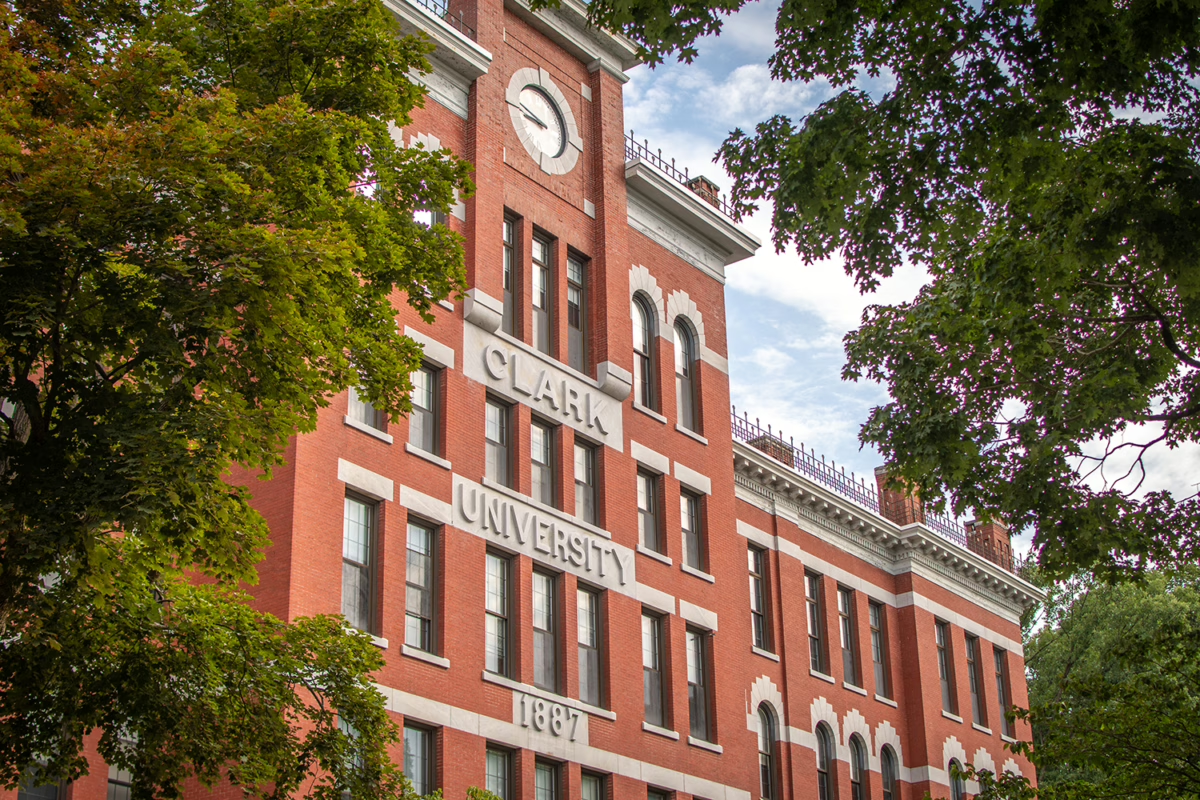
Joseph Corazzini discusses the Carnegie Classification on the Jan. 15 episode of Radio Worcester’s Talk of the Commonwealth
Clark has received the 2026 Carnegie Classification for Community Engagement, which recognizes the University’s commitment to building partnerships, collaborating with the public and private sectors, and making a positive impact in the Worcester community and beyond.
This elective designation is awarded by the American Council on Education (ACE) and the Carnegie Foundation for the Advancement of Teaching. Clark is among the more than 230 schools that received this classification this year for integrating community engagement into academic and campus life. The University previously received the classification in 2010.
“Clark University is honored to be recognized by the Carnegie Foundation for the high level of community engagement that has long been a cornerstone of our institution,” said Clark President David Fithian. “We are proud of, and celebrate, our commitment to creating partnerships that lead to collaborative and meaningful change within the community shared by Clark, the Main South neighborhood, and the city of Worcester. We are living when pluralistic civic engagement is urgently needed to better serve the common good, and where shared responsibility for one another is essential to shaping a stronger future for all.”
In announcing Clark’s achievement, Cammie Jones-Friedrichs, director of the Carnegie Elective Classification for Community Engagement, wrote, “Your institution’s application documented excellent alignment among campus mission, culture, leadership, resources, and practices that support dynamic and noteworthy community engagement.”
To earn the Carnegie designation, Clark completed a rigorous application process that included a detailed self-study of existing projects and partnerships, as well as the institution’s philosophy of community engagement — a multifaceted approach integrating scholarship, research, and community service.
The process was led by the Office of Government and Community Affairs and coordinated by former office administrator Lisa Gillingham. The application committee included Dean of the College Laurie Ross, Assistant Dean Evan Wilson, and University Librarian Laura Robinson.
“Clark University has a long history of institutional commitment to, and partnership with, the Worcester community, and beyond,” says Joseph Corazzini, vice president for government and community affairs. “This local and global engagement ensures that Clark remains at the forefront of fostering social change and advancing knowledge in the service of the public good.”
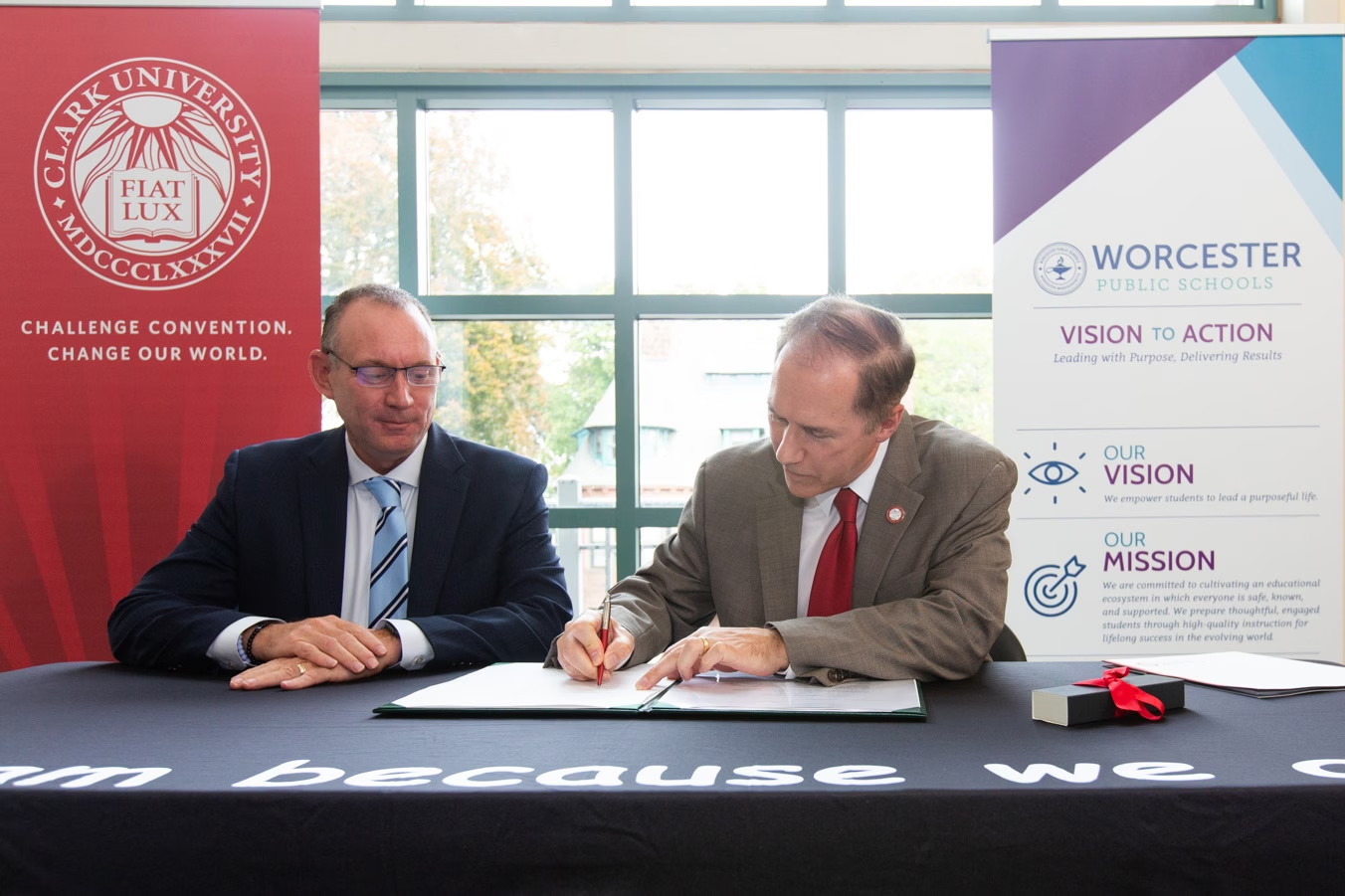
Clark’s deep local engagement includes multiple projects in local schools on issues from Hispanic heritage to mental health; Liberal Arts for Returning Citizens, an education program for formerly incarcerated people; the Small Business Accelerator, an experiential learning lab for entrepreneurs and graduate students; and ongoing collaborations with the Worcester Art Museum. Clark’s partnership with the nearby University Park Campus School (UPCS), a neighborhood school for 7th to 12th graders, is approaching the 30-year mark, and in 2023, the University expanded its University Park Partnership (UPP) Scholarship Zone to enable an additional 1,100 students to qualify every year to attend Clark tuition-free (the University has awarded 165 scholarships — an investment of approximately $11.3 million in the UPP Scholarship program — since the fall of 2000).
The Collaborative for Community Engagement, launched at Clark last year, is a partnership between the offices of Community Engagement and Volunteering, Government and Community Affairs, and the Dean of the College. Its goal is to develop and coordinate intentional engagement between Clark and the Main South neighborhood through programming, resources, and opportunities that meet local needs.
The CE classification has been the leading framework for institutional assessment and recognition of community engagement in U.S. higher education since its first presentation in 2006. It is also a critical benchmarking tool for postsecondary education, used frequently by policymakers, funders, and researchers.