Students share their experiences and education
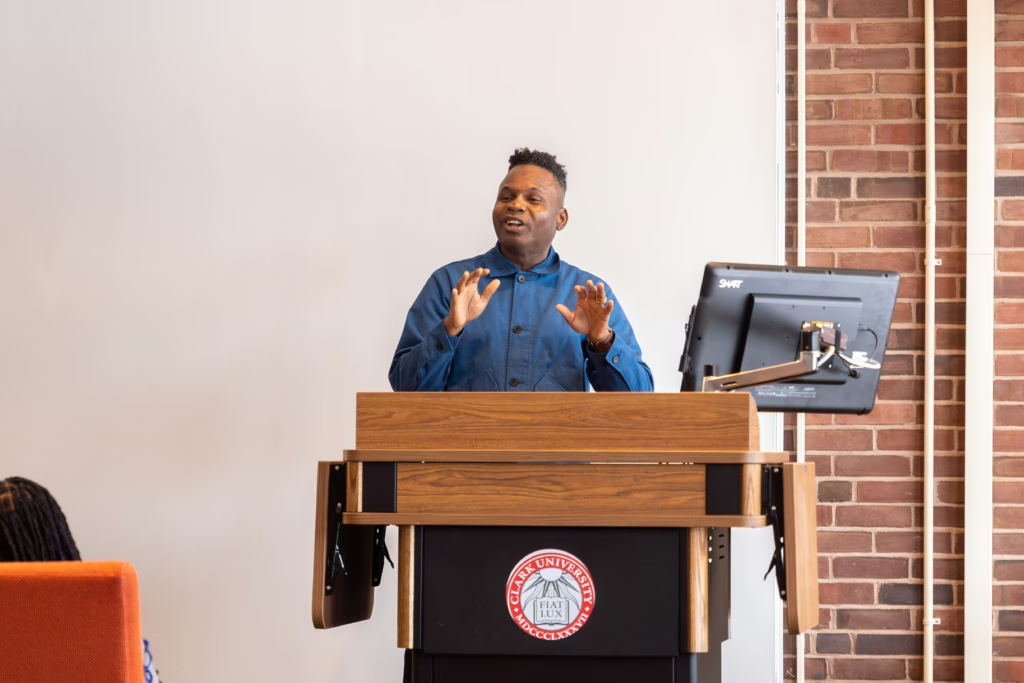
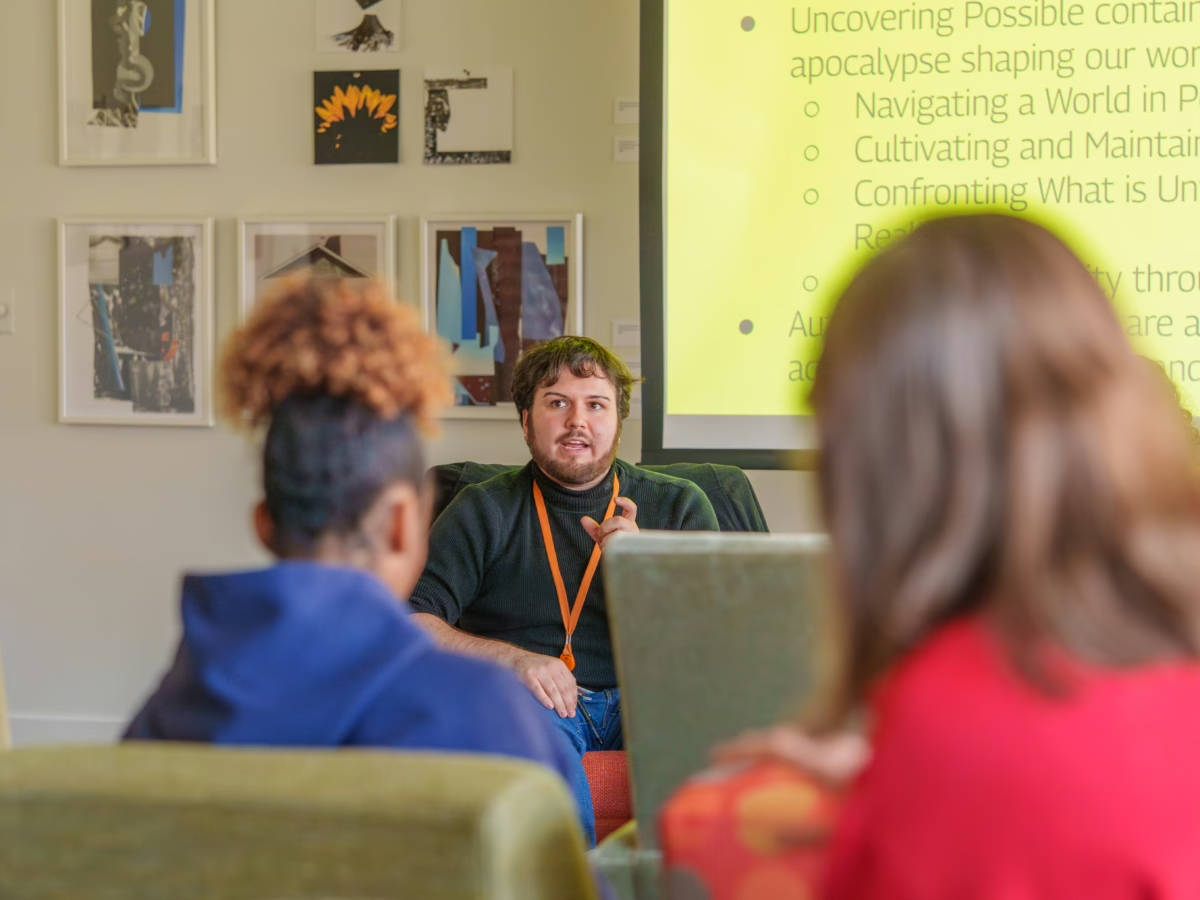
School in Cities: Complexities, Opportunities, and Narratives, a course taught in the fall by Education Professor Raphael Rogers ’94, took a layered approach to exploring the history, goals, and challenges of urban schooling. Students spent time each week observing in a Worcester Public Schools classroom, wrote literature reviews on pressing issues in urban education, and heard from a slate of education professionals who visited class to share their experiences.
Speakers included Caleb Encarnacion Rivera ’17, MAT ’18, Worcester Public Schools director of equity, cultivation, and recruitment; Kefiana Kabati ’17, a Holyoke Public Schools teacher; Loretta Lopez, a therapist and children’s literature author; Brett Iarrobino ’21, MAT ’22, a doctoral student; Cara Berg Powers ’05, the Massachusetts state director at Brown’s Promise and former Clark professor; Nastasia Lawton-Sticklor ’05, M.A. ’06, a fellow at the Climate Disobedience Center; and Nelly Medina, who was a candidate for Worcester Public School Committee at the time of her class visit.
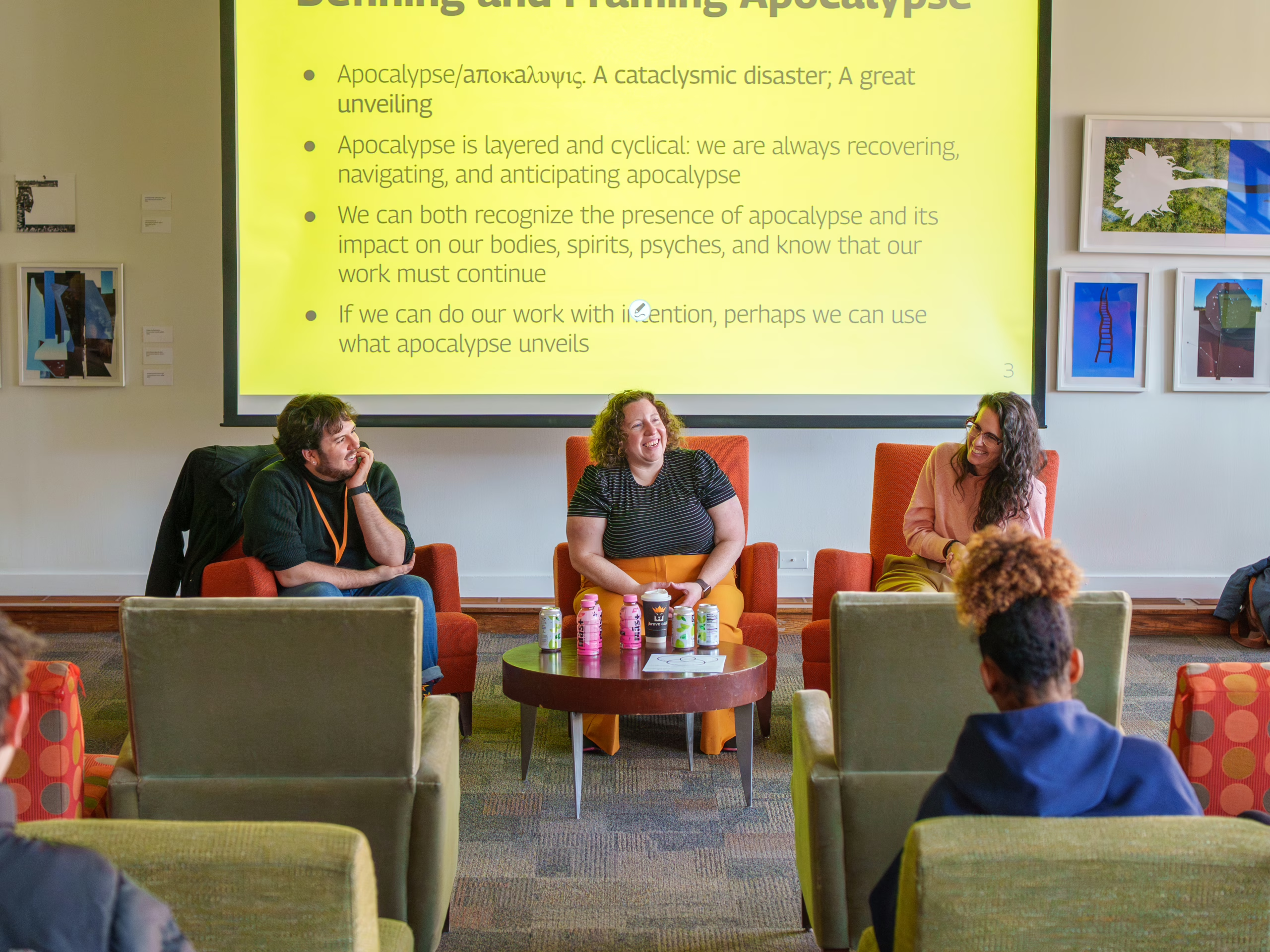
At the end of the semester, three students reflected on how the class experience expanded their understanding of urban education.
Oduwa Iyoha ’28
Iyoha was inspired to take this course because her mother is an educator, and because the course’s touchpoints on educational policy matched well with her political science major.
“Having attended urban schools for most of my life, I thought I understood all the challenges that came with that environment. However, this class revealed that I knew only a small part of the larger, systemic issues in U.S. education,” Iyoha says.
“Professor Rogers, along with the guest speakers he invited to class each week, helped me see education reform from many different perspectives. Each speaker came from a different walk of life and highlighted a new aspect of the work being done to improve schools. Their stories made it clear that there is still so much work to be done, but also that there are passionate, intelligent people determined to fight these issues. This class has inspired me to keep learning about educational reform and to stay engaged in the conversation.”
Iyoha assisted in a seventh-grade class at Claremont Academy and worked on a literature review exploring the school-to-prison pipeline, focusing on the disproportionate impact on Black girls.
“I chose this topic because I’ve seen how this mechanism has affected some of my former classmates,” she says. “One of the most interesting things I found was an article about how colorism affects Black girls in the school-to-prison pipeline. … The article explained that darker-skinned Black girls are often seen as more aggressive and punished more severely.
“I hope that by talking about these experiences, people will gain a deeper understanding of what it truly means to be a Black female student in America and will encourage more thoughtful action to address the specific barriers we face.”
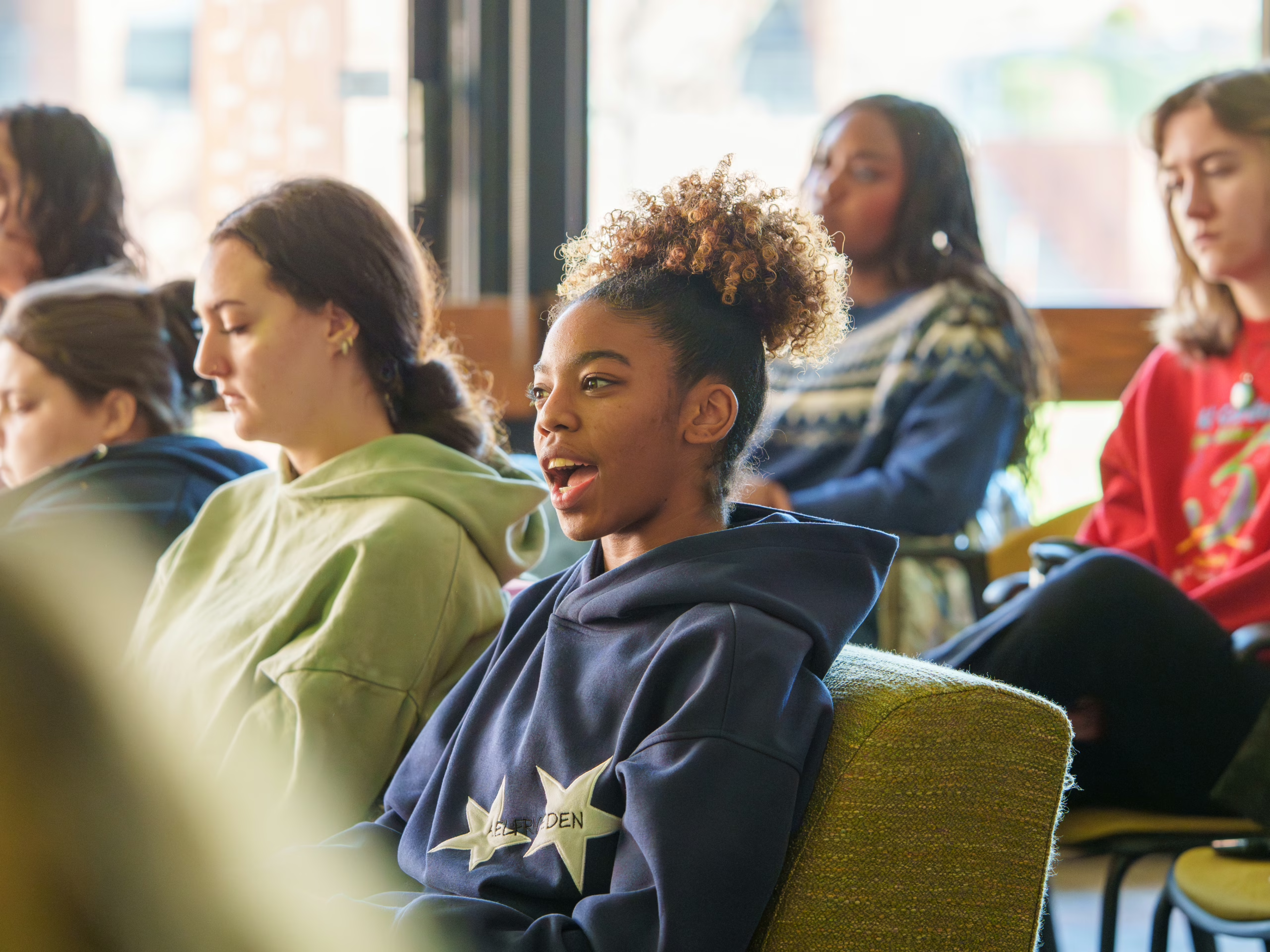
Daniela Quiroga ’26
Quiroga, who majors in sociology with a concentration in urban studies and minors in political science, wants to be an urban planner. A graduate of public urban schools in her hometown of Dallas, Texas, Quiroga was drawn to the course because it’s reflective of her educational experience.
Quiroga participated in her school’s urban debate league and in her literature reviewed she explored whether access to this kind of activity improves students’ overall education and wellbeing.
“Urban debate leagues promote critical thinking and argumentation skills, but debate has historically been an elitist extracurricular. It’s expensive to get access to tutoring and coaching for debate because it’s so specific,” she says.
Quiroga assisted in a tenth-grade English class at Claremont during the semester. “Every week, we had to submit a reflective journal connecting what we saw in the classroom to topics we’ve covered in the course,” she says. “It was really hard to keep it to one page every week.”
“Professor Rogers was very intentional with what he was teaching and what he was having us read,” she says. “I was able to connect a lot of my personal experiences to the course. Students shared in class about their connections and their experiences, which is always a beautiful thing. You want to see people be able to tell their stories.”
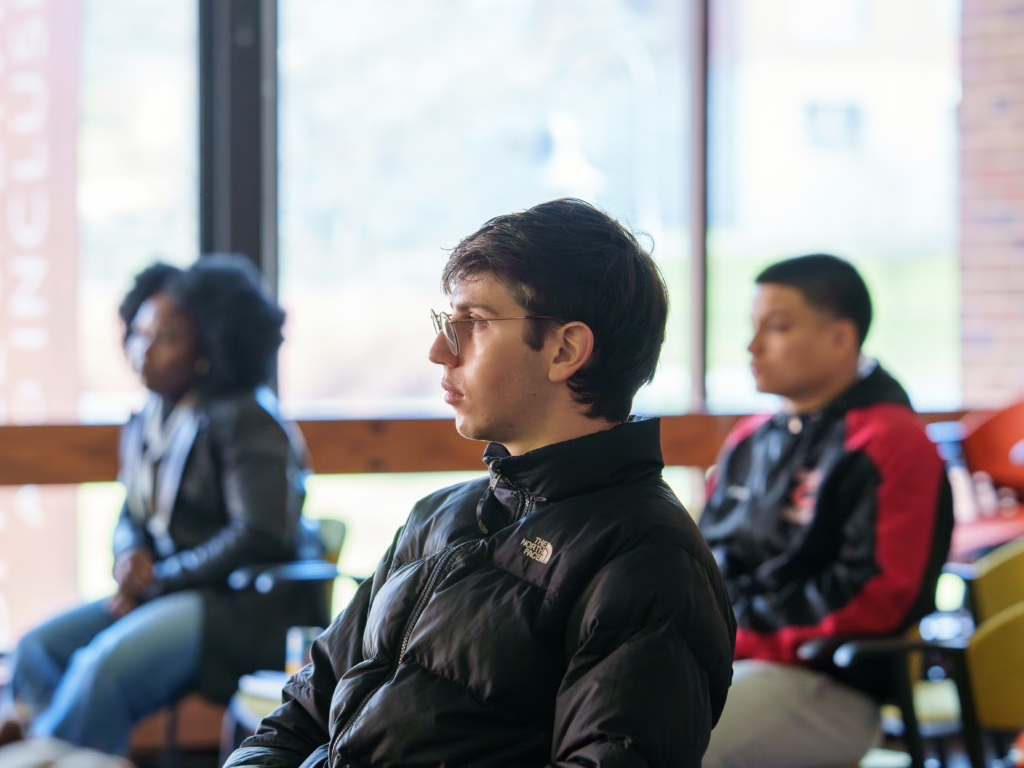
Jennalieze Santana Castillo ’28
Santana Castillo hopes to be a therapist at a children’s home and felt the School in Cities course would complement her psychology major. This class has inspired her to think about ways to provide support for children in foster care, especially those in Worcester.
“I want to work with community centers to try and see if we can implement a program for foster care students,” she says. “I wouldn’t have found that passion or that interest had it not been for this course, which broadens what you think is capable in education and in yourself.”
Santana Castillo’s literature review explored opportunity gaps in special education. While researching the topic, she read about language barriers and other equity issues in special education classrooms.
“My research paper is a policy proposal suggesting that we better educate our teachers so that they can better educate special education students,” she says.
Santana Castillo assisted middle school math teacher Alyssa Conti at University Park Campus School, which opened her eyes to strategies teachers can use to make challenging subjects approachable.
“I never liked math and I think it was because I was constantly being taught at,” says Santana Castillo. “Ms. Conti works with the students. She jokes with them, and she’s relevant and funny.”