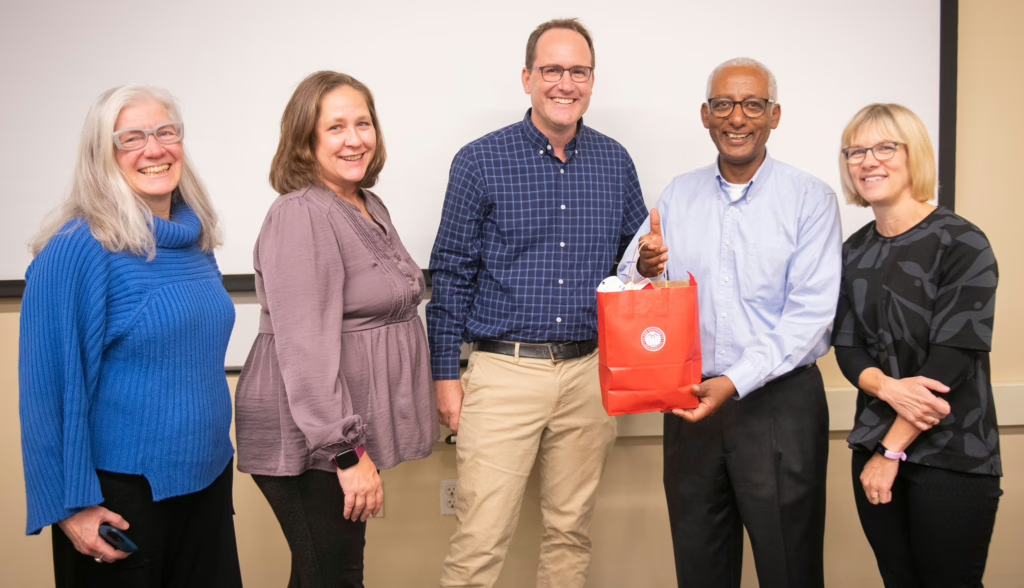
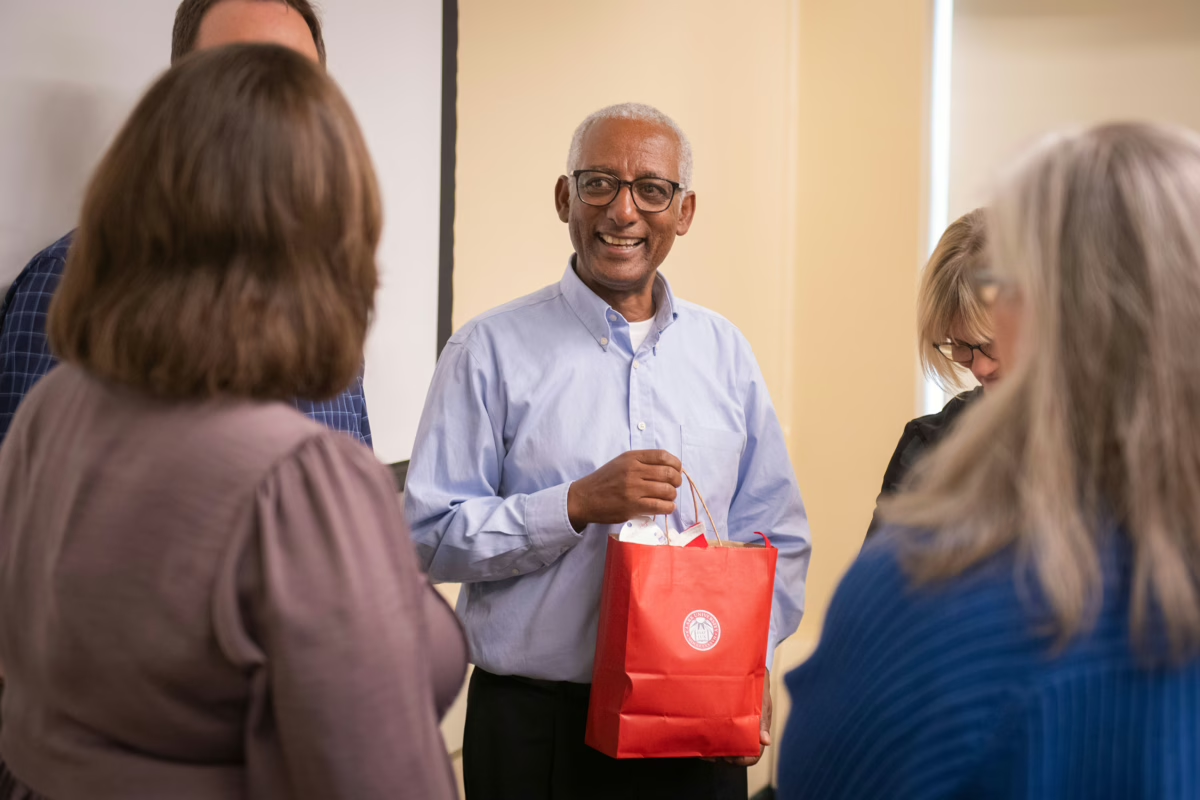
Dr. Teferi Abate, a senior research anthropologist at Yale and 2022-23 Fulbright Scholar at Wollo University, meets with Clark faculty and staff after his talk on “Vernacular Explanations of Rainfall Variability and Cascading Agrarian Shocks in Wollo, Northeastern Ethiopia.”
Agreement celebrated at talk by Yale anthropologist on Wollo farmers’ resilience amid climate threats
As part of a research project with Professor Morgan Ruelle of Clark’s School of Climate, Environment, and Society, Marshall Fredericksen, M.S.-ES&P ’26, spent last summer interviewing farmers in Ethiopia’s Wollo area who have proven resilient in the face of drought, famine, and conflict.
Funded by The Rockefeller Foundation, the two Clark researchers and their partners in the U.S. and Ethiopia are investigating whether farmers’ traditional practice of growing grain mixtures could offer a climate-resilient solution to food insecurity in Ethiopia and other parts of the world.
Now, Ruelle and his colleagues in the School of Climate, Environment, and Society are excited to expand their collaborations in Ethiopia. In October, Clark signed a three-year agreement with one of the project’s partner institutions, Wollo University, to “support collaborative research, teaching, and student engagement between our two institutions, with the intention to renew and deepen our partnership over time.”
Besides joint research projects and collaborative grant proposals, the agreement allows for faculty and student exchanges and “a streamlined application pathway for Wollo students pursuing graduate study at Clark,” along with “shared seminars, workshops, and short-term programs, staff development, and exchange of academic resources,” according to a memo of understanding.
Ruelle announced the agreement at an Oct. 30 Clark lecture by Dr. Teferi Abate, a senior research anthropologist with the Human Relations Area Files and the Council on African Studies at Yale University.
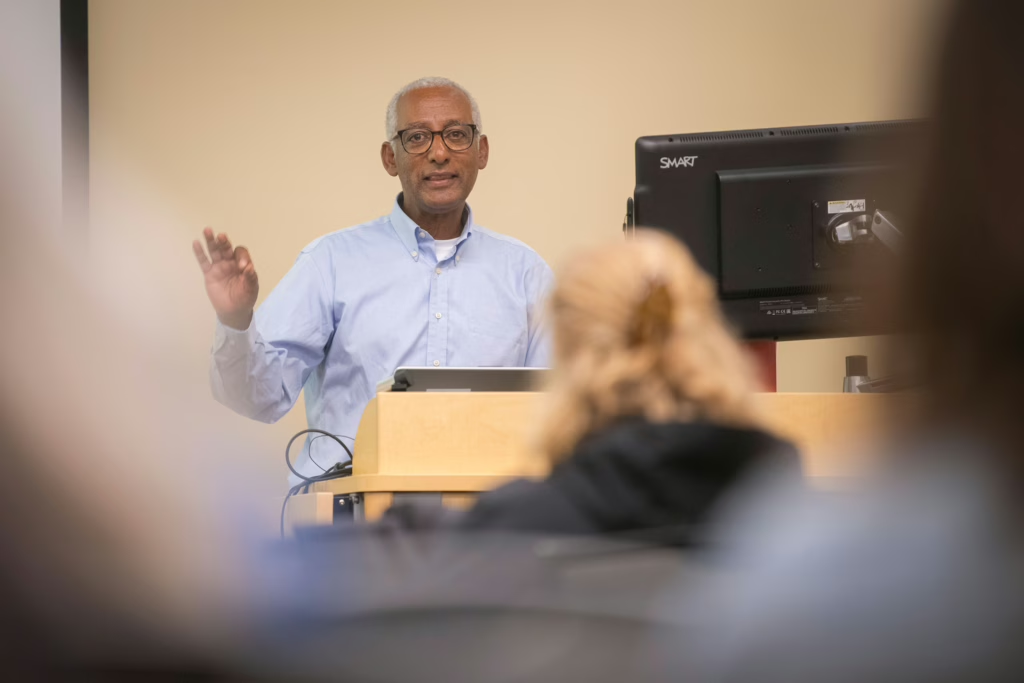
“You can’t survive in a place like this unless you have the ability to absorb all these layers of shock.”
— Dr. teferi abate, speaking about wollo farmers’ resilience
“I want to thank Dr. Teferi Abate for his instrumental role in nurturing the academic relationships that have made this moment possible,” Ruelle said. “This year, Dr. Teferi has played an important role in strengthening Clark’s partnership with colleagues at Wollo University, supporting collaborative research and faculty engagement.”
Ruelle also thanked Wollo University President Dr. Awol Seid and Dr. Berhan Asmame, vice president of academic affairs, along with Sarah Lopolito, associate dean and director of Clark’s Office of Global Engagement, who worked with Dr. Asressie Molla, director of international relations and partnerships at Wollo, to craft the agreement.
During his talk for the George Perkins Marsh Institute Seminar Series, Teferi drew upon decades of research into how people in the communities where he grew up adapt to the impacts of recurrent climate shocks and compounding local stressors.
As a Fulbright Scholar at Wollo University in 2022-23, Teferi investigated how farming families in nine communities in Wollo explain changing patterns of rainfall and other climate changes affecting their crops and livelihoods. He emphasized that climate change is one of many challenges faced by farmers in the region, including political instability and conflict, disease, pests, violent winds, invasive weeds, chronic food insecurity, unemployment, and market volatility.
Teferi’s anthropological study spanned farming communities in lowlands, midlands and highlands that experience different patterns of precipitation. He returned to areas where he had conducted his dissertation research for Boston university in 1996 to 1998. He compared farmers’ descriptions of rainfall with meteorological data.
“Farmers have a kind of chart in their head,” he explained, that categorizes variations in rainfall across time and space. They pay particular attention to the onset, duration, and cessation of the rainy season, but also to the frequency, intensity, and spatial coverage of rain. Farmers’ observations tend to be more specific — and therefore relevant — than available meteorological data. In addition, farmers believe rainfall is influenced by supernatural forces. In Wollo, “people trust in God or Allah,” Teferi said.
Devout Christians and Muslims have lived and farmed side by side for centuries in the region. Teferi described how these groups come together in rituals asking their creator and other sacred beings to bring rain. Overall, Teferi praised the resilience he finds in Wollo. “You can’t survive in a place like this unless you have the ability to absorb all these layers of shock.”
Dr. Teferi’s talk at Clark was a return visit; in 2008-09, he served as a visiting assistant professor in what is now the Department of Sustainability and Social Justice, teaching courses and mentoring graduate students.