Will join fellow psychology students to present at regional convention
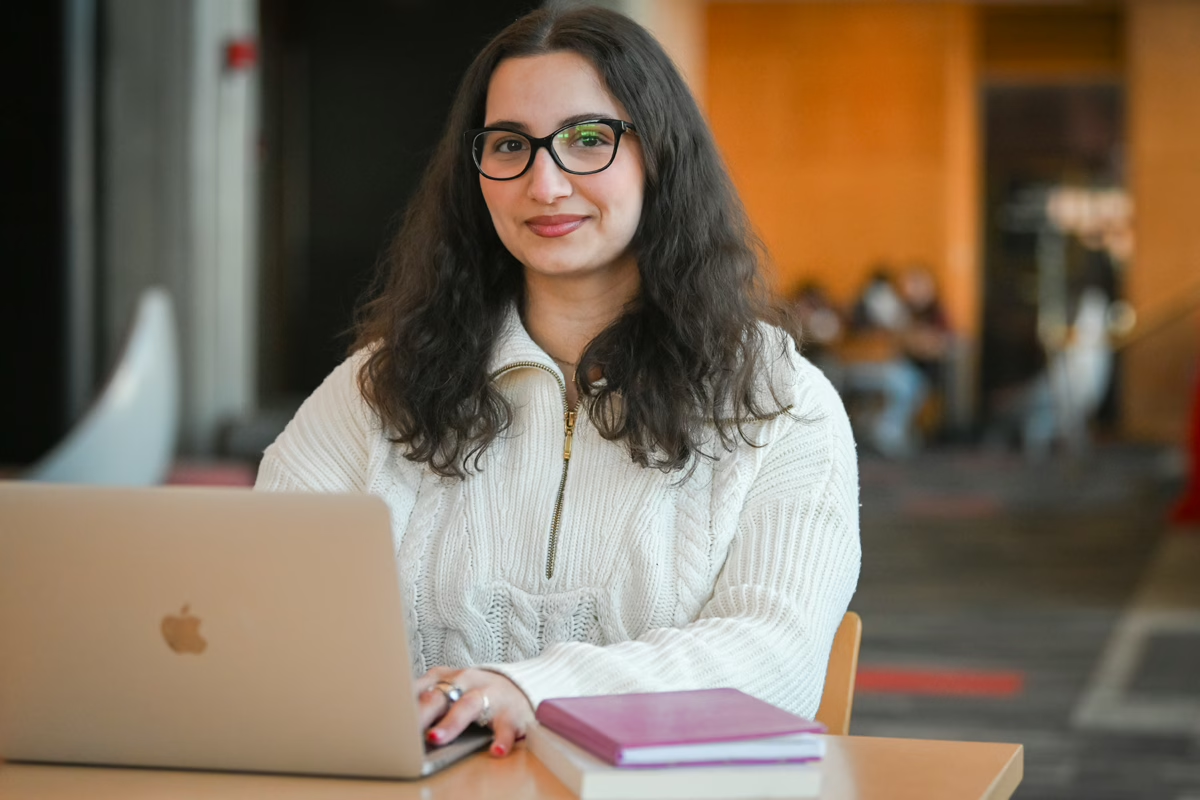
As a rower on the Clark women’s team and an avid weightlifter, Sara Parvin ’26 understands both the joy and the work that goes into keeping a body fit. From an athlete’s perspective, the calculus is relatively straightforward: proper exercise and nutrition coupled with technical training yield results in strength and speed.
But what about when the body betrays itself and fitness gives way to chronic illness? What toll does an unremitting physical decline exact on a person? On that person’s family?
Parvin, a psychology major on a pre-med track, has been interning in the Neurology Department at UMass Chan Medical School, where the answers to those difficult questions are the source of ongoing research and treatment. The Clark senior is shadowing doctors and practitioners who work with patients living with various forms of muscular dystrophy, including Facioscapulohumeral muscular dystrophy (FSHD), a genetic, progressive, and inherited muscle disorder that primarily causes wasting and weakness in the face, shoulders, and upper arms, and Duchenne muscular dystrophy, which most commonly affects boys.

“Through experience of working with those boys I’ve met incredible families,” Parvin says. “The families come from all different socioeconomic statuses and different kinds of households.”
She has accompanied physicians, research coordinators, Ph.D. candidates, and medical students on the job, observing them as they interact with patients and families who are seeking not only medical answers but also assistance in securing resources that can offer some measure of comfort. The experience has given Parvin the opportunity to speak directly with patients and learn about their lives in ways that she describes as “eye-opening.” That work, as well as a volunteer post in an inpatient nursing unit at UMass Memorial Hospital, has inspired her to deeply explore the nuances and challenges of patient care.
“I want to do more research in this area,” she notes. “I’ve had people say, ‘Why do you want to work there? It’s so depressing.’ Yes, these are serious conditions, but there’s also hope, resilience, and groundbreaking research happening every day. I want to be part of that. As my time at Clark wraps up, I feel more certain than ever that this is my path.”
Parvin will take the MCATs next month with an eye toward entering medical school after a gap year. Her goal is to enter the field of adolescent psychiatry. “I know the road to medical school is demanding with the acceptance rates being low and the competition being intense, but I’m prepared for it,” she insists.
She has done deep academic dives into psychopathology with Professor Esteban Cardemil, learning how medications can alter the brain. And she cites the biochemistry coursework with Professor Arundhati Nag as significantly expanding her understanding of how the human body functions. As part of her internship, she is allowed to attend sessions in which medical staff are trained to conduct clinical trials involving new pharmaceuticals.
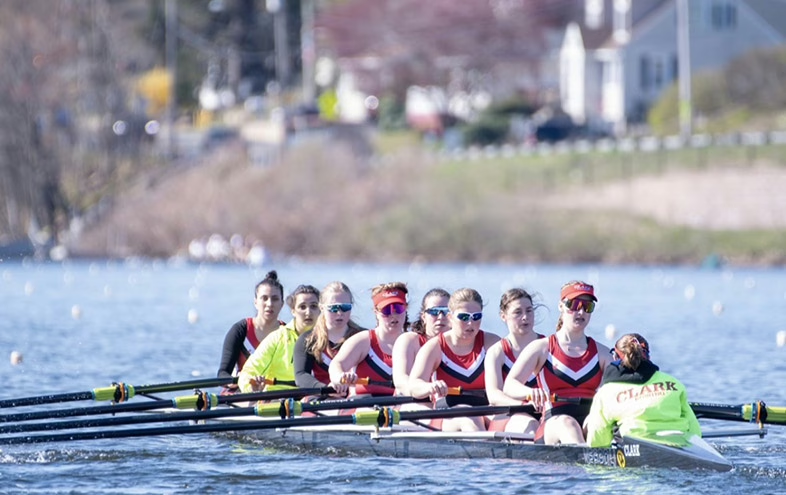
The Clark senior has been training for her final year on the rowing team (the bow is her favored position), combining a regimen of weightlifting and indoor training while waiting for the ice on Lake Quinsigamond to thaw. The team is getting antsy to train on the water, which they do in the early morning hours under the guidance of Coach Michael McDonald — who, Parvin notes, has given them the opportunity to compete in major regattas like the Head of the Charles and the San Diego Crew Classic.
“When we row, it’s so beautiful. We see the sunrise,” she says. “By the time most students are waking up, I’ve already completed a full workout and am ready to head to class. That early-morning routine sets the tone for the rest of my day.”
Outside of school, the Worcester native works as a fitness attendant at the Jewish Community Center, where, during the off-season, she begins her shift at 5 a.m., welcoming the early birds to the weight room.
The irony is not lost on Parvin that, while she’s preparing for the rigors of competition, her internship brings her into contact with people who face profound physical limitations. She’s talked with patients and their families about the challenges involved with navigating their daily lives.
“I’ve learned so much from these patients,” she says, “especially with issues surrounding accessibility. They don’t get to play sports when and how they want to play. They can’t travel where they want to go, when they want to go. It really makes me think differently about the world.”
Parvin minors in sociology, and notes that classes with sociology professors Deborah Merrill and Jack Delehanty have provided valuable context to the socioeconomic and medical challenges faced by the families she’s encountered.
“I’ve met families who are very fortunate and who have been able to come to UMass from other states. And I’ve also met single parents who worry about facing eviction while working multiple jobs to support their homes. Some families have the resources to get the best care available, while others are barely holding on.
“What’s stayed with me is watching the doctors try to help in ways that go beyond medicine by connecting families with social services and helping them navigate systems they didn’t even know existed.”
Last semester, Parvin presented a project at ClarkFEST detailing how artificial intelligence, for all its potential benefits to medicine, can never replace human empathy. Later this month, she will present at the Eastern Psychological Association in Boston on the human need for physical contact, or “touch hunger” (see related story). As she finishes out her senior year, Parvin is retaining her place at the bow — of her boat, her academics, and her future in medicine.
“Clark prepared me for this,” she says. “My professors here pushed me to think critically and compassionately at the same time. Now, as I’m finishing my last semester, I can see how everything I’ve learned within my major, minor, and premed courses comes together in this work. The hospital feels like home to me, the way Clark has felt like home.”