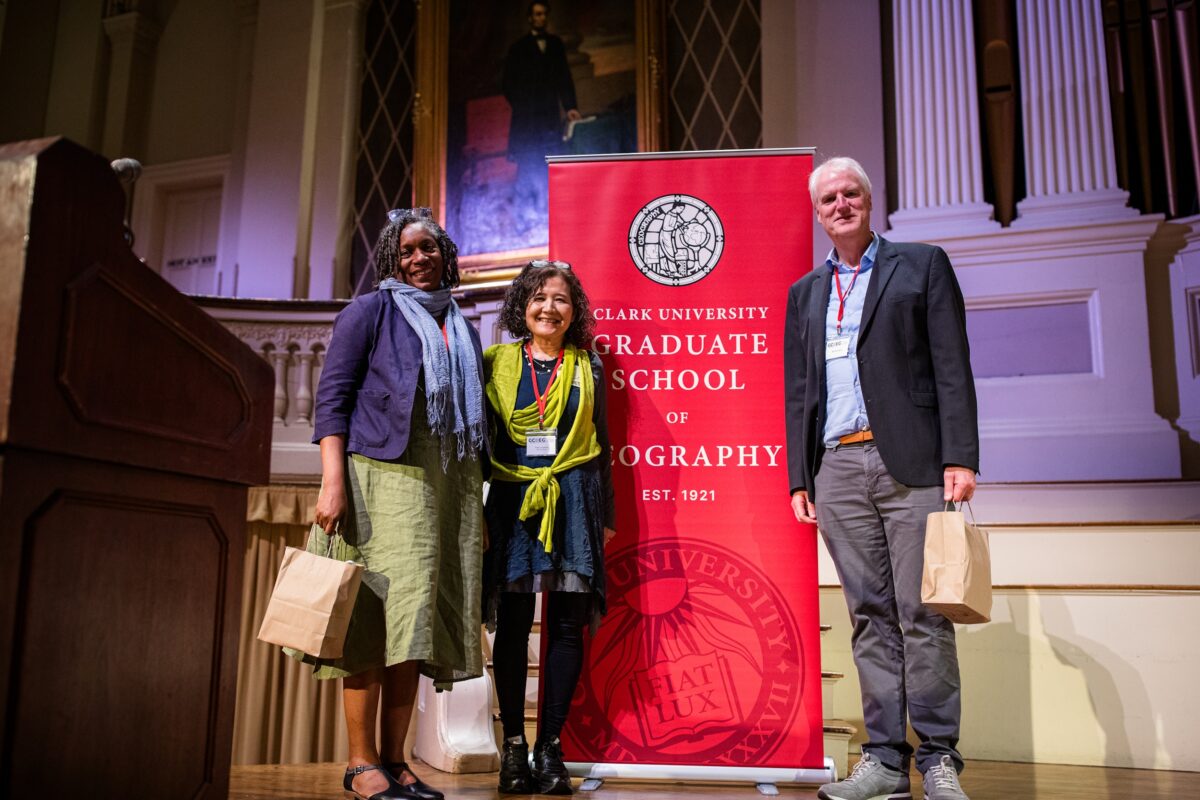
Clark Geography Professor Yuko Aoyama, center, organizer of the 7th Global Economic Geography Conference, is flanked by keynote speakers Beverley Mullings, professor of political economy at the University of Toronto, and Ron Boschma, professor of regional economics at Utrecht University in the Netherlands. (All photos by Nathan Fiske)
‘Economic geography is all about networks’
Clark University has long been known as the site of Sigmund Freud’s only visit to the United States, in 1909. Now the University can lay claim to be the first place in America to host the Global Conference on Economic Geography, which has been held in far-flung cities, from Singapore to Dublin, every several years since 2000.
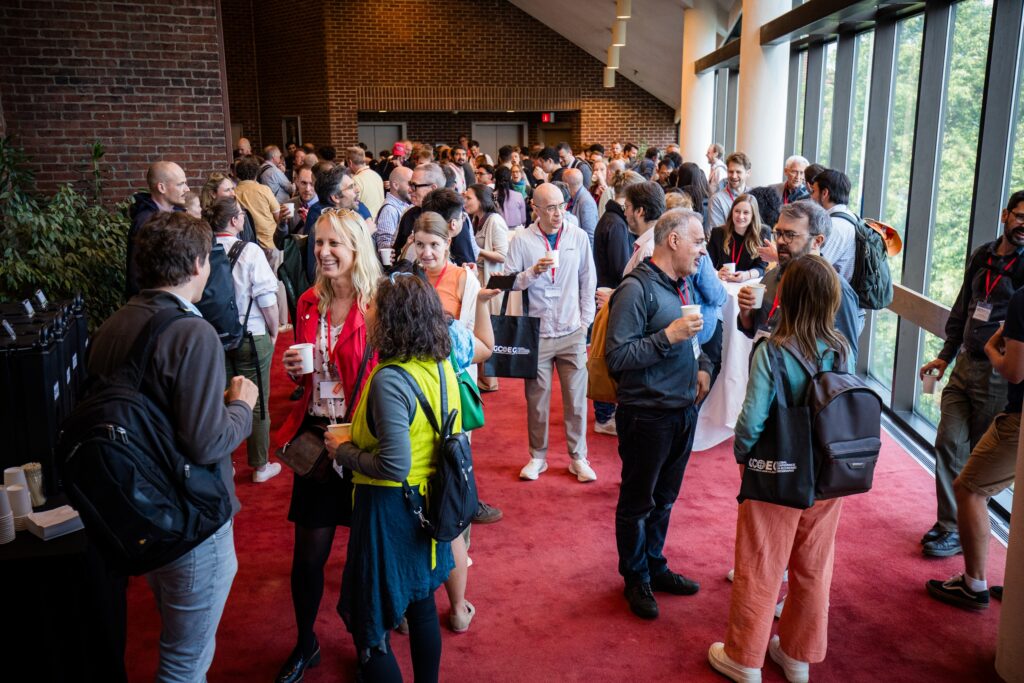
More than 400 economic geographers from around the world gathered on campus June 4-8 to present papers, attend roundtables, and network with colleagues for the 7th Global Conference on Economic Geography. Roundtable topics included the impacts of artificial intelligence, Indigenous self-determination, U.S.-China technology competition, sustainable futures, economic injustice and the law, and more.
Economic geographers regard the Clark campus as a “pilgrimage site,” with a century-old Graduate School of Geography, and the place where Clark President Wallace Atwood, in 1925, founded the esteemed Economic Geography journal, according to conference organizer and Geography Professor Yuko Aoyama. The conference marked the celebration of the centennial anniversary of the journal, which is still owned by Clark. Furthermore, as a key player in America’s 19th-century Industrial Revolution, Worcester’s history and development is of great interest to many of the participants.
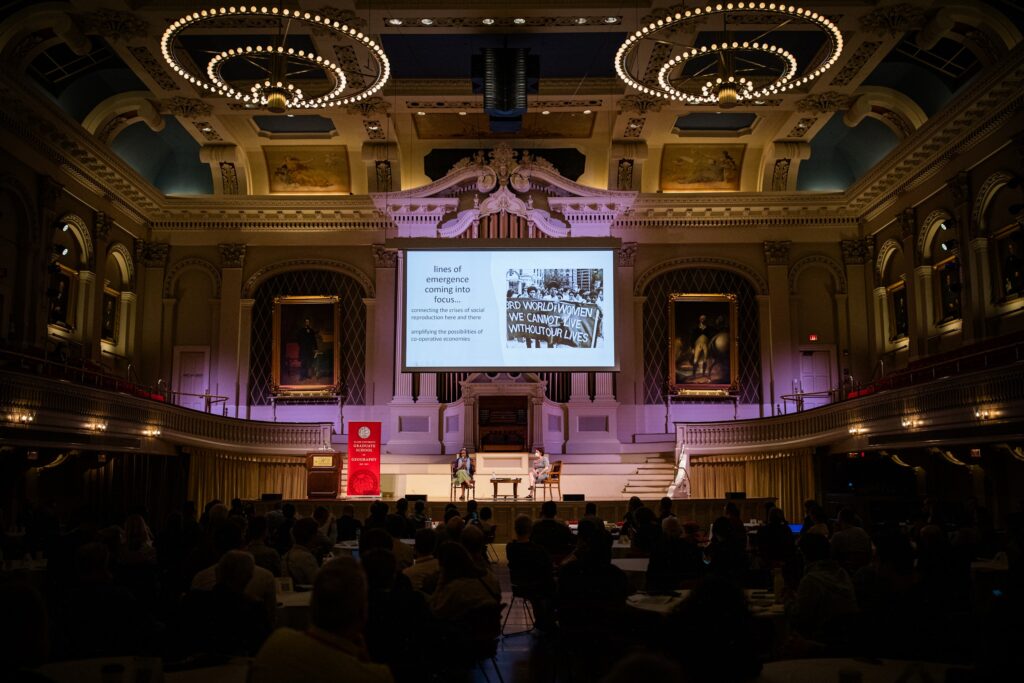
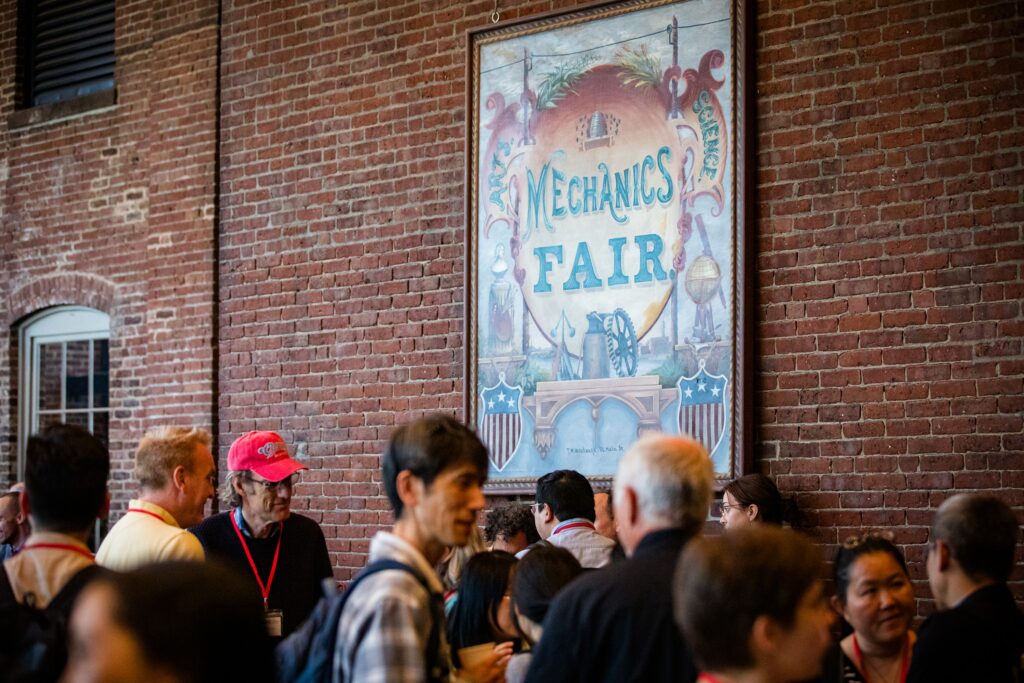
“For those reasons, it was important to host the conference on this campus,” said Aoyama, who chose historic Mechanics Hall for the conference’s keynote lectures. The downtown venue was built by Worcester’s Mechanics Association in 1857 to provide cultural and educational activities for members.
A subfield of geography, “economic geography is all about networks,” she explained. “Economic geographers study where the economic activities are occurring, which is important because we need to understand where the future jobs will be located and where regional development will occur. And where the future jobs are located will determine where the people will be.”
How and why regions grow economies

Ron Boschma, one of two keynote speakers opening the conference at Mechanics Hall on June 4, explained how, historically, regions that are home to “institutional complementaries” have seen more successful development and diversification.
“What enabled this institutional change? Why are some regions more capable of inducing institutional change?” asked Boschma, professor of regional economics at Utrecht University in the Netherlands in his keynote, “Institutional Complementaries and Long-Term Evolution of Regions.”
One example, he said, is Île-de-France, the political and economic center of France. The country’s wealthiest region is densely populated, with numerous residents possessing specialized skills in finance, IT, optics, electronics, aerospace, and other high-tech manufacturing. These interconnected sectors have brought the region much economic success, Boschma said.
When a region has “low institutional relatedness,” it would be harder to achieve success, he explained. A region harboring oil and gas industries, he said, might find it hard to develop and transition to wind-power companies.
Boschma suggested that his peers use a framework based on how institutions are related to each other, by which economic geographers could more precisely determine “what type of institutional change is feasible in some regions but not in other regions.”
Drawing from the experiences of the 99%
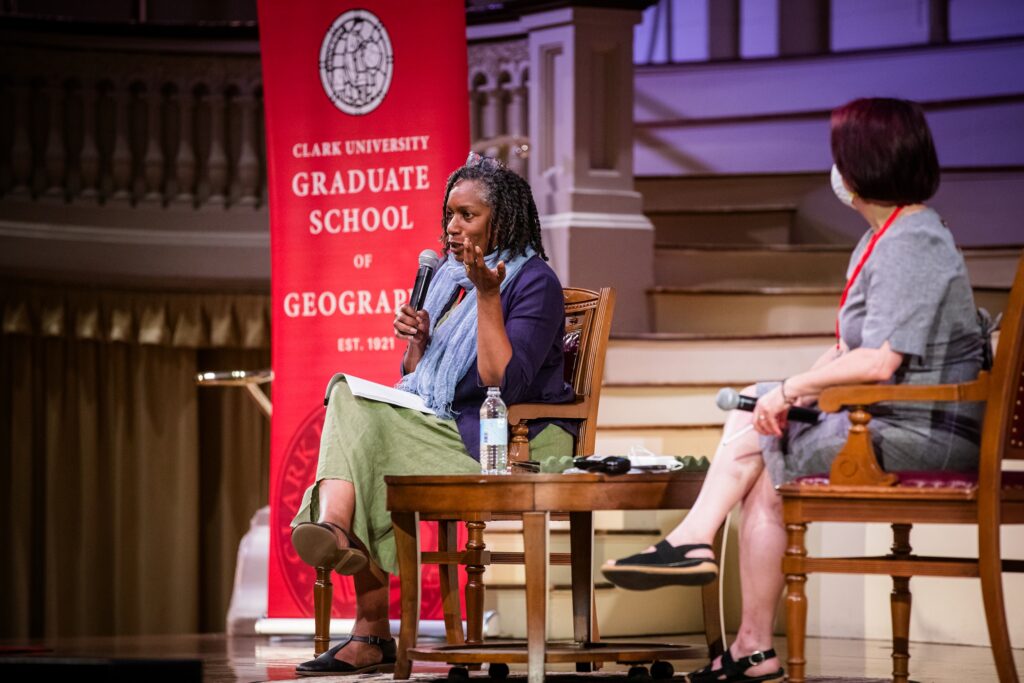
In the second keynote, Beverley Mullings, professor of political economy at the University of Toronto, explored how her peers might “build an economic geography rooted in the experiences of ‘the rest,’ the 99%, and those at the bottom of global hierarchies” to confront what the 2023 World Economic Forum called an “era of polycrisis.”
“Overlapping crises linked to economic insecurity, climate catastrophe, geopolitical conflict, pandemics, food and water insecurity, amplify each other, creating new risks like unsustainable debt and low growth,” said Mullings in her talk, “Towards an Economic Geography of the 99%: Building Sustainable Futures from the Bottom Up.” “For many in the majority world, these risks are not new, but the reactions to them by powerful interest groups and states are.”
The impacts of climate change have led to extreme weather events — 151 in 2024, according to the World Meteorological Association — “that destroyed vital crops, lives, infrastructure, and displaced over 800,000 people worldwide,” she added. “As resources dwindle, promises of prosperity can no longer conceal the stark inequalities in racial capitalism, and in this moment, all strategies of colonial conflict are being revived.”
Quoting Guyanese feminist activist and scholar Andaiye, who argued that “The angle you look from determines what you see,” Mullings urged her peers to “think from elsewhere,” drawing from the knowledge and experiences of the 99%. She provided examples of collective, community-oriented, local economies that have found success in the Caribbean, to demonstrate how many among the world’s poorest have routinely challenged the dominance of the market economy as the primary means through which society takes shape.
Mullings argued that in a world of growing uncertainty and global polycrises, “conjunctural analysis” can offer a more nuanced methodology for understanding how communities across the majority world are sustaining economies built on principles of care and reciprocity. “As economic geographers, we can begin that task of connecting the crisis of social reproduction here to the crisis there,” she said, and “reorienting our gaze towards cooperative principle that motivates economies based on care.”
The 8th Global Conference on Economic Geography is scheduled for Rome in 2028, hosted by the Italian National Research Council and Sapienza University.