


Polar research blooms inside the hot spots
New Englanders know the summer is painfully brief, so by the time July rolls around they make sure to head to the water. That could mean surfing in Narragansett, Rhode Island, boating on Lake Winnipesaukee, New Hampshire, or kayaking down the Connecticut River.
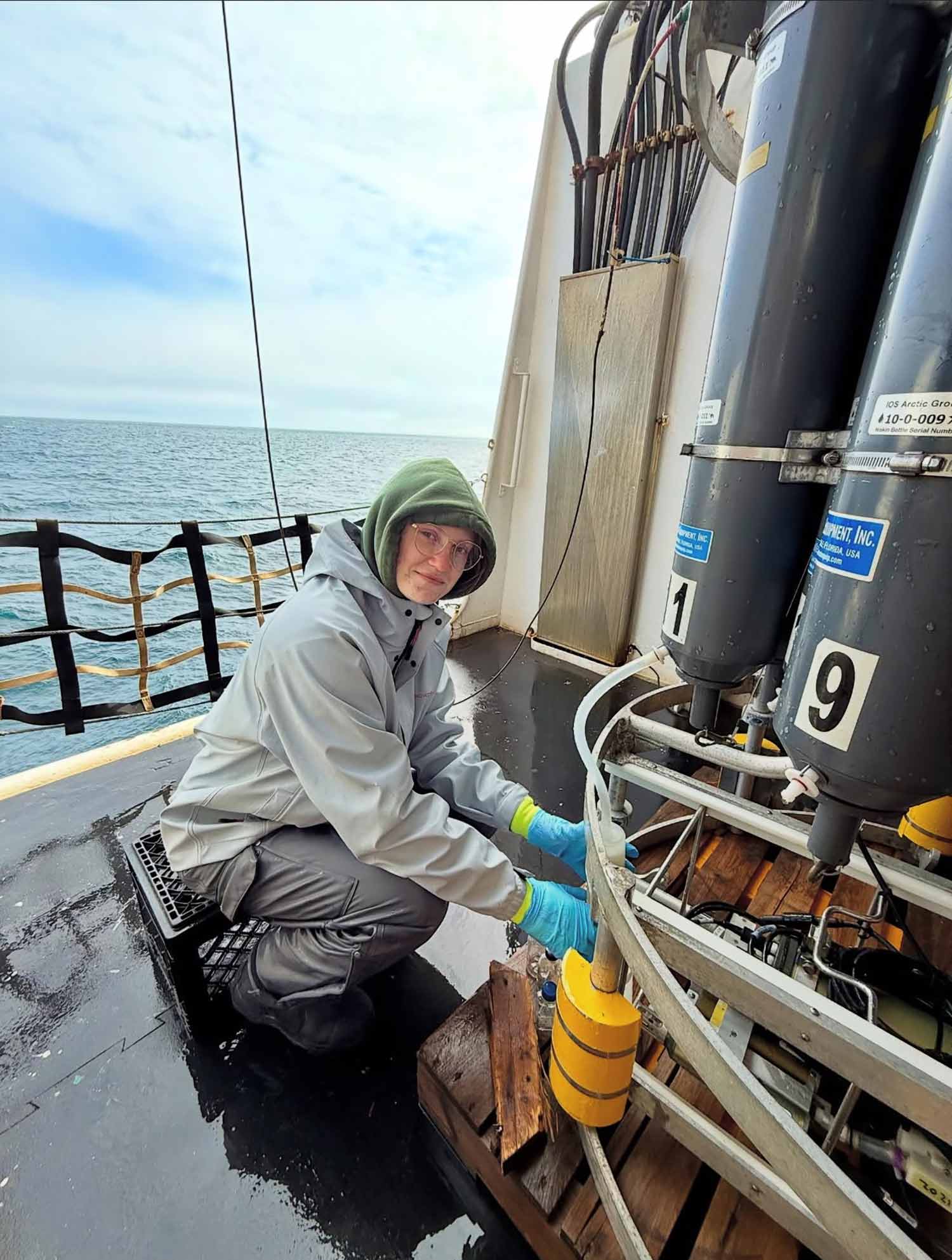
Or, in the case of South Portland, Maine, native Ella Christie ’27, it would mean traveling farther afield, collecting water samples in the Northern Bering Strait and the Southern Chukchi Sea to better understand how climate change is impacting fragile marine ecosystems.
From July 17 to 29, Christie joined Geography Professor Karen Frey’s Polar Science Research Laboratory team aboard the Sir Wilfrid Laurier, a Canadian Coast Guard icebreaker, to conduct studies of the water for the Distributed Biological Observatory, a multidisciplinary Arctic Ocean-sampling program. The observatory has designated eight “hot spots” across the Bering, Chukchi, and Beaufort seas, chosen because of their high concentrations of ecosystem productivity, biodiversity, and overall rates of change.
Christie, an environmental science major with an interest in polar research, knew she wanted to study with Frey before she even arrived at Clark. During her sophomore year, she approached the professor looking for summer internship recommendations.
“Professor Frey said, ‘I’ll do you one better,’ ” Christie recalls. “She told me she had an opportunity aboard a research cruise if I wanted to join, and I said, ‘Absolutely.’ ”
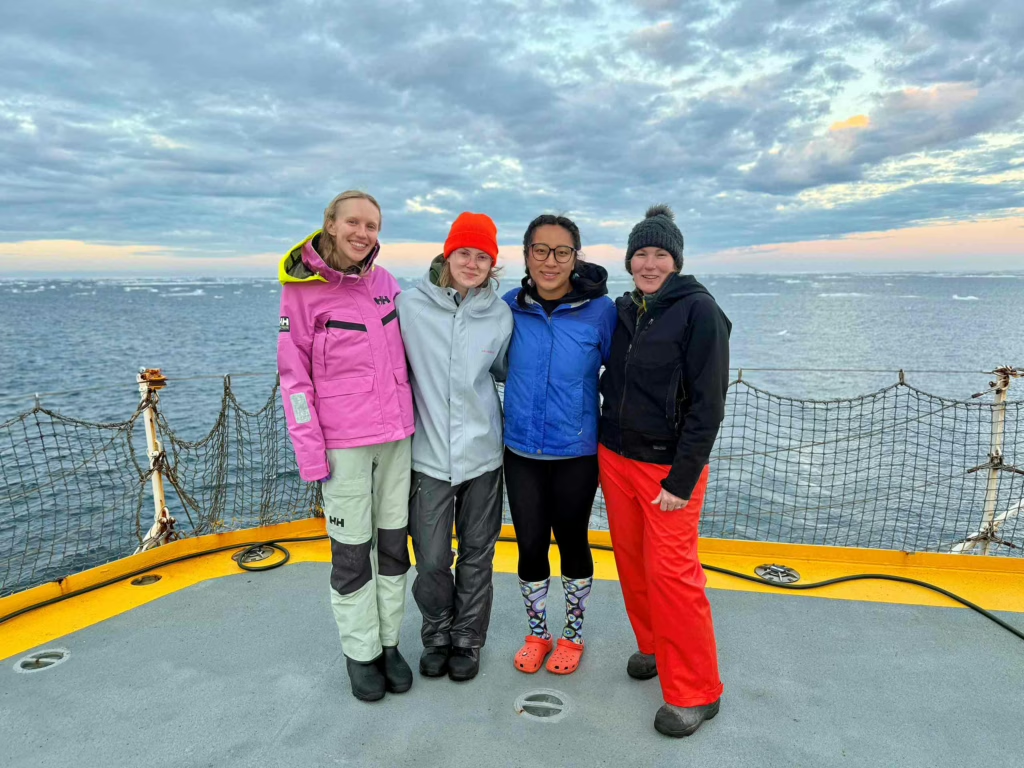
In addition to Christie, Frey’s team included Clark doctoral students Morgan Lehman and Anna Zhu. Also on board were research teams from the University of Maryland Center for Environmental Science; the Canadian Institute of Ocean Sciences, Fisheries and Oceans; the University of Victoria, British Columbia, Canada; a marine birder from the U.S. Fish and Wildlife Services, and crew members from the Canadian Coast Guard.
Off the coast of Alaska, Christie pulled up water samples at 10-meter increments; the samples were then taken to a lab on board and processed, later to be analyzed for numerous biogeochemical components, including chlorophyll, suspended particulate matter, dissolved organic matter, and algal assemblages. Hundreds of samples were brought back to Frey’s Clark lab for these analyses. Christie is assisting with the research this semester.
“We don’t have to keep going the way we’re going.”
“We started in Nome and sampled at places near St. Lawrence Island and the Diomede Islands,” Christie says. “Visiting Utqiagvik, Alaska, which is the northernmost point in the U.S., was very cool, just to be able to say that I’ve been there.”
A critical component of the project is monitoring changes in algae in the water. Significant increases in algae have been caused by the rapid retreat of sea ice, and those algal “blooms” can sometimes be disruptive, even deadly, to marine life, she says.
The experience of sailing and working aboard the Sir Wilfrid Laurier was memorable for the Clark junior. Christie notes that Lehman and Zhu were exceptionally welcoming and patient, “and broke down certain things for me, which I found very helpful.”
“You have a bunch of people who don’t have a whole lot of sleep under their belt because they’re always working,” she says with a laugh. “There were stretches where we’d do sampling, then go to sleep for an hour, and just repeat that cycle until we were done.”
Whatever time remained for socializing was usually spent in the mess hall, where the researchers and crew members gathered for meals and conversation. During rare downtime they played a bit of cribbage, a game Christie was taught by the crew.
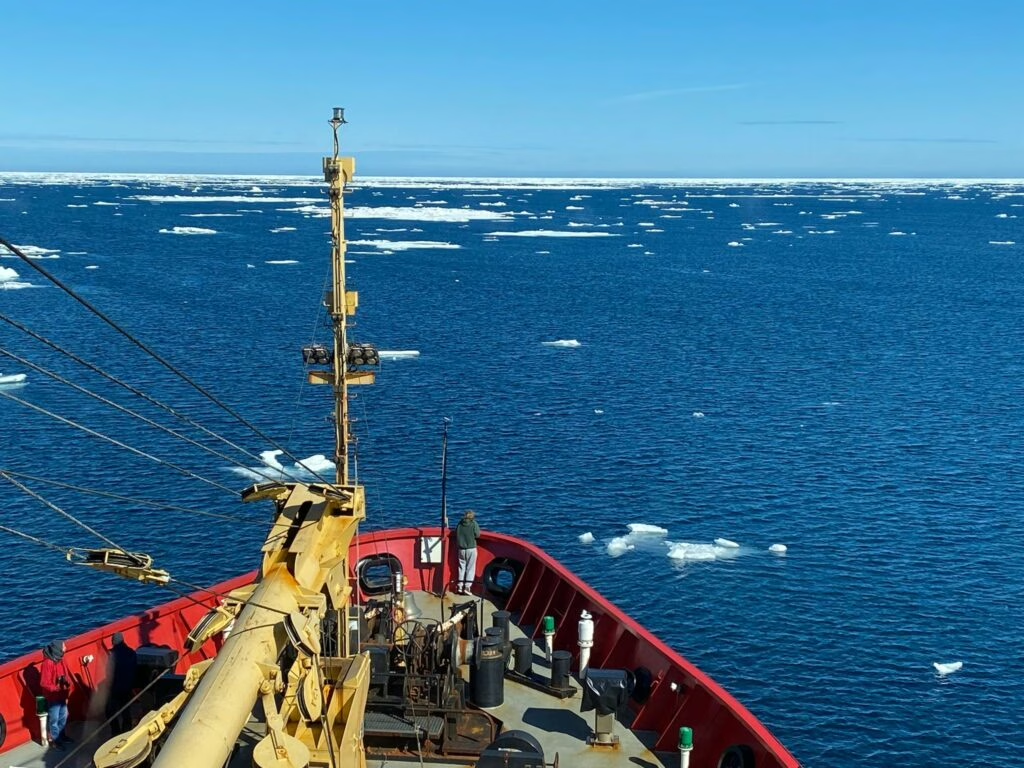
The Arctic is warming at a rate four times faster than the rest of the world, a phenomenon known as Arctic amplification. Extreme warming is also occurring in her home state: The Gulf of Maine is experiencing rapid warming that threatens marine ecosystems and challenges coastal communities.
Christie is driven to make a difference. She is treasurer of Clark Environmental Action, a student organization that advocates for a more sustainable University and conducts outreach and education efforts for fellow students through initiatives like the annual Green on the Green event. Clark Environmental Action was instrumental in Clark’s recent recommitment to more sustainable campus operations.
Climate science is almost certainly in her future, she insists.
“I want to work toward solving problems,” Christie says. “We don’t have to keep going the way we’re going. The tools are there to fix climate change, but getting on the right track has been the difficult part. That’s something I’d like to help out with.”
Jim Keogh