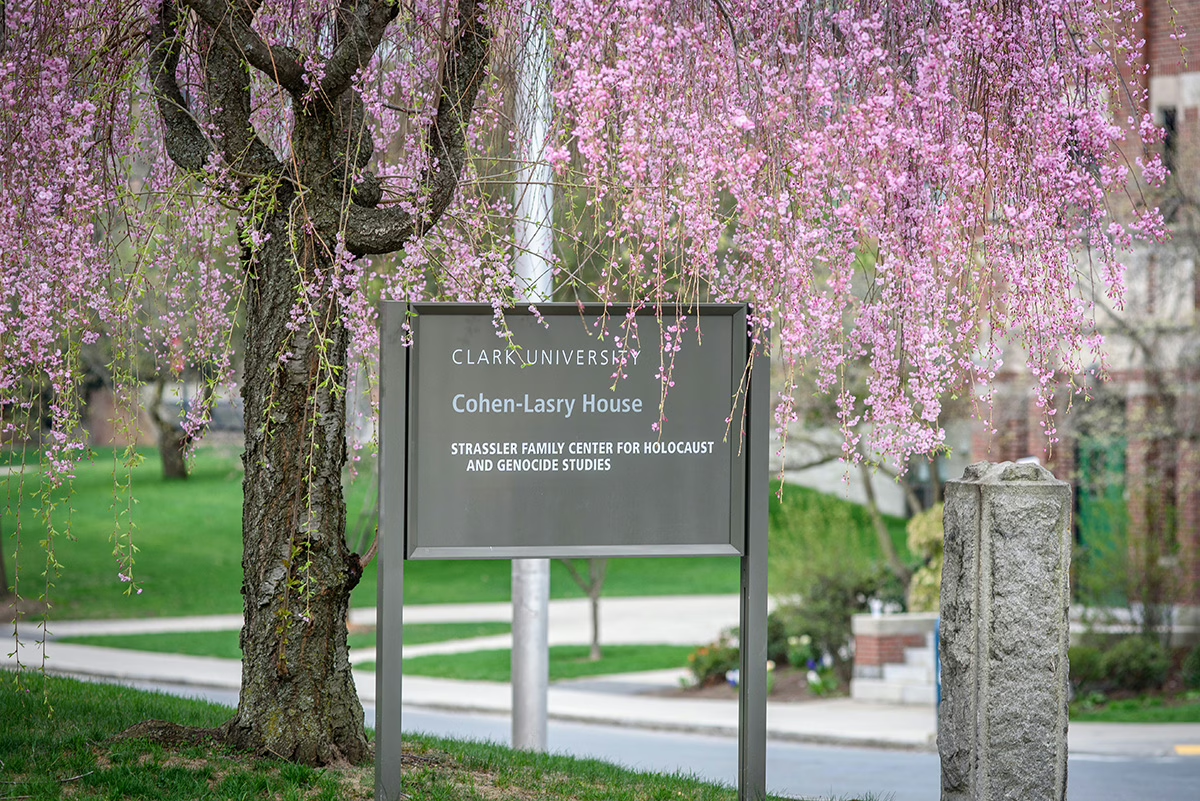

Why apply to Clark’s Holocaust and Genocide Studies doctoral program in History?
The first of its type anywhere in the world, Clark’s pioneering Ph.D. program in Holocaust and Genocide Studies is internationally recognized for the original research of its students and faculty. Students, who earn a doctorate in history, specialize on the Holocaust, Ottoman genocides conducted against Armenians and other Christian populations, the 1994 Genocide in Rwanda, and other events of genocide and mass violence in Asia and Africa. They research the causes, conduct and consequences of these events, learn to locate genocides in their specific social, cultural and political contexts, and familiarize themselves with up-to-date methods and concepts in the field.
Admission to the program is highly selective and most who are admitted choose to enroll. Doctoral students receive a full tuition subvention. During the first three years of the PhD program, they work as teaching assistants and are paid a salary as members of the graduate student union; in years four and five, they receive fellowship support in the form of an annual living stipend and research bursary. The program seeks to enroll dedicated students committed to maintaining the momentum of scholarship, research and education about the Holocaust and other genocides into the future. Our doctoral students come to the program from Europe, North America, Israel, and beyond. They work closely with world-class faculty members in a supportive setting that fosters a tight-knit intellectual community. Contributing faculty from many departments enrich the training students receive. The diverse and engaged faculty expands students’ intellectual reach by incorporating cutting-edge methodologies, introducing new cases, and challenging old ideas.
Meet our faculty
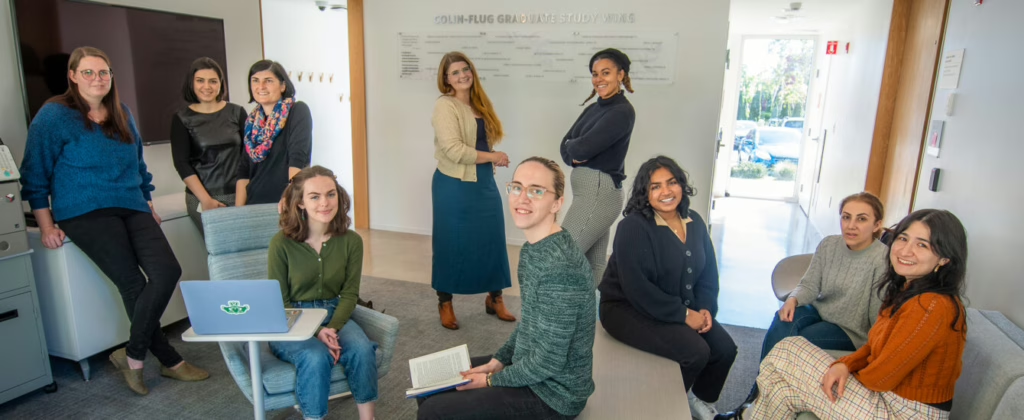
Meet our graduate students
View our graduate handbook
Key details
- Areas of study
- Program timeline and requirements
Strassler Center students deploy innovative historical methods, as well as approaches drawn from anthropology, geography, legal theory, political science, psychology, and sociology to examine the economic dimensions of genocide, transnationalism, inter-ethnic violence, memory, gender theory, refugee issues, and the psychology of perpetrators and victims, the dynamics of rescue, sexuality, genocidal continuity, and victimhood in post-genocide societies.
Our objective to prepare future scholars and leaders begins with a deep understanding of the past. The program offers students a range of courses covering a spectrum of topics pertaining to the history of the Holocaust, the Armenian Genocide, and comparative genocide. Doctoral candidates earn a Ph.D. in history and as such learn relevant methodologies and historiography, while developing skills needed for independent research.
Graduate students are encouraged, through disciplined and rigorous application, to fulfill the program requirements in five years. To learn answers to other questions, like whether those who hold master’s degrees enter the program and about the requirements, explore the links below.
Research
Graduate research
Our Ph.D. students conduct innovative research on the causes, courses and consequences of the Holocaust, the Armenian and other genocides in archives around the world. They secure prestigious fellowships, like those offered by the United States Holocaust Memorial Museum, the Claims Conference on Jewish Material Claims against Germany, the, Fulbright Foundation, and the National Association for Armenian Studies and Research, and travel the globe to present their research at conferences and academic institutions. They publish in peer-reviewed journals and contribute chapters in edited volumes.
Faculty research
Our graduate students are bolstered by the expertise of our world-class faculty members, who have published extensively and are leaders in their fields of expertise. They are recipients of numerous awards and fellowships — among them a Guggenheim — for their groundbreaking research. Several hold endowed positions that recognize their contributions to the university and the field. Faculty connections at various institutes and organizations worldwide provide pathways for our graduate students’ independent inquiries, and their mentoring has led to co-authorships on articles and books.
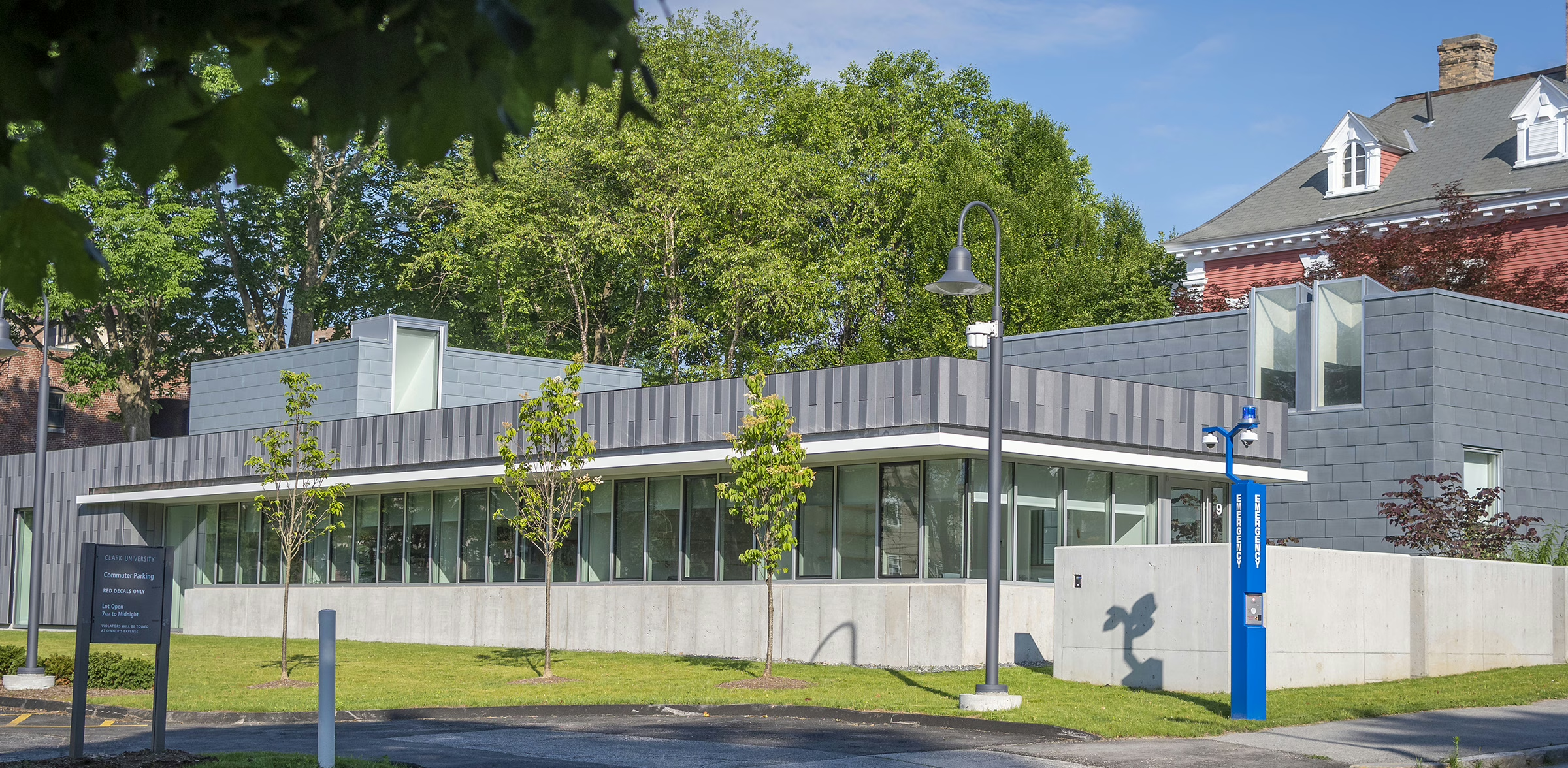
Research facilities

Dissertations
Our Ph.D. students conduct original research on topics ranging from gender experiences during the Holocaust, the Armenian genocide, and the genocide in Rwanda to the role of bystanders in genocides to the mindsets of perpetrators and the traumatic experiences of victims of genocide to humanitarian responses and rescue actions during genocide to the aftermath of mass violence and the collective memorialization of such traumatic events.
Alumni careers
Because the Strassler Center is the only program to provide doctoral education in Holocaust history and genocide studies, our Ph.D. alumni have successfully pursued careers as curators, education directors, and historians.
Explore courses in Holocaust and Genocide Studies