
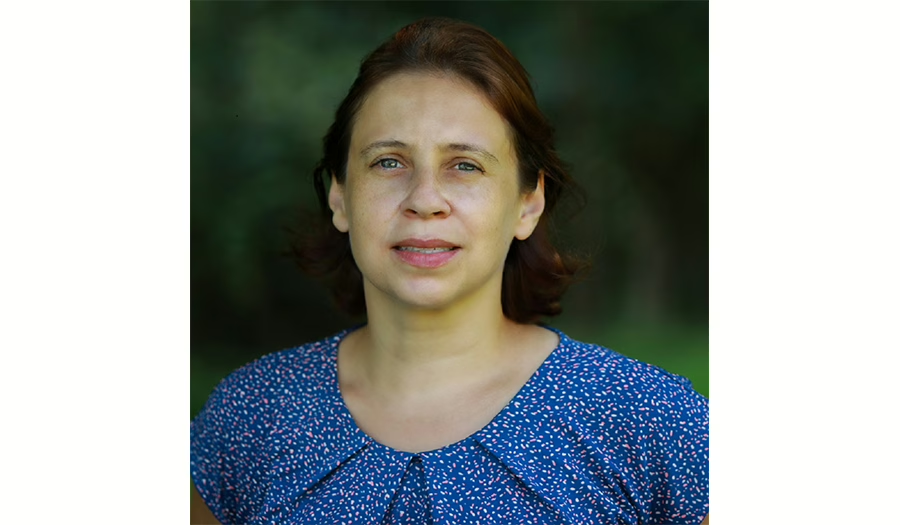
Natalya Lazar’s dissertation Czernowitz Jews and the Holocaust explores Jewish life and the changing dynamics of interethnic and neighborly relations in the contested borderland city. Czernowitz fell to the Axis on 5 July 1941 and the Jewish population was caught in Romanian control until the Soviets returned in 1944. Czernowitz Jews and the Holocaust delineates how anti-Jewish policies implemented by the Romanian state in Czernowitz differed from those in other parts of country, and scrutinizes the impact of anti-Jewish measures on the relations between Jews and their gentile neighbors. Most particularly, it explores how Jews, individually and as a community, negotiated the deadly circumstances they faced. And how did local non-Jews react to the persecution and murder of their Jewish neighbors? Most important in light of the thousands of Jews who survived in the city, what factors shaped pre- and wartime attitudes towards Jews, and what prompted collaboration and rescue during the Holocaust years?
Advisor: Debórah Dwork
Education:
Publications:
Fellowships:
Current Position:
Program Director, Initiative on Ukrainian-Jewish Shared History and the Holocaust in Ukraine, Jack, Joseph and Morton Mandel Center for Advanced Holocaust Studies, US Holocaust Memorial Museum.