

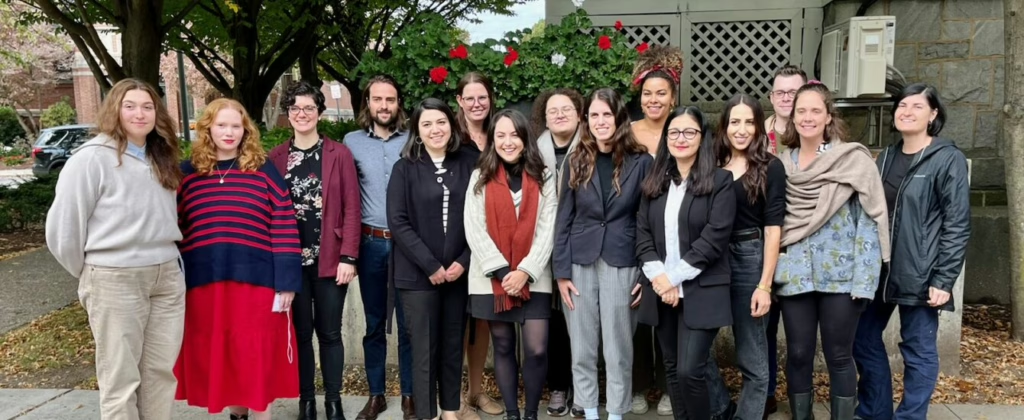
Current Graduate Students at the Strassler Center for
Holocaust and Genocide Studies
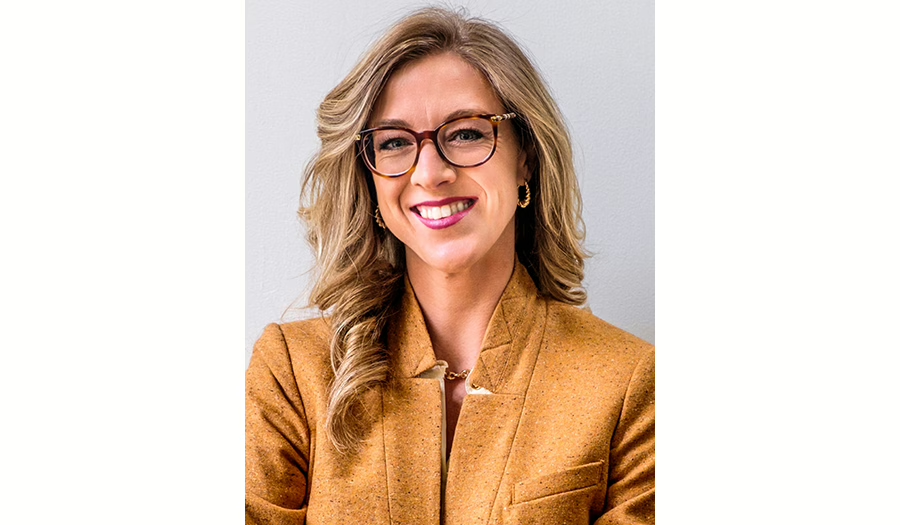
Alison Avery
A Sociohistorical Analysis of the Interahamwe Militia
Avery’s dissertation project, A Sociohistorical Analysis of the Interahamwe Militia, uses the ‘Interahamwe’ militia in Rwanda as a case study to explore how and why militias emerge and evolve in modern genocidal cases.

Janda Barazi
Merchants of Genocide: Gender, Mass Violence, and the Islamic State of Iraq and Syria
Barazi is a doctoral student in the Genocide Studies track. Barazi holds a B.A. in Political Science/International Affairs and M.A. in International Affairs from the Lebanese American University in Beirut, Lebanon.
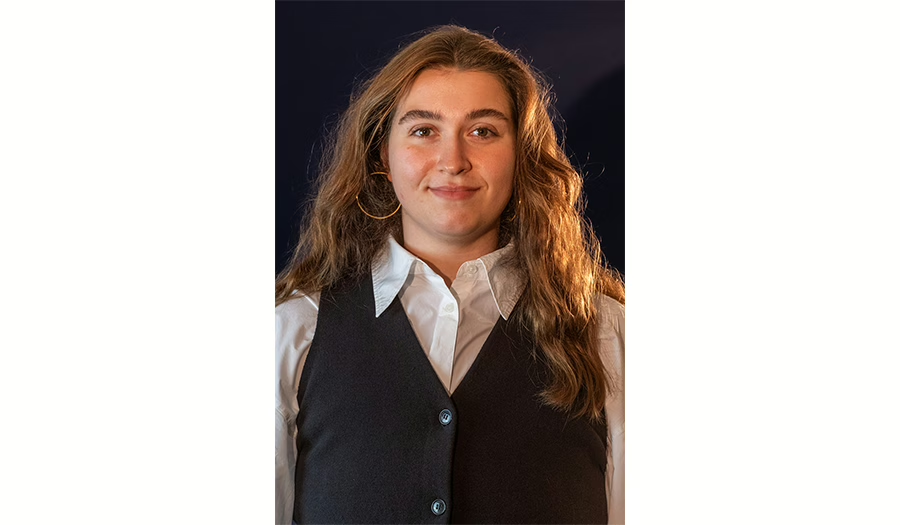
Alina Bojcic
“Treading the Borderlands: The Cabaret, its Multi-Ethnic Performers and the Holocaust in Zagreb, 1908 – 1946.”
Bojčić researches the multi-ethnic performers of the Zagreb cabaret and coffeehouse. She examines how the reconfiguration of cultural life in the urban centers of the Independent State of Croatia became inseparable from the severing and reformulation of the social relations between its multi-ethnic residents and the erasure of the Jewish population.
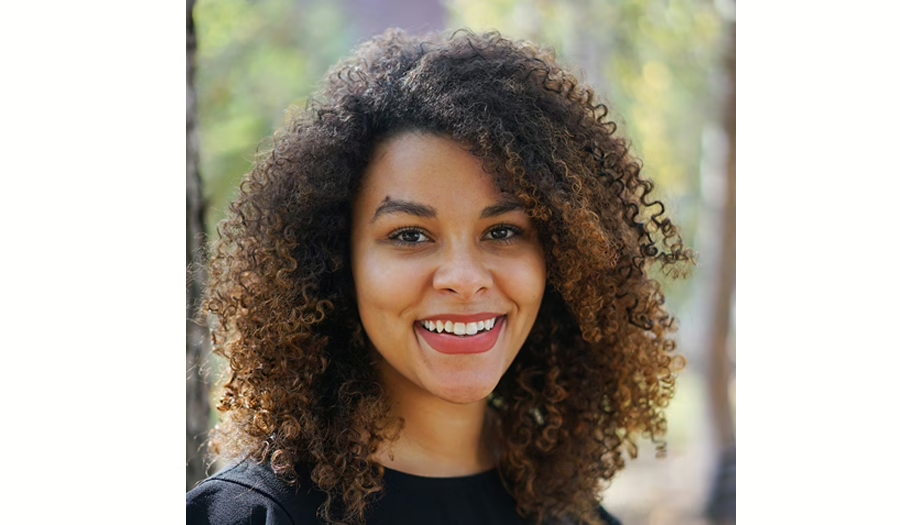
Lauren Ashley Bradford
With Blood on Their Stockings’: Women’s Public Participation in Racial Terror in Nazi Germany and Jim Crow America
Bradford’s dissertation, With Blood on Their Stockings’: Women’s Public Participation in Racial Terror in Nazi Germany and Jim Crow America, takes a feminist comparative approach to women as perpetrators of violence in Nazi Germany and Jim Crow America.
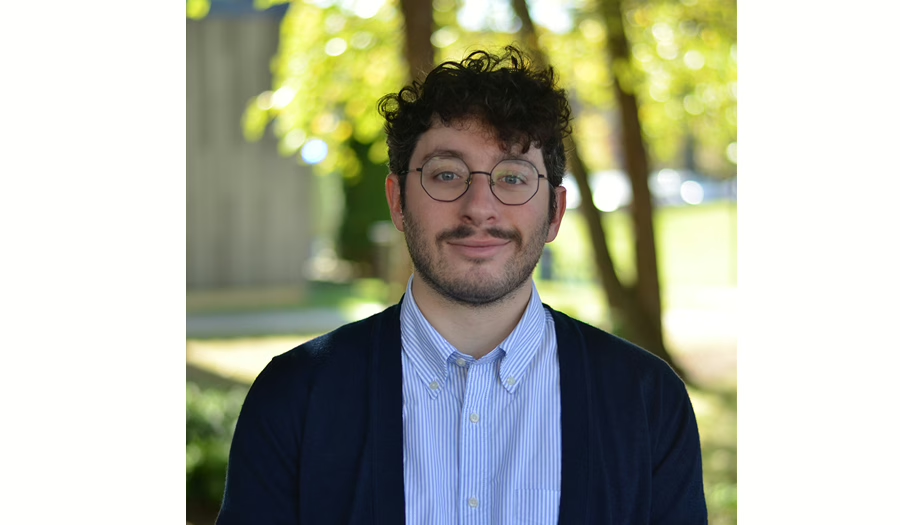
Andrew Burnstein
TBD
Andy Burnstein researches the intellectual history of the idea of the Shtetl. Inspired by his own family history, Burnstein aims to trace how the Shtetl, the popular understanding of which exists more as an idea than a historical reality, is discursively constructed over time.
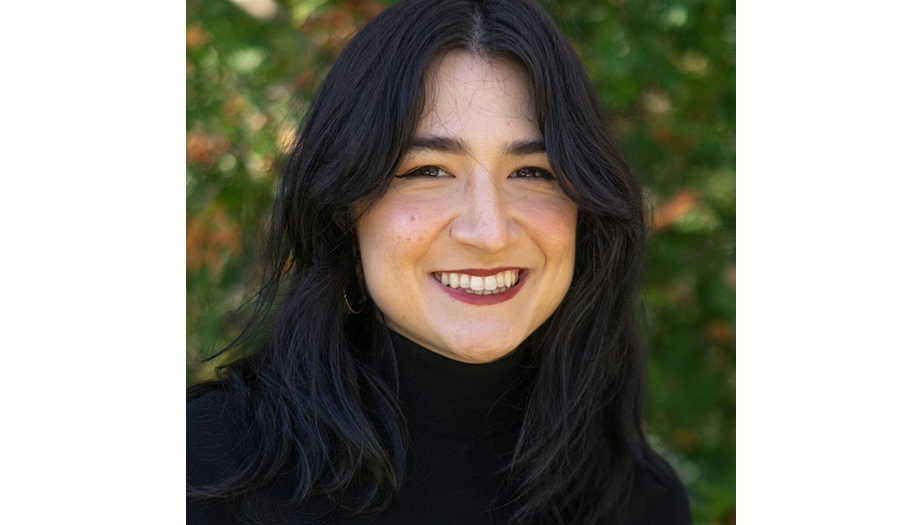
Nadia Crowley
Transformations of ‘Never Again’: Holocaust Education in the United States
Nadia’s dissertation “Transformations of ‘Never Again’: Holocaust Education in the United States” seeks to understand the history of Holocaust education through the “Never Again” mantra in Holocaust museums and education centers in the United States from the late 1960s to present day.
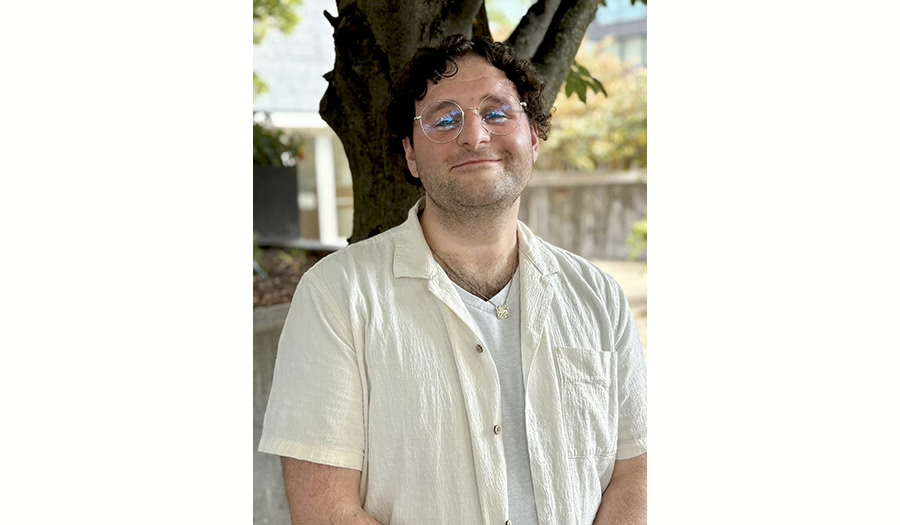
Ara Daglian
TBD
Daglian researches the experiences of anxiety, hope, and change within the Armenian-American community following the Armenian Genocide.
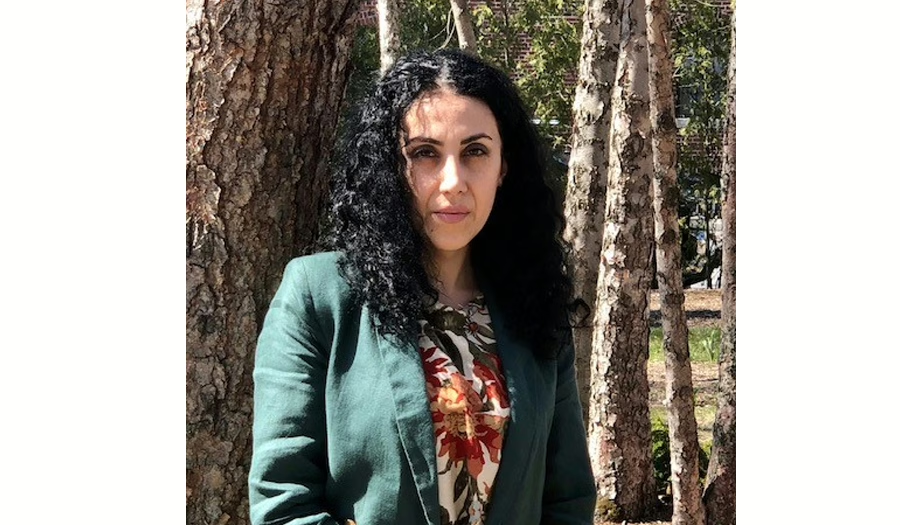
Hasmik Grigoryan
The Socio-Political Situation in Van and Bitlis Provinces in (1912-1915) in the context of the Armenian Genocide
Grigoryan’s dissertation, The Socio-Political Situation in Van and Bitlis Provinces in 1912-1915 in the context of the Armenian Genocide, explores whether the regional problems and developments of events in the Van and Bitlis Provinces of the Ottoman Empire during this period had an impact on the final decision to carry out a genocide.

Gabrielle Higgins
Sex Education and the (Un)Making of Men in Nazi Germany
Higgins’ dissertation, Sex Education and the (Un)Making of Men in Nazi Germany, examines Nazi sex education and its impact on the coming-of-age process for young “Aryan” men living under the Third Reich.
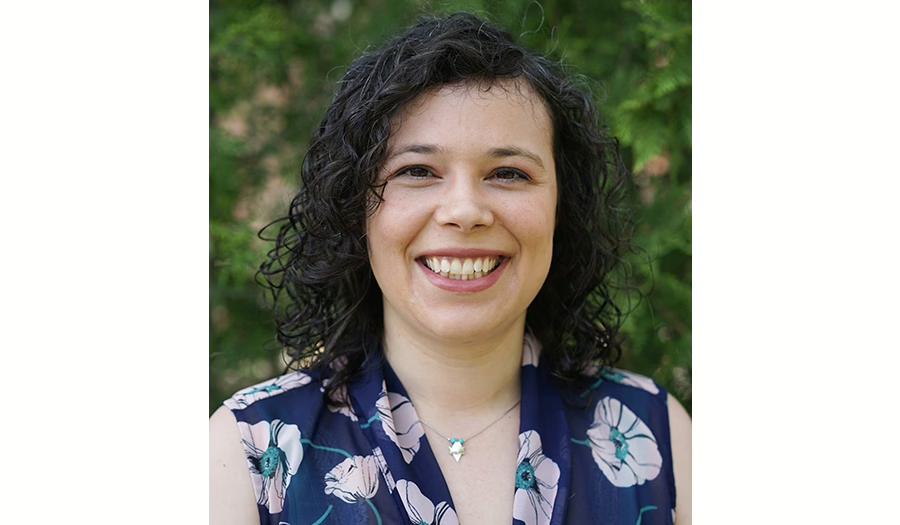
Alexandra Kramen
Justice Pursued: Jewish Survivors’ Struggle for Holocaust Justice in Displaced Persons Camp Föhrenwa
Kramen’s dissertation, Justice Pursued: Jewish Survivors’ Struggle for Holocaust Justice in Displaced Persons Camp Föhrenwald, 1945-1957, focuses on Jewish survivors living in Föhrenwald, the longest-running Jewish displaced persons camp in postwar Germany.
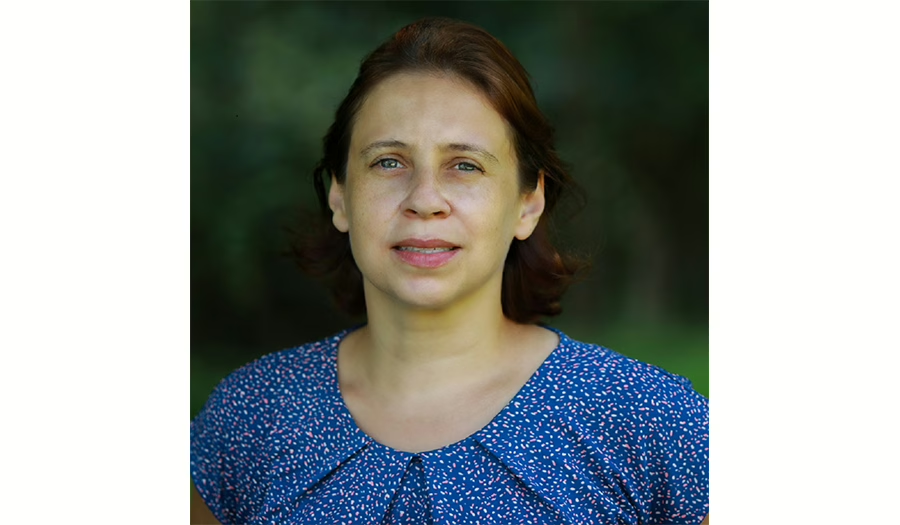
Natalya Lazar
Czernowitz Jews and the Holocaust
Natalya Lazar’s dissertation Czernowitz Jews and the Holocaust explores Jewish life and the changing dynamics of interethnic and neighborly relations in the contested borderland city.
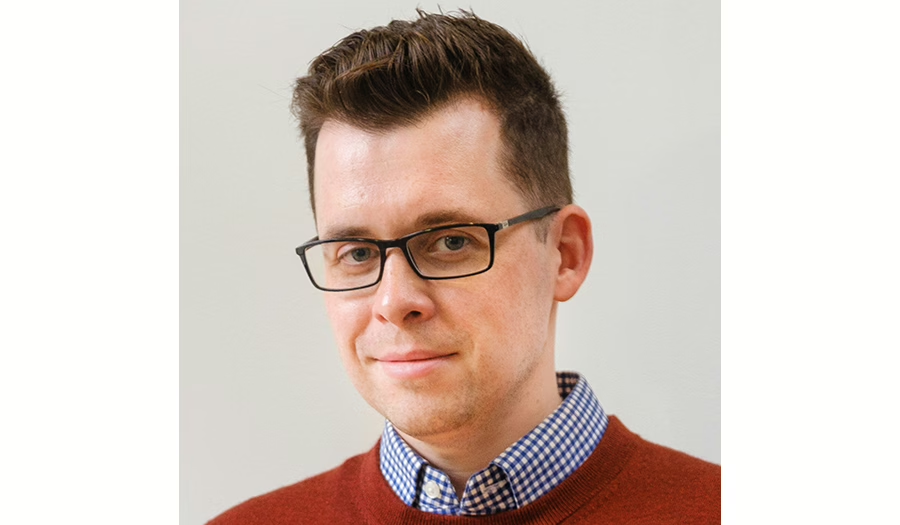
Nathan Lucky
Information Borderlands: Jewish News Networks during the Holocaust, 1933-1950
Lucky’s dissertation, Information Borderlands: Jewish News Networks during the Holocaust, 1933-1950 charts how the Jewish Telegraph Agency (JTA) used their news agency and its more than 150 employees in bureaus around the world to spy on the Nazis and resist fascism on a global scale.
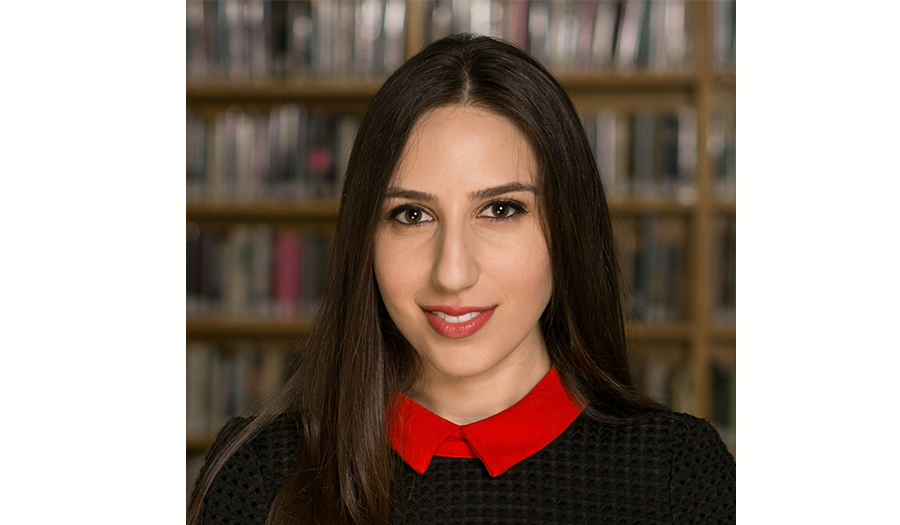
Ani Garabed Ohanian
Reconfiguration of the Caucasus: Bolshevik-Kemalist Cooperation and the Armenian Genocide, 1917-1923
Ohanian’s dissertation project, Reconfiguration of the Caucasus: Bolshevik-Kemalist Cooperation and the Armenian Genocide, 1917-1923, sheds light on the role that the Armenian Genocide played in the context of Bolshevik-Kemalist relations, analyzing how, or to what extent, the genocide influenced the respective actions of Turkish and Russian revolutionary forces – the Kemalists, and the Bolsheviks.
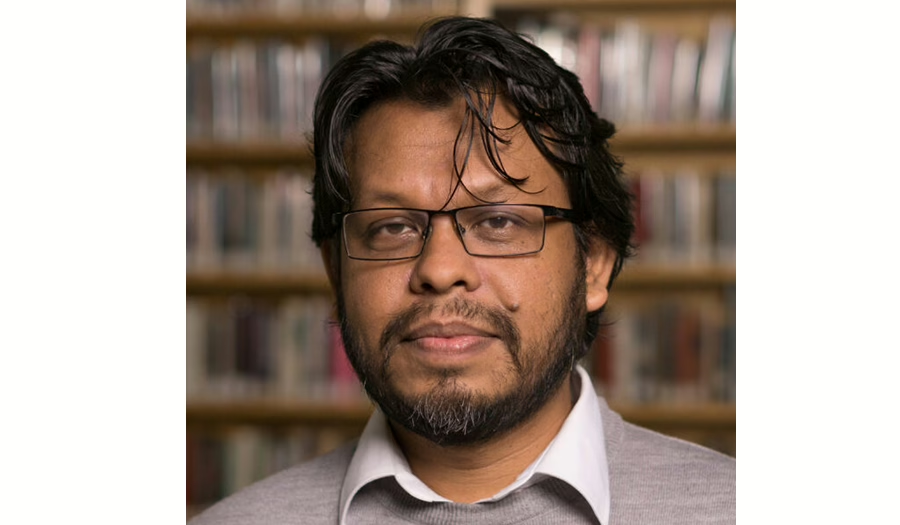
Mohammad Sajjadur Rahman
Wartime Collaborators and the Politics of Justice in Bangladesh (1971-1975)
Sajjad is engaged in researching and writing his dissertation, Against Freedom: Understanding the “Anti-Liberation Forces” in Bangladesh’s War of Independence.
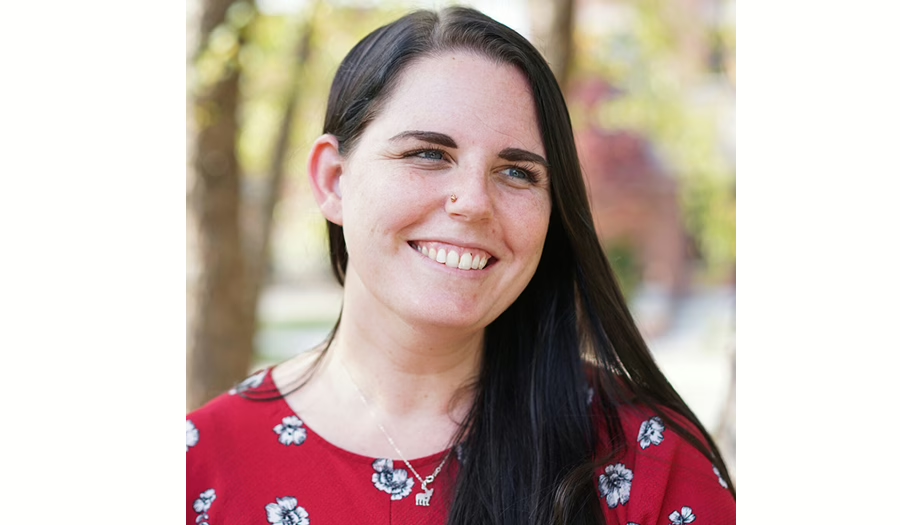
Jessa Sinnott
Anti-Jewish Pogroms and Neighborhood Violence in Nazi-Occupied Poland (1941)
Sinnott’s dissertation examines neighborhood and pogrom violence in Nazi (and Soviet) occupied Poland.
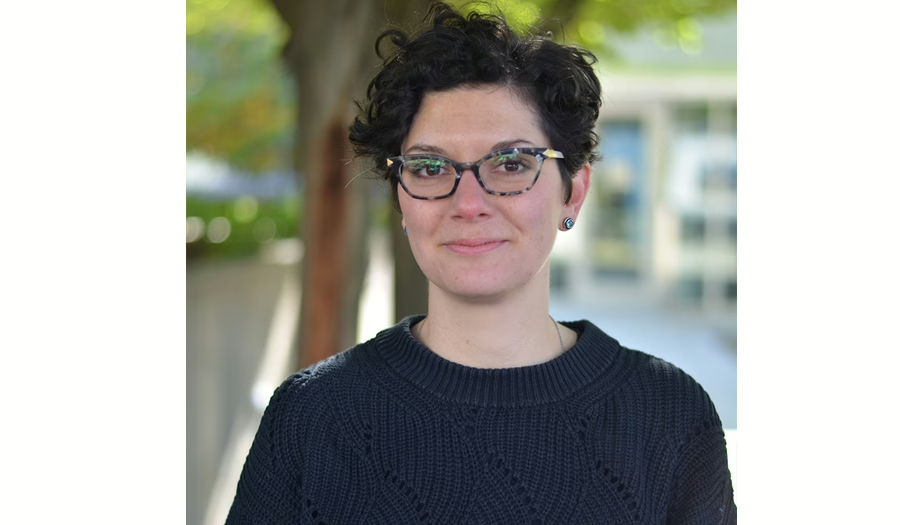
Nicole Toedtli
Role-Shifting in the Holocaust and the 1994 Genocide in Rwanda
Toedtli work is a comparative study that examines actors who move between being a victim, perpetrator, bystander, and rescuer in the context of the Holocaust and the 1994 genocide in Rwanda to understand how, when, and why actors in genocide engage in role-shifting.
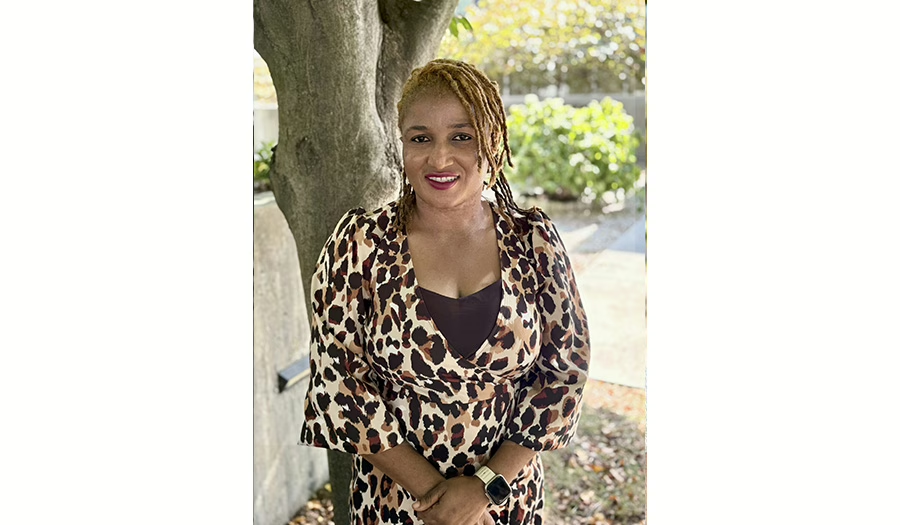
Onwe Refine Uchechi
TBD
While growing up in northern Nigeria, Refine was subject to recurring violent conflicts. Those early experiences shaped her academic and professional trajectory, sparking a deep interest in understanding the impacts of conflict, particularly on gender dynamics and displaced populations.
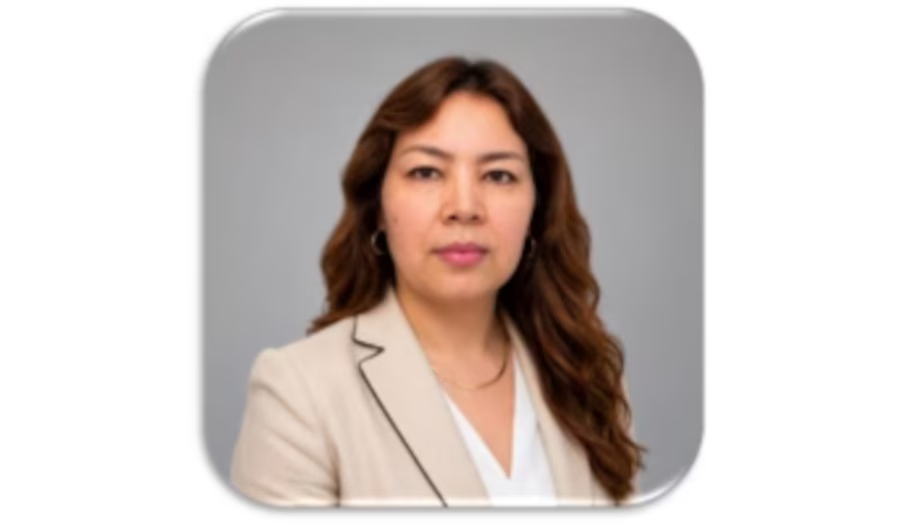
Zahra Lotfi
TBD
Lotfi’s current research is an examination of the August 1998 massacre of Hazaras in Mazar-e Sharif and Balkh Province by the Taliban. Over the past three years, she has conducted 79 oral history interviews with survivors and eyewitnesses living in Afghanistan and across the diaspora. These testimonies document experiences of violence, imprisonment, forced displacement, and survival, preserving a valuable oral history archive of the massacre and its aftermath.