

Why apply to Clark’s Genocide Studies doctoral program?
The new interdisciplinary Genocide Studies doctoral program broadens the methodological, conceptual, and empirical training that we offer; transcending history as a discipline, it goes beyond European and Ottoman genocides. Adding a cross-disciplinary Ph.D. to the existing doctoral program in History, the Strassler Center offers training designed to confront large-scale human rights abuses and events of mass violence in the past as well as in the present. Accommodating inter- and multidisciplinary methods that increasingly shape the field of genocide studies, students will graduate prepared for careers as leaders in government, NGOs, and various pedagogical institutions such as museums, memorials, and teacher training initiatives.
Admission to the program is highly selective and most who are admitted choose to enroll. Doctoral students receive a full tuition subvention. During the first three years of the PhD program, they work as teaching assistants and are paid a salary as members of the graduate student union; in years four and five, they receive fellowship support in the form of an annual living stipend and research bursary. It seeks dedicated students committed to maintaining the momentum of scholarship, research and education about the Holocaust and other genocides into the future. Our doctoral students come to the program from Europe, North America, Israel, and beyond. They work closely with world-class faculty members in a supportive setting that fosters a tight-knit intellectual community. Contributing faculty from many departments enrich the training students receive. The diverse and engaged faculty expands students’ intellectual reach by incorporating cutting-edge methodologies, introducing new cases, and challenging old ideas.
Meet our faculty
Meet our graduate students
View our graduate handbook
Key details
- Areas of study
- Program timeline and requirements
The Ph.D. in Genocide Studies relies on a curriculum that trains students not primarily in the diachronic, but in the synchronic dimension of genocides, and thus in disciplines such as anthropology, psychology, political science, sociology, literary studies, legal studies, and pedagogy. Graduates will be conversant in multiple disciplines and will be able to “translate” across these differences, becoming practitioners prepared to apply knowledge and skills in problem-oriented work and real-life contexts.
Graduate students are encouraged, through disciplined and rigorous application, to fulfill the program requirements in five years. To learn answers to other questions, such as admission requirements and program details, explore the link below.
Research
Graduate research
Our Ph.D. students conduct innovative research in archives around the world, with survivors of genocides, and at sites of mass violence. They secure prestigious fellowships, like those offered by the United States Holocaust Memorial Museum, the Conference on Jewish Material Claims against Germany, the Fulbright Foundation, and the National Association for Armenian Studies and Research, and travel the globe to present their research at conferences and academic institutions. They publish in peer-reviewed journals and contribute chapters to edited volumes.
Faculty research
The expertise of our world-class faculty members, who have published extensively and are leaders in their fields, is a hallmark of the program. They are recipients of numerous awards and fellowships — among them a Guggenheim — for their groundbreaking research. Several hold endowed professorships that recognize their contributions to the university and the field. Faculty connections at various institutes and organizations worldwide provide pathways for our graduate students’ independent inquiries, and their mentoring has led to co-authorships on articles and books.
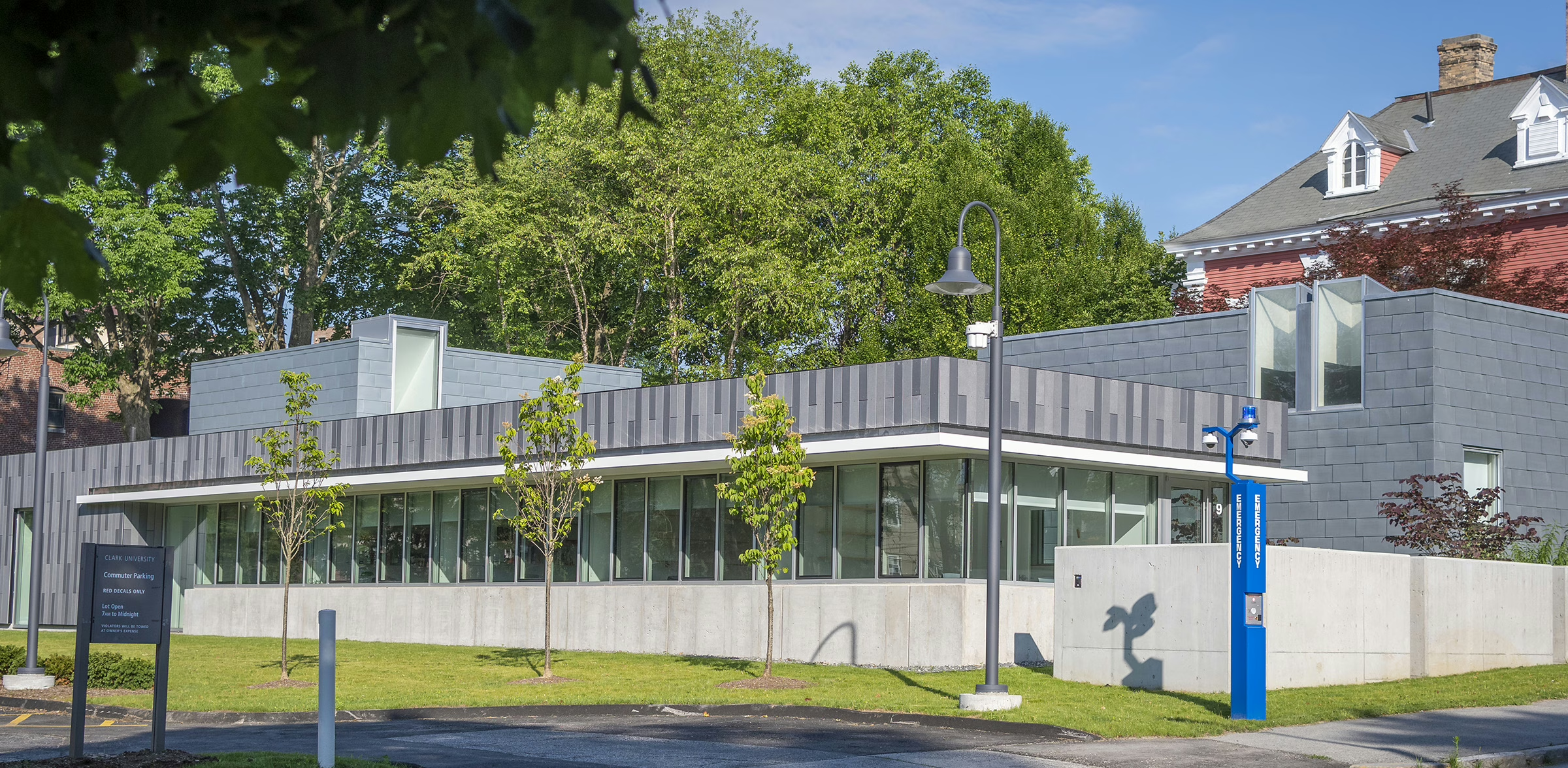
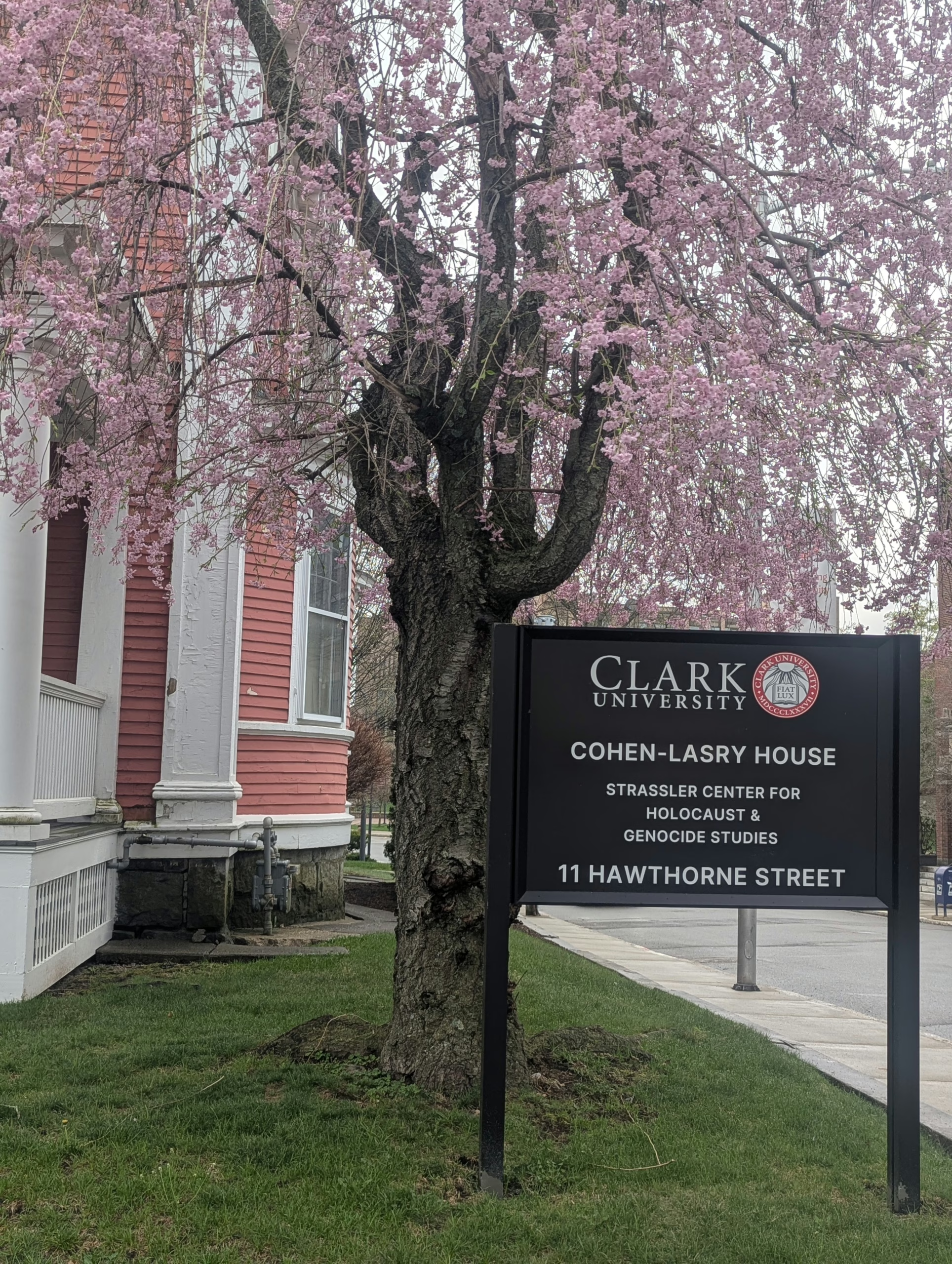
Research facilities

Dissertations
Faculty engagement and generous financial support for doctoral research foster highly original dissertation projects on topics ranging from gender experiences during the Holocaust, the Armenian Genocide, and the 1994 Genocide in Rwanda to the role of bystanders, the mindsets of perpetrators, and the traumatic experiences of victims, to humanitarian responses and rescue actions to the aftermath of mass violence and the collective memorialization of such traumatic events.
Alumni careers
Graduates of the Ph.D. program pursue careers as leaders, curators, education directors, and historians at renowned institutions including the Conference on Jewish Material Claims against Germany, the United States Holocaust Memorial Museum, the Wiener Holocaust Library, Chapman University, Stockton University, and the United States Military Academy at West Point.
Explore courses in Genocide Studies