
Red Maple
Acer rubrum
The red maple is one of the most common maple species found in New England today and is distributed throughout central and eastern North America. Like sugar maples, red maple sap can be made into maple syrup; though usually considered a lower grade.
History at Hadwen
The red maple has existed in the arboretum since some of its trees were first documented by Hadwen himself in a news clipping from October 1882. Since then, they’ve been documented in 1971 and 1978 in reports on the status of the arboretum, and again in 2020.
Detailed species information
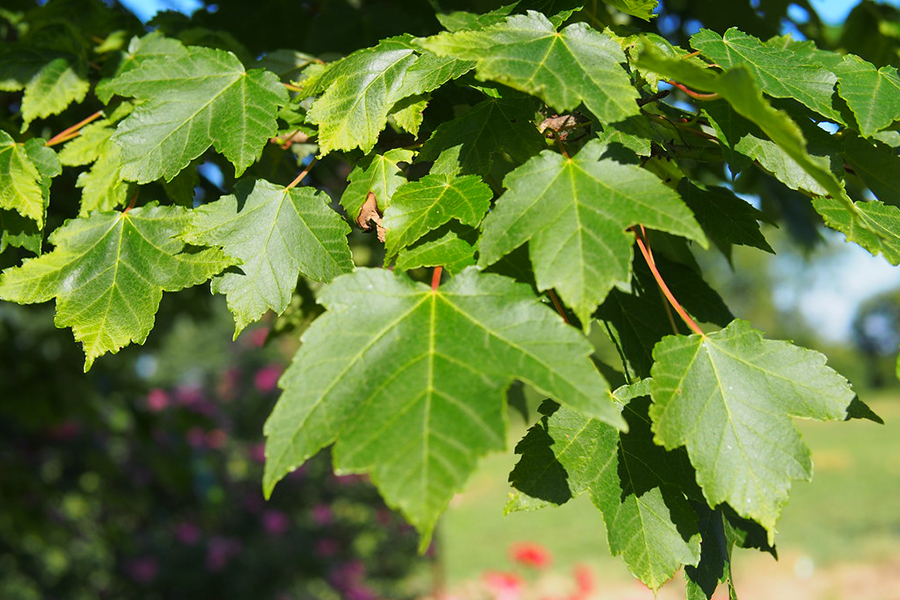
Red maple is a deciduous tree in the family Sapindaceae and is widespread throughout eastern and central North America. The tree can grow up to 40–90 feet (12–27 meters) in height and 35 inches (89 centimeters) in trunk diameter. The bark is smooth and red when the tree is young, but becomes grey, rough, and furrowed with age. The green leaves of the red maple are oppositely arranged on the stem, three-lobed, and have roughly serrated edges. In the fall, the leaves turn brilliant shades of red, orange, and yellow. The tree produces small red five-petal flowers in early spring before the leaves appear. Red maple is a common tree found in a variety of habitats from wetlands to upland forests. It is a hardy tree that can tolerate a range of soil types, moisture levels, and lighting conditions.
Although red maple lumber is softer than the harder wood of other maples such as sugar maple (Acer saccharum), the lumber is still relatively hard and commercially viable. The wood of red maple is often characterized by “curly” wood grain patterns which are valued for instruments and wood veneers. The tree is also used in landscaping and is a popular choice for shade trees in residential areas due to its beautiful fall foliage. Because of its ability to adapt to changing environmental conditions, red maple is a popular tree for reforestation efforts and urban foresty. The tree is able to grow in disturbed areas and can tolerate high levels of pollution, making it an important species for urban forestry. The red maple is also used in the production of maple syrup, although it is considered to be of lower quality than sugar maple syrup.