
Norway Spruce
Picea abies
Norway spruce is a coniferous tree native to Europe that is popular in landscaping and used for paper production.
History at Hadwen
In 1900, Hadwen lectures that he planted Norway spruce extensively and that they “have attained a height of sixty to eighty feet and are prominent in the landscape. They form a splendid pyramidal head and the branches are flexible and remain unbroken even in old age.” After this, they weren’t documented on the property again until 2020.
Detailed species information
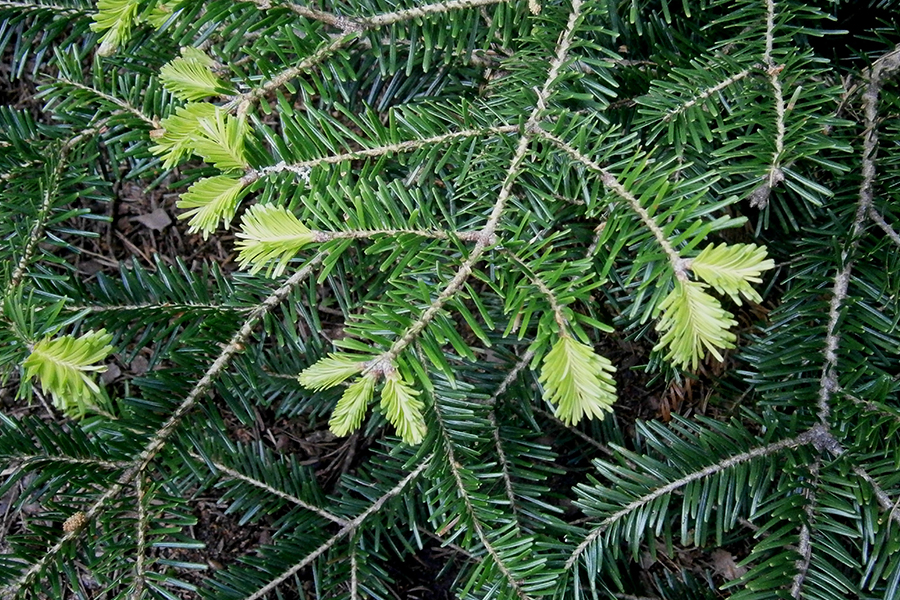
Norway Spruce is a coniferous species in the family Pinaceae native to Europe and widely cultivated in temperate regions around the world. Typically, Norway spruce can grow to over 100 feet (30 meters) in height and up to 6 feet (1.8 meters) in trunk diameter. The tree is fast-growing and long-lived. It is characterized by its downward-hanging branchlets. The needles are dark green and the seeds are contained in large brown cones. Norway spruce is often found in mountainous regions and prefers moist, nutrient-rich soils. It is also tolerant of cold temperatures and can withstand heavy snowfall.
In Europe, Norway spruce is an economically significant species used for paper production and for the production of the synthetic vanilla substitute, Vanillin. Additionally, the tree is often used in landscaping due to its broad range, rapid growth, and distinctive appearance. Norway spruce is also often planted to be cut for Christmas trees.