

American Hornbeam
Carpinus caroliniana
American hornbeam, sometimes called “musclewood” due to the muscled appearance of its bark, is known for its spectacularly hard lumber.
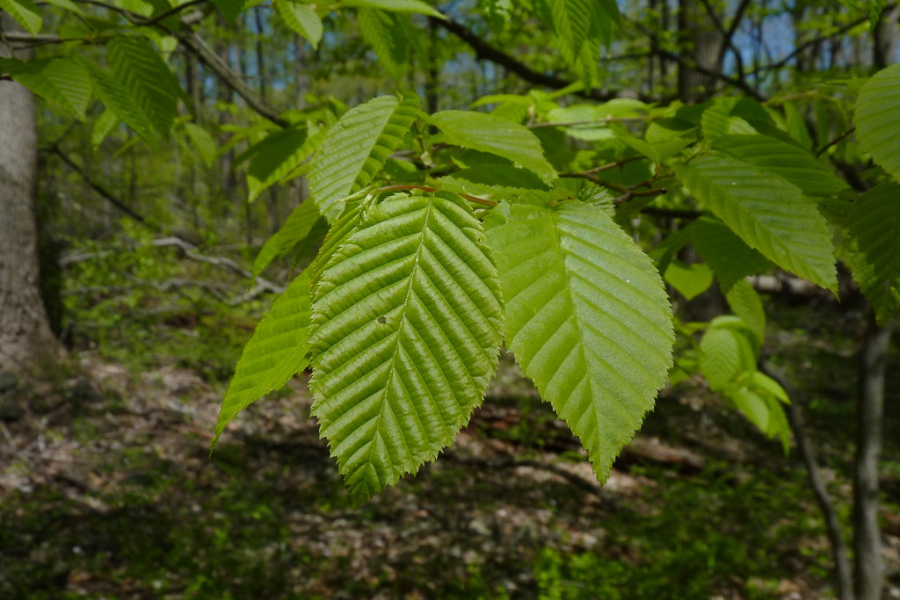
History at Hadwen
Records show that Hadwen planted a hornbeam on the property during the 1800s as one of his original tree plantings. However, none of the tree surveys conducted during the 1900s record hornbeam existing on the property.
Detailed species information
American hornbeam is a small hardwood tree in the family Betulaceae and is found throughout the eastern United States and southeastern Canada. The tree typically grows to 35–50 feet (10–15 meters) in height and the roots typically grow wide and shallow. The American hornbeam is characterized by smooth gray bark and alternate green leaves, which vary in shape from ovate-oblong to rounded with prominent veins. In autumn, leaf colors range from oranges to bright and dark reds. The flowers of the American hornbeam emerge in April as buds without petals, eventually developing into small, edible nuts at the end of branches. This species prefers shady light conditions and moist, rich soils. It is often found near wetlands and streams and is a food source for deer, birds, and insects.
The wood of the American hornbeam is sturdy and heavy making it ideal for tool handles, canes, and golf clubs. Because of its shade tolerance, small size, and ability to thrive in poorly drained soils, the American hornbeam is often used for landscaping in yards and gardens.