

Connecting with the Global QGIS Community: Clark CGA in Sweden
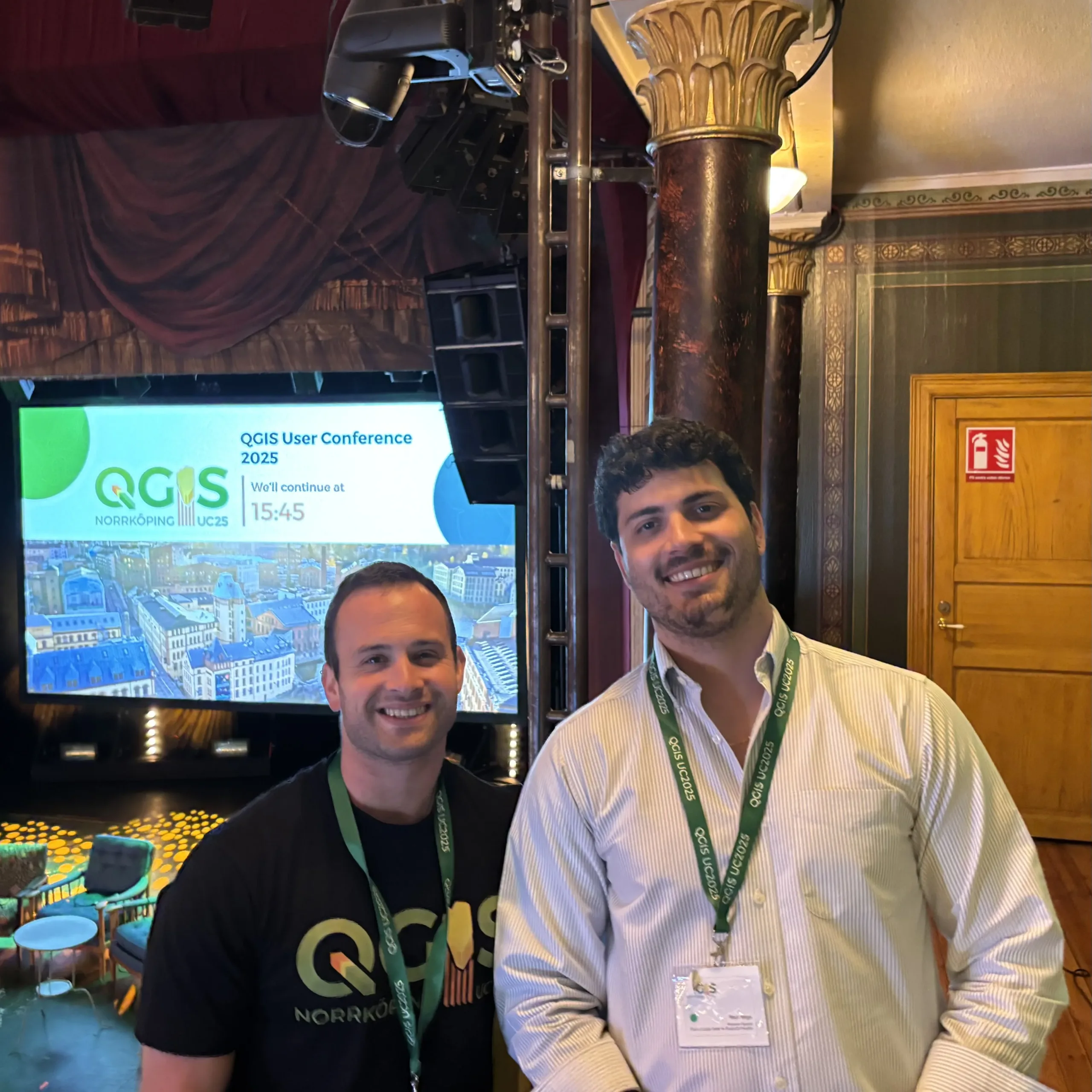
Clark Center for Geospatial Analytics (Clark CGA) operates on the philosophy of open science, prioritizing the creation of tools and data that are accessible to the wider public. This commitment to sharing resources aligns closely with the global community surrounding QGIS, the world’s leading open source Geographic Information System software. To stay up-to-date on this technology, Research Scientist Rishi Singh and Research Associate Eli Simonson recently traveled to Sweden to attend the annual QGIS Conference.
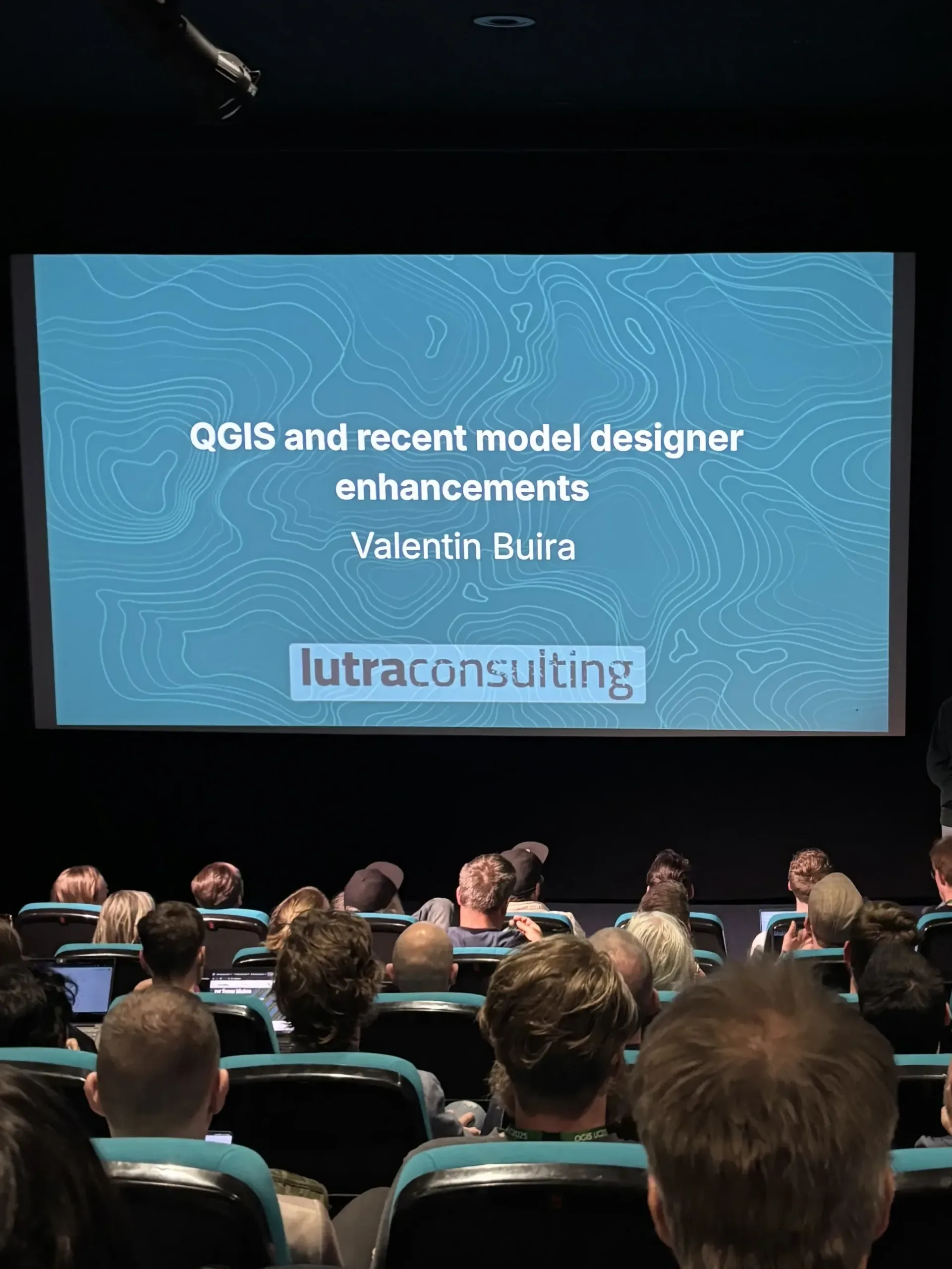
Unlike proprietary software which is owned and managed by a single company, QGIS relies on a community-driven model. This unique structure allows contributors from around the world to develop features, fix bugs, and share their innovations freely. Furthermore, the conference in Sweden served as a meeting ground for these contributors, bringing together the core developers who build the software and the diverse user base that relies on it for everything from municipal asset tracking to experimental research.
For Simonson and Singh, the trip was an opportunity to engage directly with this international network. Their goal was to immerse themselves in the community and generate new ideas for Clark CGA. A major highlight of the event was seeing how developers are integrating cutting-edge technologies into established platforms. Moreover, Simonson noted that many sessions focused on combining novel methods, such as GeoAI, with the user-friendly interface of QGIS. This trend demonstrates how new innovations can be made accessible to a broader audience without requiring them to learn entirely new software environments.
This focus on accessibility connects directly to the ongoing development work at Clark CGA. As an analyst and developer, Simonson has a particular interest in QGIS plugins, which are custom tools that extend the functionality of the software. Last year, he successfully created a plugin for the UDef-ARP tool, a project originally developed by the Clark CGA software team. By converting this standalone tool into a QGIS plugin, he made it easier for users to visualize data and analyze results within a familiar map interface.
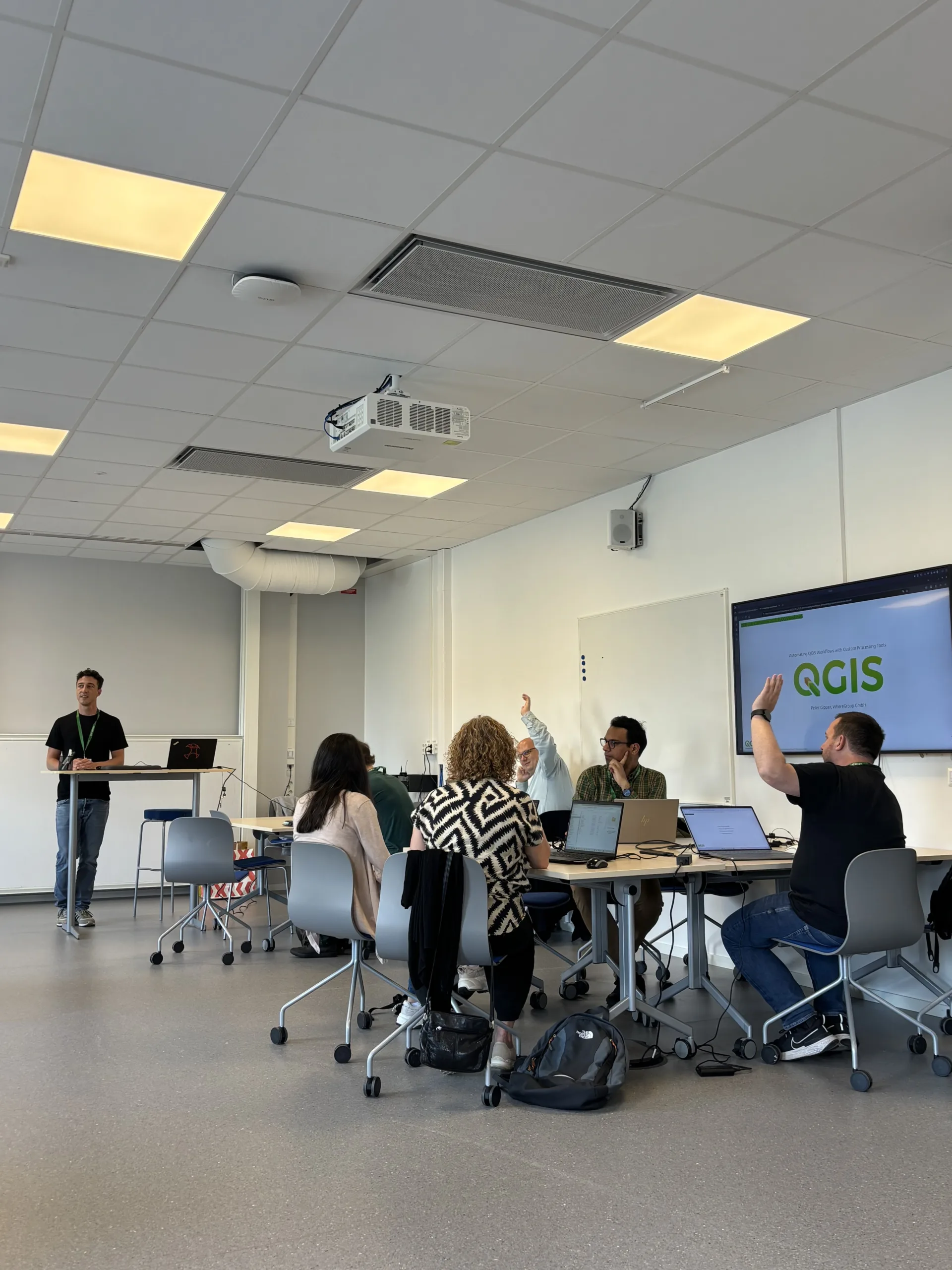
By participating in global events like the QGIS User Conference, the Clark CGA ensures its team remains connected to the latest industry standards. The insights gathered by Simonson and Singh in Sweden strengthen the Center’s ability to build better tools.