




Project overview:
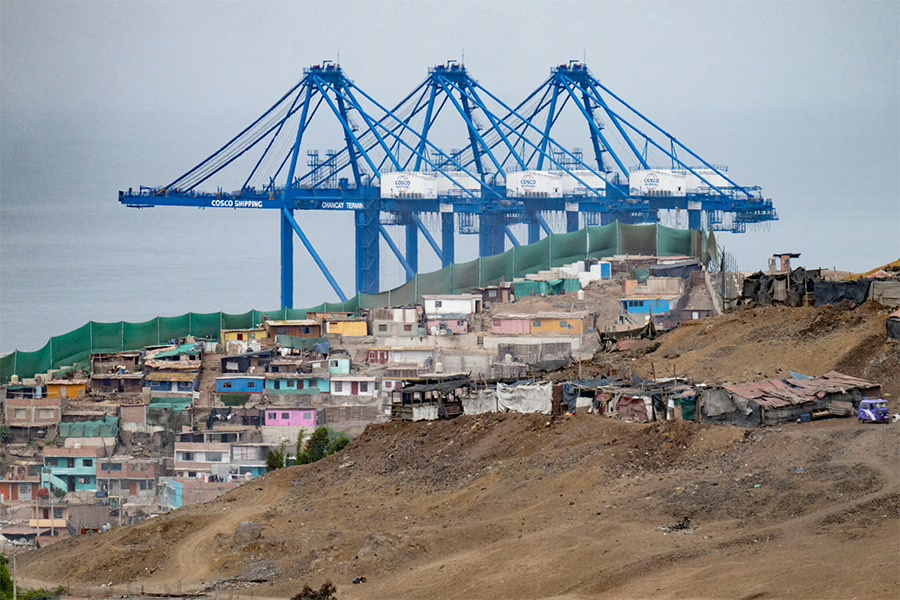
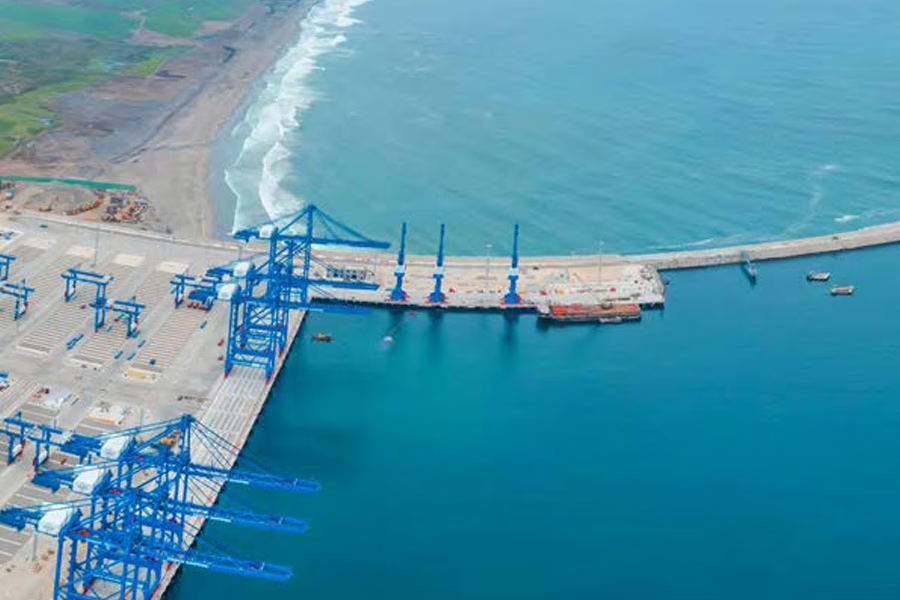
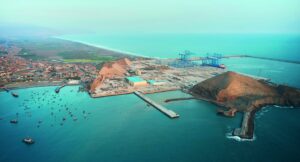
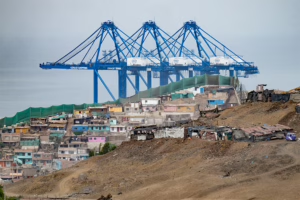
The Port of Chancay is a multipurpose port terminal located approximately 70 kilometers north of Lima, Peru, financed through a joint venture between Cosco Shipping Ports Limited (a subsidiary of the China Cosco Shipping Corporation, a Chinese state-owned conglomerate) and Inversiones Portuarias Chancay S.A.C. (a subsidiary of Vulcan Compañia Minera S.A.A., which belongs to the Integra Capital group of Argentina). While privately owned, the port is classified as a project for public use, and its state-of-the-art ‘smart port’ model makes it a promising competitor alongside other terminals on the west coast of South America. This largely automated port terminal significantly increases loading, unloading, and transshipment speeds, streamlining overall servicing time. Ultimately, the Port of Chancay aims dramatically transform the region into a major logistics hub facilitating trade between China and Latin America and has the potential to be a major driver of economic development as well as social and ecological change.
The Chancay-Amazon Connection Project aims to provide an up-to-date and comprehensive overview of the port, to demystify dominant narratives surrounding the project, and to identify linkages between the port and the Amazon region where its impacts will be far reaching. We seek to highlight issues identified in other sources while offering new perspectives and issues to consider in the overall assessment of the port’s impact, especially in regard to the Amazon region.
Our partners:
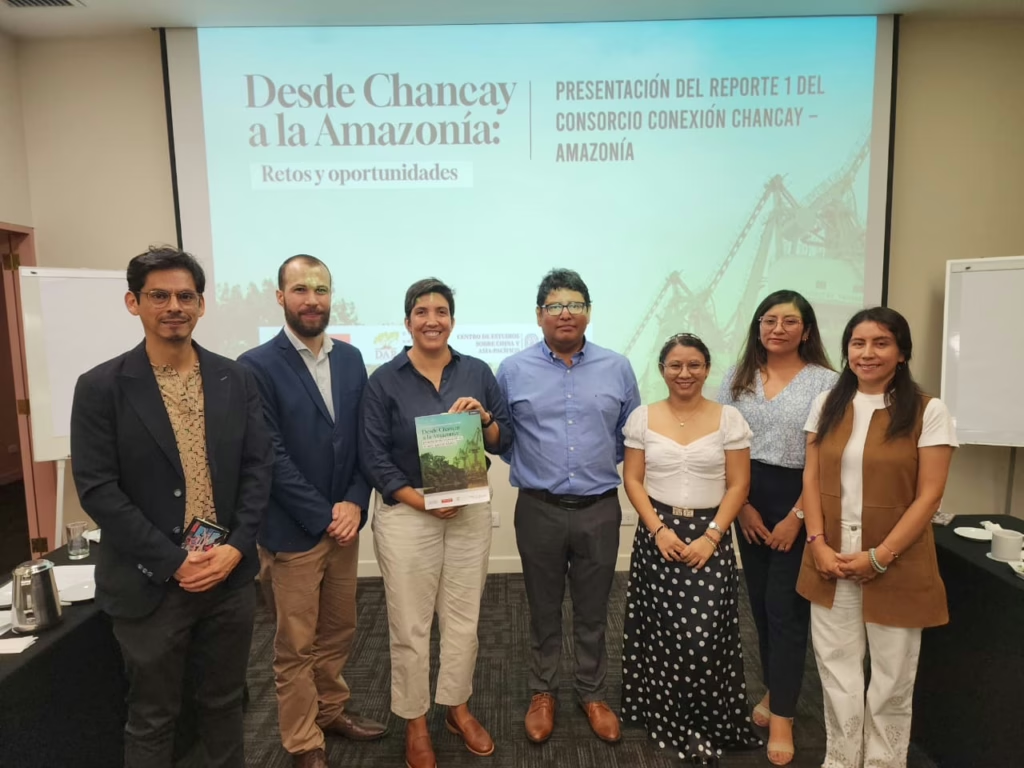
The Chancay-Amazon Connection Project is an initiative developed with the support of the Gordon and Betty Moore Foundation and includes the participation of a multi-disciplinary team of researchers of three partner institutions: the Center for Studies on China and Asia-Pacific (CECHAP) at the University of the Pacific, the Center for the Study of Natural Resource Extraction and Society at Clark University (Extractives@Clark), and the non-governmental organization Derecho, Ambiente y Recursos Naturales (DAR).
Partners in Peru:
- Derecho, Ambiente y Recursos Naturales | DAR – Sitio web de Derecho, Ambiente y Recursos Naturales
- Centro de Estudiossobre China y Asia-Pacífico
Key messages from the work so far:
- Chancay is a major opportunity, but not an automatic development:
- The Port of Chancay has the potential to drive economic growth and regional integration, but Peru currently lacks the logistical, regulatory, and planning capacity needed to fully realize this potential.
- Planning must come before expansion:
- Infrastructure alone does not generate development. Robust spatial planning, public policy alignment, and governance are essential for ensuring sustainable and equitable outcomes.
- Amazon connectivity requires caution and rigor:
- Expanding infrastructure into the Amazon must be carefully assessed to avoid environmental damage, social harm, and the spread of illegal activities.
- A transparent and participatory national strategy is essential:
- It is crucial that the government of Peru leads an open, technical, and inclusive dialogue to define a clear long-term vision, reduce uncertainty, and strengthen decision-making.
- Opportunity must be balanced with responsibility:
- Chancay’s potential as a gateway to Asia comes with considerable risk. Only through responsible investment, strong governance, and respect for ecological and cultural value can benefits be maximized and harms minimized.
Current report:
Assessing Impacts and Advancing Sustainable Connectivity Between the Pacific and the Amazon
Find the Spanish report “Desde Chancay a la Amazonia: panorama de expectativas, retos y oportunidades”.