

Geographer Florencia Sangermano and her global colleagues conduct research on how Indigenous lands in the Amazon region help buffer and protect humans from forest fire-related illnesses and, in many cases, animal- and insect-borne diseases.
Published in the Nature group journal Communications Earth & Environment, their first-of-a-kind study explored the complex relationships between landscape structures, the legal status of Indigenous lands, and the effects on human health in the 4.35 million-square-miles Amazon region, which is home to 33 million people, 2.7 million of them Indigenous, and tens of millions of plant and wildlife species. The researchers note that policies to protect Indigenous land rights globally would result in decreased biodiversity loss and deforestation, leading to healthier populations.
In another study published in Communications Earth & Environment, Sangermano and her colleagues examined similar links between deforestation in the Amazon rainforest and threats to human health. Based on 10 years of satellite data compiled and analyzed by Sangermano, the scientists analyzed the effect of PM2.5 particulates — the fine particles — from forest fires on heart and respiratory diseases and the economic impact of these effects. They found that particulate matter can disperse, affecting people who live up to 310 miles away.
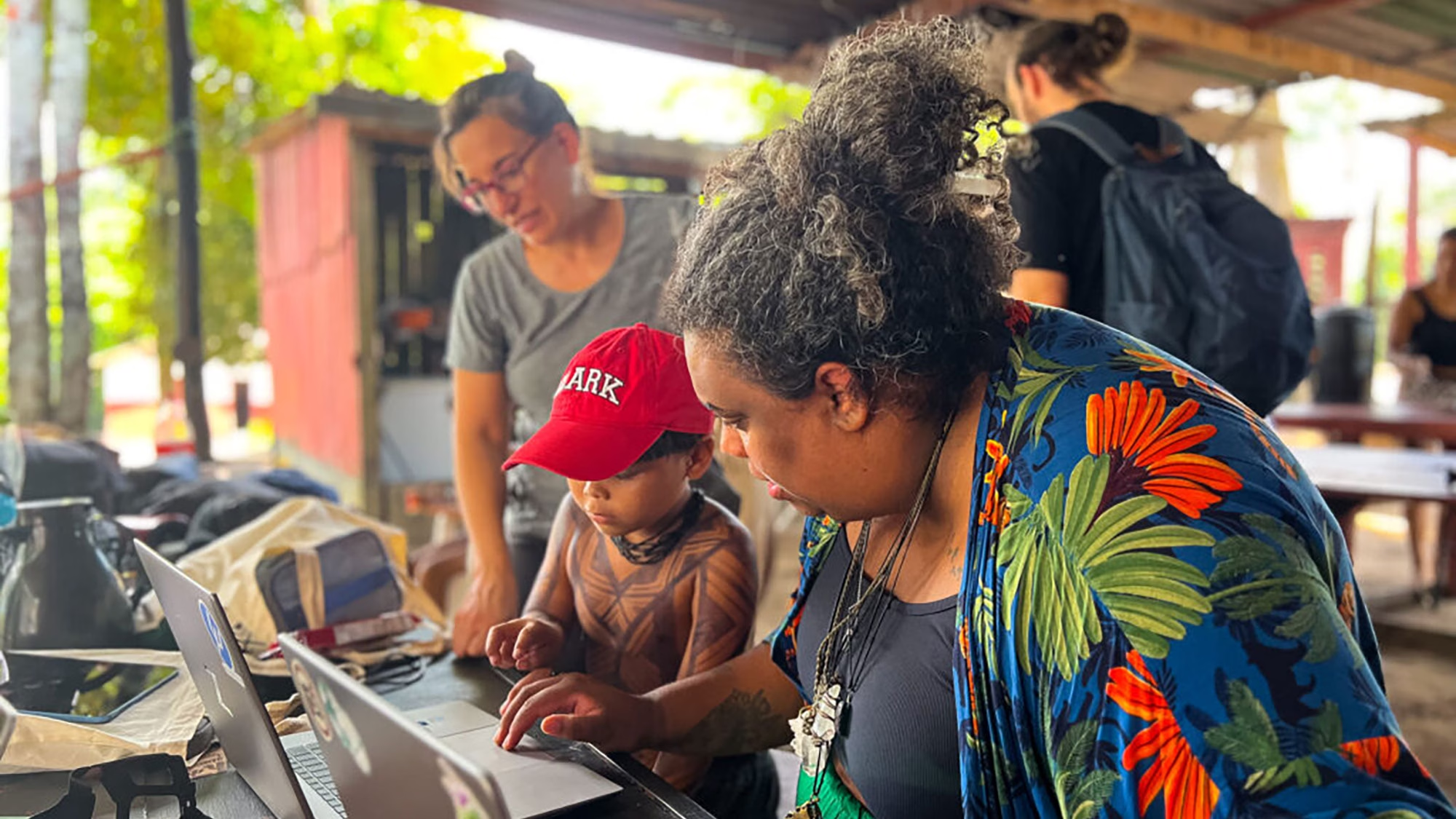
Sangermano has experience partnering with Indigenous and local people on environmental research in the Amazon. In Brazil, as part of the five-year XPRIZE Rainforest competition, she was a member of the global research team ETH BiodivX that eventually won a $250,000 Bonus Prize in 2024. Her expertise in ecoacoustics, geospatial science, and remote sensing helped inform the environmental insights the team derived from data gathered in the Amazon.