Becker School of Design & Technology students highlight the scientist’s advances in modern rocketry
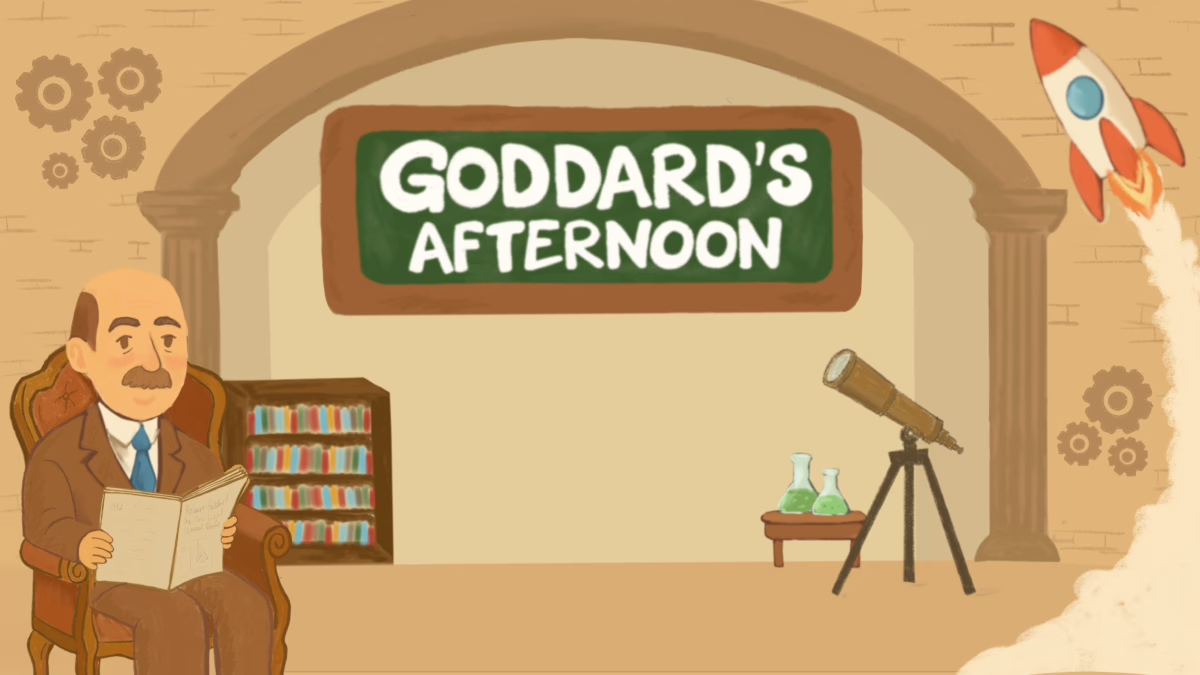
Robert Goddard was a dreamer and a visionary, but the Clark physicist and father of modern rocketry likely never could have imagined that in 100 years, students would be learning about his accomplishments through a video game.
Students taking Game Studio with Becker School of Design & Technology professors Ilir Mborja and Kat Andler have spent the academic year crafting “Goddard Afternoon,” a video game project that takes players into a virtual version of Goddard’s childhood home in Worcester, featuring interactive mini games and facts about Goddard’s historic launch of the world’s first liquid fuel rocket on March 16, 1926, an accomplishment that ushered in the Space Age.
The idea came from a group of six students taking a Serious Games course taught by professors Mborja and Ulm in spring 2025. Serious games are video games created for purposes beyond pure entertainment, such as academic instruction or professional training.
“Serious games tend to be misunderstood a little bit,” says Andler. “It is an educational experience for the students and the people playing the game, but the goal is still for it to be fun and entertaining and engaging, which I think it is.”
“It doesn’t feel different just because it’s a serious game,” adds Mborja. “They’re doing this work because it’s fun for them as well.”
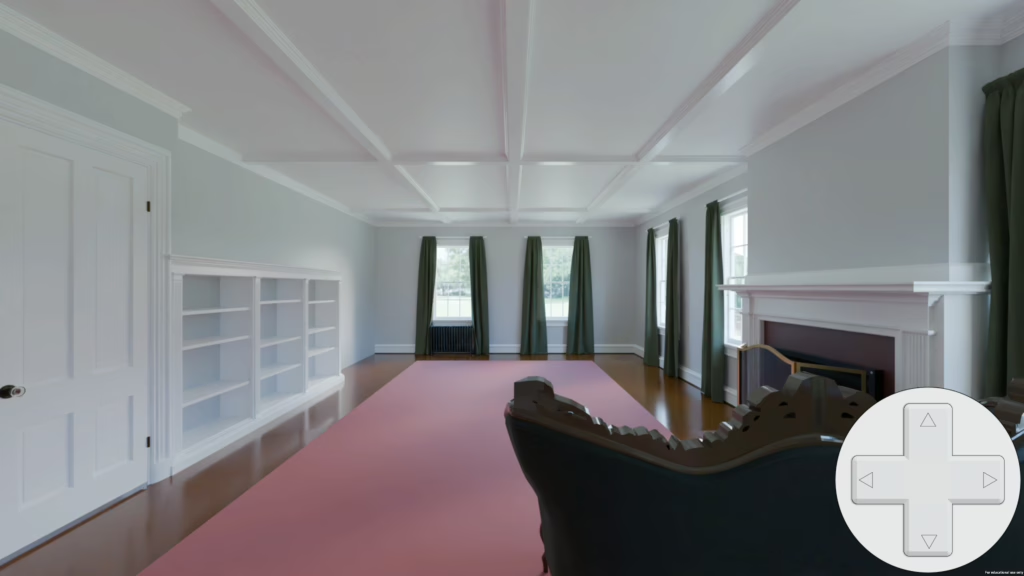

Students visited Goddard’s childhood home, which is not far from the Clark campus and has been renovated by alum and former Clark professor Charles Slatkin ’74 into a center for science education and inspiration called The Dr. Robert and Esther Goddard Center for Innovation. They created a 3D rendition of the house, where players can explore and interact with objects to unlock facts and information. Some of the objects lead to 2D mini games related to rocketry:
- A liquid sorting-style game to organize rocket fuel, fun for all ages
- A “Flappy Bird”-esque game in which the longer you press the screen, the higher a rocket soars, but you must avoid obstacles
- Using a telescope, players search a celestial sky and illuminate newspaper articles that were critical of Goddard. The ultimate objective is to find the moon, which Goddard dreamed of reaching by rocket
- A platformer game to jump on a cherry tree, inspired by Goddard’s “Anniversary Day”
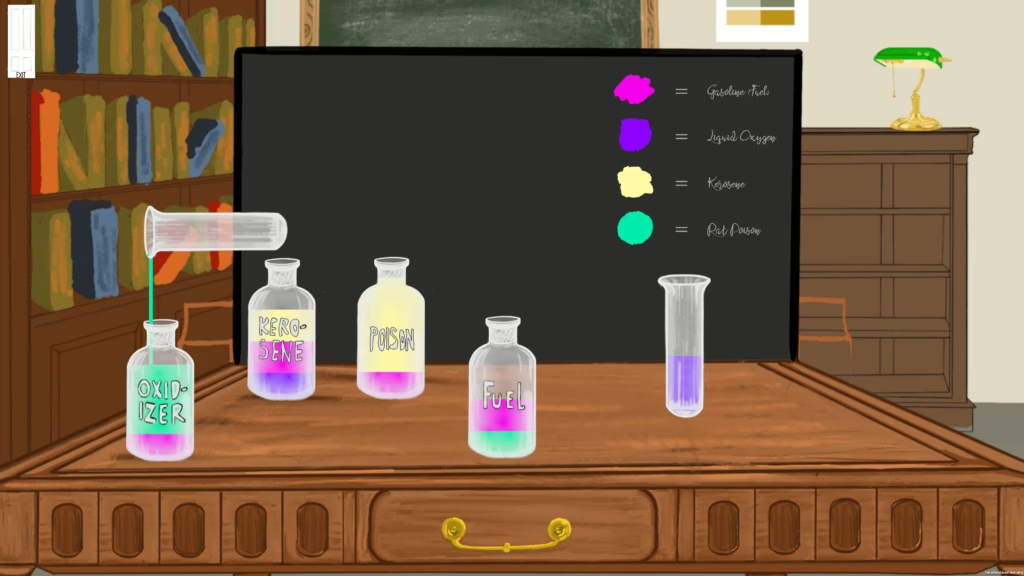
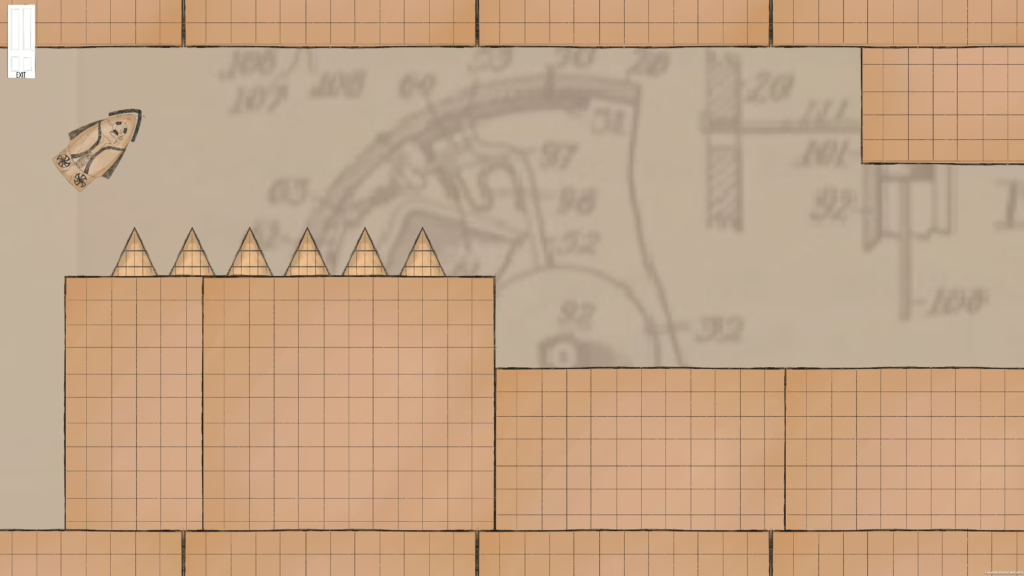
Andler says she has been impressed by the students’ dedication to researching Goddard’s influence, particularly the team’s two writers.
“They really looked at his life and what motivated him, and did a lot of research on his wife, Esther Goddard, and how important she was to the process — she was really into photography, for example, and documented his work,” says Andler.
“This group did such a good job with the research, and I think that shows through, especially in the game where you’re searching for news articles up in the starry sky,” Andler continues. “The articles were mean — they were really terrible to Goddard and he kept persevering. The game, I think, shows a little hope.”
Jack Carson ’27, an interactive media major on the programming track and a programmer for the Goddard Afternoon project, has primarily been working on the mini games. He says he was fascinated to learn about Goddard’s persistence.
“One of the coolest parts of learning about Goddard for this project is seeing just how much criticism he went through from outside sources and how determined he was to go through with the project to prove his idea could work,” says Carson. “I hope players come out of this with a greater appreciation for the work of Robert Goddard, and an understanding of how instrumental his contributions were to our modern understanding of rocketry.”
Beyond the research, Andler and Mborja have been impressed by the students’ ability to problem-solve together.
“Almost from day one, they just jelled,” says Andler. “They all have different personalities, and everybody’s in a different stage in their career at school, but they bonded and they’ve worked together really well.”
Students will continue developing the game through the semester, which may need finishing touches during a summer internship or in the fall semester, Mborja says. From ideation to now, about 18 students have been involved in the project.