Spencer Platt ’94 is no stranger to the unimaginable.
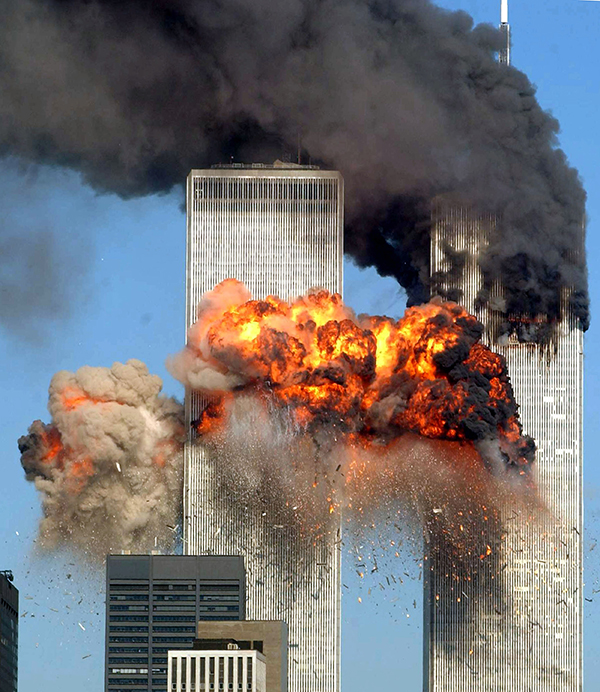
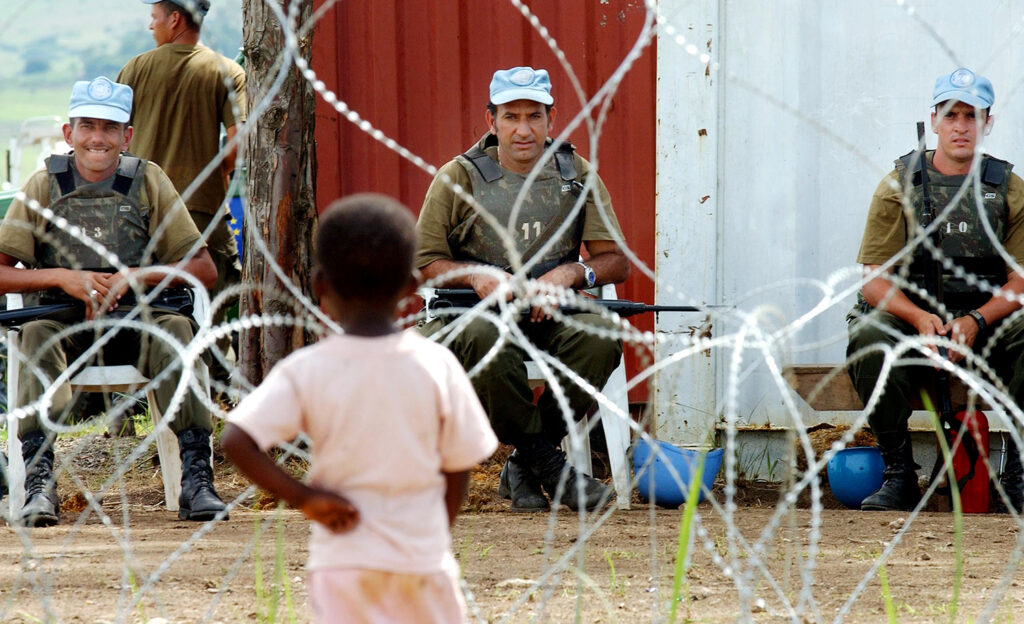
As a photojournalist for Getty Images, he has been deployed to some of the world’s most war-ravaged countries, from Afghanistan to Iraq to the Republic of the Congo. He was in New York City on September 11, 2001, his camera capturing the horrific moment when the second plane exploded into the South Tower of the World Trade Center. He was dispatched to Sandy Hook Elementary School in 2012 to chronicle the immediate aftermath of the shooting deaths of 26 children and teachers, and to the Pulse nightclub in Orlando shortly after 49 people were murdered by a gunman. For more than two decades, his unsparing images have told hard truths.
Still, when he was assigned to cover the confirmation of Joe Biden’s presidential victory in Washington, D.C., on January 6, 2021, Platt was confident that despite Donald Trump’s baseless assertions that the election had been stolen, the day would end peacefully.
“I thought [Trump] would speak, there would be screaming and yelling, then things would settle down and I’d be on the 6:07 back to New York,” he recalls. Even with his “antenna up,” Platt purchased a train ticket to return home to Brooklyn that night.
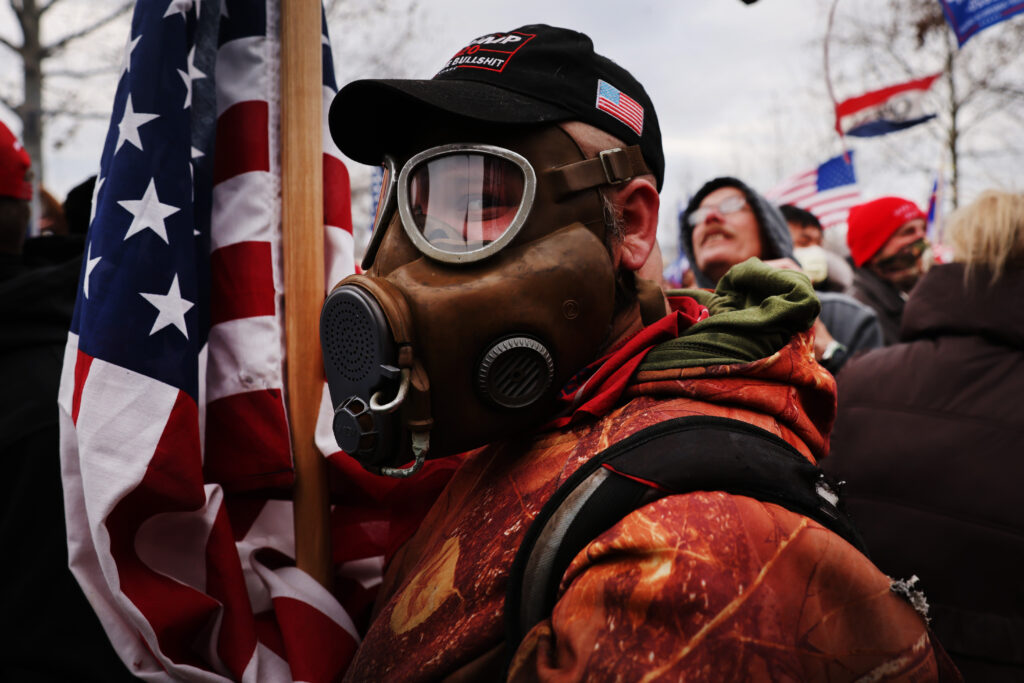
The ticket never got used. By day’s end, he had borne witness to an unprecedented attack on the U.S. Capitol by a mob intent on halting the final step in the electoral process and forcefully reinstalling Trump as president. In the mayhem outside the building, as rioters stormed metal barricades and attacked Capitol police officers, Platt trained his camera on a man in a red hoodie and black ball cap clutching an American flag while the crowd swirled around him. The man’s face was covered in a gas mask, but his eyes, visible behind the glass, turned toward Platt, acknowledging his camera just as the photo was taken.
Platt’s picture of the rioter earned him a Pulitzer Prize for breaking news, an honor shared with four Getty colleagues whose collection of gripping photos chronicles the assault on the Capitol.
When he looks at the photo, Platt wonders what became of the man in the gas mask or what his motivations were for storming the Capitol, but, as he notes, “We had no time to chat.”
Platt’s road to the Pulitzer has Clark origins. The photography student from Darien, Connecticut, found classroom work far less alluring than the streets of Worcester, which he roamed at every opportunity, camera in hand. His mentor, Professor Stephen DiRado, “pushed me out the door to meet people, to explore the city, which is what I did. And I discovered that street photography was my forte. This is what I loved.”
Platt worked as a freelancer for the Worcester Telegram the summer after he graduated from Clark, before landing his first full-time photography job at a small newspaper in Milford, Massachusetts. A few years later, while working at a paper in New York state, he used some vacation time to travel to Albania when it was experiencing violent political protests. His series of photographs was published in the newspaper, and one of them was republished by LIFE magazine.
“Albania was in severe strife at the time — you could hear the guns. I knew then that this is what I’m cut out for,” he recalls. “I’m not an adrenaline junkie, but I do like some risk and adventure.
“Photojournalism offers me an unpredictable life. The news sometimes can wear me down, but there’s no way I can just read about it. I have a mental and physical need to witness it. That’s what leads me into those places.”
It’s in those places where Platt documents conflict in its rawest and most perilous form. The fallout from September 11 set the course of his career for the next five years, much of that time spent photographing the U.S. invasions of Afghanistan and Iraq. He remembers being lined up with other journalists on the Kuwait-Iraq border, awaiting the official declaration of war.
“We all had rental trucks, ready to go. When the gun went off, we started them up and sped off into the desert. It was like the start of some mad endurance car race.”
The settings were chaotic; the conditions lethal; the work exhilarating. Platt can speak with authority about what it’s like to navigate a road cratered by explosions, or the whistling sound an approaching shell makes as you hurl yourself to the ground. He shot photos, and was shot at with rifles.
“I thrived on it,” he says of his time in high-conflict areas, “but I was also pragmatic. When you’re in it, ultimately, your main goal is to make it out of there. I’ve lost a number of colleagues covering war, and each loss brings home that this is serious and can happen in a very small conflict, or the biggest conflict.”
Some threats are less explicit. While covering the Arab Spring rebellions a decade ago, Pratt roamed Cairo while it was under military lockdown. “There was a surreal quality to it — like walking through Manhattan on a Tuesday afternoon and nobody is there,” he recalls. “You could feel the soldiers eyeing you, debating what to do with you. In hindsight, probably shouldn’t have been out on the streets at that moment.”
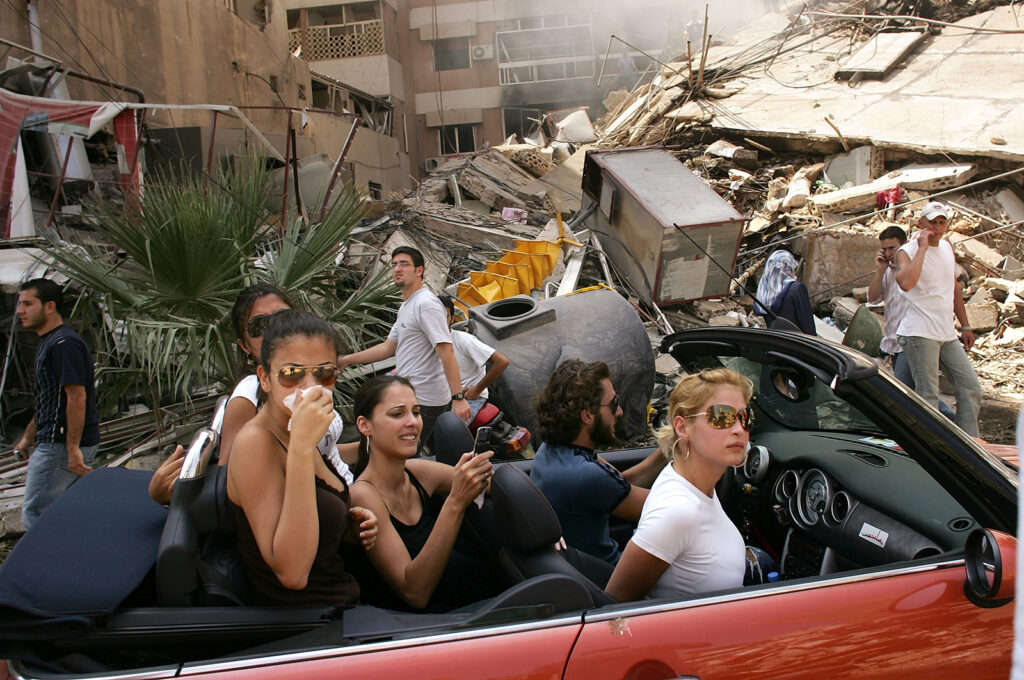
Platt won the 2007 World Press Photo of the Year for his image of a group of Lebanese men and women cruising in a red convertible past the wreckage of a recent bombing. Years ago, he was in Ukraine chronicling the Russian invasion of the Donbas region when he was detained at a roadblock by Chechen soldiers who believed he was a spy.
“There were some heated moments,” he says. “With Russian soldiers, things can escalate pretty quickly if you don’t have someone on the scene who is level-headed.”
Platt no longer seeks out assignments in war zones. He acknowledges that as the married father of a young daughter, family considerations play into his decisions about the length of time he spends away from home and the risks he’ll assume. “I’d be lying if I said having a child doesn’t affect the calculations you make,” he says.
Despite the changing calculus of his career, Platt would gladly welcome the opportunity to bring his camera to places where political and economic instabilities exert themselves on vulnerable populations — if those opportunities are ever offered. He’s troubled by media organizations’ unwillingness to extend their storytelling resources to parts of the world where long-standing problems go unrecognized because they don’t align with consumers’ short-term interests and flickering attention spans. Catastrophe and scandal rule the day.
“I try not to be cynical about the news business, but the story that dominates today is easily eclipsed by novelty and titillation,” he says. “We’re too easily distracted and forget what’s happening elsewhere, especially in places like Central Africa that don’t always get a lot of attention. If I can find an editor to support coverage in those locations, I will always accept that work.”
Platt has covered his share of American tragedies, each of them requiring that he don a sort of emotional armor allowing him to capture images at the scene.
When he arrived in Newtown, Connecticut, the day of the Sandy Hook shootings, he had to struggle against his own sadness and disbelief — and the surreality of schoolchildren being murdered in classrooms just 30 miles from where he grew up — to emerge with photos that captured both the devastation and resilience of the townspeople.
He faced similar challenges at the scenes of the Pulse nightclub massacre and the 2022 supermarket shooting in Buffalo that left 10 people dead. Always, he says, the photographer needs to find a way to compartmentalize the dispiriting emotions to get at the story.
“You have to make yourself a little bit numb to what has happened, or you wouldn’t be able to function,” he says. “In the end, we have a responsibility to cover these stories — we have to get the news out. There are some people who would prefer we don’t do that and just go away. But the response is, ‘No. We’re not going to forget what happened here.’ ”
Through his lens, Platt not only chronicles the world’s conflicts, but celebrates its joys. He’s photographed the Tour de France and bread makers in Tripoli; communities of people at their most buoyant and individuals in quiet reflection. The subjects of these pictures are a persistent reminder of the good things among us that deserve a Spencer Platt photograph.
Sometimes, accessing those things requires a well-timed road trip.
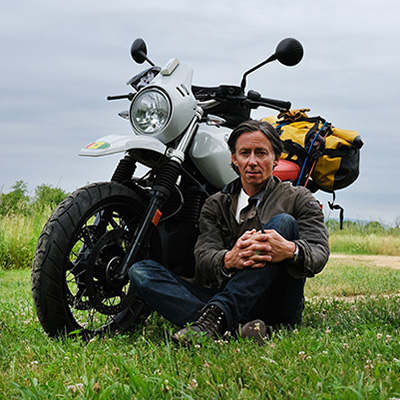
Once he’d finished his grim assignment in Buffalo, Platt climbed onto his Moto Guzzi motorcycle and left for an appointment in Syracuse. To decompress from what he’d just experienced, he chose a route that took him along backroads and through small towns. Within 20 minutes, he was passing by Little League games in progress and waving back to the people who waved to him from outside their homes. It was the tonic he needed.
“Here I was, just an hour before, thinking that this country is hopeless,” he says. “Maybe I’m romanticizing, but it’s important to recognize the great things happening every minute of every day, and remember there are a lot of good people in this world. I always try to remind myself of that.”
Story from Clark magazine, winter/spring 2023