One hundred years — and one day — after Robert Goddard made the first successful launch of a liquid-fueled rocket, the enduring impact and inspiration of his historic accomplishment was recalled by a fellow Clark alumnus and retired NASA employee.
In a March 17 presentation on the Clark campus, John Emond ’74 harkened to Goddard’s March 16, 1926, launch from snow-covered Ward Farm in nearby Auburn. The hand-fashioned rocket, nicknamed Nell, soared 41 feet into the sky, remained airborne for 2.5 seconds, and landed in a cabbage patch 184 feet away. The numbers were modest; their reverberations are still being felt.
Emond took the audience back to the scientist’s boyhood, recounting the famous story of Goddard climbing his family’s cherry tree and peering up into the starry sky, imagining the scenarios for space travel posed by his favorite fantasy authors, Jules Verne and H.G. Wells. He descended that tree with a sense of purpose that would feed his lifelong efforts to reach the cosmos.
“Creating a fantasy novel is one thing, but turning vision into reality requires a break from current understanding, a dramatic paradigm shift, a movement from known to unknown,” Emond said.
Goddard’s paradigm shift came with its share of challenges. When he referenced the possibility of a moonshot in his seminal 1919 essay “A Method of Reaching Extreme Altitudes,” the press tabbed him as “Moon Man” and mercilessly mocked his ambitions, Emond said. The New York Times in 1920 famously derided Goddard’s contention that a rocket could travel in the vacuum of space, insisting he lacked the basic knowledge “ladled out daily in high school.”
Despite the public scorn, the Clark physicist persevered, and turned his vision into reality — the ultimate vindication, he noted. From that humble launch, Goddard would continue with his experiments, moving them to Fort Devens, Massachusetts, and then Roswell, New Mexico and earning the backing of Charles Lindbergh, the Guggenheim Foundation, and the Smithsonian Institute, among others.
Goddard contributed his rocketry expertise in service to the war effort, both in World War I and II, with Emond noting the “dichotomy in technology” between the great benefits offered to humankind and the potential for great destruction. Among the former, he cited Cospas-Sarsat, an international satellite-based search and rescue system that since its formation in 1982 has been responsible for saving over 63,000 lives.
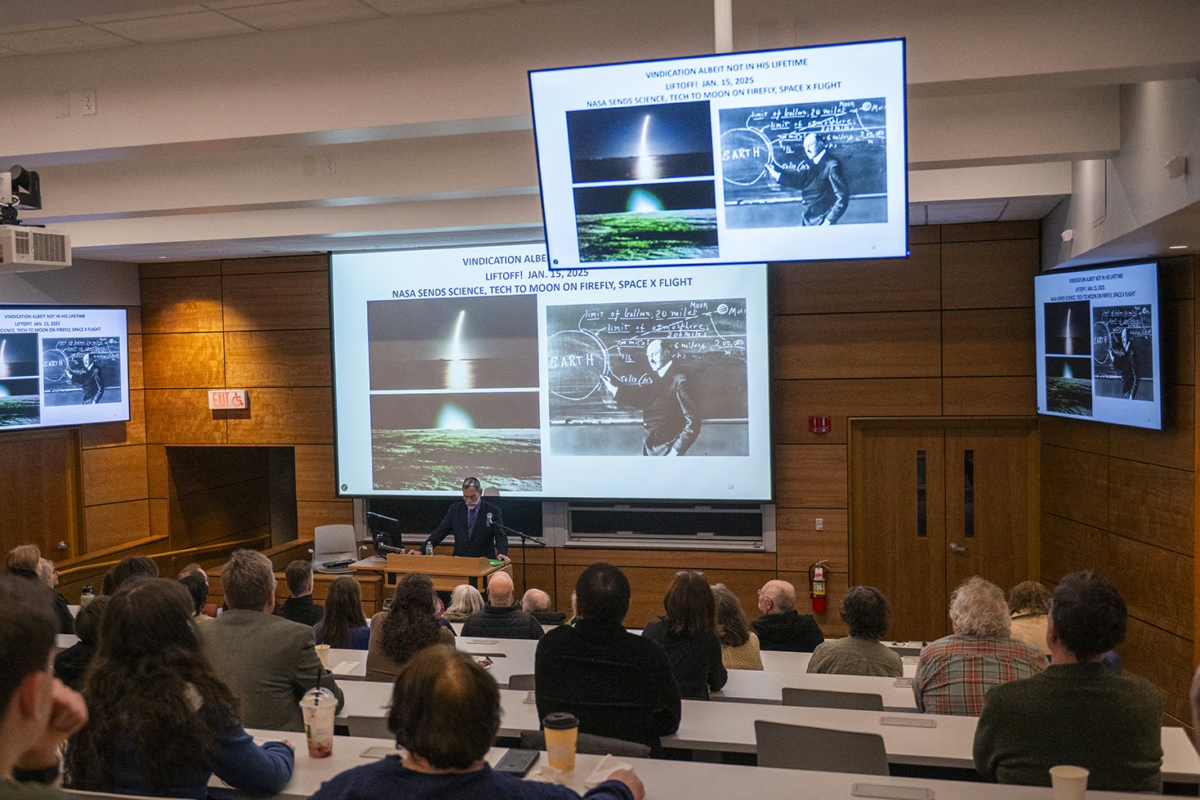
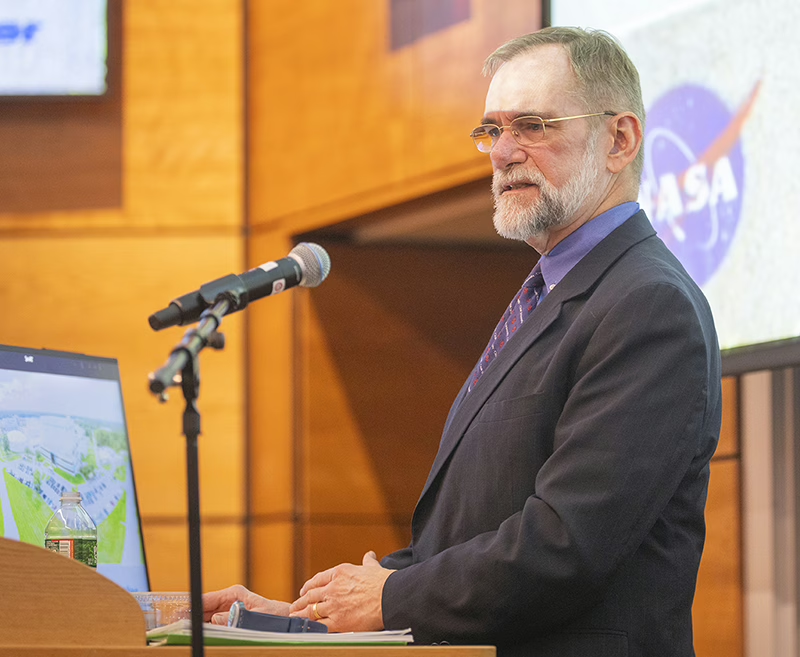
Emond enjoyed a 29-year NASA career, first at the Goddard Space Flight Center in Greenbelt, Maryland, and later at NASA HQ in Washington, D.C., holding positions as a contract specialist, policy analyst, and program manager until his retirement in 2011. Throughout his presentation, Emond took care to juxtapose the famous photo of Goddard (taken by his Robert’s wife, Esther) standing next to his launch frame with images highlighting the technological advances in space travel over the succeeding decades—among them the Apollo 11 moonshot, the International Space Station, and the upcoming Artemis lunar mission. Goddard’s work, he said, must be viewed as a continuum that has informed all of these later achievements, by NASA as well as by private companies like SpaceX and Blue Origin.
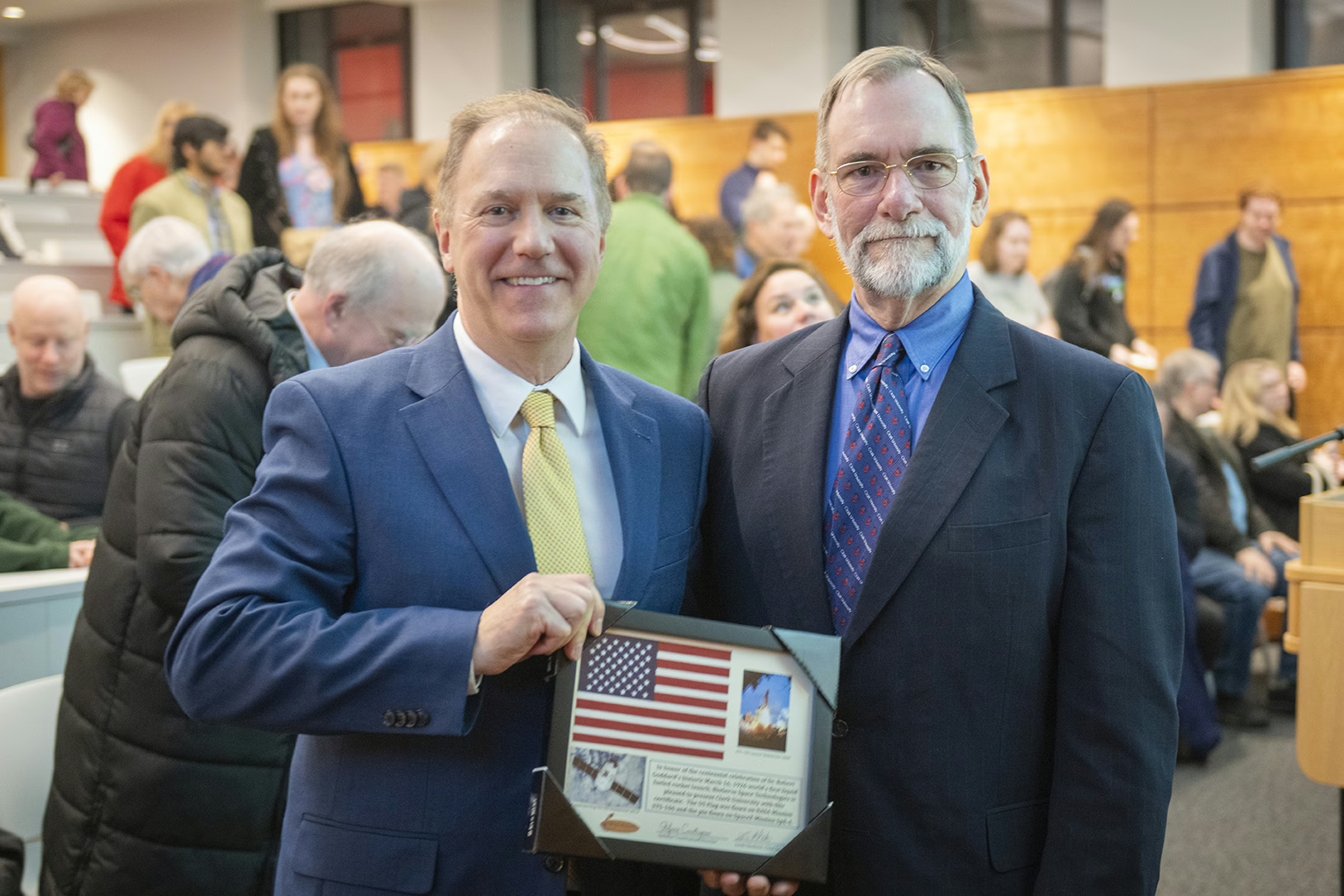
Following his lecture, Emond presented Clark President David Fithian with a special certificate from BioServe Space Technologies, a Center within the Ann and HJ Smead Aerospace Engineering Sciences department at the University of Colorado Boulder that has designed, built, and flown hundreds of microgravity life science research experiments and hardware on over 110 spaceflight missions. BioServe’s gift to Clark includes a flag and pin that were flown to the International Space Station, the latter on a Falcon 9 rocket — a descendant of Nell’s.