The use of AI in the creation of art. Can you tell the difference, and why does it matter?
What kind of vegetation grows in a former cranberry bog, and what does it contribute to the landscape?
Does the heavily invasive golden oyster mushroom have a beef with other fungal species, or does it just seem that way?
Does the Clark student who studied the shapes of various lizard skulls and jaws know the student who won an award for their poem “An Epitaph for the Last Great Jawbone”?
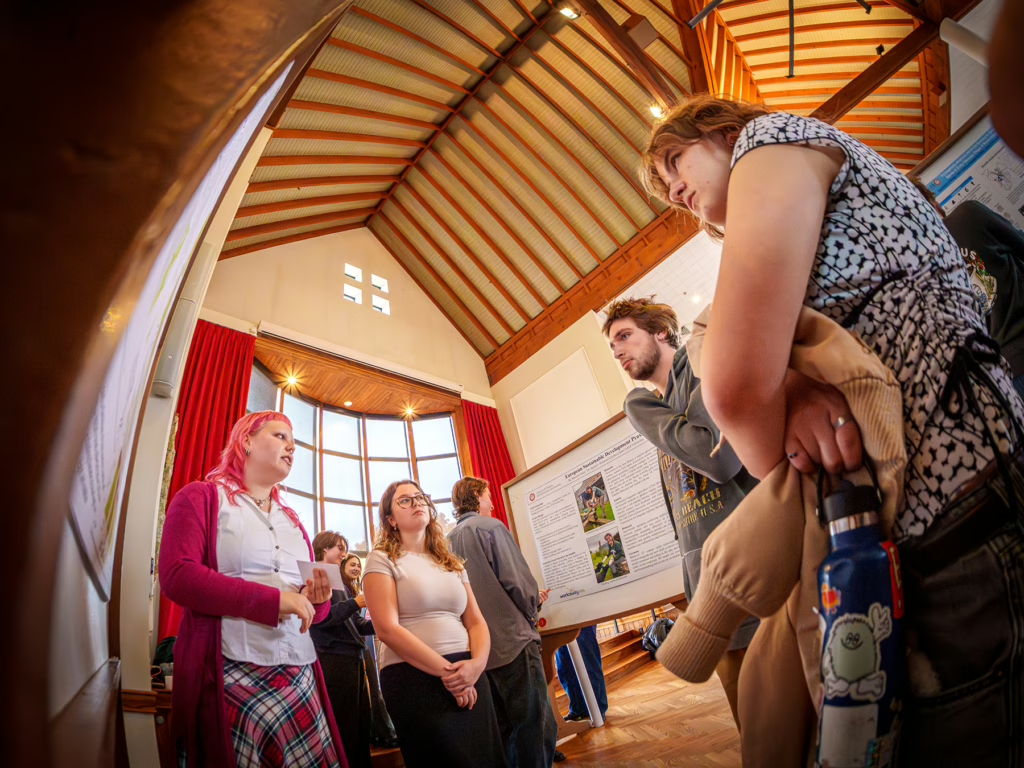
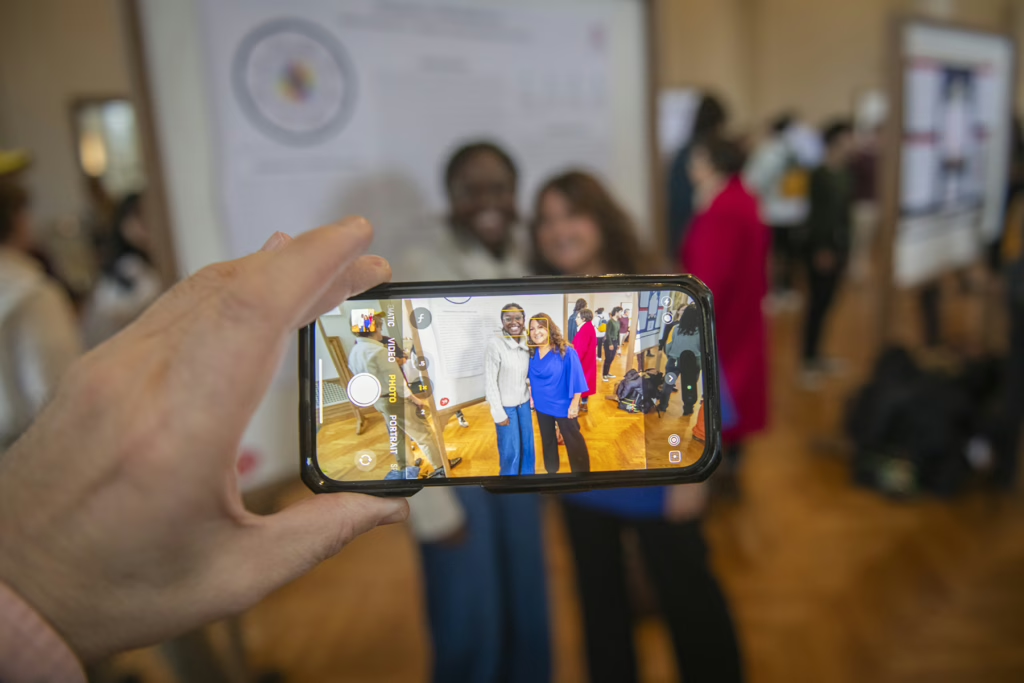
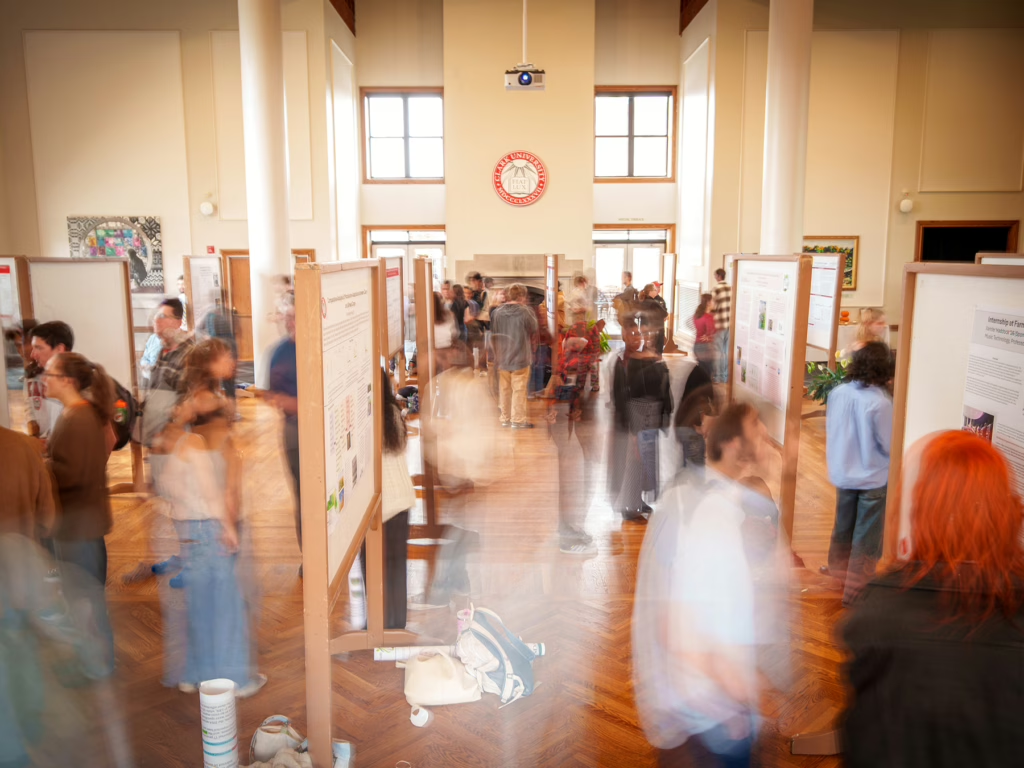
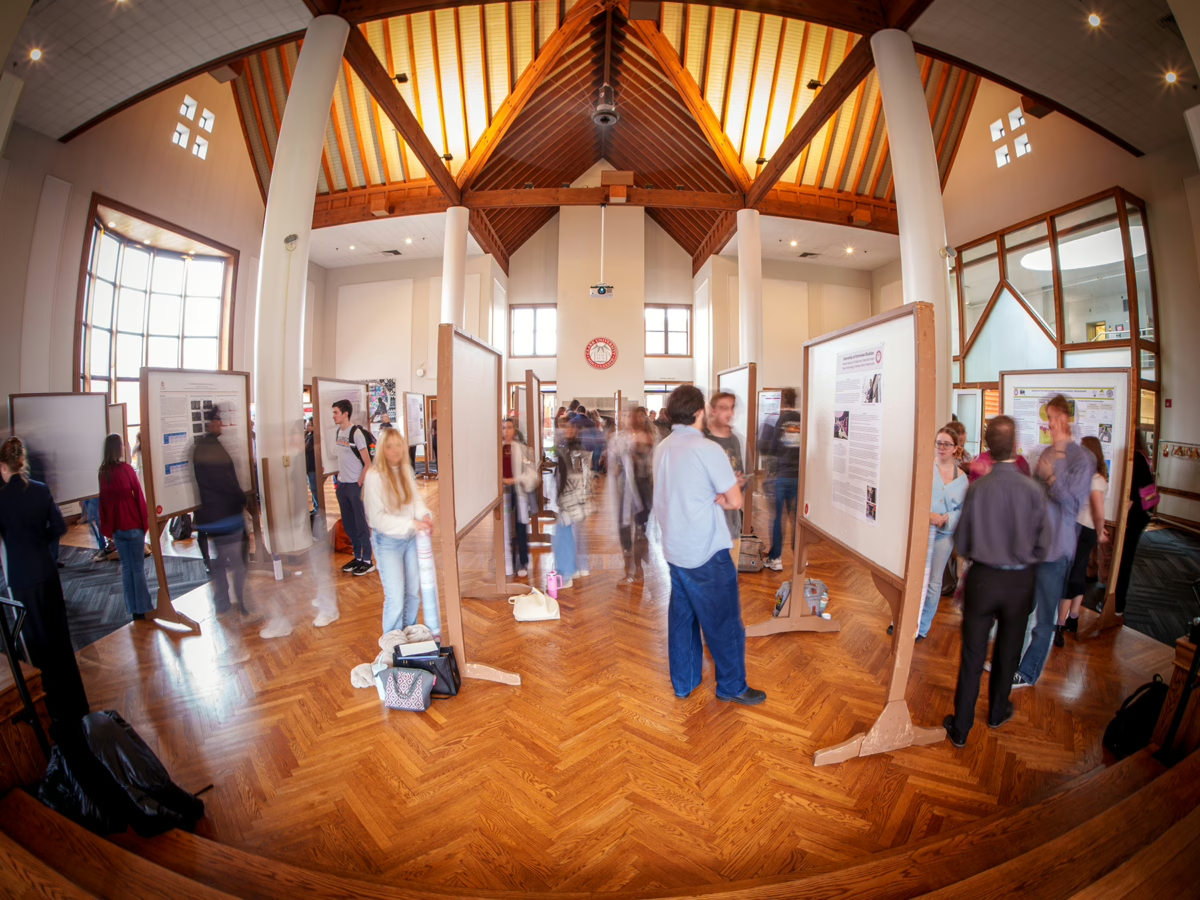
They were questions that compelled plenty of lively discussions at the Fall 2025 edition of ClarkFEST, held Oct. 29. The event showcased student research and creative projects through poster exhibitions in Tilton Hall, interactive media displays inside the Center for Media Arts, Computing, and Design, and presentations detailing student projects and political science internships at the Higgins University Center.


Throughout the day, students presented on countless topics representing Clark’s many disciplines.
A ‘golden’ opportunity in biology
Carter Peterson ’26, a biology major and a Penn Family Research Fellow, displayed a poster describing the golden oyster mushroom’s impact on other fungi, which it “outcompetes” for terrain. The poster had earned Peterson the prize for Best Undergraduate Poster at the Mycological Society of America conference held this past summer in Madison, Wisc. Golden oysters are combative in the wild, and popular in the kitchen. “Unfortunately,” Peterson said with a laugh, “they’re very tasty.”

Of monkeys and feral cats in Puerto Rico
Several students studied animals in Puerto Rico. Lauren Bostwick ’26, the recipient of a Steinbrecher Fellowship, tracked feral cats in San Juan by developing a tool that allows the community to keep track of their condition and arrange for their care. Sofia Moncayo Caamaño investigated the use of melatonin to treat self-injurious behavior in a Rhesus macaque (monkey).

The psychology of AI and art
Psychology major Xiaoai Rachel Lin ’25 constructed a study of different perceptions surrounding the use of AI in the creation of art. And within the realm of decidedly human-created art, the winners of poetry, short story, and essay writing competitions were prominently displayed at ClarkFest. (The “Last Great Jawbone” is by Reuben Glassenberg ’26).
The uses of chemistry
For over a year, Avery Schwartz ’26 conducted polymer science research in the lab of Professor Julio D’Arcy, the Carl J. and Anna Carlson Endowed Chair of Chemistry and Biochemistry. Polymers are complex, chemically bonded chains of large molecules used to produce materials for a wide range of applications, from energy storage devices to atmospheric water collection. Schwartz’s research poster describes the chemical reaction that occurs when nanotube structures, which can absorb and hold atmospheric water, are formed during the “vapor phase” of polymerization. In D’Arcy’s lab, which is supported by his National Science Foundation CAREER grant, “we’re doing chemistry, but we also get the chance to do reactor engineering,” she says. Schwartz’s research has been supported by an Edwin A. Weiller Summer Science Fellowship.
The physics behind dam failures
As part of physicist Morgane Houssais’ $577,000 National Science Foundation-funded project, Finn Baker ’27 used a 4-by-6-by-2-cubic-foot tank that simulates a natural environment, allowing him to videotape and observe how water flows and breaks through an angled mound of sand that represents an earthen dam. Houssais’ three-year study aims to develop a mathematical model that would help surveyors determine how and when even a moderate amount of rainfall, coupled with the “creep” of sediment, might lead to the failure of earthen dams, landslides, and flooding. The issue that has become even more urgent due to the impacts of climate change, Baker says.

Fight against cancer starts in the lab
Biochemistry and molecular biology majors Nicole Steele ’27 and Lily Vincent ’27 presented research on “the PLC-gamma protein, which is found to be overactive in many human tumors, specifically in human T-cell leukemia,” according to Vincent. The Women’s Cross Country teammates have worked for 1-1/2 years in the lab of Biology Professor Justin Thackeray on a project that aims to identify a novel PLC-gamma inhibitor cancer drug. The students use CRISPR-Cas9, a technology allowing them to “edit” the DNA sequence of fruit flies, or Drosophila melanogaster, and recreate activating mutations found in human tumors. Steele has been funded by a Penn Family Research Fellowship; Vincent has received departmental funding.
How do colors affect how you think?
Mentored by Psychology Professor Alena Esposito, seniors Diana Stozhkova, Cami Ratzkin, and Cey’Ara Hutley researched how eye-tracking could be used to determine how people experience colors, which “influence how the brain processes information, affecting key cognitive abilities,” according to their research poster. As part of their psychology capstone project, they designed an eye-tracking experiment that could uncover the effects of warm vs. cool colors on a person’s attention and memory. Their next step, Stozhkova said, is to conduct a trial study with members of their capstone course, Advanced Topics in Developmental Psychology.
Games with cool names
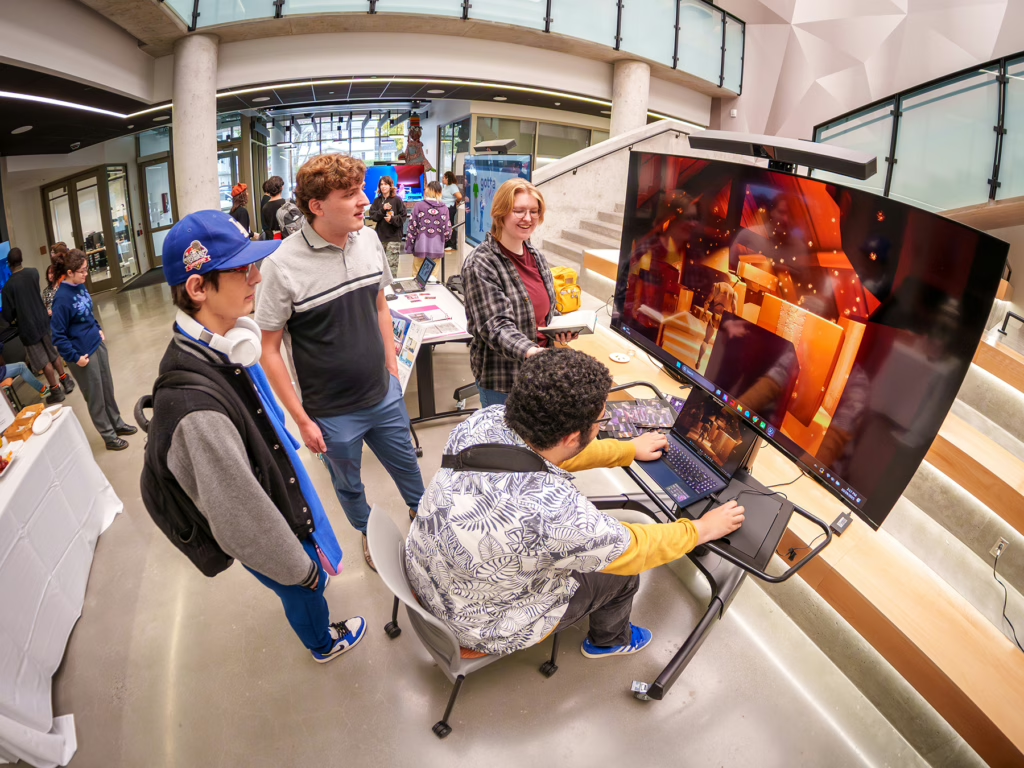
The Becker School of Design & Technology played host to a series of interactive media exhibits. Visitors to the lobby of the Center for Media Arts, Computing, and Design saw video games at various stages of production with inviting names like Gotta Gloss, Fairy Cursebreaker, and Through the White Wall.
Photos by Ismael De La Cruz ’27 and Steven King