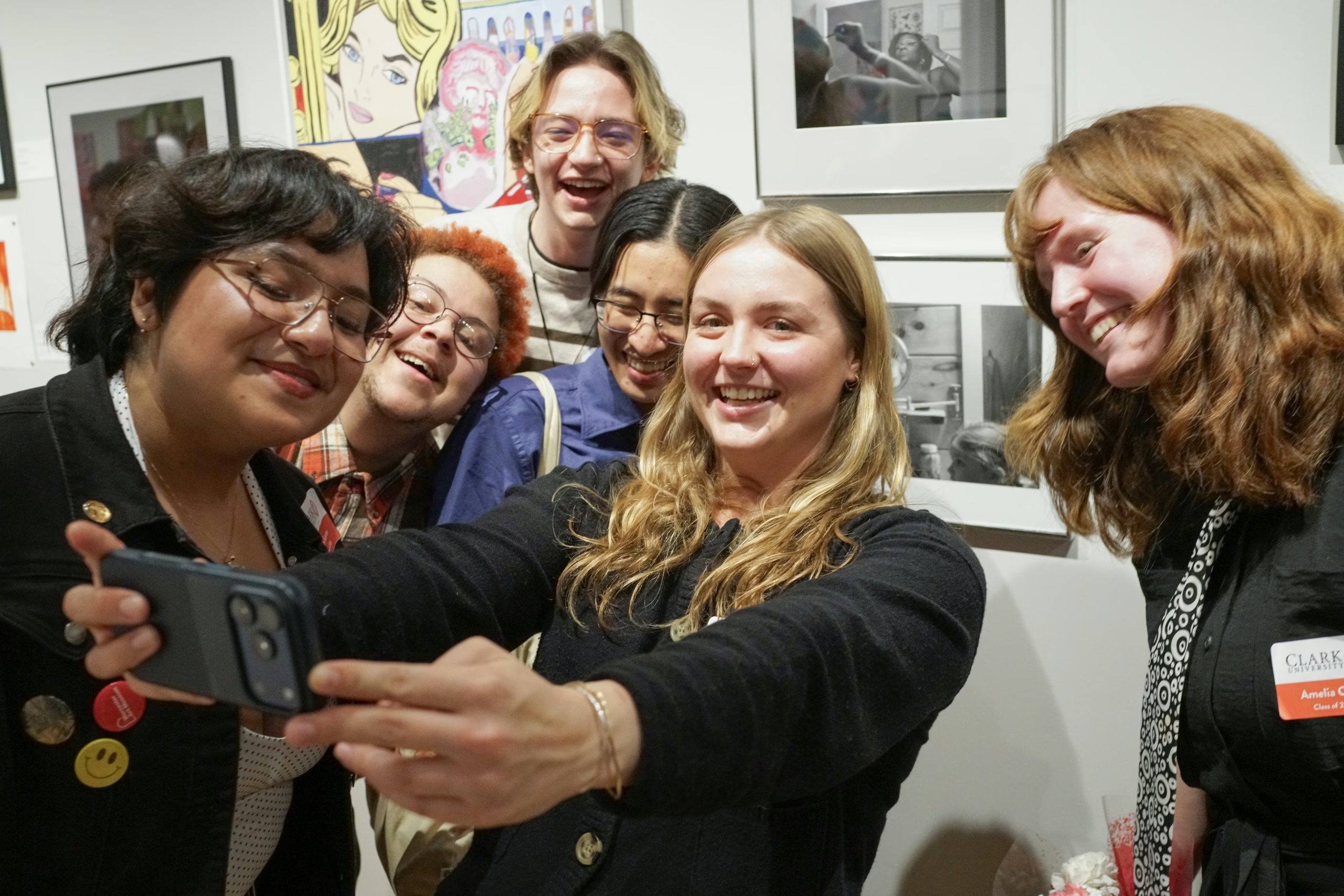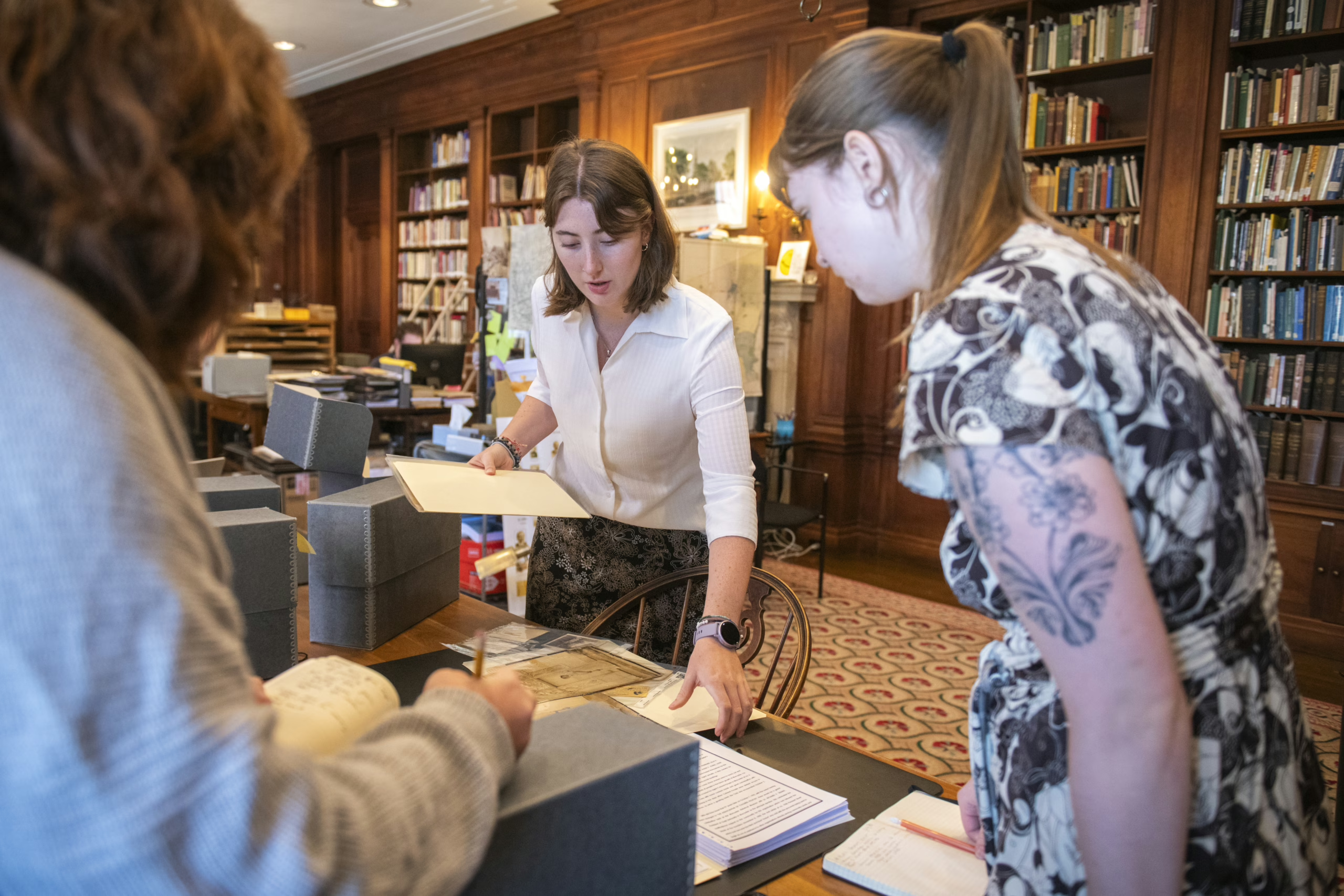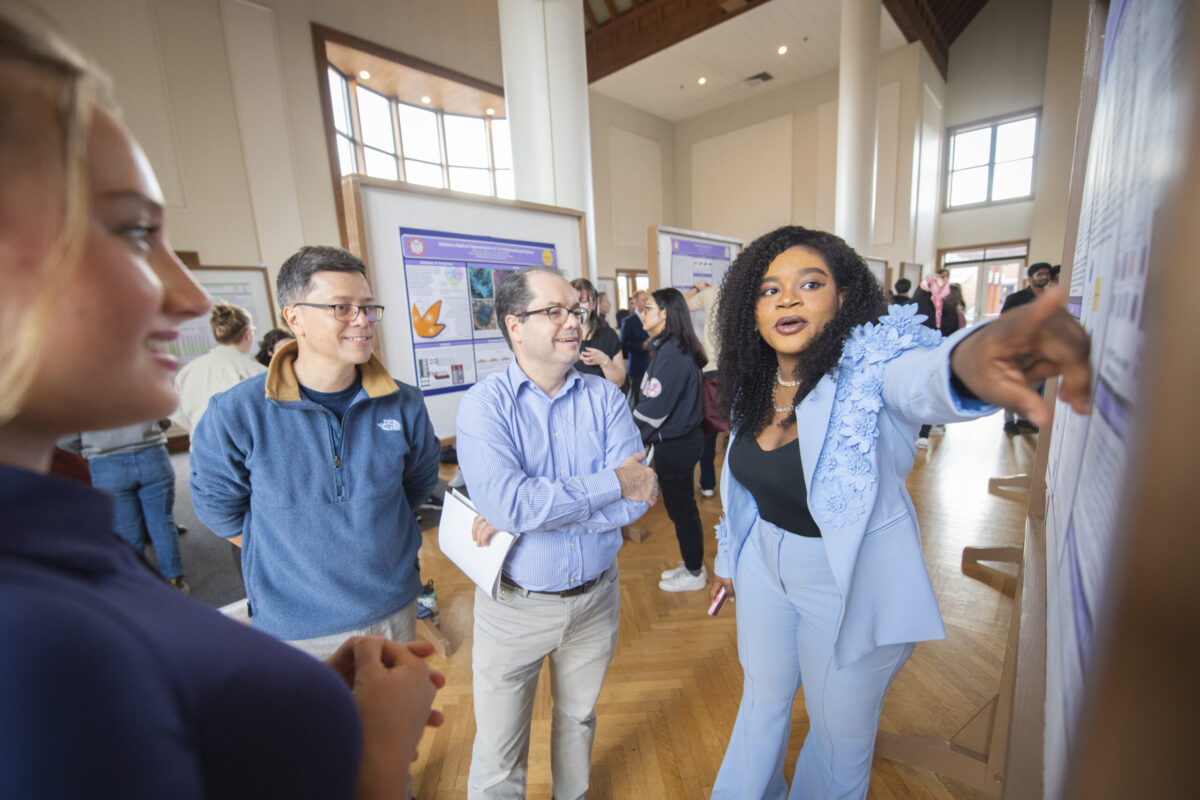
Clark University’s undergraduate students will display their work at ClarkFEST, the biannual showcase of research and academic excellence, to be held Wednesday, October 29.
Over 100 undergrad students will show off their academic and research achievements to the Clark community through poster exhibitions, panels, and roundtables. The displays highlight both the students’ efforts as well as the faculty mentorship that made the projects possible.
Throughout the day, students will present on countless topics representing Clark’s many disciplines. A ClarkFEST visitor can learn about the uses of AI in educational settings, the fate of precious frescoes removed from churches, the secrets of genomic diversity, and the restoration of wetlands in Massachusetts. This is just a sampling of the rich collection of projects on exhibit.
Poster displays will be held in Tilton Hall and spread across two sessions: 1:30–2:45 p.m. and 3–4:15. A political science internship panel will be held from 2 to 3 p.m. in Grace Conference Room, and individual paper presentations will be held in the Lurie Conference Room. All interactive media exhibits will be in the Center for Media Arts, Computing, and Design.
One of the presenters this year is computer science major Isaac Tomeho ’26, who will present a poster on the topic of “What Majors Do Makerspaces Attract the Most?” Tomeho is a coordinator of Lux Lab, Clark’s first makerspace, located in the Center for Media Arts, Computing, and Design. In Lux Lab, Clark students express their creativity using a variety of tools, from sewing machines to 3D printers.
Tomeho’s year-long research focused on the type of students that the lab is attracting, gathering such data as their majors, class year, and the machines they prefer to use. The data was used to make improvements to the facility. Tomeho emphasized that serving the community his priority, with the main goal of his research “figuring out how to bring in more non-STEM majors into this space.”
Biology major Lauren Bostwick ’26 is presenting a poster on using “Geographic Information System Approaches to Track Feral Cats in San Juan, Puerto Rico.” Bostwick was in Puerto Rico working on a separate project when she noticed strays wandering the streets — playing with them brightened her days when she was missing home. She developed a tool that allows the community to input a location when they find a feral cat, and that data is used to help arrange care for the animals.