Clark community prepares for NECHE reaccreditation visit
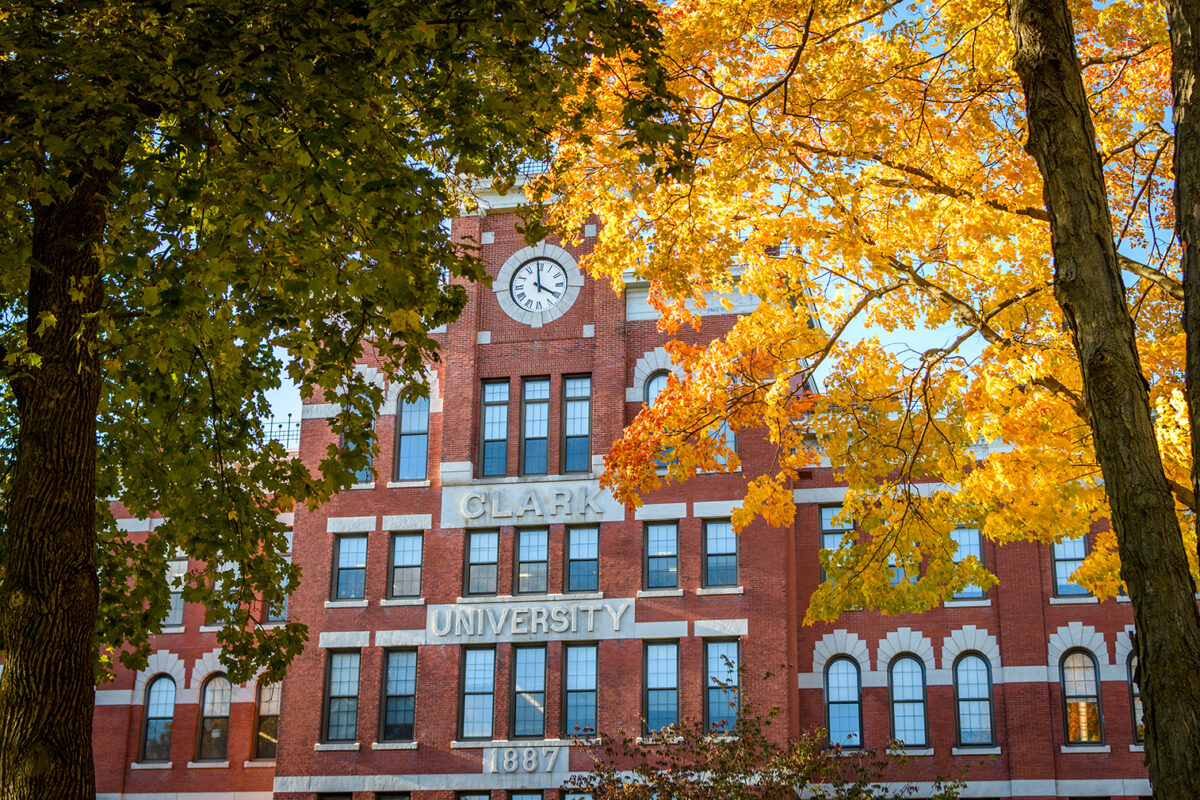
From Nov. 2 to 5, Clark will host representatives from the New England Commission of Higher Education (NECHE) to assess University operations and strategies, set benchmarks, and consider effective pathways to continue meeting its academic and research goals.
Reaccreditation takes place every 10 years, with NECHE as a key partner and arbiter of the University’s performance.
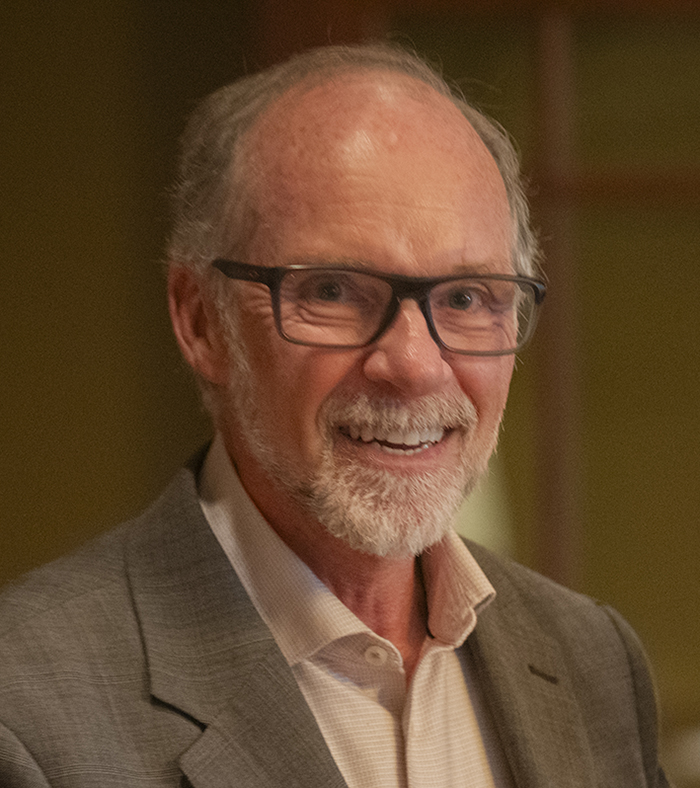
“Accreditation signals to the external community a sense of accountability, and that accountability can be equated with the integrity of our academic portfolio,” said John LaBrie, dean of graduate studies and international programs, and co-chair of the Reaccreditation Steering Committee with Eduard Arriaga-Arango, who chairs the Department of Language, Literature, and Culture at Clark.
Clark recently completed the self-study portion of the accreditation process, launched in late spring 2024, which involved teams of faculty and staff members composing a narrative of accreditation “standards” that critically assess the institution’s progress in nine distinct areas: Mission and Purpose; Planning and Evaluation; Organization and Governance; The Academic Program; Student Services; Teaching, Learning, and Scholarship; Institutional Resources; Educational Effectiveness; and Integrity, Transparency, and Public Disclosure.
In addition to an introduction and description, each standard includes both an appraisal of current operations and a projection of how strategic initiatives will inform program and goal alignment. The self-study is a comprehensive document, with a narrative of 100-plus pages and about another 200 pages of supporting documentation.
“Our mission clearly states that we’re here for the betterment and the education of our undergraduate and graduate students and expresses a desire to better society through that education,” LaBrie says. “The question we need to answer for evaluators is, are we doing those things that our mission says we are committed to doing?”
The accreditation process is a time for institutional reflection — about those things the University does well and areas where improvements can be made, Arriaga says. He notes that recommendations emerging from past evaluations have yielded valuable changes, including the creation of the Office of Strategic Analytics, Assessment, and Institutional Research, “which is so instrumental” for Clark.
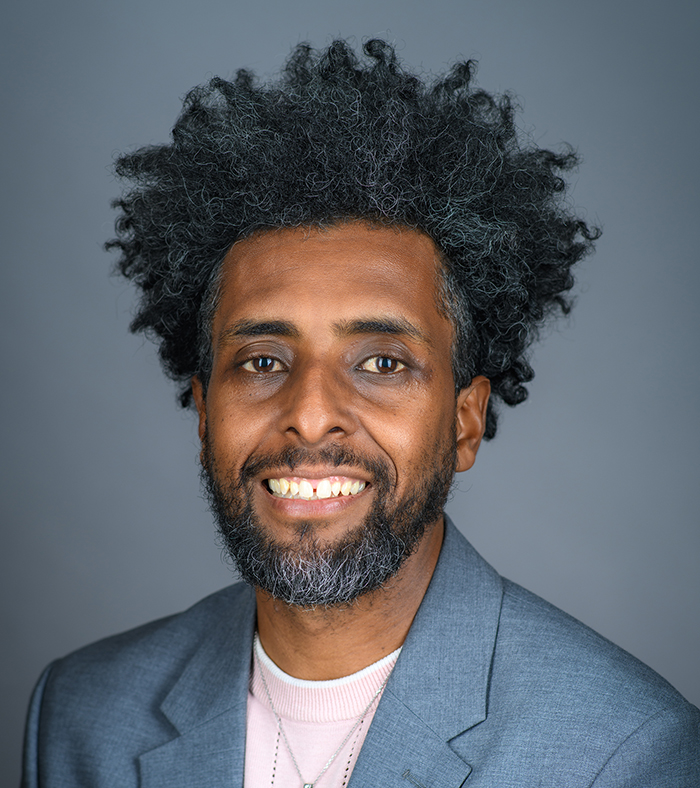
“The involvement of faculty, staff, and administrators in pulling Clark forward is just amazing,” Arriaga says. “They’ve identified important things we need to do to continue to make this place even better for our students to study here, and for our faculty and staff to work here.”
“With the rigor of developing the self-study and working through all the standards, we’ve discovered things that we can do better with. Those are reflected in the self-study,” LaBrie says.
What can the Clark community expect when NECHE’s review team arrives?
Members of the evaluation team will take part in a series of interviews with the authors of the individual standards, members of the faculty (chairs of the departments, for instance), and the leadership team. Five separate dialogue forums will be scheduled with various Clark constituencies: undergraduate students, graduate students, staff, faculty, and alumni and community members (days, times, and locations to be announced).
The process, LaBrie and Arriaga emphasize, is voluntary and collaborative rather than punitive, with NECHE already having provided workshops and guidelines to facilitate an impactful presentation. Evaluators “try to get a feel for the institution and understand its purpose and mission and how well they’re doing,” says LaBrie, who has served as a NECHE reviewer in the past. “If there are gaps between what your self-study says and what they’re hearing on the ground or seeing through data, then it’s their job to ask questions about those gaps.”
“We’re telling the story of Clark: what we have been doing, and what we are prepared to do.”
eduard arriaga-arango
“Self-assessment never stops,” Arriaga says. “The NECHE visits are cycled, with a preliminary report every five years and the big report every 10 years. But reflection is continuous.”
Accreditation is determined by a panel of commissioners appointed from among NECHE-member schools, of which Clark is one.
According to LaBrie, the self-study authors needed to be nimble to adjust the standards for changes in budget and strategic planning necessitated by lower-than-anticipated student enrollment.
“We’re telling the story of Clark: what we have been doing, and what we are prepared to do,” Arriaga says. “We need to be prepared, candid, and transparent.
“The force and the strength of the Clark community working together, even in difficult times, really surprised me,” he continues. “People contributing their time to think through each of these standards, doing revisions, pulling together data. It’s quite a thing to accomplish in any institution, and everybody has rallied to get this done.”