
Protecting the wealth beneath the waves
With a camera and collaboration, Philip Karp ’77 works to save the coral
By Jim Keogh
Philip Karp ’77 grew up watching Jacques Cousteau on his family television and dreamed of one day embarking on his own undersea adventures. What he didn’t understand at the time was that the famed French explorer was doing more than enchanting the TV masses: Cousteau also recognized the power of the camera to heighten awareness about the precarious state of our seas and move the public to take action to protect them.
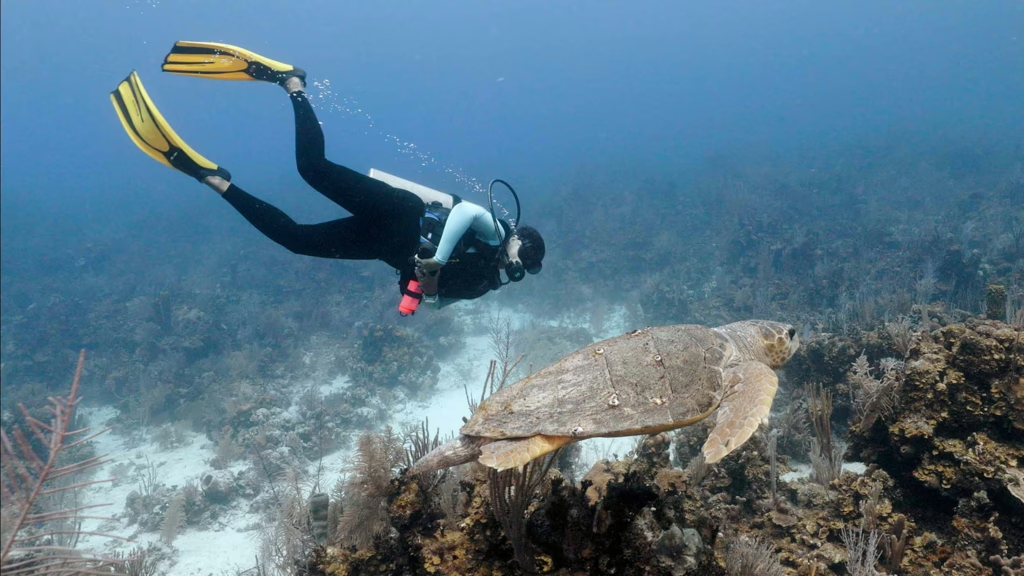
Years later, that lesson truly landed with Karp. He’s merging his passion for ocean conservation with the medium of film as producer of Wealth Untold, a documentary detailing the efforts of the Caribbean nation of Belize to protect coastal ecosystems against a host of challenges—from the predatory lionfish, an invasive species that decimates native fish populations, to the destruction of natural habitats by overdevelopment and tourism.
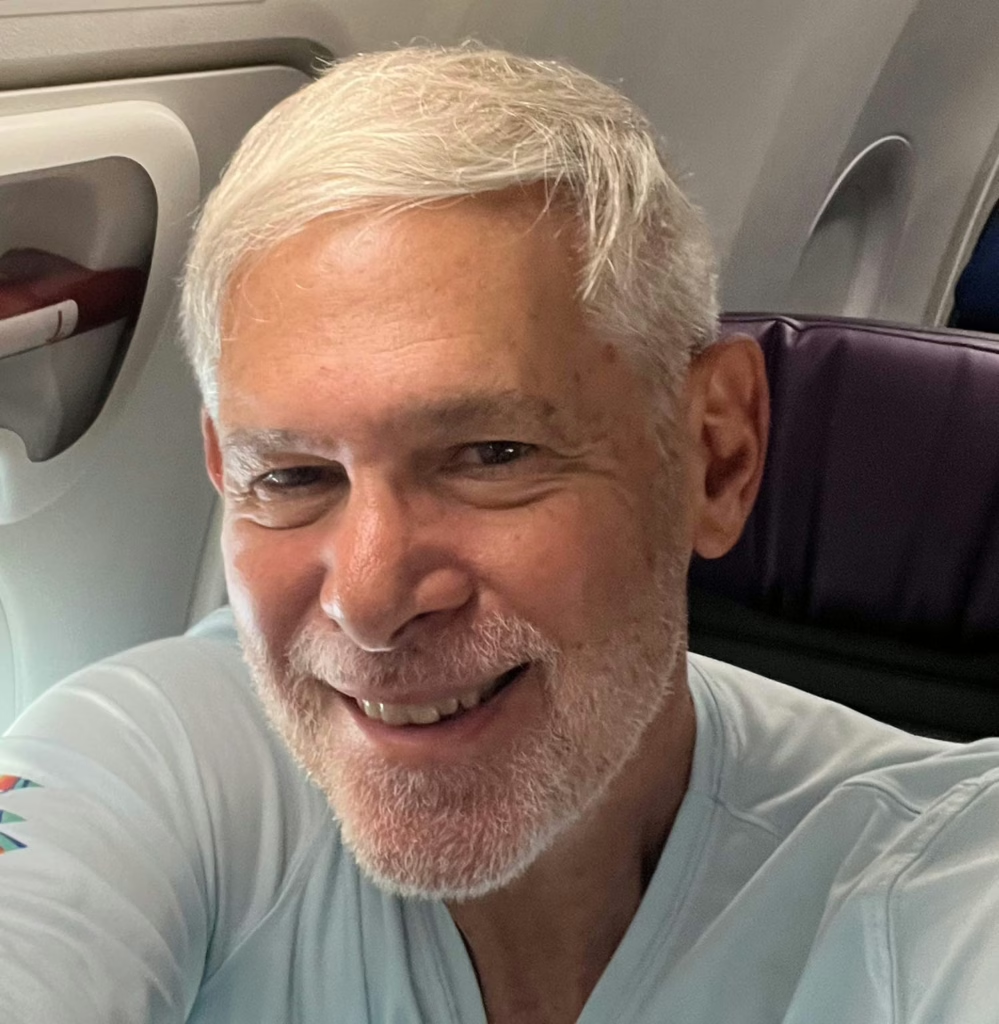
Karp first got involved with Belize in 2013 when he worked with local nongovernmental organizations to devise a plan to combat the lionfish. His recommendation of using market-based solutions to deal with the fish has been successful, with a number of local women launching their own businesses by designing popular jewelry from the animal’s ornate fins, and local restaurant chefs incorporating lionfish into their cuisine.
The Clark alumnus was enjoying his career as a lead knowledge management specialist with the World Bank, working with communities around the world to help them manage the development of their rural, urban, and social spaces and build climate and disaster resilience. He advocated for nature-based solutions to ecological threats, like cultivating oyster beds to prevent storm surge and growing mangroves to sequester carbon, and lectured across the globe about the incipient dangers of plastics littering the ocean. When he retired in 2019, Karp turned his full attention to volunteer work on ocean conservation, and to Belize.
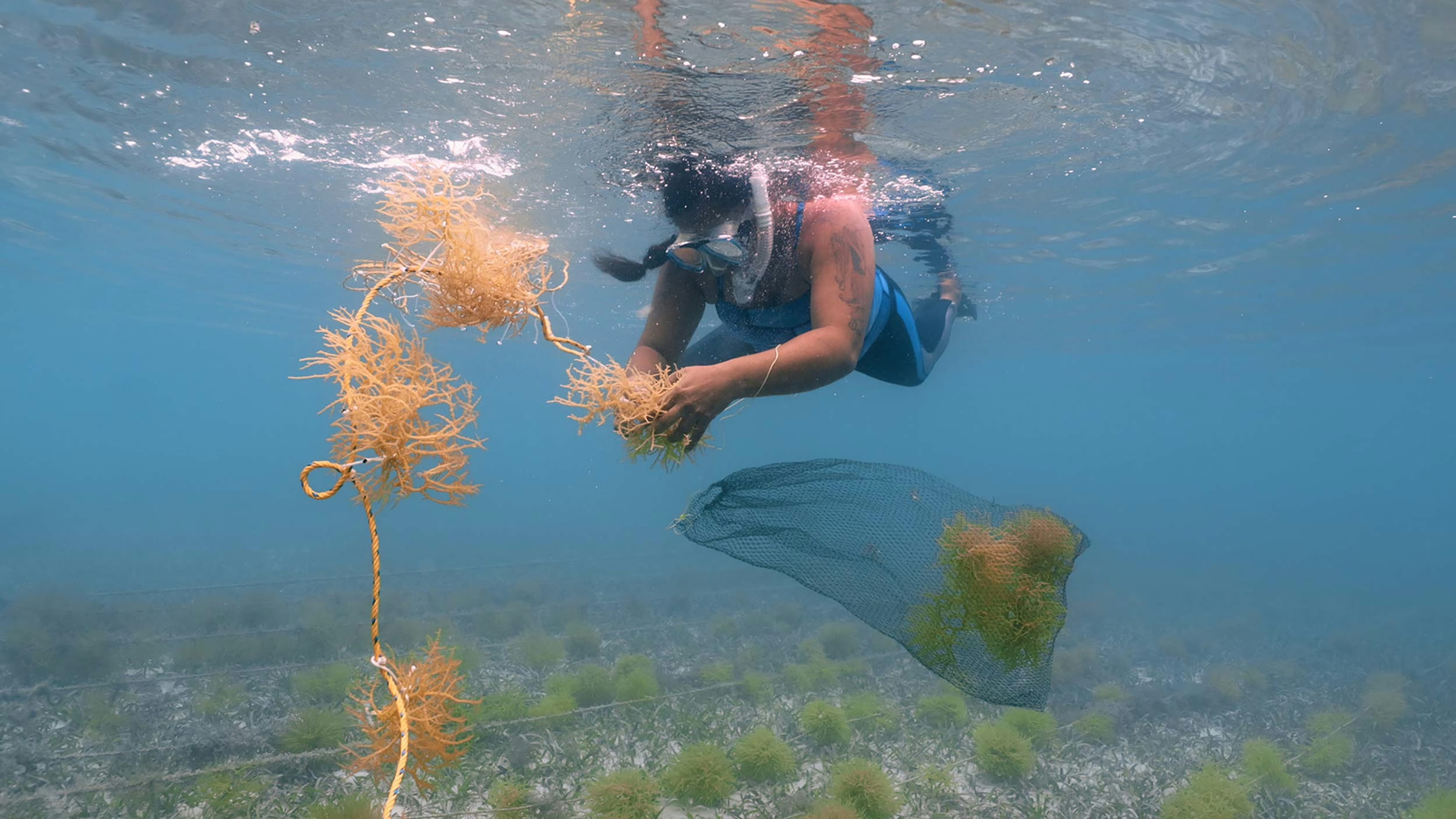
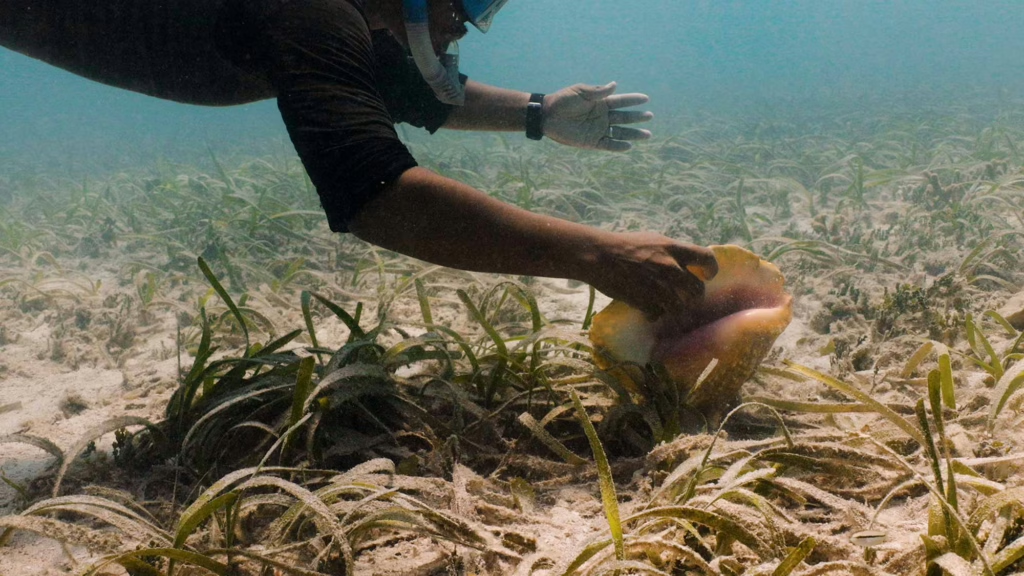
Wealth Untold, directed by Eladio Arvelo, centers the stories of a dynamic group of Belizean women—scientists, community leaders, artists, entrepreneurs, and policymakers—who have spearheaded efforts to protect the country’s distinctive barrier reef (the longest in the Western Hemisphere), guard against overfishing, and fend off offshore oil drilling, all while delicately balancing economic survival—represented by tourism dollars—with the real dangers to Belize’s fragile ecosystem posed by a mass influx of visitors. Largely because of their efforts, the Belize Barrier Reef was designated a UNESCO World Heritage site.
“We were committed to telling a balanced story,” Karp says of the film, which took four and a half years to make. “One of the biggest decisions we made was to have no narrator; we wanted the story told entirely through the voices of the women. It was more difficult than I realized it would be, but it worked.”
Among those interviewed in the documentary is Dr. Sylvia Earle, a renowned oceanographer and NOAA’s first female chief scientist. Karp recalls the on-camera conversation with Earle as very similar to a lunch he and a small group of World Bank colleagues once shared with noted primatologist Jane Goodall.
“When you ask them a question that’s familiar to them, they respond immediately with a sound bite that is absolutely brilliant,” he says. “And if you ask a question outside of that, they reflect for about thirty seconds, then give you an answer. And it’s equally brilliant.”
Wealth Untold premiered, appropriately, at the Belize International Film Festival last November. It has since been shown at conferences, including the U.N. Ocean Conference in Nice, France, this past June. The film also has been accepted into the Newport Beach Film Festival at the end of October and will be screened on the festival circuit and at conferences for about the next 18 months. Karp’s hope is to have Wealth Untold broadcast on PBS.
When he was at Clark, Karp, an international relations major, challenged some of his friends in the sciences to take a political science course, and in return, he would take a marine biology class. He scored the highest grade on the midterm and, to the chagrin of his science-major classmates, managed to throw off the grading curve.
So, this self-described “citizen scientist” is heartened by some of the innovative ideas being brought forward to aid in ocean preservation at every level. His optimism is tempered, however, by the lack of progress on the U.N. Plastics Treaty, especially the resistance to it shown by the United States.
The people of Belize, Karp suggests, are exhibiting leadership in the conservation realm through local efforts that can serve as a model for thoughtful, collaborative, and creative stewardship globally. As of this writing, he is excited to return to Belize, where he serves on the board of an NGO that is proposing alternatives to single-use plastic water bottles in the schools.
He also produced a music video in Belize to accompany the theme song to Wealth Untold. Who knows? Maybe it will go viral—surely even Cousteau couldn’t have imagined that.
Information about upcoming screenings of Wealth Untold can be found on Facebook and at wealthuntoldfilm.com.