

How to feed a hungry world
Clark researchers stand at the center of efforts to sustain the planet’s strained food and water resources
by Meredith Woodward King
With 673 million people starving and 2.3 billion experiencing food insecurity, U.N. Secretary General António Guterres issued an urgent message at a recent United Nations food summit in Ethiopia. “The future of food is the future of humanity,” he said, imploring the world to work faster to develop food systems that are “inclusive, sustainable, equitable, resilient, and rooted in human rights.”
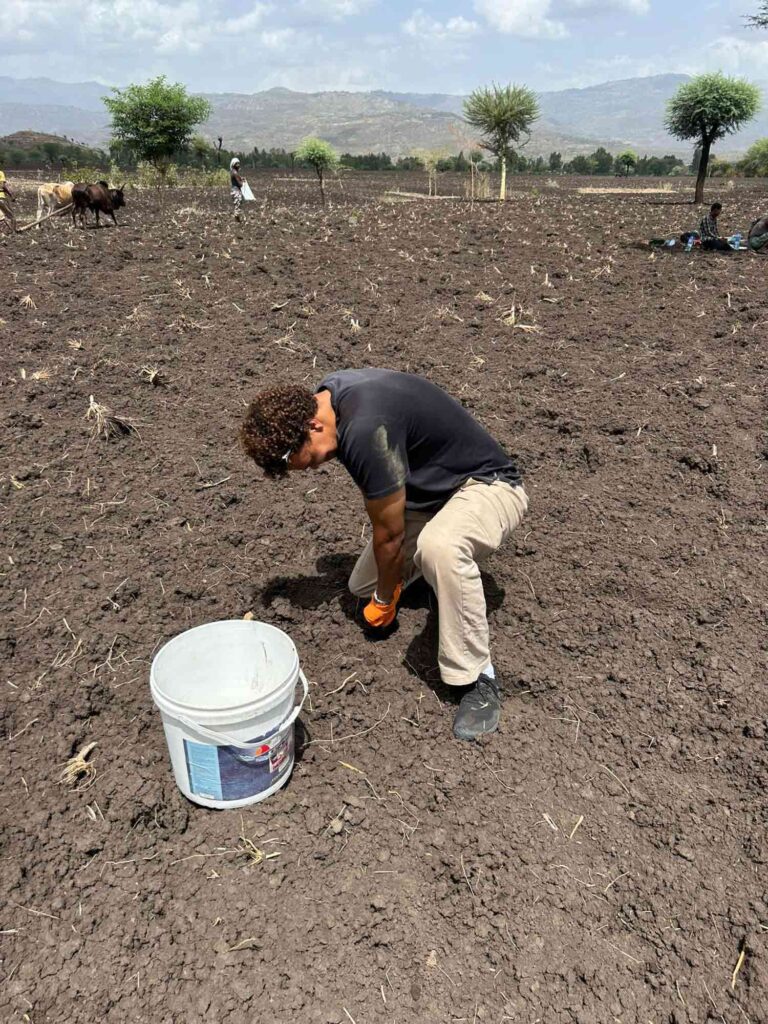
As Guterres spoke in Addis Ababa, Marshall Fredericksen, M.S.-ES&P ’26, was wrapping up nearly three months of visiting and conducting interviews at 90 farms in the country’s Wollo zone, which has experienced cycles of drought, conflict, and famine over the decades.
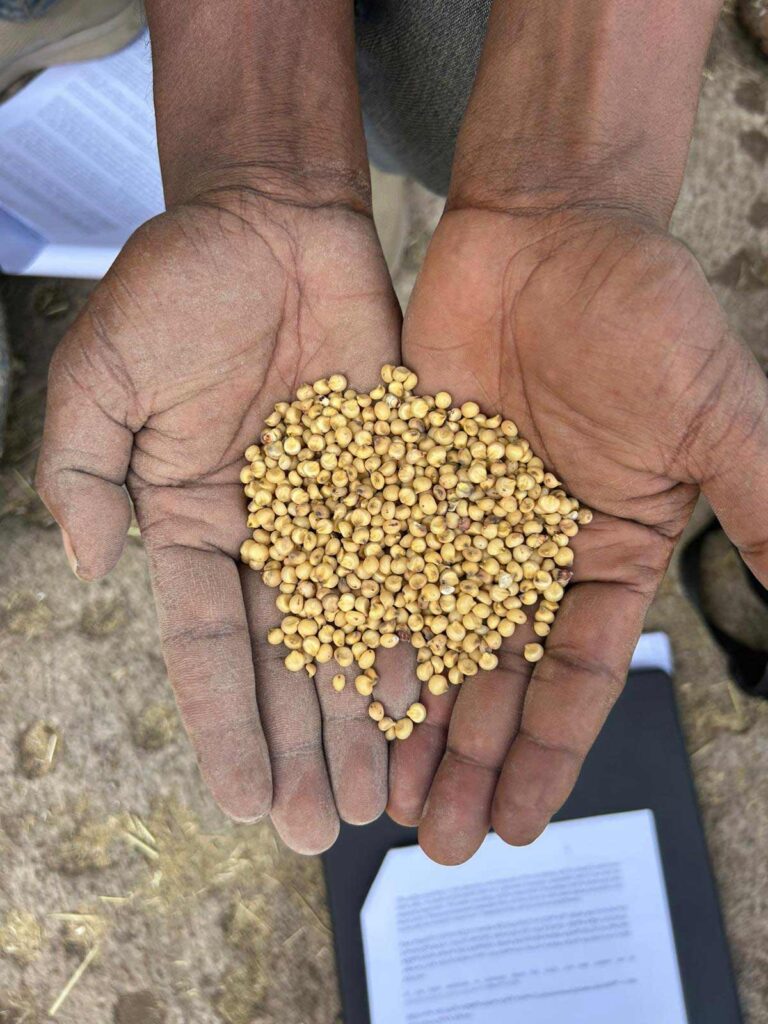
The government encourages farmers to plant a single variety of each crop for export. But many adhere to a centuries-old practice of sowing and harvesting multiple species and varieties of grains together to produce a steady, nutrient-rich source of food for their families. The mixtures commonly include wheat and barley, field peas and fava beans, or several sorghum varieties.
“Farmers notice that mixing them provides an added benefit compared to planting them individually as monocrops,” says Fredericksen, whose research is part of an international project with Professor Morgan Ruelle of Clark’s Department of Sustainability and Social Justice.
Funded by The Rockefeller Foundation, the researchers believe the farmers’ traditional practice of growing grain mixtures could offer a climate-resilient solution to Africa’s food insecurity. They are partnering with Professor Zemede Asfaw, known as the father of Ethiopian ethnobotany, and Ph.D. students at Addis Ababa University, as well as researchers and practitioners with the New York Botanical Garden, Lehman College, and Wollo University.
“The varieties compensate for each other depending on the climate and weather conditions in a particular year,” Ruelle says. “If it’s really dry one season, the varieties that do better under dry conditions take over, and if it’s really wet, others become dominant.”
Archaeological evidence suggests that people in northern Africa and Eurasia have been cultivating grain mixtures for thousands of years. In Ethiopia, farmers use mixtures for injera, a staple bread, as well as many other traditional foods and beverages.
“In some cases, the farmers are planting five to seven different varieties of two different species in a single field,” Ruelle says. “They’re planted together, harvested together, used together, saved together, and then planted again the next year.”
The research team has now expanded its project to Kenya, where farmers have begun growing mixtures of maize and sorghum for breakfast and lunch programs in public schools. The project connects Ethiopia’s ethnobotanists, agronomists, and nutritionists with Kenya’s Cereal Growers Association, which will be traveling to speak with farmers in Wollo this October.
Next fall, The Rockefeller Foundation will support two fellows from as master’s students in Clark’s Sustainable Food Systems and/or Environmental Science and Policy programs. They will work with Ruelle to investigate the outcomes of the grain mixtures project for farmers and students in Kenya’s schools.
“I’m really interested in solutions that build on what farmers already know how to do,” Ruelle says.
Ruelle and Fredericksen are just two of the researchers affiliated with Clark’s new School of Climate, Environment, and Society who are rising to Guterres’ challenge to address hunger and food insecurity.
From Africa to Asia to the Americas, Clark faculty and staff are partnering with communities and governments seeking to improve agricultural practices and food systems. They are learning from Indigenous communities’ age-old practices, as well as sharing geospatial technology (see GIS story, page 38). And they are studying beneficial microbes and insects that could help farmers promote soil and plant health to increase crop yields—sustainably.
‘Not enough hands, rather than too many mouths’
Food insecurity commonly—and mistakenly—has become linked to population growth, according to Geography Professor Gustavo Oliveira.
“People still rely on 20th-century thinking about overpopulation and the need to increase food production,” says Oliveira, an expert in global agro-industrial trade and food-supply issues. “But that way of thinking doesn’t accurately reflect our current reality, which is about urbanization, industrialization, and market forces.”
Across the world—and especially in Africa, Asia, and Latin America—foreign investors have snatched up millions of acres of farmland in a “global land grab” since 2010, Oliveira points out. The land has been turned over to expansive farm operations, resource extraction, energy production, and development.
Led by growth in Africa, the global population is expected to increase from 8.2 billion people in 2024 to as many as 10.4 billion in the mid-2080s, then start to decline, according to the United Nations. But today, much of the world—including traditional economic powerhouses like China, Brazil, the United States, Germany, and Japan—already is seeing lower fertility rates, aging populations, and slower or decreasing growth rates.
Meanwhile, young people are bypassing village life and farming for what they perceive as more promising, lucrative work in the city, according to Oliveira. The U.N. projects that by 2050, almost seven in 10 people across the globe will be urban residents.
“Not enough hands, rather than too many mouths, is the bigger challenge to food security in the future,” he says.
Oliveira has experienced these demographic changes firsthand. He and his wife, a professor at Amherst College, have traveled back to her native China to help her elderly parents transplant rice. No one else is available to work the farm.
‘Food and water are deeply interconnected’
China has become the world’s biggest pork consumer and producer, with rippling effects. To feed its hogs, many of which are confined to high-rise factories, China imports 80 percent of Brazil’s soybean crops. Having passed the U.S. as No. 1 soybean grower, Brazil has cleared at least 11 percent of the 789,000-square-mile Cerrado, the most biologically rich savanna in the world, to plant 52.9 million acres of commercially farmed monoculture crops. As part of a NASA-funded project, Oliveira and fellow Clark Geography Professor Robert “Gil” Pontius are modeling future competing scenarios of this expansion, given climate change.
Deemed a significant carbon sink due to extensive plant root systems, the Cerrado harbors the earth’s second-largest underground water reservoir.
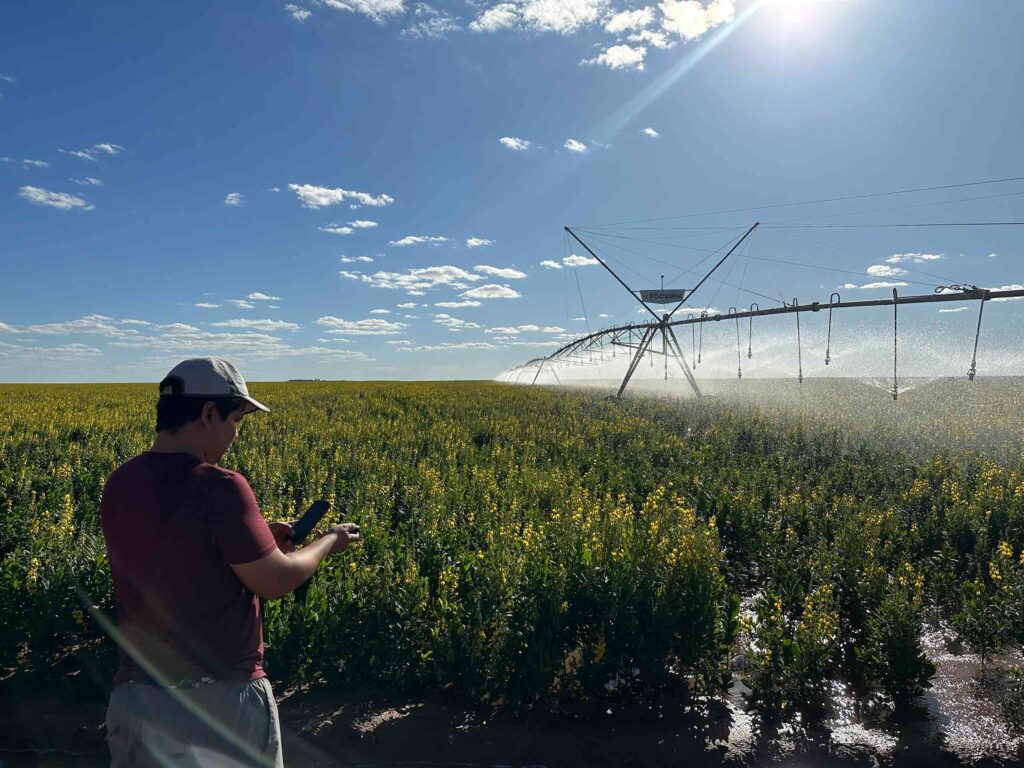
Yet, the area is threatened by agricultural deforestation and declining water tables, made worse by climate change. In addition to dealing with the impacts of planting water-intensive soybeans and cotton—the latter of which China imports for its busy textile mills—the region has seen a 12 percent decrease in rainfall since 1980.
Across the world, agriculture uses 70 percent of the world’s freshwater resources, and nearly 2.2 billion people lack safe drinking water.
“Food and water are deeply interconnected,” Oliveira concurs. “We are facing more water shortages than land scarcity. And with climate change, we have increased reliance upon irrigation to produce food, but we also have reduced capacity to sustain that irrigation.
“It’s a Catch-22 that comes down particularly forcefully in industrial food systems,” he adds, “which are chemical- and capital-intensive and drive further climate change.”
Like Oliveria, other Clark faculty and student researchers are investigating the issue of water scarcity.
In Central Mexico, a team led by Professor Tim Downs of the Department of Sustainability and Social Justice is focusing on how climate change impacts water, agriculture, and health—affecting 28 million people in 200 communities in and around Mexico City—and how to anticipate and mitigate those impacts. Funded by an NSF grant, the Clark team, which includes both undergraduate and graduate students, has worked closely with three local communities, academics at the National Autonomous University of Mexico, and the Mexico City government. Geography Ph.D. student Kwabena Antwi, spent a month working alongside farmers, and will continue his fieldwork in 2026 to understand how climate change affects agriculture. Professor Yelena Ogneva-Himmelberger and a team of graduate students are co-creating an online atlas so that communities can better visualize climate impacts and ways to respond.
A greenhouse for greener solutions
Back in the United States, two Clark biologists—professors Chandra Jack and Kaitlyn Mathis—are conducting research that has implications for advancing sustainable farming, food security, and conservation practices.
“Agricultural intensification indirectly pushes climate change,” Mathis explains. “By managing agriculture more sustainably, we could reduce the impacts of climate change.”
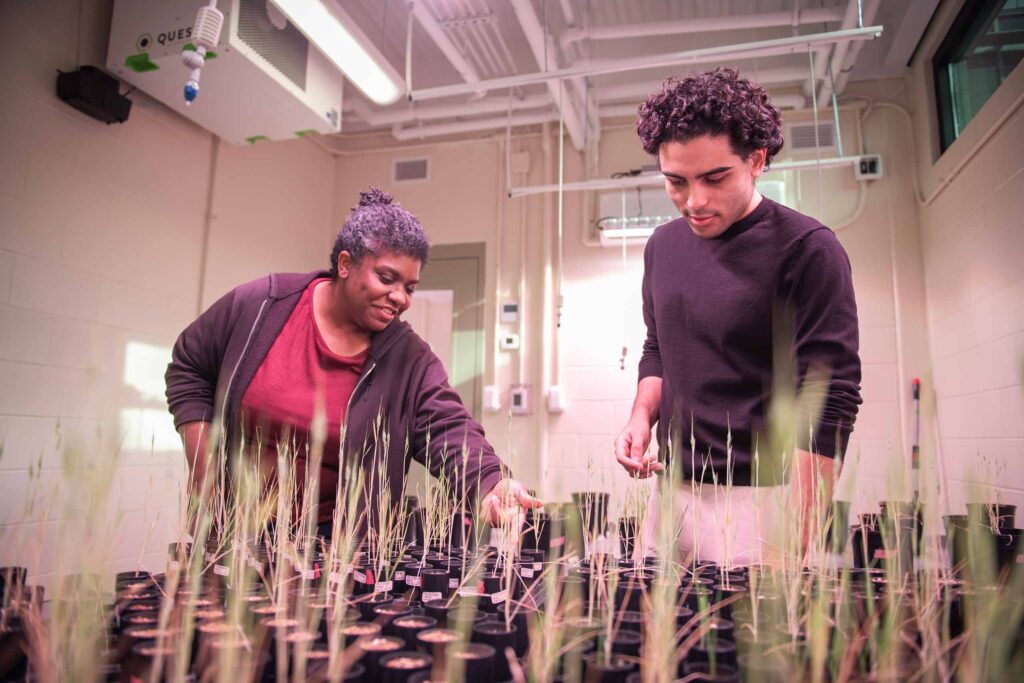
The two professors and their students run controlled experiments in Clark’s greenhouse, the Experimental Plant Investigation Center (EPIC).
Jack studies how microbe interactions affect plant traits—research that could help lead to the development of more sustainable, less invasive ways to grow food.
“We are interested in how microbes in the soil could combat some of the stress that plants are facing due to climate change,” she says.
Microbes—including bacteria, fungi, and viruses—help break down organic matter, fix nitrogen, improve roots, ward off pests and pathogens, and mitigate environmental stressors.
In one experiment, Jack’s research team inoculated sterilized soil with microbes to grow Ryan soft white spring wheat, which has great potential as a high-yield cereal crop in areas with variable rainfall. The researchers compared that sample with wheat grown in “regular,” nutrient-rich soil from fields in Washington state, where Jack has worked with farmers seeking to reduce their reliance on synthetic fertilizers.
Under simulated drought conditions in Clark’s greenhouse, the wheat planted in the microbe-inoculated soil grew taller, compared to those in the regular soil from Washington, according to Jack, whose research is funded by the NSF and the U.S. Department of Agriculture.
With her Washington State University collaborators, she is investigating the differences in microbial biodiversity found in wheat planted in long-tended agricultural sites versus natural prairie areas.
“We want to know if the microbes that we find function differently,” Jack explains. “Prairies haven’t been disturbed much, whereas agricultural areas have faced constant displacement, fertilizers, and pesticides. We’re thinking about what makes a healthy soil and what are the implications for food production.”
Can ants help our farmers?
Meanwhile, Mathis and her students are researching how ants and other beneficial insects can be used by farmers to produce food crops without heavy use of pesticides.
Deploying ants as agricultural “workers” goes back centuries, according to Mathis. In 304 A.D., Chinese farmers first transported nests of green tree ants to protect citrus crops, one of the oldest recorded biological controls to ward off pests.
Over the years, Mathis has studied the interactions between Azteca ants, phorid flies, and beetles in Southern Mexico’s coffee plantations, and how native Argentine ants protect Asian citrus psyllid pests that threaten California’s $2 billion citrus industry.
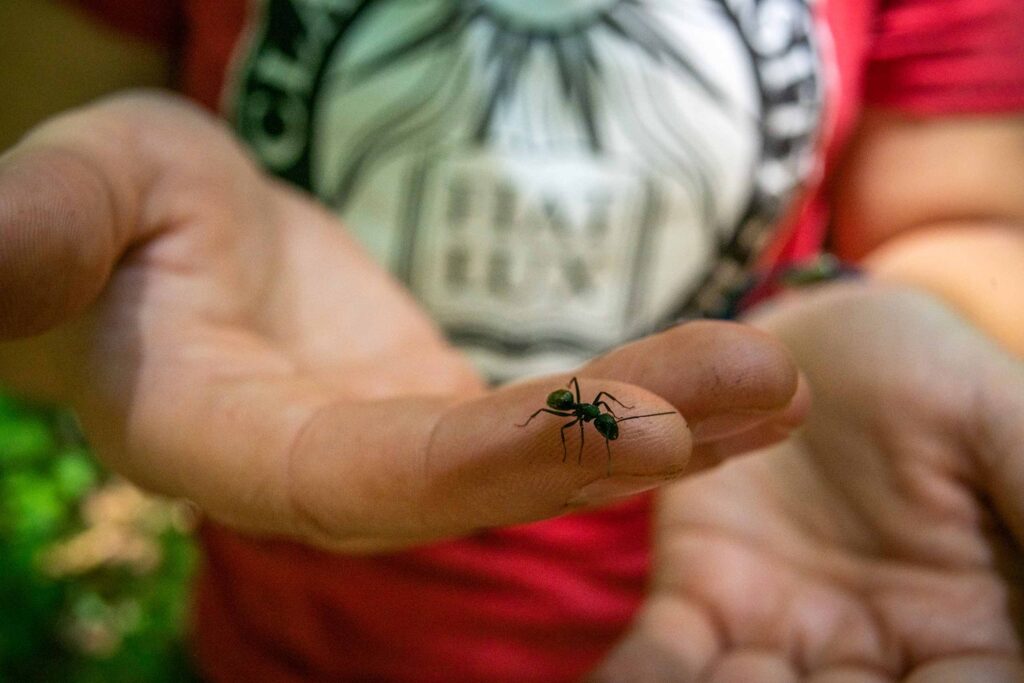
Now, she is mentoring Joseph Nelsen, a Ph.D. candidate, and undergraduate students who are studying how ants interact with other insects on zucchini and cucumber plants containing extrafloral nectaries—tiny “bowls” found on the underside or base of leaves.
“Information gained from studies like mine will build on our understanding of the plant-protecting activities that abundant omnivorous insects like ants provide,” Nelsen says, “which may be a useful tool for farmers dedicated to sustainably growing food.”
Pests like caterpillars, striped cucumber beetles, and aphids flourish near the extrafloral nectaries, drinking the nectar and eating the plants, Mathis says. But the nectaries also attract beneficial insects like ants and parasitoid wasps, which typically consume or drive away the pests.
“Managing these smaller agricultural ecosystems to promote these beneficial predator insects could reduce the amounts of pesticides that farmers need to use,” Mathis says. “That would be good for everybody. It’s good for farmers, who wouldn’t have that exposure. It’s good for consumers who eat the produce. And it’s good for the planet.”
‘I’m trying to make my own path’
Like Nelsen, Marshall Fredericksen also hopes to encourage more sustainable agricultural practices. Besides his research in Ethiopia, he will draw from an intimate knowledge of farming in Africa.
Fredericksen was raised in Tanzania, where his mother grew up in a farming family. His father, Michael Frederickson, M.S. ’98, was born in Massachusetts and earned his master’s degree from Clark’s international development program.
The elder Fredericksen was a student of the late Dick Ford, the Clark professor whose pioneering Participatory Rural Appraisal approach to community development emphasized collaboration and partnership. Traveling throughout Sub-Saharan Africa, Michael worked with local farmers on agricultural techniques to yield more robust harvests.
“I have many childhood memories of holding a seedling while we drove to visit farmers who would learn planting and grafting techniques from my father,” Fredericksen says. “He would lead focus groups with farmers, village leaders, and chiefs.”
Since then, the younger Fredericksen has also become interested in agriculture, noting that everything starts from the ground up—with the soil.
“I’m trying to make my own path,” he says. “I’m a firm believer that diversification is the agroecological approach that can best improve soil health and optimize farm yields.”
Yet, he still learns from the farmers in his family, many of whom “struggle with the variability of weather and climate. It’s something that hits home for me, when I speak with the elders and realize that climate variability has been an issue the past five, 10, 15 years, and it’s slowly becoming more intensified, uncontrollable, and unpredictable.”
Drawing on his experiences in Tanzania and America, Fredericksen hopes to continue working in Africa, promoting the best practices of agroecology, international development, and climate science to combat hunger and food insecurity.
“I think I can be a big asset working in this part of the world,” he says.
Besides, “I would be doing myself and the rest of my family a disservice if I didn’t take a stance on what I believe in and contributed to what I think is important.” ●