


“The planet needs this, and students are hungry for it.”
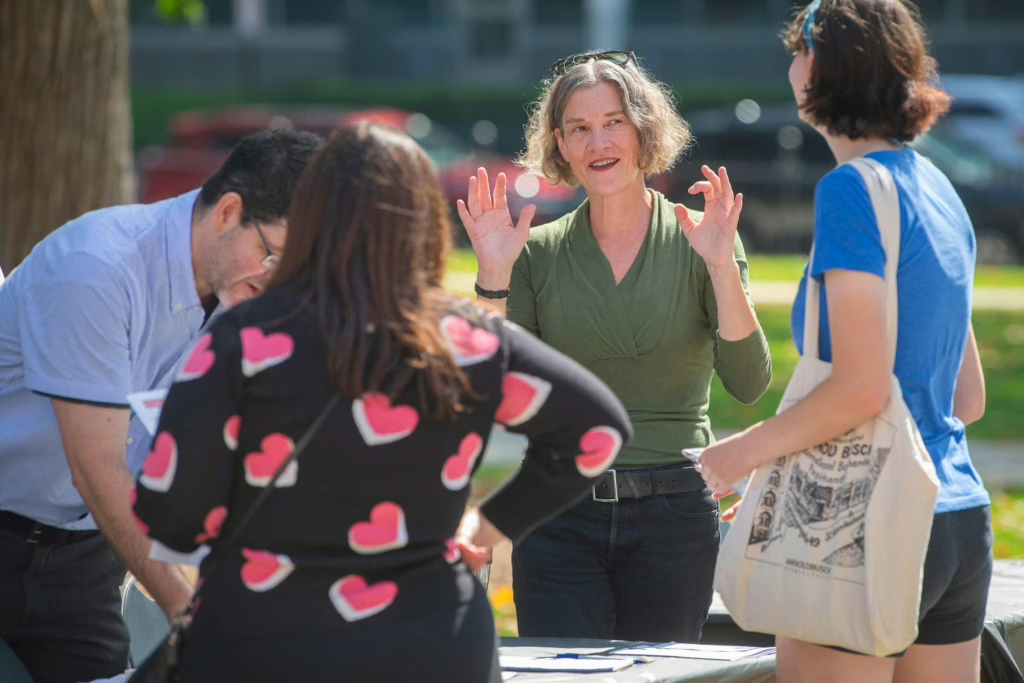
Introduction to Environmental Humanities
Christina Gerhardt
Christina Gerhardt, the Henry J. Leir Endowed Chair of Comparative Literature, designed the course, but she is quick to note that the Introduction to the Environmental Humanities represents a gateway to the newly launched environmental humanities concentration she co-founded and co-directs with English Professor Stephen Levin. “We often get the question, ‘What is the environmental humanities?’ My response is: It’s how disciplines in the humanities, such as literature, art, film, history, and philosophy, engage with and respond to the climate crisis.”
What are the aims of the course?
I am trying to do two things: give students an introduction to important theoretical foundations for the environmental humanities and apply some of the lessons that we have learned from the theoretical texts to actual literary texts. Last week, we read a text by Rob Nixon, a professor of English at Princeton. Next week we’ll read one by Donna Haraway, a theoretician of feminist science technology, and we have other texts coming up by scientists and geographers about dating the Anthropocene. The Environmental Humanities pulls down the barriers between disciplines within the humanities, and each of these texts is pulling down the barriers between the humanities, the social sciences, and the natural sciences.
How do students approach the subject of our climate future?
Students today are facing what historian Adam Tooze has popularized as a “polycrisis”—that includes everything from rising costs, to student debt, to whether they’ll be able to get a job. The climate crisis is another example. I tell students when we start the class that if they’re feeling overwhelmed, they don’t need to solve all the problems. They can focus on what meshes with their interests and goals, by topic, by approach, etc., so they can figure out what their “beat” is.
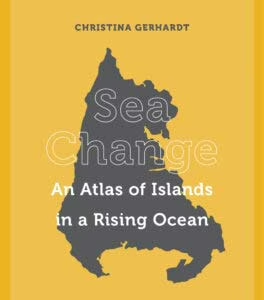
Christina Gerhardt, from “Sea Change”
I try to end every class session with a discussion about solutions: How do we need to rethink history in light of the climate crisis and consider past missteps? The way we’ve been doing things is what got us into this climate situation, so this same structure of thinking is not going to be what gets us out of it. So history is very important here, but so is rethinking how we create solutions.
What is the humanities’ role in grappling with climate challenges?
The humanities bring to the table history, questions of ethics, the imaginative through art. The speculative is important because it allows you to imagine a future, and imagining a future is incredibly important for thinking about how to do things differently. I’m seeing it in the digital space with the Becker School; others at Clark are teaching climate narratives and environmental storytelling.
Are Clark students primed to take on this work?
The cross-pollination going on with the climate school is precisely what needs to happen. So many of our students already take a science class and a humanities class—they’re just so balanced, more so than I’ve seen at other places. With environmental humanities, we focus on the people. And I am thrilled that climate is one of the main foci of the reimagining of Clark, because the planet needs this, and the students are hungry for it.