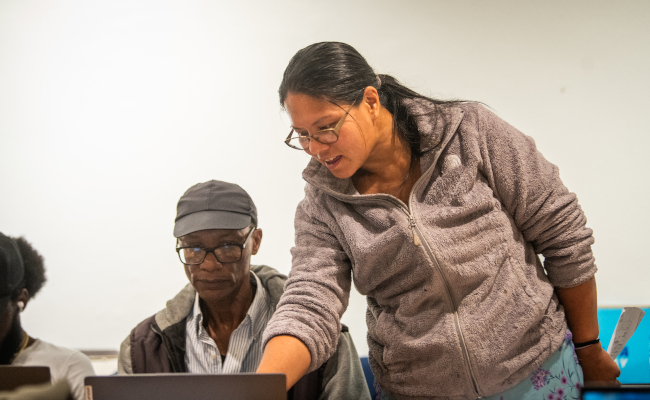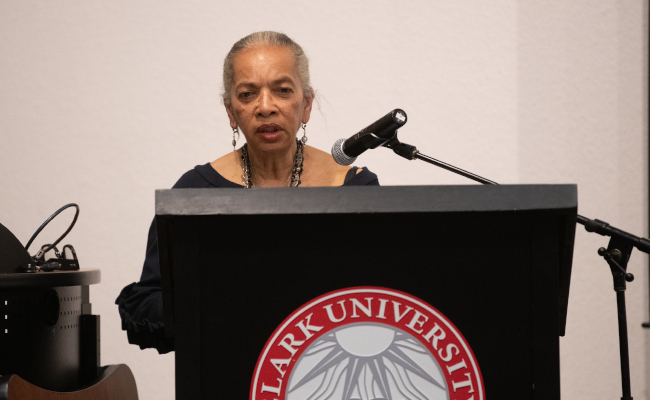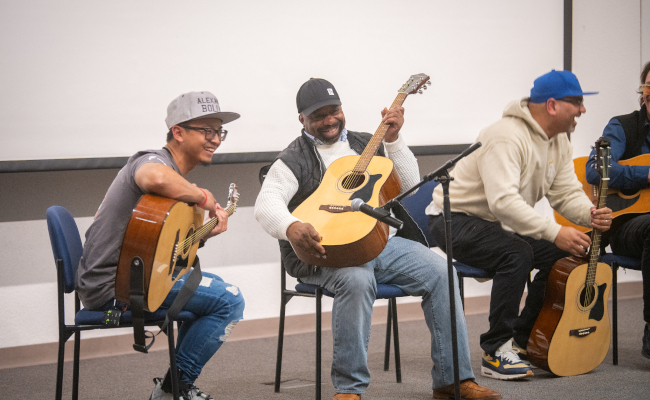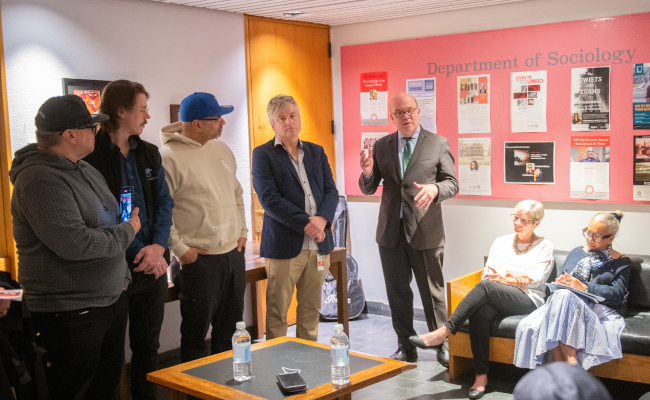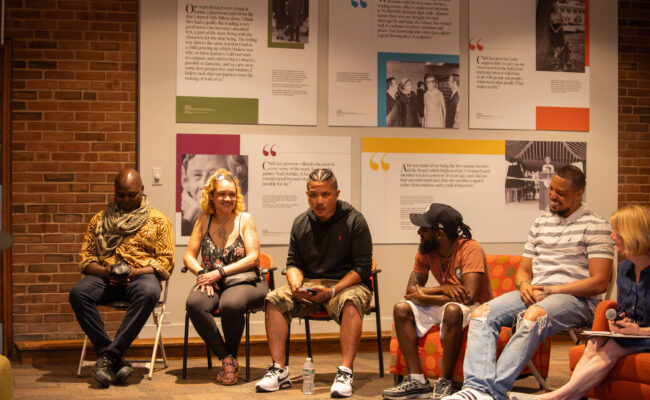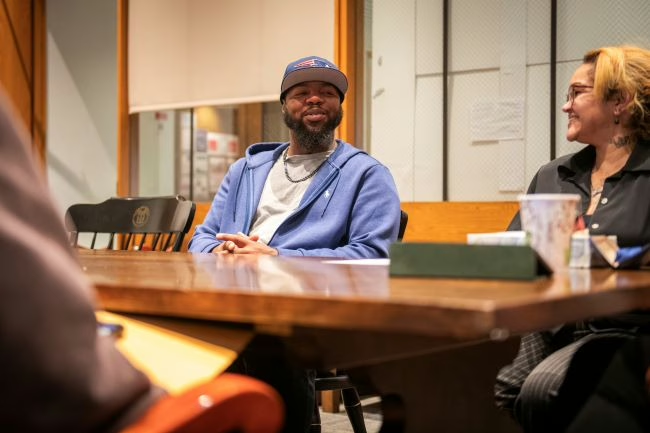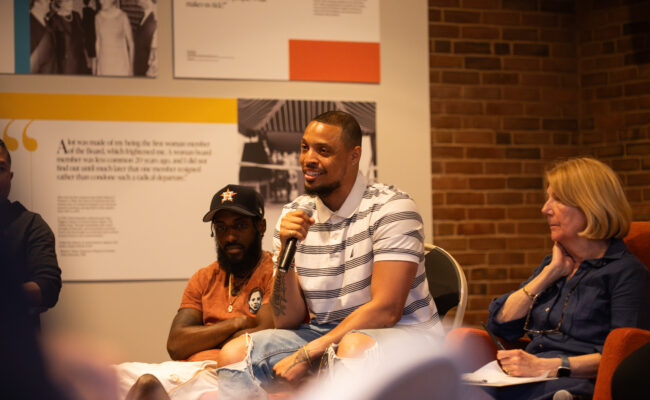

Liberal Arts for Returning Citizens (LARC) is a tuition-free college credit program at Clark University for formerly incarcerated individuals. Through the power of a liberal arts education, students can transform their lives by improving their critical thinking and communication skills. Classes are offered during fall, spring, and summer terms.
Program details
Each course is offered on a pass/fail basis, is seven weeks long, and is the equivalent to 0.5 credit hours at Clark or 2 credit hours if the student transfers to a community college or a four-year college. A high school diploma or equivalent is required to enroll in LARC.
While LARC is a non-matriculating program, students receive Clark IDs and can use university services such as the Writing Center, library, and fitness center. LARC students can join student clubs and participate in the vibrant college life on campus with events like the weekly Clark Collective pop-ups and Clark Tank.
Spring 2026 Courses
Healing Across the Globe: Introduction to Medical Anthropology
March 11 – April 22
Taught by Professor Dara Bramson
Surveys diverse global healing systems through the lens of medical anthropology. We will examine perspectives on the body, disease, diagnoses, treatment, and notions of healing and cure. Topics include ancient and modern healing systems, approaches to the doctor-patient relationship, as well as practices of integrative medicine and cross-cultural healing.
Social Media Literacy
May 19 – June 23
Taught by Professor Cara Berg Powers
Considers how broadcasting and electronic media have impacted social life. We will examine early electrical and wireless communication (telephone, radio) to mid-century inventions (television, satellites) and more recent innovations (cable, digital technology).
Practical Data Analysis
June 10 – 25
Taught by Professor Li Han
Equips entrepreneurs with practical data analysis skills tailored to small business challenges. The curriculum leverages AI as a strategic partner for generating data and clarifying concepts. The course culminates in a data-informed business plan, cultivating an essential skill set for evidence-based decision-making.
Only students who completed Introduction to Excel are eligible.
Related stories
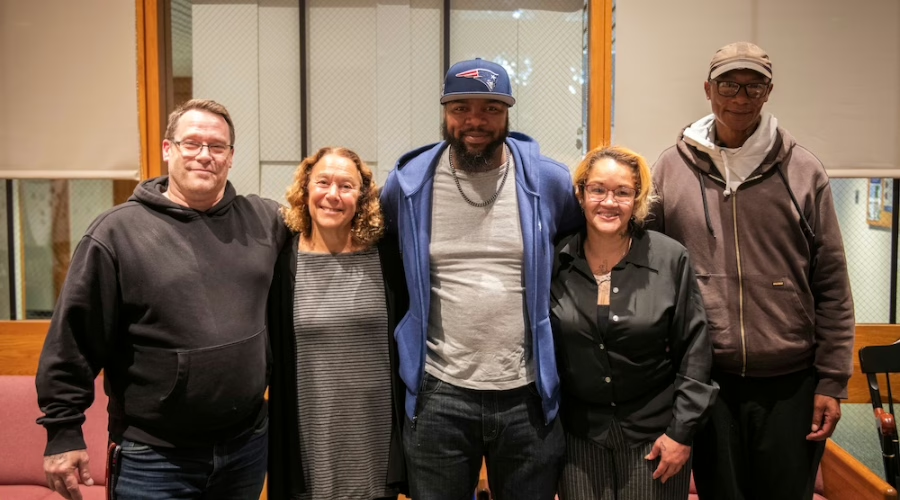





LARC Voices
Hear from LARC participants about their experiences in the program.
Listen to Nate’s Story
Frequently asked questions
What is LARC?
LARC (Liberal Arts for Returning Citizens) is a program that offers formerly incarcerated individuals free college courses at Clark University. All books and materials are free for students.
Is it necessary to have a GED or diploma to register for LARC enrollment?
Yes, in order to register for LARC courses, potential students must have a high school diploma or equivalent (such as a GED or HiSET). If you cannot obtain a copy of your high school diploma, we will provide you with a form to complete with this information.
Do potential students have to be formerly incarcerated to sign up?
Any person who has been involved with the legal system (e.g., probation, juvenile detention) may apply to LARC.
Do I have to live in Worcester to participate?
No, students do not have to live in Worcester, but most classes are offered in person on Clark University’s campus, so students must have transportation to our Worcester campus.
How often do LARC classes meet?
Classes meet one night per week for three hours over the course of a 7-week module. Classes are offered in the evenings, typically from 6 – 9 p.m. Dinner is provided for all classes that are held on the college campus.
When are classes offered?
We offer classes year-round, including summer.
Is there a minimum number of classes I am required to take at a time?
LARC is a flexible program. Students can take one or more classes during each 7-week module. And if you decide to take a break after a module ends, you can return to LARC when you want to take additional classes. We will continue to keep you informed about classes that are being offered.
Would I get a degree taking all the classes offer by LARC?
While LARC students do not earn degrees by participating in LARC classes, students are awarded transferable credit for passing LARC courses. These credits may be transferable to Clark (should students enroll in a degree-granting program) as well as other colleges, community colleges, and universities.
Are LARC course credits transferable to other schools?
Yes, credits students earn by completing courses in the LARC program are transferrable to other colleges, universities, and community colleges. LARC students earn .50 units – or 2 credits – for each course they complete, and all classes are graded on a Pass/Fail basis (rather than letter grades).
Do I need access to a computer or laptop to participate in LARC?
You do not need a personal computer or laptop to participate in LARC. If you are a LARC student, you will receive a Clark student ID card, which gives you access to computer lab spaces on campus. You may use these computers to complete assignments, check your email, and so on.
Are LARC students considered Clark University students?
LARC students are given a Clark student ID, which grants them access to resources like computer labs, the library, and the athletic facilities. They may participate in student clubs and organizations and may attend university-sponsored functions.
LARC students are considered part-time Clark students. As such, they are allowed to participate in programs, services, and groups open to part-time students. Some programs and services are not offered to part-time students.
Will I have access to Clark University services?
Yes, LARC students can use Goddard Library, the Writing Center, and the Fitness Center. Students also have access to Uwill, a program that provides online mental health services. You can access Uwill by going to https://app.uwill.com/.