
Lessons learned from Bat Night
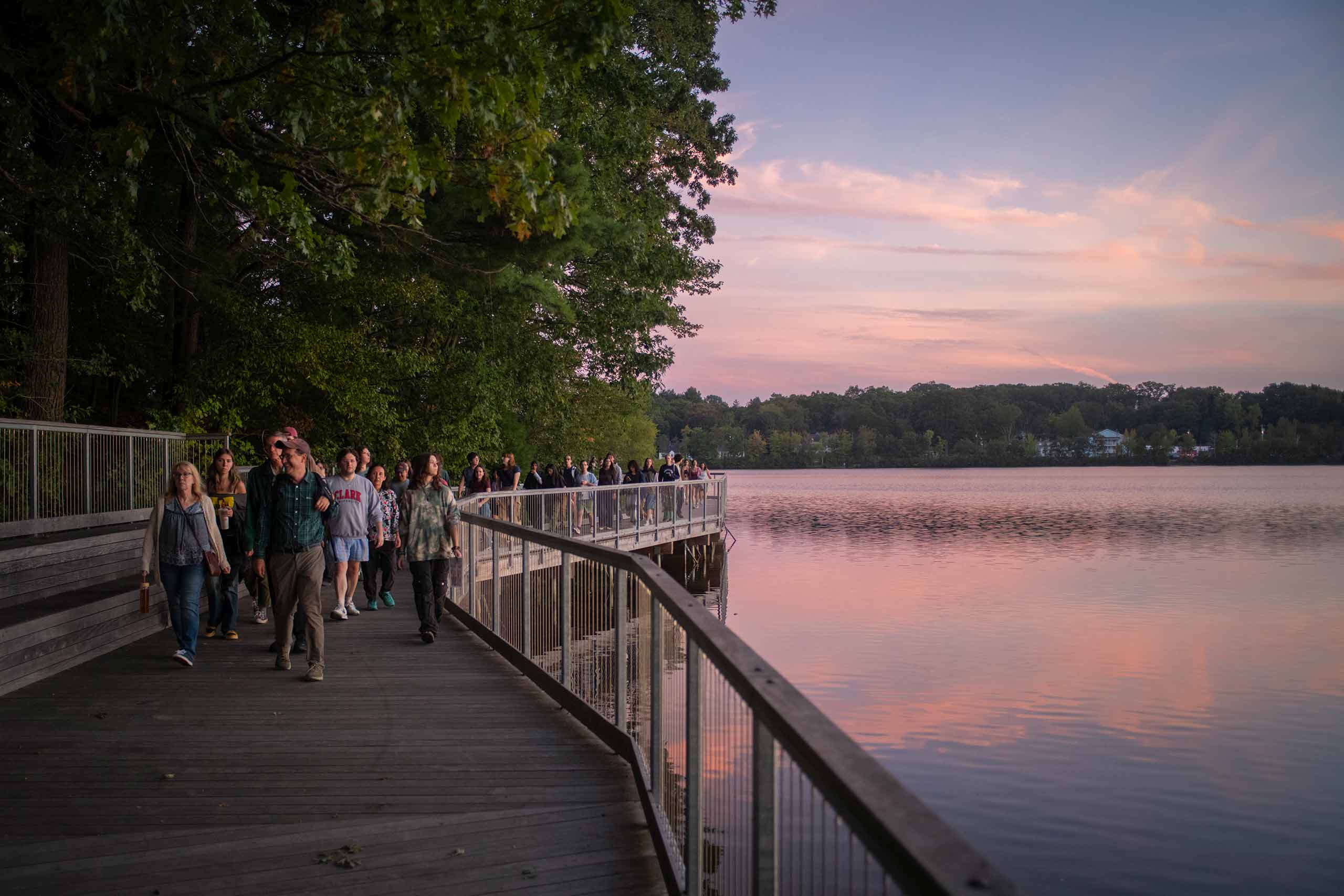
On a warm September evening, students gather at Coes Pond, about a mile from the Clark campus. The sun sets. A student holds up a handheld device, and suddenly the dark comes alive with sound — chirps and clicks from bats sweeping overhead.
The living world at night
Each click and squeak reveals information about species found in the Worcester area, including big brown bats, silver-haired bats, hoary bats, and Eastern red bats.
The device lowers their high-frequency calls to an audible level. The students crowd closer to listen, laughing as they begin to recognize distinct sounds.
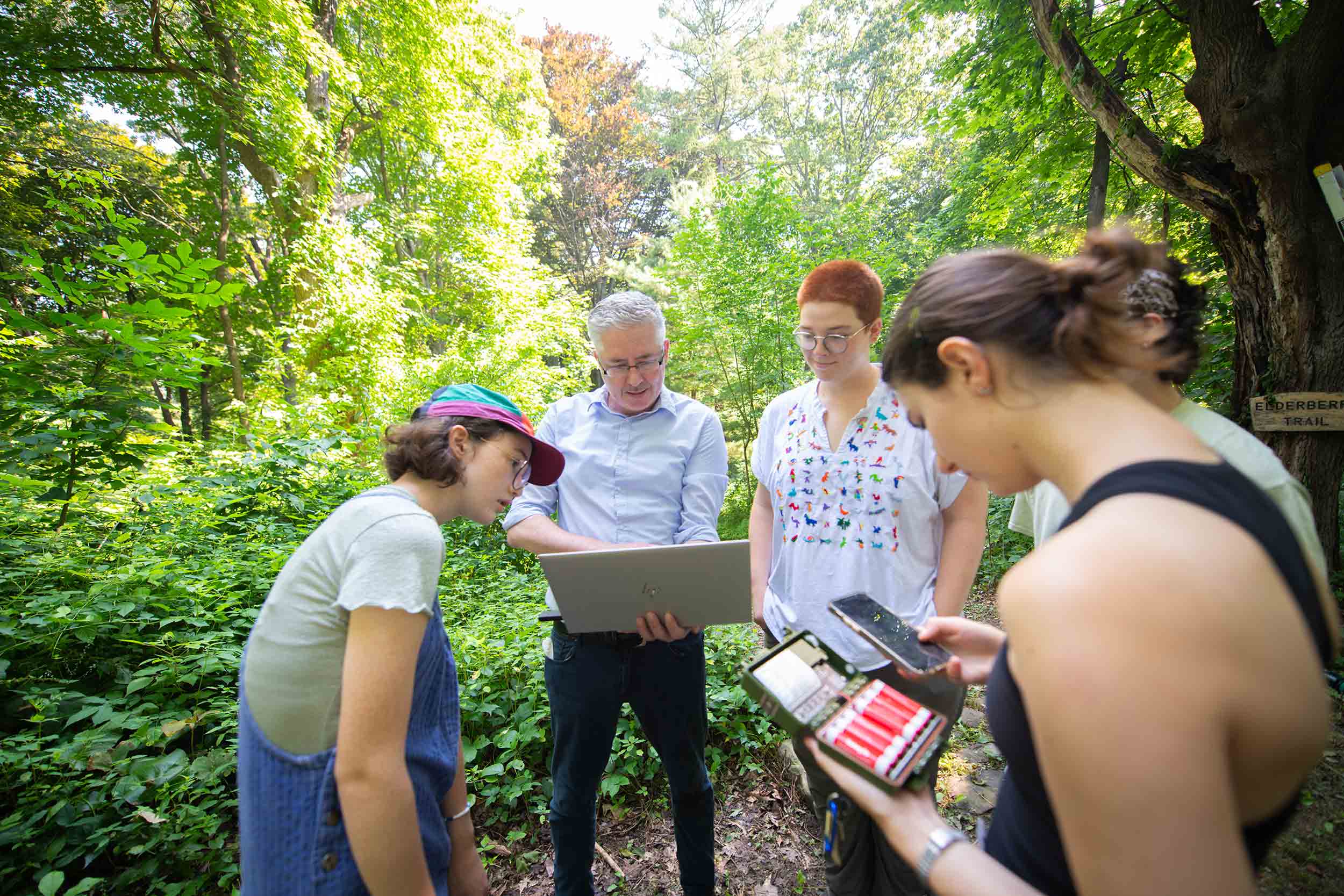
Each year, Department of Sustainability and Social Justice Professor Morgan Ruelle hosts Bat Night. Students learn about the health of their local ecosystem and major challenges—like white-nose syndrome, a fungal infection devastating bat populations—and how the loss of these small creatures can ripple across entire ecosystems.
Environmental science meets justice
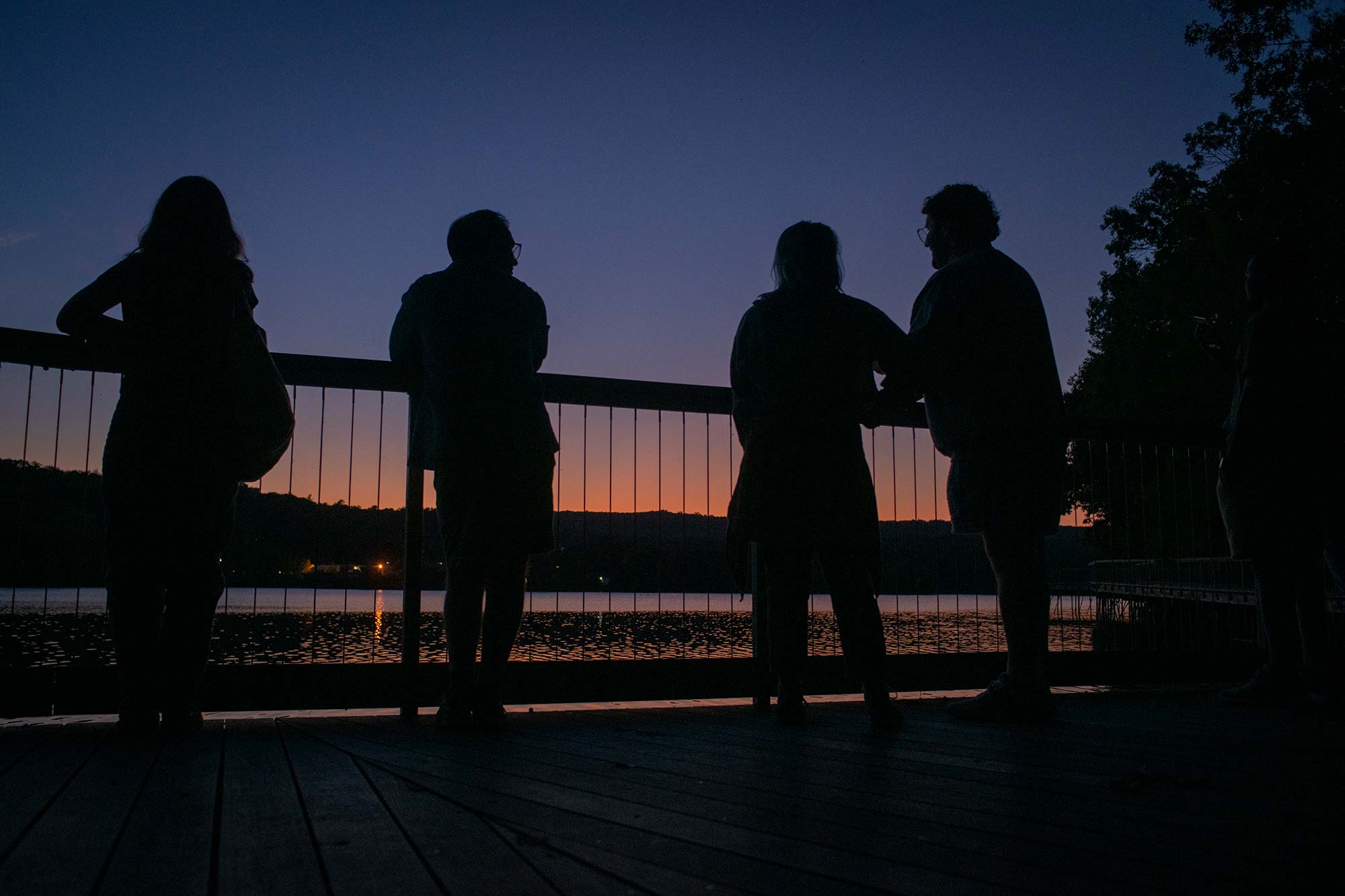
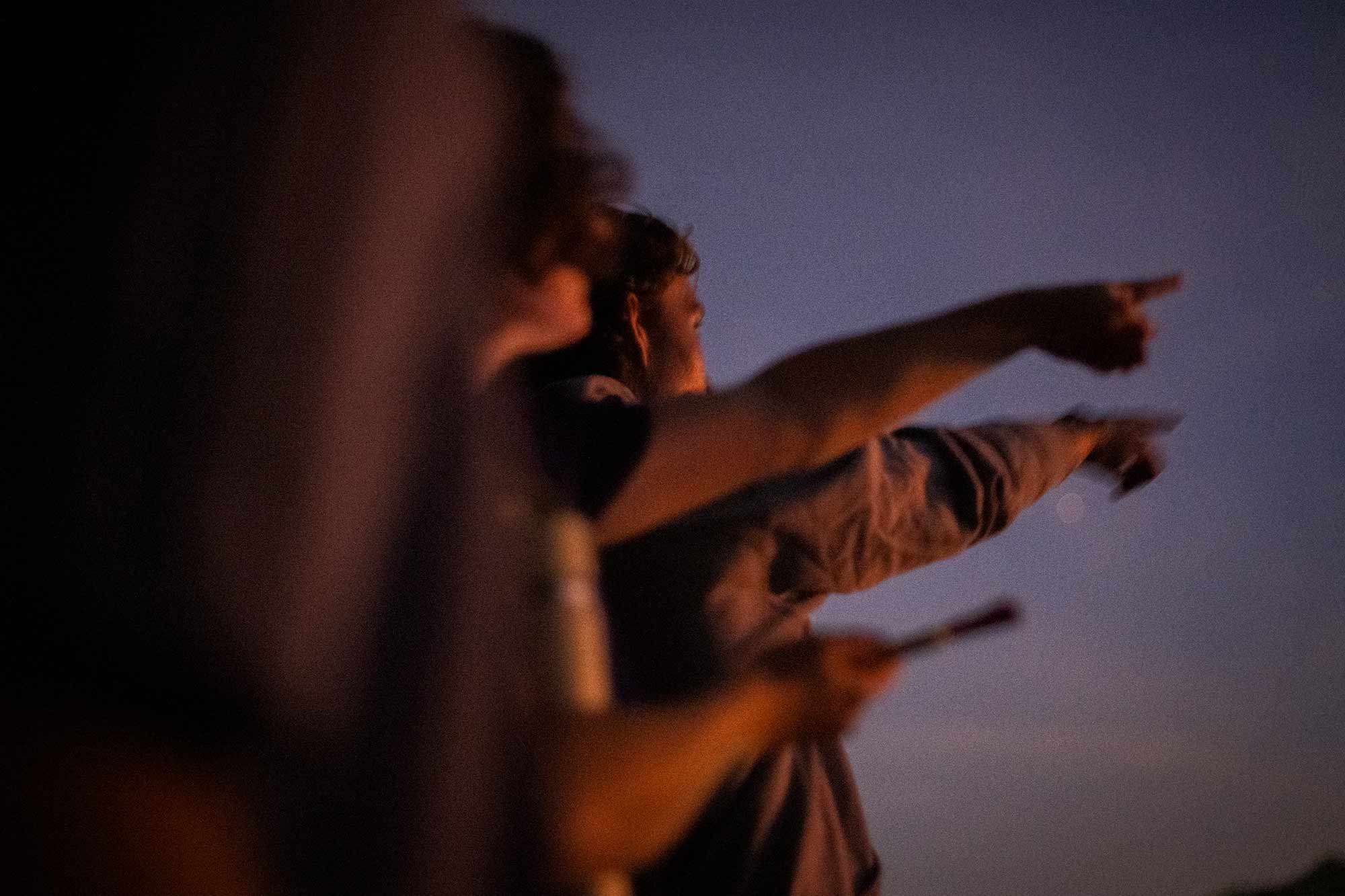
White-nose syndrome has wiped out millions of bats in New England since 2009, threatening species like the little brown and northern long-eared bat. Because bats play a vital role in controlling insects and maintaining healthy ecosystems, their loss has ripple effects that reach farms, forests, and even our own backyards.
Ruelle’s research spans Worcester woodlands, the Northern Great Plains, and Ethiopian farmlands. He studies how communities adapt to climate change, blending Indigenous ecological knowledge with the latest scientific tools. His courses ask big questions: How do we feed the world sustainably? How can Indigenous knowledge offer solutions? What role can you play?
Bat Night is open to students from all his courses — including Food Security and Climate Change and Science Meets Policy in the Real World. It’s a chance to step into the field, listen, and learn how to act.
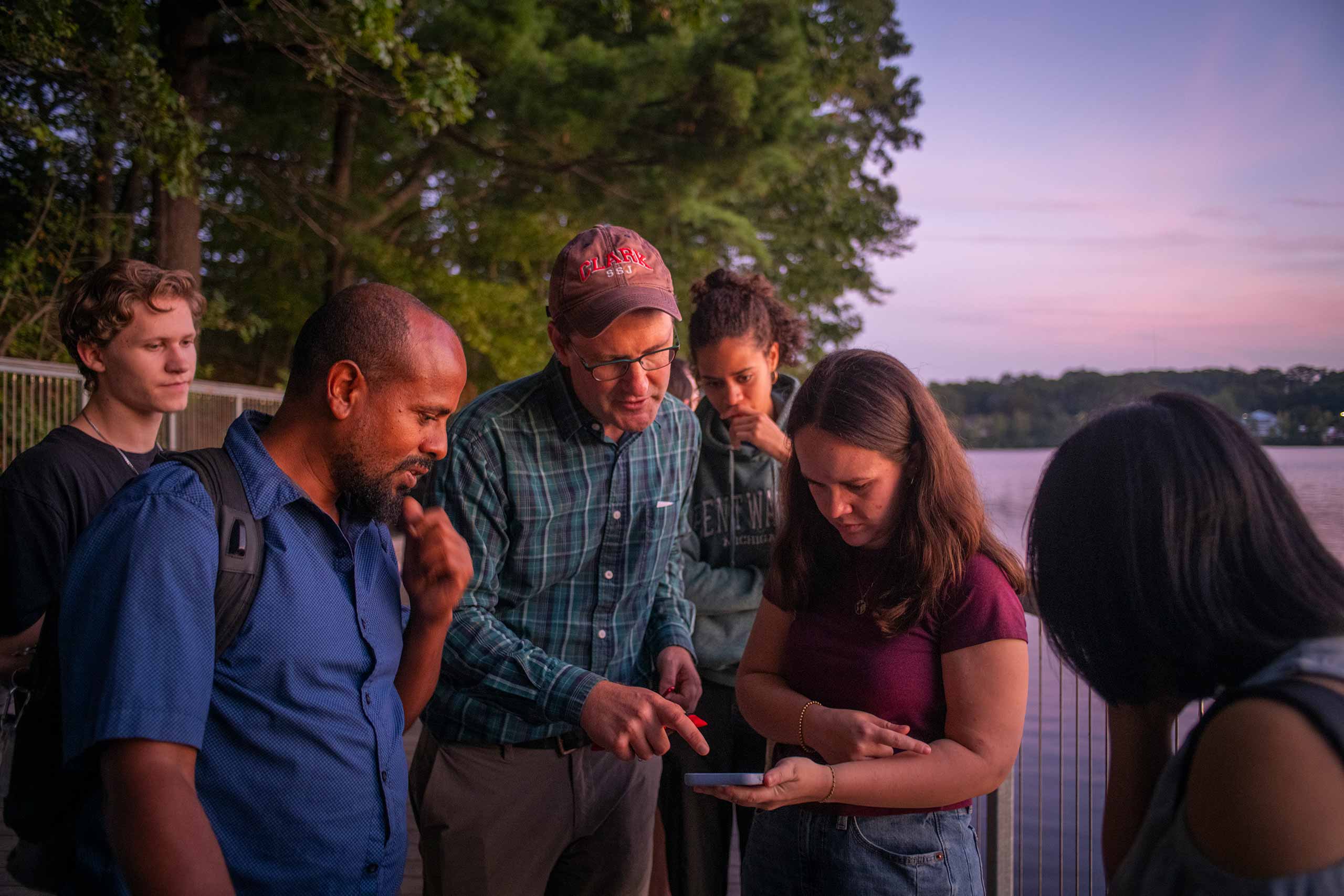
By monitoring Worcester’s ecosystems, students see how local environmental health connects to global challenges — and how their work can help shape solutions.
“Our work will be radically interdisciplinary and deeply rooted in places and communities, both in Massachusetts and around the world.”
Lou Leonard, D.G.A. Spencer dean of the School of Climate, Environment, and Society