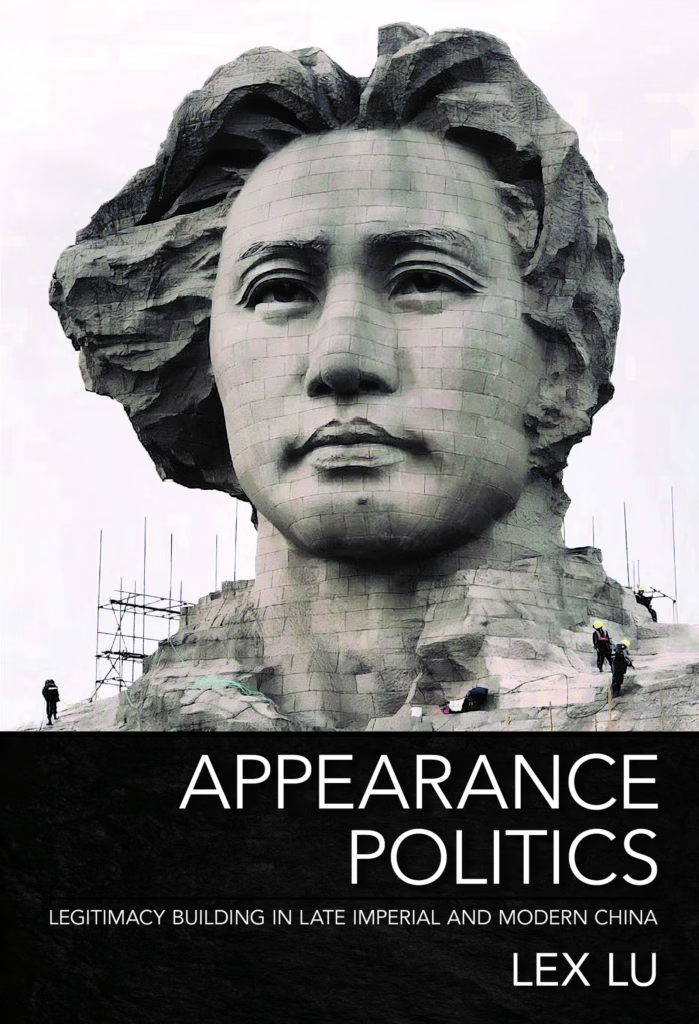

What did the powerful men look like in Chinese history? How did they adorn their political image with power? Clark University professor Lex Lu (History) will explore these questions and more in a talk based on his recent book, Appearance Politics: Legitimacy Building in Late Imperial and Modern China (Cornell University Press, 2024). Using rare archival materials from Beijing, Shanghai, and Nanjing, he will examine textual and visual records of political imagery and recount behind-the-scenes maneuvering of image cultivation in Chinese politics. From Ming Prince Zhu Di’s usurpation to Mao Zedong’s iconic visual legacy, Lu will illustrate the power, influence, and nuance behind ever-shifting standards of male beauty.
A book signing will follow immediately after the discussion. Copies of Appearance Politics will be available for purchase.
Admission is free and open to the public.
About the Speaker
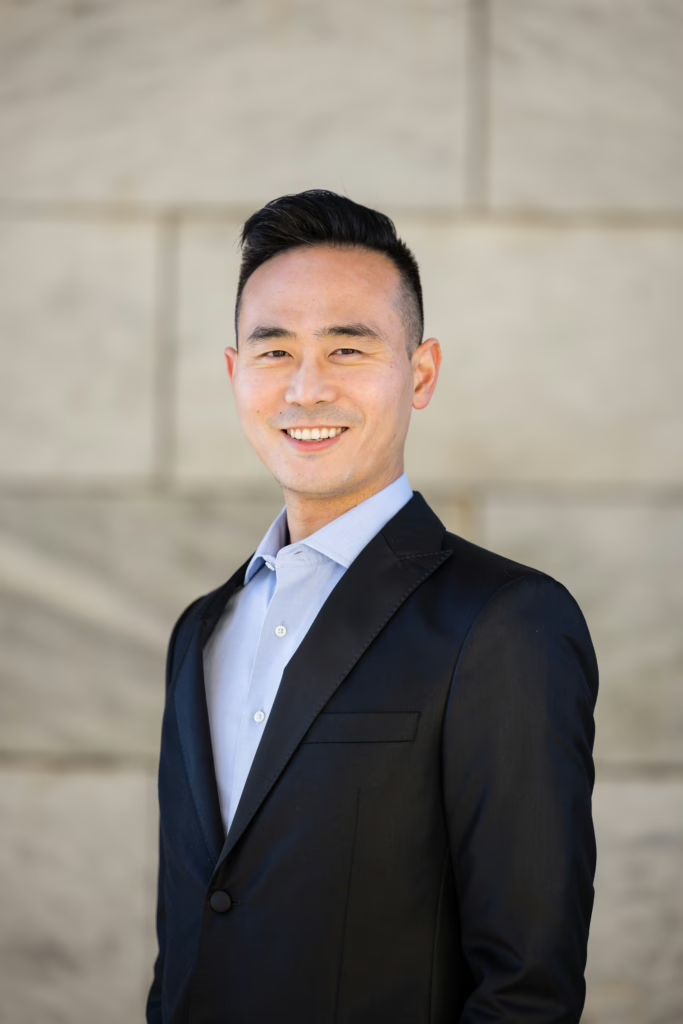
Professor Lex Lu has taught classes on Chinese, Japanese, Korean, Asian American, and gender histories at Clark University since 2016. He is currently working on two research projects. One focuses on the history of aphrodisiacs in East Asia and its intricate relations with animal trade, environment, medicine, and fertility, which is funded by the Higgins Institute for Arts and Humanities. Another is on the growth of affordable housing and the formation of modern building codes in the city of Shanghai at the turn of the 20th century. Lex is a registered General Contractor in the state of Rhode Island. He enjoys taking courses at trade school and is interested in construction of all sorts, in particular, residential construction. He plans to write a history book on affordable housing from a builder’s perspective.
In Appearance Politics, Lex Lu argues that crafting an appealing and powerful outward image has long been a critical political tool in China. This strategy is evident in historical records, imperial portraits, physiognomic assessments, photographs, posters, statues, and digital images. Using rare archival materials from Beijing, Shanghai, and Nanjing, Lu explores how political figures designed their images and examines the shifting standards of male beauty that shaped their choices.
The book analyzes five case studies: Ming Prince Zhu Di’s usurpation; the rise of Manchu masculinity and blended Han-Manchu beauty standards under Emperor Yongzheng; modern photography and Western beauty ideals in the early 20th century; Sun Yat-sen’s crafted image as the Republican founding father; and Mao Zedong’s iconic visual legacy.