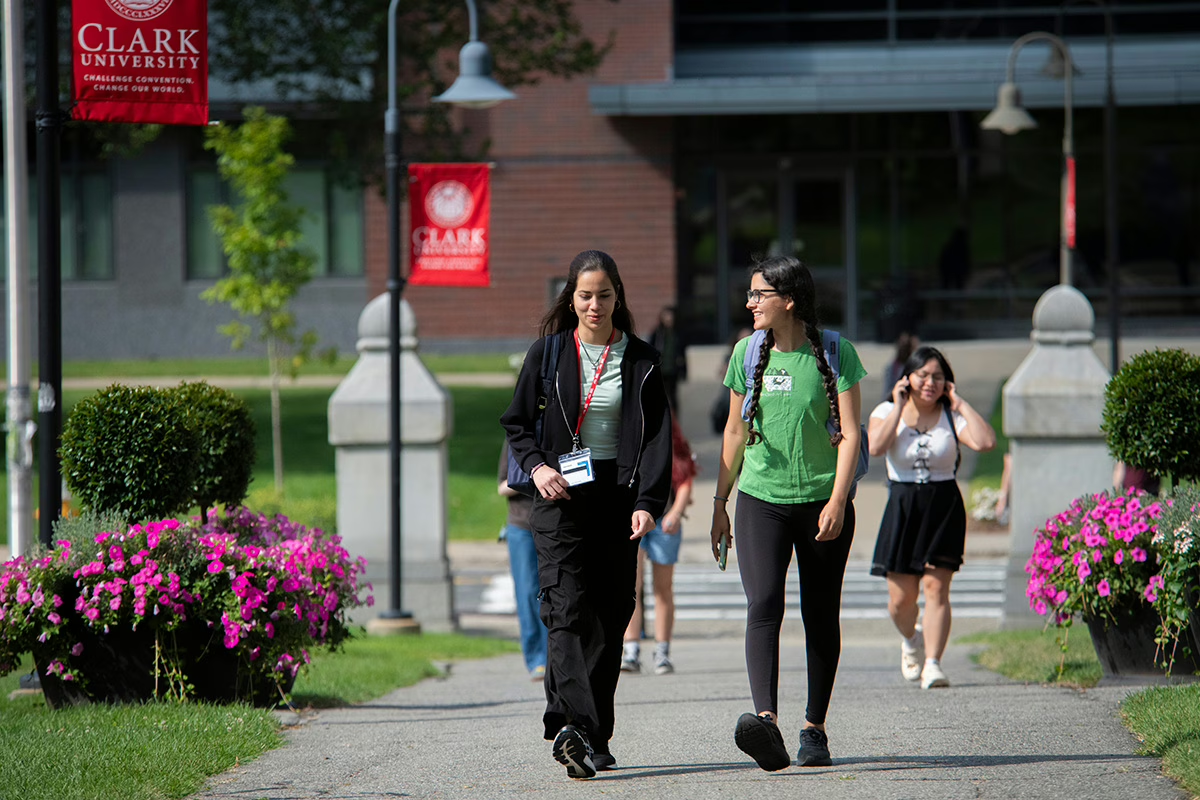



CPG strives to provide Clark students with exceptional mental health support in a safe and inclusive environment.
Core values
Community
We believe that the university counseling center is an important part of the larger University community, and as such, should attend to both systemic and individual needs. Thus, we provide therapy services to students to address their individual needs, we help Clark University faculty and staff address behavioral and psychological issues that may be impacting the learning environment of their students, we connect with key University personnel in concerns of campus safety/threats of violence, and we provide consultation to parents to help them support their students while also respecting the student’s independence.
Student-Centered services
We believe that our counseling center should offer a spectrum of mental health services, paying particular attention to:
- Students faced with challenges that may arise in relation to transitional phases of life and other potentially stressful situations.
- Students faced with serious mental health issues and needs, including Major Depressive Disorder, Bipolar Disorder, Schizophrenia, Obsessive Compulsive Disorder, addiction issues, eating disorders, etc.
- Students who are in immediate need of emergency services, for such issues as suicidality, homicidality, emergence of psychotic symptoms, sexual assault, etc.
Responsibility
The Clark University Center for Counseling and Personal Growth believes strongly that self-reflection, an openness to change, and a sense of responsibility for oneself are qualities that are key to living a meaningful life and to achieving personal, relational, and intellectual growth throughout the lifespan. We believe that helping to promote these characteristics within the students with whom we work provides an important skill set that will serve students well as they mature and tackle life’s challenges both inside and outside of the college experience.
Holistic Wellness
We believe that the healthiest members of our society have developed a personal model that incorporates positive self-care and stress management. We do our best to advocate such a model within our University community and to provide students with the skills necessary to develop this practice for themselves.
Diversity
We believe that we are stronger as individuals and as a society when we embrace and learn from our diversity. Within our department, we challenge each of our staff members to create an environment that fosters personal and professional integrity, civility, respect, freedom of expression, individuality, and fairness. We are committed to the promotion and affirmation of diversity in its broadest sense and place a high value on the dignity and worth of all individuals. We aim to create and maintain a counseling center that is accessible and valuable to all students, including those of differing races, ethnicities, sexual orientations, genders, abilities, religions, political beliefs, and lived experiences.
Connection
The Clark University Center for Counseling and Personal Growth assists in connecting students to peers, University personnel, and others in the community while helping them learn to better manage their emotional and psychological health. We seek to create a space that allows students to explore their personal journey while empowering them to connect with their community.
Advancement
We value the continual development of our professional staff and our center. We stay abreast of recent advances in the fields of psychology and mental health, and incorporate these within our clinical work. We also strive to use technological advances to improve our services and the experience of students benefiting from them.
Meet the team
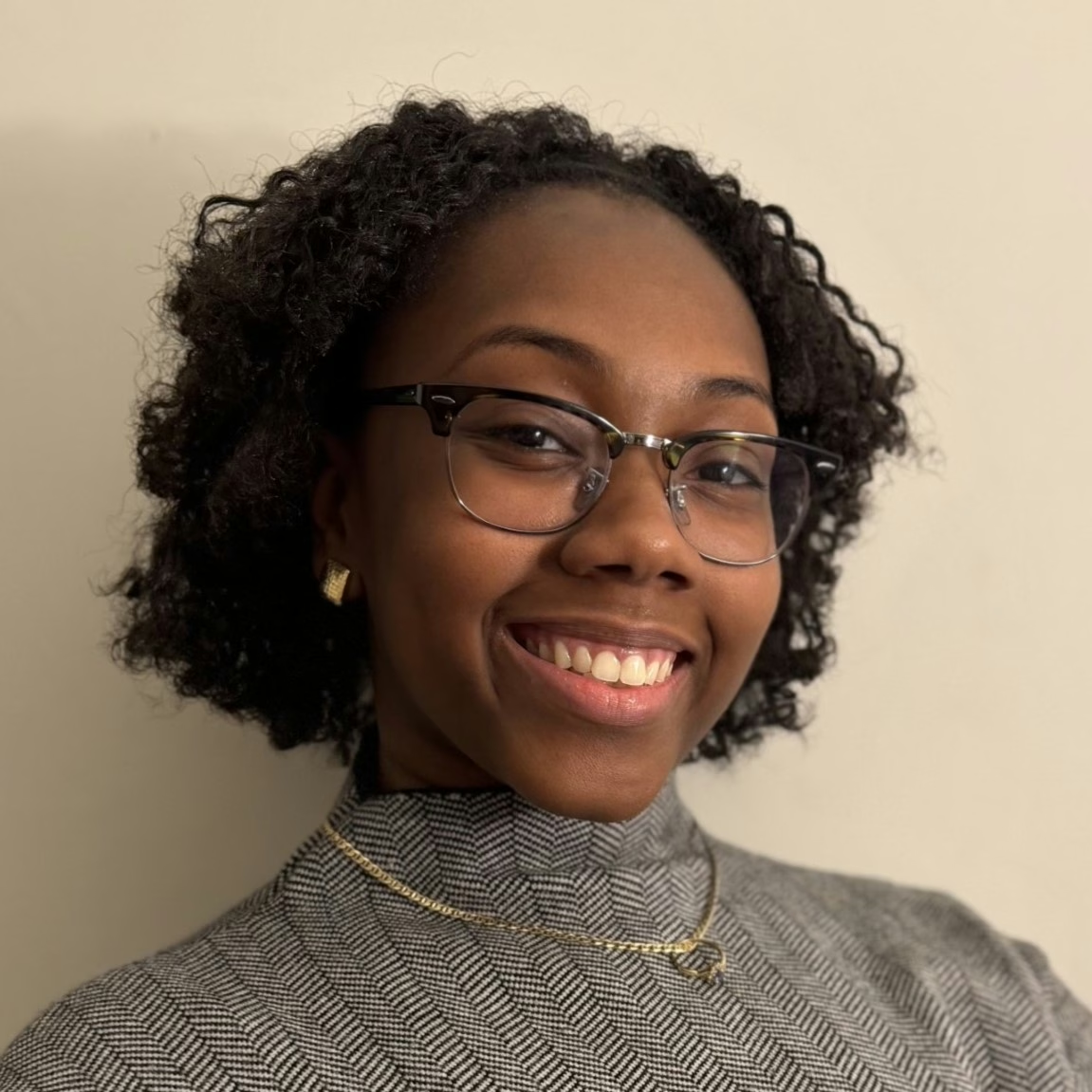
Tori H. Bacote, B.A.
Administrative Assistant

Marcia Galvinhill, Ph.D.
Director

Mary Xatse, LMHC, Ph.D.
Assistant Director of Clinical Services & Multicultural Counseling

Anushka Mohapatra, M.Ed., NCC
Assistant Director of Outreach Programming

Justin Donovan, Psy.D.
Staff Clinician
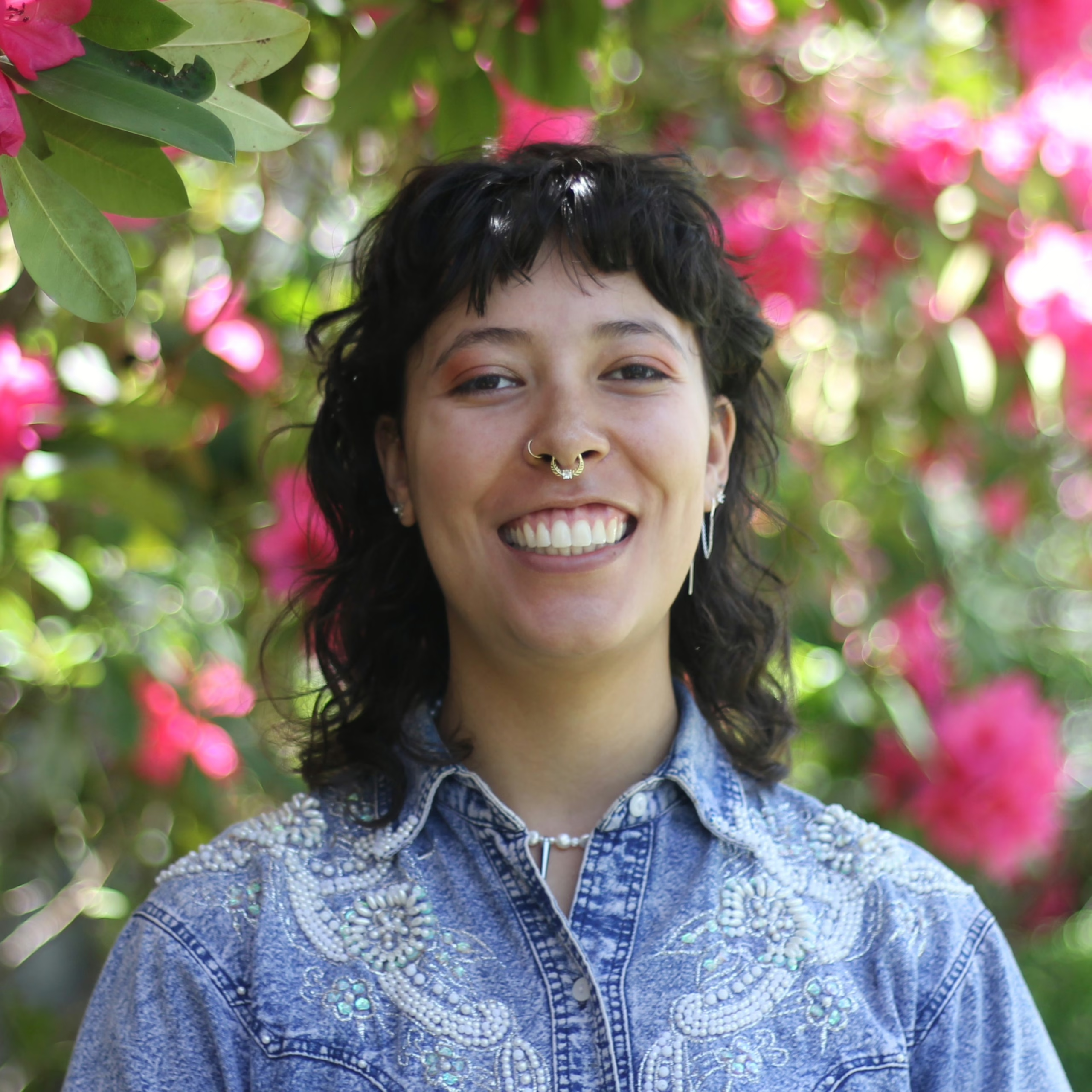
Aviva Davis, LCSW
Staff Clinician & LGBTQIA+ Specialist

Dr. Alex Cutler
Staff Psychiatrist

Erin Morrell, M.A.
Trainee
Frequently asked questions
How do I know I should go to counseling?
The Center for Counseling and Personal Growth (CPG) is a good place to get help and support if you’re dealing with a stressful situation, especially if it’s something that you might not feel comfortable talking about with friends, family members, or other supports. You are welcome to talk with someone at the Counseling Center whether it’s about a life-changing event or simply a worrisome one. CPG also can be a good resource if you’re worried about a friend and want advice from an experienced professional about how you can best help them.
What are some of the reasons that someone goes to therapy?
Sometimes students in college find life difficult and overwhelming. A great many life stressors contribute to these feelings, such as academic stress, scheduling and time management, illness or injury, and devastating life events such as abuse, death, or a relationship breakup. Internal factors also can impact a person’s well-being, including issues around self-esteem, body image, or feeling different or isolated from other people. Regardless of the reason, many people experience times in life when events become overwhelming, and counseling is a great way to receive support in those moments.
What would an appointment be like?
Students sit down with a counselor to look at their situation and decide together where the problem lies and what is needed. Your counselor will listen and prompt you to clarify your own thinking, rather than deciding what’s best for you or giving advice. The counselor will ask you guiding questions and also make suggestions and recommendations about what course of therapy might be the most helpful for you.
How long is a therapy session?
Ordinarily, students will see a counselor for a 45 minute appointment.
Does the Counseling Center have session limits?
Because of the very high demand for counseling services, CPG had instituted limits in the past (six sessions per semester). However, we realized that counseling is not a “one size fits all” kind of service. Some students present with issues that can be quickly improved, and some may take more time. Therefore, this year we have eliminated the session limit policy. Instead, CPG will offer the appropriate amount of treatment that a student clinically needs. However, if your needs indicate that you need to be seen frequently for a longer period of time, or you need more specialized treatment, we will be happy to help connect you with a therapist in the community.
Will CPG tell anyone else that I have used their services? Will you tell my parents?
The Counseling Center is a confidential resource and a clinician would only talk to a University dean or parent if a student makes a request, or if there was an imminent risk of serious injury or violence.
If you are under 18-years-old, a parent or guardian will need to consent to treatment and have access to treatment information and documentation.
No other campus office has knowledge of a student’s visits to the Counseling Center without his or her explicit permission.
If I go to counseling, are those records part of my academic records?
Because counseling records are confidential, they are not typically shared with the University. When a student signs a release of information form to provide limited health-related information to other college departments, that information may become a part of their academic record. Limited information may also be shared in the event of an emergency requiring transportation to the hospital for a mental health evaluation or in the uncommon event that a student either presents a clear and present danger to self or others or has a history of physical violence and communicates a threat of death or serious bodily injury to another person. However, most information is not shared outside of the counseling center. Also, students’ counseling center records are destroyed seven years after graduation.
I think medication will help me. Do you have a psychiatrist who can see me?
If you are in need of psychiatric medication, CPG offers a limited amount of psychiatric care for the Clark community. Because the demand for these appointments is very high, CPG offers medication appointments with a psychiatrist for assessment and stabilization of symptoms. Once a student’s mental health symptoms are stabilized with medication, they are referred either to a physician at Clark University Health Services or a psychiatrist in the community for continued medication management.
Because psychiatric resources are very limited at CPG and in the Worcester community, we urge you to keep your mental health prescriber (or pediatrician/primary care physician) from home. Many students currently do this, and follow-up appointments can be easily scheduled during school breaks. However, if it’s not possible to keep your mental health prescriber from home, we recommend that you contact a Worcester-area mental health clinic to arrange an initial appointment. A list of specific mental health clinics in the Worcester area can be found on our Off-Campus Mental Health Resources page.
What if I don’t feel comfortable with my assigned counselor?
We want you to have a successful experience at CPG. If you don’t feel comfortable with your assigned counselor, please let us know. Ideally, this would be a concern that you can actually discuss with your counselor. However, if you don’t feel comfortable doing so, please communicate this with the CPG Director , and we will try to work out a different arrangement for you.
If I think my friend needs help, how do I get them to come in and see you?
It can be very difficult when someone you care about is in pain, but remember that it is very hard to make a person seek help if they don’t want to or don’t feel they need it. Counseling with an unwilling client is usually not very effective. Here are some ideas that might help:
- Let your friend know that you are concerned. Suggest that they make an appointment with a counselor to see if we can be of help. Try to phrase the communication using “I,” rather than “you,” language — e.g., “I care about you and I am sad to see you hurting,” rather than “You are struggling and need help.”
- Offer to be with your friend while they request an appointment.
- Offer to accompany your friend to their first appointment. You may wait in the waiting area to be available when they finish.
- Come to the counseling center yourself and talk with a counselor about your worries about your friend. You will not need to tell the counselor your friend’s name, and you do not even need to let your friend know you came in. The counselor may be able to offer you suggestions about how to interact more effectively with this friend, as well as to manage your own feelings about the situation.
- Check out our online mental health resources and see if there is any information you can share with your friend.
Can you write my professor a note to excuse me from class or exam, or help me get an extension on my paper?
If you need additional academic support, please speak with your professor or reach out to the CARE team to help advocate for you. Counseling is a confidential resource, so you will not be required to have a medical note from CPG to make a request for temporary accommodations such as extensions or class attendance exemptions.