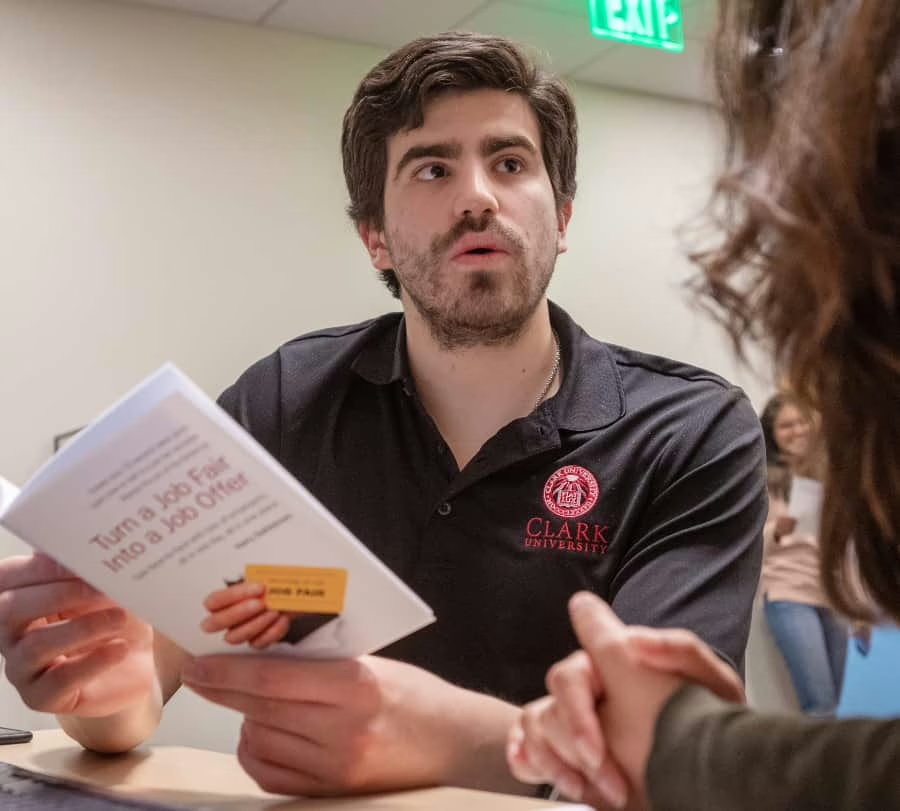



Data, Analytics, & Quantitative
Career Community for Data, Analytics, & Quantitative
This community is about using data to find patterns, answer questions, and support better decisions. Students build strong quantitative, analytical, and modeling skills that lead to careers in data science, analytics, AI, research, economics, finance, and policy analysis. , and leadership that lead to careers in business management, finance, consulting, operations, and entrepreneurship.
You might belong here if you….
- Like working with numbers, patterns, or trends
- Enjoy using data to answer questions or solve problems
- Want to make decisions based on evidence and analysis
- Enjoy logical thinking and analytical challenges
- Are interested in technology, research, or predictive modeling
Some careers students pursue in this community are:
Data, Analytics, & Quantitative Career Pathways
Data Analyst
- Data Scientist
- Business Intelligence Analyst
- Machine Learning Engineer
- AI Specialist
- Quantitative Analyst (“Quant”)
- Statistician
- Actuary
- Operations Research Analyst
- Market Research Analyst
- Economic Analyst
- Risk Analyst
- Pricing Analyst
- Sports Analyst
- Survey Researcher
Skills You’ll build in This Community
Skills Taxonomy
- Creative Thinking
- Storytelling
- Visual Design
- Media Literacy
- Production Skills
- Project Management
- Adaptability
- Critical Thinking
- Time Management
- Audience/User Awareness
- Self Advocacy
- Portfolio Development
- Communication
Campus Involvement
Getting involved on campus is one of the best ways to build experience, leadership skills, and professional connections. Clark University offers 130+ student organizations across academic, professional, and leadership areas, giving students many ways to explore business-related interests.


Data Science Collaboration
The goal of the Data Science Collaboration is to foster interest in the field of data science, give hands-on learning to students interested in data science, and explore the latest advancements in the field.
Future AI Leaders
Future AI Leaders is dedicated to building Clark University’s presence at the forefront of the rapidly going field of artificial intelligence.
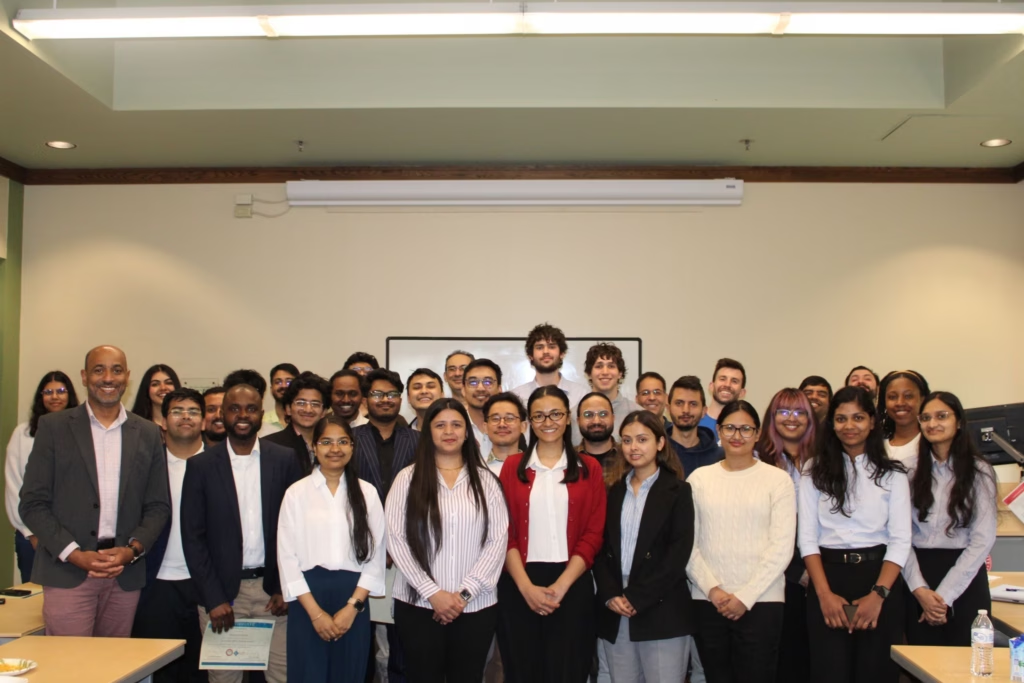
IEEE Student Branch
The IEEE Student Branch at Clark is a platform for students interested in expanding their knowledge and skills in computer science, electrical and electronics engineering and related fields.
What can I do now? (Action steps by class year):
First Year: Explore & Get Involved
- Attend career events, info sessions, and employer panels to learn about careers
- Join 1–2 student organizations (analytic-focused or not)
- Start building basic skills (Excel, communication, teamwork)
- Meet with Career Services to explore interests and options
- Create a first résumé and LinkedIn profile
- Create GitHub profile
- Talk to sophomores/juniors about their experiences
- Take a variety of classes to explore interests
Juniors: Focus & Gain Experience
- Secure a targeted internship (critical recruiting year)
- Take on leadership roles in clubs or organizations
- Strengthen technical specialization areas
- Network intentionally with alumni and professionals
- Attend career fairs and employer recruiting events
- Refine résumé, cover letters, and interview skills (including coding technical interview)
- Participate in competitive opportunities (hackathons or coding competitions)
- Contribute to open-source projects and work on personal projects and portfolio
- Understand recruiting timelines for technology hiring
- Consider whether graduate school may be part of your path
Sophomores: Build Skills & Experience
- Take foundational courses (computer science, programming foundation, etc.)
- Pursue early internship, part-time job, or summer experience
- Get more involved in a club (active member or small leadership role)
- Participate in competitive opportunities (hackathons or coding competitions)
- Attend networking events and begin connecting with alumni
- Participate in alumni shadowing program, campus career fairs and alumni sessions to learn more
- Start exploring specific career paths (Data analysts, Financial Analysts, Artificial Intelligence etc.)
- Build technical skills (Excel, data tools, presentations)
- Build technical projects or portfolios
- Consider a certification (e.g., Excel, Google Analytics, HubSpot)
Seniors: Launch Your Career
- Apply for full-time jobs or post-grad internships early
- Leverage your network (alumni, professors, past supervisors)
- Practice interviewing and salary negotiation
- Finalize your technical portfolio, résumé, and LinkedIn
- Consider graduate school applications (if relevant)
- Stay engaged with Career Services for job search support
- Reflect on your experiences and tell your story confidently
Industry Specific Career Resources:
Students exploring the Data, Analytics, & Quantitative community can use these resources to learn about industries, research career paths, build skills, and stay current on trends.
- Professional Associations
- Labor Market & Career Exploration
- Skill Building Platforms
- Common Graduate Programs
- Association for Computing Machinery (ACM) — Supports careers in computer science, software engineering, artificial intelligence, and computing research through networking, conferences, and technical resources.
- Association for Information Systems (AIS) — Useful for students and professionals interested in information systems, business technology, analytics, and digital transformation.
- American Statistical Association (ASA) — Provides resources, conferences, publications, and networking opportunities for statistics, data science, and research careers.
- INFORMS (Institute for Operations Research and the Management Sciences) — Supports careers in operations research, analytics, optimization, supply chain management, and decision sciences.
- Data Visualization Society — Focuses on data storytelling, dashboard design, and visualization best practices for analytics and communication professionals.
- International Institute of Business Analysis (IIBA) — Valuable for business analysts, process improvement specialists, and organizational strategy professionals.
- Project Management Institute (PMI) — Supports project management, operations leadership, analytics project coordination, and organizational management careers.
- CFA Institute — Supports careers in investment analysis, portfolio management, financial modeling, and quantitative finance.
- Global Association of Risk Professionals (GARP) — Useful for risk management, financial risk analysis, compliance, and quantitative finance careers.
- Association for the Advancement of Artificial Intelligence (AAAI) — Focuses on AI research, machine learning innovation, and artificial intelligence career development.
- National Association for Business Economics (NABE) — Supports careers in economic analysis, forecasting, policy research, and business economics.
- Society for Industrial and Applied Mathematics (SIAM) — Useful for careers involving applied mathematics, computational science, modeling, and quantitative research.
- Healthcare Information and Management Systems Society (HIMSS) — Supports healthcare analytics, health informatics, and healthcare technology careers.
- Urban and Regional Information Systems Association (URISA) — Focuses on GIS, spatial analytics, urban planning, and geographic data systems careers.
- U.S. Bureau of Labor Statistics – occupational outlook, salary ranges, job growth
- O*NET OnLine – skills, interests, tasks, and job matches
- LinkedIn – job titles, career paths, alumni outcomes, hiring trends
- Glassdoor – salary data, company reviews, interview insights
- Indeed – internships and job openings
- Occupational Outlook Handbook – detailed career profiles
- GitHub Explore – Open-source projects, trending technologies, and collaborative technical learning opportunities
- LinkedIn Learning – Professional development platform with courses in software development, cloud computing, IT, and technical certifications
- Forage – job simulation platform
- Udemy – courses in SQL, Python, Tableau, machine learning and analytics software
- Codecademy – develops programming and SQL skills through interactive coding exercises
- LeetCode – Strengthening coding, algorithms, SQL, and technical interview preparation skills
- Coursera – university- and industry-created courses in computer science, cybersecurity, data science, and software engineering (free audit options available)
- FreeCodeCamp – free, project-based coding platform covering web development, data analysis and machine learning with hands-on exercises and certifications
- GitHub Skills – interactive learning modules for Git, GitHub, version control and collaborative software development workflows
- Tableau – Training resources for dashboard development and data visualization skills
- Microsoft Learn – Excel, Power BI, workplace productivity
- Google Cloud Skills Boost — Helps students build cloud computing, machine learning, and data engineering skills.
- AWS Skill Builder — Provides cloud analytics, machine learning, and data engineering training.
- IBM SkillsBuild — Offers foundational learning in AI, cybersecurity, analytics, and professional skills.
- Master of Science (MS) in Data Science — Prepares students for careers in data science, predictive analytics, machine learning, and large-scale data analysis.
- Master of Science (MS) in Business Analytics — Focuses on using data to improve business strategy, operations, marketing, and organizational decision-making.
- Master of Science (MS) in Statistics — Develops advanced statistical and quantitative skills for research, forecasting, modeling, and data interpretation roles.
- Master of Science (MS) in Applied Mathematics — Prepares students for mathematical modeling, optimization, computational analysis, and technical problem-solving careers.
- Master of Science (MS) in Computer Science — Supports careers in software development, artificial intelligence, machine learning, cybersecurity, and advanced computing.
- Master of Science (MS) in Artificial Intelligence or Machine Learning — Specializes in developing intelligent systems, automation tools, predictive models, and AI-driven technologies.
- Master of Business Administration (MBA) with Analytics Focus — Combines leadership and business strategy with data-driven decision-making and organizational analytics.
- Master of Science (MS) in Economics or Quantitative Economics — Prepares students for economic forecasting, policy analysis, market research, and financial analysis.
- Master of Science (MS) in Finance or Financial Engineering — Focuses on investment analysis, risk management, quantitative finance, trading models, and financial technologies.
- Master of Science (MS) in Information Systems or Business Intelligence — Prepares students to manage organizational data systems, reporting tools, and technology-driven business solutions.
- Master of Public Policy (MPP) or Public Administration (MPA) with Data Analytics Focus — Supports careers in government, nonprofit analysis, policy evaluation, and public sector research.
- Master of Science (MS) in Bioinformatics or Computational Biology — Combines biology, computing, and analytics to support healthcare, genetics, biotechnology, and medical research.