
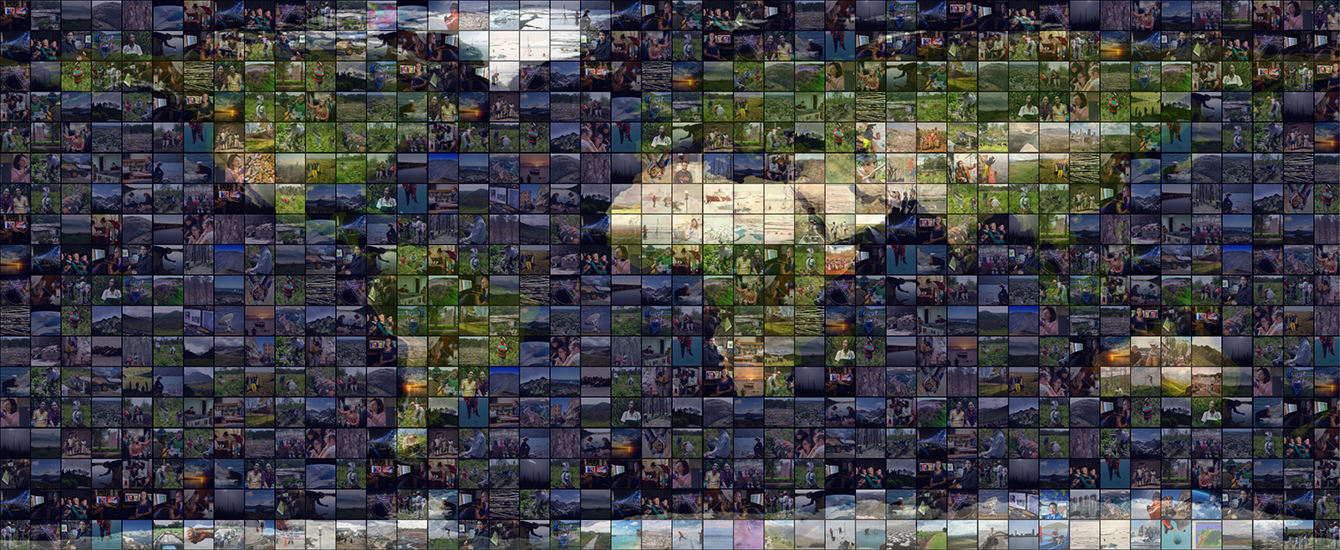
Welcome to the Graduate School of Geography
With its highly ranked graduate and undergraduate programs, Clark University is one of the best places in the world to study geography. Students have the opportunity to work with nationally and internationally known faculty to examine why certain places are different, how those differences shape the way we live, and how we, in turn, shape our environment.
Celebrating Our Centennial
On April 13-15, 2023, we celebrated 100 years of Clark Geography and the impact our scholars have made on the world.
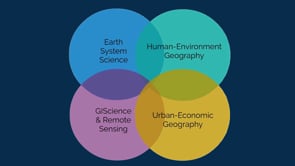
Academic Programs
Undergraduate Programs
Undergraduates may major or minor in geography, global environmental studies, or environmental science/earth system science. All three programs allow students the opportunity to work closely with faculty and graduate students (both master’s and doctoral) on projects.
Master’s Programs
We offer an M.S. in geographic information science (GIS) in collaboration with the Department of Sustainability and Social Justice. Qualified Clark undergraduates may apply to our Accelerated B.A./Master’s of Science in GIS program.
Ph.D. Program
Clark’s doctoral program in geography not only is top-ranked in the nation by the National Research Council but also is internationally renowned. Our graduates have found overwhelming success in securing academic and nonacademic positions throughout the world.
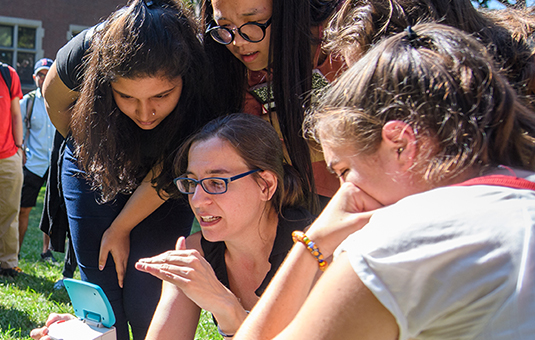
Research
Clark’s Graduate School of Geography has a long history of significant and influential research; five geography faculty have been elected to the National Academy of Sciences and four to the American Academy of Arts and Sciences. Our faculty and students continue in this tradition, with inquiry that benefits communities, environments, and the world.
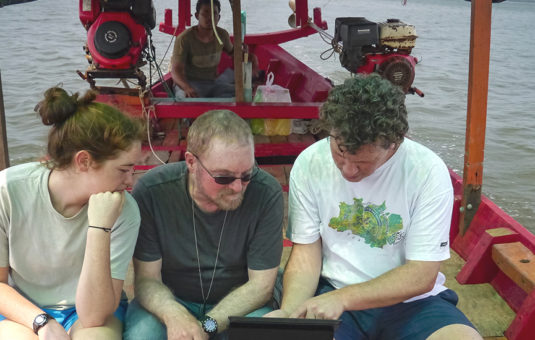
Careers and Internships in Geography
Our doctoral students land positions in colleges and universities, government, and nongovernmental organizations around the world. Our undergraduate and master’s students benefit from our internship and career opportunities and active alumni networks.
Upcoming Events
There are currently no upcoming events.
Save the Date
Contact Information
Graduate School of Geography
Office Location
-
Jefferson Academic Center, Room 220
950 Main Street
Worcester, MA 01610 - 1-508-793-7336
- 1-508-793-8881 fax
- geography[at]clarku[dot]edu